Oct 02, 2026
Oct 02, 2026
Written jointly with Nandini Nimbkar
Abstract
Sweet sorghum (SS) [Sorghum bicolor (L.) Moench] crop was introduced in India by Nimbkar Agricultural Research Institute (NARI) in early 1970s. Today sweet sorghum is an important crop in ethanol ecosystem in India and the world and as a subset of millets – a useful food crop. We thought of telling the story of how the whole thing started in India.
NARI has worked on all aspects of sweet sorghum which include:
(I) Breeding high yielding varieties.
(II) Fermentation studies and solar distillation of ethanol.
(III) Development of lanterns and stoves running on low grade ethanol.
(IV) Development of high-quality syrup and complete technology for producing it.
The work in early phases (from 1970s to 80s) was for producing a complementary crop for sugarcane. Later, work continued for producing ethanol from sweet sorghum and its use as household fuel in newly developed lanterns and stoves (1980s to 90s). Because of low interest in ethanol use for rural households the work then shifted to producing high quality syrup (from 1990 onwards).
This article details the work done at NARI. The article also details how a small institute like NARI with limited resources but working in a dedicated and sustained manner has been able to produce technologies for sweet sorghum utilization. Quite a good amount of work described in this article was written up in the book “Romance of Innovation”, published in 2014.
Introduction
Sweet sorghum [Sorghum bicolor (L.) Moench] (SS) belonging to millet family is a dryland crop and has a great tolerance to a wide range of climatic and soil conditions. It is a short duration crop, maturing in 100 to 140 days (as compared to 12 to 18 months for sugarcane) and requires about 40% less water than sugarcane.
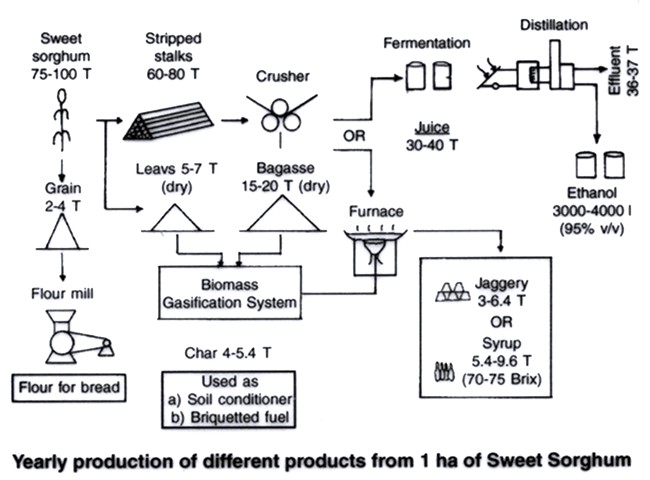
Besides SS is the only crop that provides grain and stem that can be used for sugar, alcohol, syrup, jaggery, fodder, fuel, bedding, roofing, fencing, paper and chewing. It has been used in U.S. for nearly 150 years to produce concentrated syrup with a distinctive flavor. Sweet sorghum has also been widely used to produce forage and silage for animal feed. The oil crisis of 1973 and 1976 renewed interest in the commercial production of ethyl alcohol from SS for use as fuel or fuel additive. India unfortunately is presently following this route.
Below are the details of NARI’s work.
I. Breeding high yielding SS varieties and hybrids for grain and sugar production
Cultivars developed by the U.S. Sugar Crops Field Station at Meridian, Mississippi, Texas Agricultural Experiment Station, Weslaco and Georgia Agricultural Experiment Station, Griffin were brought to the Nimbkar Agricultural Research Institute during the early 1970’s. Their major drawbacks were:
(a) Greater susceptibility to pests and diseases than the normally cultivated grain/fodder sorghums in India
(b) Photothermal sensitivity
(c) Poor seed quality for human consumption (US cultivars had red or brown colored grain) as well as low seed yield and late maturity.
Keeping these shortcomings in mind, a breeding program was carried out to minimize them. As a result, we were successful in producing relatively early lines yielding about 30 tons of stripped stalks per hectare per season throughout the year. The lines were photothermal insensitive and produced medium to bold-sized grain with pearly white color. This was basically achieved by crossing the American lines with M 35-1 or Maldandi as the pollinator. Maldandi is planted locally on a large scale as a fodder/grain variety and has a juicy stalk as well as good quality grain.
Since sorghum grain is the staple food in some parts of India, further improvement in grain yield was attempted to get a dual-purpose crop giving high yields of grain and stem biomass. To achieve this, crossing was carried out of lines having high stalk yields, high brix of juice, property of retention of juiciness of stalk after grain maturity and lines giving high yield of pearly white grain as pollinators. This resulted in production of sweet sorghum varieties capable of giving high yields of grain of acceptable quality and possessing juicy stalks high in sugar.
A total of 22 SS accessions were tested for three years (in mid 1980s) to identify the most promising ones for ethanol production. Hybridization was carried out with both non-sweet, dwarf and sweet, tall female lines successfully and resulted in Madhura hybrid. Hybrids were generally found to possess greater uniformity and were felt to be more desirable than varieties from commercialization point of view.
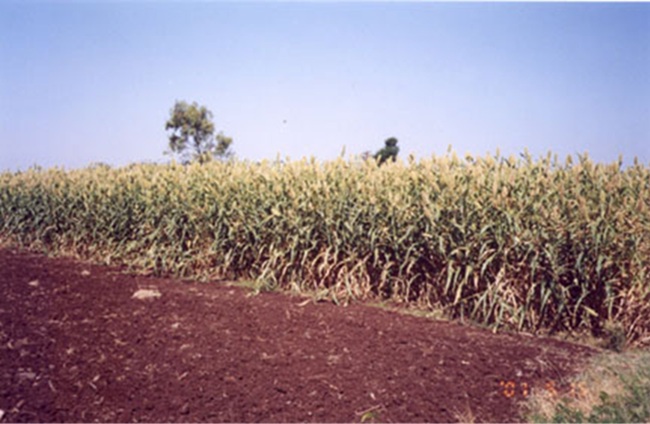
However, in our syrup work we found problems with sweet sorghum hybrids mainly in terms of seed production. Hence a program was initiated to develop varieties which were high in sugars, tolerant to pests and high yielding in biomass. Thus, two varieties Madhura-2 and Madhura-3 were developed which were found to be good for syrup production. Being high sugar-yielding these varieties could also be used for ethanol production. Table 1 lists the properties of these cultivars and because of its good performance year-round and properties such as tolerance to stem borer and lodging Madhura-3 is presently being used for syrup production.
The NARI hybrids and varieties contain maximum sugars at grain maturity. The brix in the juice of some of these varieties nearly approaches that of sugarcane9. Some attempts were made by NARI in the late 1970s to produce crystalline sugar from SS juice. They were unsuccessful because of the difficulty in crystallization. Therefore, in the early 1980s it was decided at NARI to use SS as a feedstock for ethanol and syrup production.
Table 1. Different properties of sweet sorghum cultivars developed by NARI for syrup production (based on 6 years data).
| Parameter | Madhura-1 (hybrid) |
Madhura-2 (variety) |
Madhura-3 (variety) |
| Biomass (Ton/ha-season) | 10-40 | 20-40 | 20-<40 |
| Stripped stalk (Ton/ha-season) * | 5-20 | 10-25 | 10-<30 |
| Extraction (kg juice /100 kg of Stripped stalk) | 15-35 | 15-25 | 25-35 |
| Juice yield (kg/ha-season) | 750-7000 | 1500-6250 | 2500-10500 |
| Juice brix (sugar content) | 15-20 | 16-18 | 16-<20 |
| Stem borer damage(kg/100 of stripped stalk) | 5-35 | 10-20 | 0-5 |
| Syrup recovery (kg/100kg of stripped stalk) | 3-6 | 2-7 | 5-7 |
| Syrup yield (Ton/ha-season) | 0.15-1.2 | 0.2-1.5 | 0.5-<2.1 |
| Best sowing months | May-June | May-June, Oct.-Nov. | May-June |
| Crop duration (months) | 4 | 4 | 4 |
* Stripped stalk includes damaged stalk due to pest infection.
Our SS work also helped start breeding work in late 1980s in MPKV, Rahuri. ICRISAT did the breeding work in early 1980s whereas IIMR started work in early 1990s. All these organizations however worked in SS breeding in fits and starts with very little continuity in their work.
II. Fermentation studies and solar distillation of ethanol
Sweet sorghum has great potential as an energy crop. In a 2007-08 study, among the cultivars tested Madhura produced highest ethanol yield. Unlike sugarcane, which is a 10–18-month crop and a tropical plant, SS can be cultivated in nearly all temperate and tropical climatic areas and uses less water to grow. Our work and data from various sources have also shown that SS uses around 40% less water than sugarcane to produce the same amount of sugar per acre per year. At NARI, technology of alcohol production from sweet sorghum and its use as a cooking and lighting fuel for rural India was developed. The work started in early 1980s and continued till 2010.
The fermentation studies conducted in early 1980s at the Institute showed that out of the 16 strains tested, the strain NCIM 3319 of yeast, Saccharomyces cerevisiae gave good results in batchwise fermentation. Fermented juice containing 10-11% (w/w) total fermentable sugars yielded about 6% (v/v) ethanol after 48 to 72 hours.
Studies on ethanol production worldwide have shown that the maximum energy (~ 80%) is used in its distillation from fermented mash. Hence, we felt that renewable solar energy should be used to distill it to reduce the carbon footprint and make it sustainable.
A pilot solar distillation plant consisting of 38 m2 of flat plate solar collectors coupled to a hot water storage tank of about 2500 liters capacity was therefore set up at NARI campus in the late 1980s. Distillation column of this completely instrumented facility was of packed bed type and was specifically designed to run at distillation temperatures of 50-700C. These temperatures are easily obtainable from solar collectors. This was probably the first pilot plant in the world to distill ethanol from SS using solar energy.
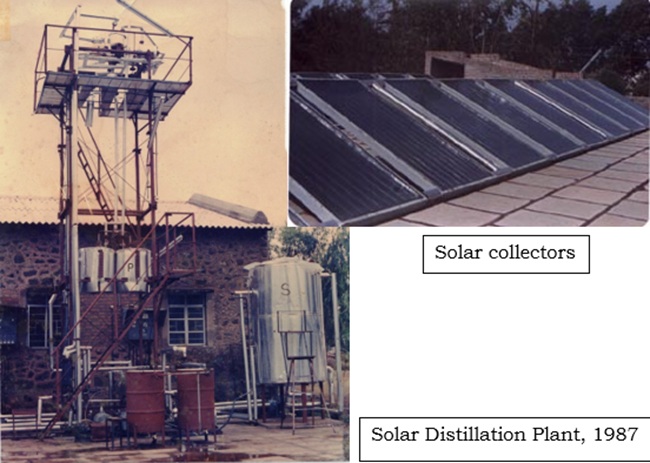
Till March 1989 this plant had logged about 4000 hours of operation producing 30-40 liters per day of 95% (v/v) ethanol. About 70% of total yearly distillation heat load came from solar energy, while the rest had to be provided by electric heaters or from a biomass-powered producer gas unit.
Because of the publicity given to this plant we had a continuous stream of visitors coming to see it from all over the country. However, when we tried to sell our technology to industries, we were not very successful; our guess is we were way ahead of our time.
In 1992 we almost set up India’s first SS distillery near Mysore. A detailed project report based on our technology was made by one party to distill 10,000 liters per day of ethanol from sweet sorghum. The farmers planted our Madhura hybrid and were happy with it and waited anxiously for it to be taken up by the distillery. However, the markets were not favorable, and the Government of India (GOI) did not have any policy in 1990s regarding the use of ethanol for energy purposes, so the project did not move forward. This was the disadvantage of being ahead of our time!
We also stopped producing ethanol in our plant at NARI in the mid-1990s and dismantled it in 2000, since the excise department gave us continuous trouble during yearly renewal of license.
Now, almost 20-25 years later, there is a tremendous interest in India and worldwide in using sweet sorghum as an alternative crop for ethanol production and the use of renewable energy like solar energy for its distillation. We get many inquiries about our solar plant and sweet sorghum seed. We have supplied substantial quantities (more than 15 tons) of our ‘Madhura’ sweet sorghum seed in the last 20-25 years to various industries in India and all over the world.
In fact, all major companies in India involved in sweet sorghum work like Tata Chemicals, Nagarjuna Fertilizers, Praj; and Sugar factories like Vasantdada Sugar, Bannari Amman Sugars Ltd and Renuka Sugars, among others have interacted with us and have taken our seed for planting. Internationally we have supplied our SS seed to Thailand, Italy, France and U.S. for ethanol production. Because of its high sugar content and drought resistance, we feel the use of SS for ethanol will flourish.
III. Development of lanterns and stoves running on ethanol
In early 1980s most of the cooking in Phaltan rural area was done on wood stoves. Some enterprising people also used kerosene and LPG stoves but with shortage of LPG they mostly switched to wood. Kerosene in those times was in short supply and was mostly imported from Russia. So, we thought that a clean fuel which could be produced locally would be a great boon for cooking and lighting. Ethanol fitted the bill and so our program of ethanol started.
Initially our program was focused on improving the existing kerosene lanterns and then running them on ethanol. An improved multifuel lantern called “Noorie” was therefore developed. It was a pressurized mantle lantern producing light output of 1250-1300 lumens (equivalent to that from a 100 W light bulb). Compared to existing pressurized kerosene lanterns, this lantern consumed only 60% of the kerosene and operated at one-third the pressure. We tweaked the design so it could also run on ethanol or diesel and then developed a lantern to run-on low-grade ethanol (~50% ethanol-water mixture).
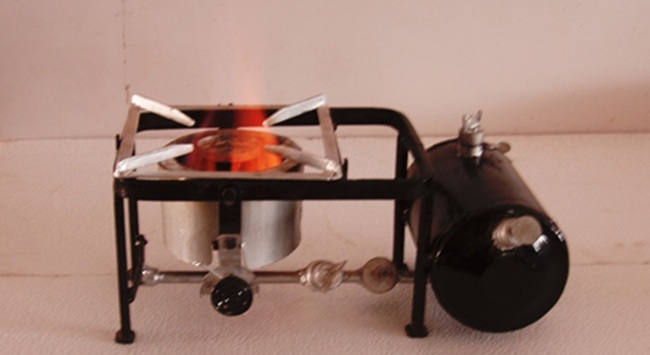
In our distillation work we had also developed small scale solar-powered units which could easily distill 40-60% (v/v) ethanol. We thought this low-grade ethanol could be an excellent fuel for household usage since it was safe. Pure ethanol is a very inflammable and extremely hazardous fuel. By diluting it to 60% ethanol-water mixture it becomes a safe fuel for cooking and lighting. In 1984 a simple stove running on this mixture and on the principle of surface evaporation and combustion was designed and tested. However, we found that the mixture after combustion still had 20% ethanol left in it which was a waste.
After appropriate design modifications an ethanol stove was designed which could easily run on 60% ethanol-water mixtures (called low grade) and completely evaporated all the ethanol for combustion. To our knowledge this was the first serious effort anywhere in the world to develop a stove which could run on illicit liquor (~60% ethanol - water mixture) that is produced in rural areas. This stove was extensively tested in Phaltan by rural women for cooking a complete meal for family of five.
Our work on developing unique low-concentration ethanol stove helped spawn several international efforts in this direction. An alcohol stove program in Africa called GAIA, funded by the World Bank, probably came about as a result of our work. During the testing of our alcohol stove, couple of rural women suggested that ethanol should also be used for lighting purposes.
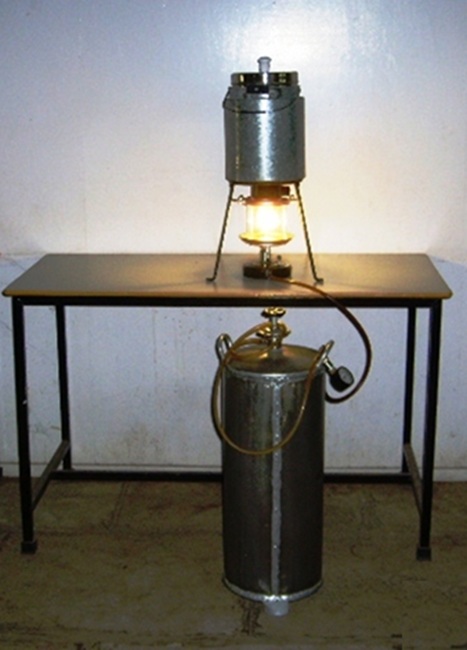
So, a combined cooking and lighting device called lanstove was developed. This was based on incandescent mantle lamp technology. This lanstove (lantern + stove) produced excellent light (equivalent to a 100 W incandescent bulb) and in the ensuing heat cooked a complete meal for a family of five via a steam cooker. This patented technology was sold to an entrepreneur in Indonesia. For this invention we were given the prestigious Globe Forum Award in Stockholm in 2009.
When we wanted to spread this technology in rural areas excise department proved to be a stumbling block since they insisted that every hut would have to be issued a license to store ethanol. So, the program was stopped.
Ethanol is not good fuel for automobiles
At that time our thinking was that we should use ethanol as cooking and lighting fuel and not for automotive use. Now in hindsight we feel that ethanol is a very important and energy-intensive chemical and should not be wasted in combustion devices like automobiles and stoves but should be used as a feedstock for chemical industry.
Automobile is an extremely inefficient mobility device. Its efficiency is mere 1-2%; the total amount of energy used in transporting a passenger certain distance at a certain speed divided by energy input of petrol is less than 2%. And yet we persist in using high-quality chemicals like ethanol and other biomass-based fuels like biodiesel etc. for this purpose. A much better alternative is to develop electric mobility running on renewable solar PV. On energy of fuel to wheel basis, electric vehicles are 3 times more efficient than internal combustion systems. This is because of very high efficiencies of D.C. motors (80-90%) as compared to 25-30% efficiencies of IC engines.
We also feel more efforts should be made in increasing the efficiencies of internal combustion engines so that their pollution levels are reduced substantially.
At the same time distilleries use large quantities of water in producing ethanol and pollute the environment by discharging obnoxious distillery effluent in local water bodies, canals and rivers. About 15 liters of effluent are produced per liter of ethanol production. Theoretically, distilleries are supposed to detoxify the effluent but get away with it. We feel increasing distillery landscape will produce more pollution so as to completely offset the gains made by improving air quality by using ethanol/petrol mixtures in automobiles. So, from all these considerations we feel that ethanol for automobiles is a very poor strategy.
Therefore, we feel that use of productive and precious land should only be used for growing food rather than fuel. However, the greed of mankind makes us go for technologies and systems which favor the rich and the corrupt system.
For example data from all over the world on the use of ethanol for automobiles shows that it is fueled by strong farm lobby in most countries and not by any desire to reduce air pollution or improve the quality of environment. Air quality improvement seems like an afterthought. Some lab studies show air quality improvement by ethanol blends but no ground data exists on large scale testing.
We therefore feel that sooner or later the world will realize the futility of use of ethanol for automobiles.
IV. Development of SS syrup technology
Around early 1990s we realized that ethanol market from sweet sorghum was uncertain since the Government of India (GOI) did not have a clear policy regarding it. Thus, we started looking for alternative uses for sweet sorghum juice. Syrup from it seemed to be the right choice. It has good antioxidant properties and is found to be useful in food, beverage, pharmaceutical and nutraceutical industries. Besides SS syrup is a good substitute for honey and with decrease in natural honey has led to greater demand for SS syrup. Also, with experience we realized that land is a prime commodity and it should be used mostly for producing food for human beings.
Thus, the focus on syrup showed that we can use sweet sorghum - a multipurpose crop for grain and syrup production. Both these things are nutritious and hence good for human consumption.
Our work on sweet sorghum syrup has focused on the following:
1. Developing complete protocol for producing excellent syrup on lab scale.
2. Scaling the technology so that decentralized units could be set up to produce about 100 kg/day syrup.
3. Development of a very efficient biomass furnace for syrup production.
All these issues also helped in developing better varieties for syrup production as has been shown in Section I.
Syrup is produced by evaporating the SS juice which has 15-20 brix (% of dissolved solids in liquid – mostly sugars) to 70-75 brix. By proper filtration of juice and scum removal during evaporation excellent syrup is made.
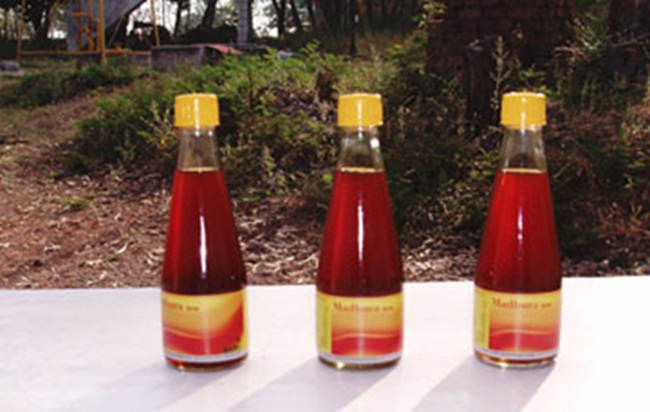
A complete protocol of making excellent syrup from different SS varieties and hybrids was developed. This included measuring the juice brix at different growth stages, temperature - time history of making syrup, filtration of juice and clarification of syrup and optimum temperature at which the syrup should be made among others. The idea was to develop table variety syrup without any additives which should match honey both in appearance and taste. Table 2 shows the comparison of Madhura syrup with honey and sugarcane syrup.
Table 2. Comparison of the nutritional content of Madhura sweet sorghum syrup with honey and sugarcane syrup [All data is from Reference 18]
| Nutrient | Madhura syrup (mg/100 g) |
Honey (mg/100 g) | Sugarcane syrup (mg/100 g) |
| Potassium | 1810.00a, 133.20=145b | 40-3500 | 662 |
| Calcium | 160.00a, 190.87-272.33b | 3-31 | 18.4 |
| Sodium | 84.25-153.13b | 1.6-17 | 21.5 |
| Phosphorus | 11.00a | 2-15 | 61 |
| Iron | 0.86a, 15.43-19.74b | 0.03-4 | 0.16 |
| Nicotinic acid (vitamin B3) |
153.00a | 0.10-0.20 | - |
| Vitamin C | 11.50a | 2.2-2.5 | - |
| Riboflavin (vitamin B2) |
10.00a | 0.01-0.02 | - |
| Total phenolics (antioxidants) | 184.70-261.31b | 7.37-46.57 | 29-98 |
| Total flavonoid (antioxidants) | 75.62-197.50b | 0.53-11.67 | 109-135 |
| Shelf life | 1-2 years (without refrigeration)d | Long | 6 monthsc |
aAnalysis of samples of ‘Madhura’ syrup by CFTRI, Mysore and ITALAB Pvt. Ltd. Mumbai.
bAnalysis of samples of syrup made from ‘Madhura’ hybrid cultivated at different locations in Kenya.
cThis is the recommended shelf life of sugarcane syrup manufactured by companies in India. To improve shelf life of sugarcane syrup, various chemicals are added. Also, storage in a refrigerator after opening the container can increase shelf life up to two years.
dThe pH of food-grade sweet sorghum syrup was in the typical range of 5.0-5.5. Thus, given a combination of low pH, it is possible to store sweet sorghum syrup under ambient conditions. However, it is important to ensure that no moisture ingress occurs into the product during storage.
Once the protocol was established a decentralized unit for producing SS syrup was set up at NARI. It included industrial scale crusher, filtration units, evaporation pan running on a very efficient biomass furnace and cool room for storing syrup. The details of these efforts are given here, and a nice video of the whole process is available here.
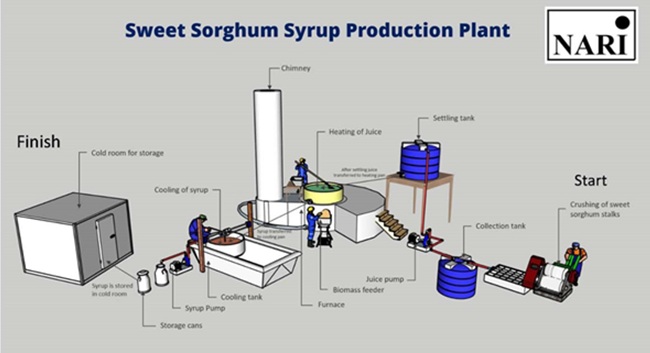
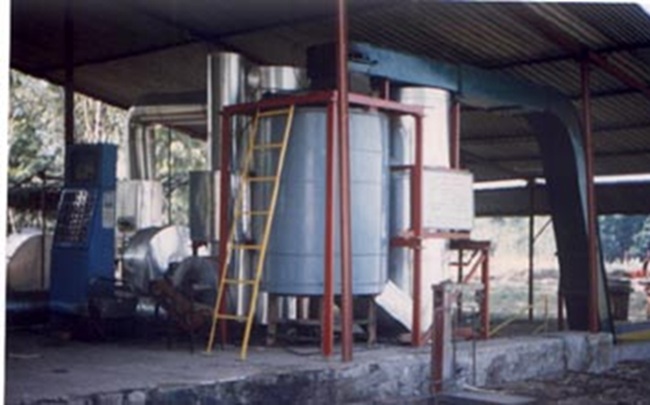
One of the critical components in the production of excellent syrup was the development of semi-automatic efficient biomass furnace (>500 kW thermal capacity) running on loose biomass. This increased the efficiency of syrup production and reduced the cost. The details of the design and development are given here. Such small biomass furnaces are not available in India, and we are proud of this development.
Based upon this development a semi-automated plant for producing high quality syrup has been operating at NARI for the last 3 years.
In our earlier work on SS syrup, we used loose leafy biomass gasifier developed at NARI as a heat source to concentrate the juice. However, the cost of the system together with the limitation that it could only run on 10-15% moisture content biomass made it uneconomical and unfeasible for syrup production. Thus, we developed a cost effective and efficient biomass furnace where even 25-30% moisture content biomass could be easily combusted.
The study also showed that by producing syrup a farmer doubled his profit since the grain and syrup together amounted to doubling the crop production parameters.
In late 2012 I was invited by Dr. Belum Reddy, one of the major architects of sweet sorghum ethanol program at ICRISAT to discuss various issues of sweet sorghum. Almost everybody who was working in SS in India at that time were invited to this ICRISAT meeting.
At the end of the meeting Dr. Reddy asked me what the direction of SS R&D in India should be. I told him it should be SS syrup. He said that at ICRISAT they have also come to the same conclusion after burning their fingers with Rusni Distillery fiasco. Being a good breeder, Dr. Reddy also felt that the land should be used for human food production rather than fuel. This was a vindication of our sweet sorghum R&D direction.
We are proud to say that we are probably the only organization in India producing sweet sorghum syrup on this scale. Syrup (more than 10 tons) has been sold in last 20 years to various food processing companies and nutraceutical industry. The technology of syrup production is available from our Institute.
Our Contributions
We feel NARI’s impact has been highly successful in establishing the crop’s technical viability and influencing macro-level national biofuel policy.
Specifically, we are proud to state the following:
1. Because of our efforts, work on sweet sorghum R&D spread in various organizations and universities in India. Thus, good breeding work was carried out (mostly in fits and starts) by various universities and organizations like ICRISAT and IIMR. However, no sustained work on developing downstream technologies was done by them.
2. Our work on ethanol stoves spawned similar development work in African and Latin American countries funded by UN and World Bank.
3. We are the only organization in India producing sweet sorghum syrup regularly and on some scale.
4. We also did pilot studies on producing paper from sweet sorghum bagasse. Thus, a local Paper company was able to produce good quality paper.
Lessons Learned:
1. Land should be used for producing food and not fuel. Thus sweet sorghum breeding and downstream work should focus on improving grain and sugar yields per ha for human consumption.
2. Use of ethanol/petrol mixture for automobiles is waste of a valuable chemical like ethanol. It reduces automobile performance and plays havoc with engine and fuel supply system in it. There is also no real ground data that shows its use helps reduce atmospheric pollution.
3. Ethanol is a great energy intensive molecule. It should be used as a chemical feedstock.
4. Sweet Sorghum is an excellent multi-purpose crop for human food where grain is used for bread (bhakari), sugars from stem for syrup and bagasse and leaves make excellent fodder for animals.
5. Despite our substantial contribution in SS development, we feel sad that it has not picked up in India. Some possible reasons and remedies could be as follows:
Further R&D needed
1. Development of pest resistance and high sugar yielding SS varieties.
2. Mechanical leaf stripper to remove leaves from the stalk. Leaf removal helps in improving the quality of syrup.
3. Mechanical harvester of sweet sorghum. Presently it is harvested manually.
4. Small syrup making units mounted on a truck so that they can be taken to the SS fields.
Acknowledgements
Such long and sustained work is not possible without the dedicated efforts of large number of scientists, engineers, technicians and interns. Most notable have been.
1. Scientists: A.D. Karve, A.R. Ghanekar, Nandini Nimbkar, Tapas K De, Sudhir Kumar, V.A. Bhagwat, N. M. Kolekar, J. H. Akade, V. Singh, S.V. Choudhary.
2. Engineers: Rajiv Jorapur, B. Mendonca, S.D. Patange, S. Tiwari.
3. Technicians: Phil Byrne, S. M. Patil, A.D. Nale, R.S. Bale, S. Adsul.
4. Interns: Rivan Jadav, Meenal Pore, S. Dhiman.
Financial help for various aspects of this program was received from ICAR, DST, CAPART, DNES (predecessor of MNRE), Advisory Board of Energy, USDA among others. It is gratefully acknowledged. Authors are also grateful to Dr. R.T. Patil for giving valuable suggestions on this article.
Suggested Readings
1. Eleventh Annual Report, Nimbkar Agricultural Research Institute, 1977-78.
2. Twelfth Annual Report, Nimbkar Agricultural Research Institute, 1978-79.
3. Ethanol production from sweet sorghum. 1988. A final project report submitted by NARI to the Department of Non-conventional Energy Sources (DNES), New Delhi, 59 pp.
4. Breeding sweet sorghum for the production of sugar. 1988. A final project report submitted by NARI to the United States Department of Agriculture (USDA), 44 pp.
5. Rajvanshi, A. K., Jorapur, R. M., and Nimbkar, N. 1989. Ethanol from sweet sorghum. Publication No. NARI-ALC-1, published by Nimbkar Agricultural Research Institute (NARI), Phaltan, India.
6. Rajvanshi A.K., Jorapur Rajeev M., Nimbkar N., “Ethanol from sweet sorghum”, Nimbkar Agricultural Research Institute (NARI), Phaltan (India), 1989. https://nariphaltan.org/ssalc.pdf
7. Breeding sorghum for grain and sugar. 1992. A final project report submitted by NARI to the Indian Council of Agricultural Research (ICAR), New Delhi, 76 pp.
8. Development and Propagation of Efficient Gur making Technology for Rural Areas. 1992. Final project report submitted by NARI to CAPART, New Delhi, 190 pp.
9. Rajvanshi, A. K., De, T. K., Jorapur, R. M., and Nimbkar, N. 1993. Jaggery and syrup from sweet sorghum. Publication No. NARI-GUR, published by NARI.
10. Rajvanshi, A. K., Jorapur, R. M., and Nimbkar, N. 1994. “Sweet sorghum R & D for food and fuel”. Proceedings of VII Joint Convention of the Deccan Sugar Technologists’ Association (DSTA) and the Sugar Technologists Association of India, DSTA, Pune 411 005, India.
11. Development of sweet sorghum [Sorghum bicolor (L.) Moench] lines giving high stalk yield and good quality juice for production of industrial ethyl alcohol. 1995. A final project report submitted to the Ministry of Non-conventional Energy Sources, New Delhi by the Nimbkar Agricultural Research Institute, Phaltan, 83 pp.
12. Rajvanshi A.K., Nimbkar N., “Sweet Sorghum R & D at Nimbkar Agricultural Research Institute”, NARI, Phaltan (India), 2001. https://nariphaltan.org/sorghum.pdf
13. Rajvanshi A.K., Patil S.M., and Mendoca B., “Development of Stove running on low ethanol concentration”, Nimbkar Agricultural Research Institute, 2004. https://nariphaltan.org/ethstove.pdf
14. Nimbkar N., Kolekar N.M., Akade J.H. and Rajvanshi A.K., “Syrup Production from sweet sorghum”, Nimbkar Agricultural Research Institute (NARI), Phaltan (India), 2006 www.nariphaltan.org/syrup.pdf
15. Rajvanshi A.K., “Ethanol Lantern cum Stove for Rural Areas”, Nimbkar Agricultural Research Institute (NARI), Phaltan (India), 2009. https://nariphaltan.org/lanstove.pdf
16. Willis O.O., Mouti M.E., Sila D.N., Mwasaru M., Thiongo G., Murage H. and Ojijo N.O., “Physio-chemical properties and antioxidant potential of syrup prepared from ‘Madhura’ sweet sorghum (Sorghum bicolor L. Moench) cultivar grown at different locations in Kenya”, Sugar Tech, 2013, 15(3), 263-270. nariphaltan.org/madhurasyrupproperties.pdf
17. Vinutha K.S. et al., “Sweet Sorghum Research and Development in India: Status and Prospects”, Sugar Tech, June 2014. Volume 16(2), pp 133-143.
18. Rajvanshi, A.K., S,D, Patange and N. Nimbkar. “Sweet Sorghum Syrup R&D in India”, Current Science, Vol 119, No. 12. December 2020.
20-Dec-2025
More by : Dr. Anil Rajvanshi
