Jun 03, 2026
Jun 03, 2026
India is a strange Republic.
The Supreme Court of India says prostitution per se is legal. The Constitution guarantees dignity, privacy, autonomy, and the right to choose one’s profession. Yet on the streets, in police stations, and inside courtrooms, the Indian State behaves as if consensual sex between adults is a moral crime that must be punished—not regulated.
This contradiction is not harmless. It is not philosophical. It has a real human cost—to men, to women, to families, to public health, and to an already collapsing justice delivery system.
And the irony? The data the State itself publishes quietly exposes the lie.
What the Supreme Court Actually Said (And What the State Pretends It Didn’t)
Let us begin with law, not emotion.
The Supreme Court has made it clear: prostitution itself is not illegal. What the Immoral Traffic (Prevention) Act criminalises are associated activities—brothel management, pimping, solicitation in public places—not the act of consensual sex between adults.
The Court has gone further. It has held that sex workers are entitled to:
In plain language: the Constitution recognises agency.
Yet at ground level, the police act as moral custodians, not law enforcers. Arrests are made, names are published, lives are destroyed—without convictions, without nuance, without accountability.
When the highest court recognises autonomy, why does the lowest constable still enforce morality?
Criminalising Men Without Reducing Crime

Every year, thousands of men are arrested under the Immoral Traffic (Prevention) Act.
Drivers. Customers. Hotel staff. First-time offenders. Men caught in decoy traps.
Most of them are never convicted.
But conviction is not the punishment—the process is.
An ITPA arrest means:
The law does not ask whether the act was consensual. It does not ask whether coercion existed. It assumes guilt by gender.
Men are criminalised by default.
This is not crime control. This is social punishment through criminal law.
Rape Data Destroys the Moral Argument
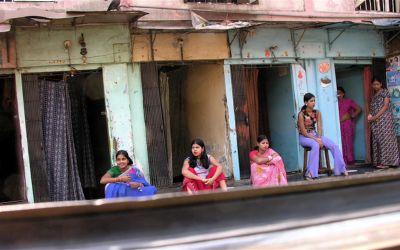
The most emotionally powerful argument against legalising prostitution is this:
“Prostitution increases rape.”
It sounds intuitive. It is also factually false.
Look at India’s own crime data.
Cities that host some of Asia’s largest red-light districts—Mumbai, Kolkata, Delhi—do not top rape charts.
Kolkata, home to Sonagachi, consistently reports the lowest rape rates among major Indian metros.
Now look elsewhere:
Rajasthan
Madhya Pradesh
Uttar Pradesh
Chhattisgarh
These states have no organised red-light districts, yet report some of the highest rape numbers in the country.
Why?
Because rape in India is not about sexual availability. It is about power, proximity, and silence.
Most rapes occur:
Rape is not caused by sex scarcity. It is caused by power surplus.
How Legal, Regulated Prostitution Protects Women
Criminalisation does not protect women—it abandons them.
Illegality pushes sex work underground, where:
Legal regulation does the opposite:
When sex work is legal, women can seek help without risking jail.
When it is illegal, the State hands them over to middlemen and pretends it is saving them.
How It Also Protects Men (The Ignored Half)
India refuses to acknowledge a basic truth: men are human beings with emotional and physical needs.
Every year:
Why? Because abroad:
At home, Indian men are told to suppress desire—or risk criminal records.
So they export their money, their loneliness, and their emotional health to foreign economies.
India moral-polices its men domestically and profits from their absence internationally.
The Forgotten Victim: The Customer and the Machinery of Moral Humiliation
There is another truth the system refuses to acknowledge—the customer.
In most ITPA raids, the customer is the easiest target. He is present, identifiable, and expendable. He is arrested, photographed, paraded, and leaked to the media. His name, face, and address are published in newspapers and circulated on television and social media.
This happens even when:
In the majority of such cases, the customer is never convicted. The case collapses. Charges are dropped. Or the trial simply fades away.
But the damage is permanent.
Families break. Marriages collapse. Children carry stigma. Careers end. Mental health shatters.
This is punishment without conviction—moral execution without due process.
Meanwhile, the woman involved is officially labelled as “rescued.” She is taken to a rescue home, often against her will. After days or weeks of confinement, she is released—sometimes without any real rehabilitation, employment option, or support system.
Worse still, adult women are routinely forced to give written undertakings stating that they will “not indulge again” in this so-called illegal or immoral work.
This raises an uncomfortable constitutional question:
If an adult woman has agency, who exactly is appointed as her guardian?
An adult citizen is made to sign an apology for exercising choice, while the man involved is publicly shamed for life—without a conviction.
This is not justice. This is collective moral theatre.
Courtrooms Clogged With Morality, Not Justice
As an advocate, I ask a simple question:
Why are our courts wasting years prosecuting consensual acts?
Thousands of ITPA cases flood:
Meanwhile:
Legalising and regulating prostitution would:
Justice delayed is justice denied—and morality policing is stealing time from victims who actually need the courts.
Public Health: Diseases Thrive on Denial
Sexually transmitted diseases do not disappear because the State closes its eyes.
Illegality means:
Regulation enables:
Trafficking Is the Crime—Consensual Sex Is Not
India makes a fatal mistake: it confuses trafficking with consensual sex work.
They are not the same.
Trafficking requires:
Consensual sex work requires:
By criminalising both under one moral umbrella, India fails at rescuing victims and protecting rights.
Judicial Clarity the State Refuses to Follow: Bombay High Court on Prostitution
Before morality enters the conversation, the judiciary has already spoken.
On Thursday, 24 September 2020, the Bombay High Court, while hearing a plea before a Single Bench of Justice Prithviraj K. Chavan, categorically reaffirmed what the law already states but enforcement routinely ignores.
While observing that prostitution has not been made an offence under the Immoral Traffic (Prevention) Act, 1956, and that an adult woman has the right to choose her vocation and cannot be detained without her consent, the Court ordered the release of three adult sex workers who had been unlawfully confined in a Corrective Institution.
The Court rejected the paternalistic assumption that adult women engaged in sex work require compulsory custody, moral supervision, or corrective detention. It held that such confinement, in the absence of proven trafficking, coercion, or force, is illegal and unconstitutional.
The judgment exposed a routine but deeply unlawful practice:
Adult women, labelled as “rescued,” are confined in corrective or protective homes against their will, without any adjudication, without consent, and without a finding of criminality.
Despite this judicial clarity, enforcement agencies continue to:
This is not a gap in law. It is a refusal to obey law.
Articles 14 and 21: When Moral Policing Becomes Unconstitutional
What is happening under the guise of enforcing the Immoral Traffic (Prevention) Act is not merely social injustice—it is constitutional breach.
Article 21: Life, Liberty, Dignity
Article 21 does not protect only the innocent. It protects the human.
The Supreme Court has repeatedly held that the right to life includes:
When a customer is arrested without conviction, photographed, named, and shamed in the media, the punishment is inflicted before guilt is established. Reputation is destroyed without trial. Family life collapses without adjudication.
This is not procedure established by law. This is procedure invented by morality.
Likewise, when an adult woman is forcibly “rescued,” confined in a shelter, and compelled to give a written undertaking not to engage again in sex work, her liberty is curtailed without crime, without conviction, and without consent.
An adult citizen does not require a guardian to exercise choice.
To impose one is to reduce Article 21 to a privilege granted by social approval.
Article 14: Equality Before Law, Not Equality Before Morality
Article 14 forbids arbitrariness.
Yet under current practice:
This is not classification based on intelligible differentia. It is gendered moral sorting.
If two adults engage in a consensual act:
Such enforcement fails the basic test of Article 14: fairness, non-arbitrariness, and equal protection of law.
Yet enforcement practices operate on shame, spectacle, and social destruction. This is not the rule of law. It is the rule of moral panic.
The Question the Republic Must Answer
Then one question remains:
Whose morality is the Indian State protecting—and at what constitutional, economic, and human cost?
Until that question is answered honestly, India will continue to punish desire, reward hypocrisy, and call it justice.but at whose cost and whats cost?
Critical Analysis of the above article by Dr. Kolahalam Ram Kishore
Advocate Chandan Agarwal's article presents a powerful and provocative critique of the vast disconnect between India's constitutional principles and the ground reality of how its laws on sex work are enforced. The essay is not merely a legal argument; it is a social commentary that uses logic, statistics, and a human-centric approach to expose the deep-seated hypocrisy of the Indian state. It forces the reader to confront an uncomfortable question: Is the state interested in justice, or is it merely a tool for enforcing a particular moral code?
The Central Paradox: Law vs. Morality
The article's strongest point is its clear articulation of the central paradox. It correctly highlights the Supreme Court's stance that sex work itself is not illegal; only the ancillary activities like running a brothel or soliciting are. This establishes a fundamental right to dignity and freedom of choice for sex workers. However, the article powerfully contrasts this with the actions of the police, who act as "moral guardians," using the ITPA to arrest, harass, and publicly shame individuals involved in consensual adult acts. This creates a system where the law is not applied equally but is instead used as a weapon for social policing. The individual liberty guaranteed by Article 21 is effectively nullified by the moral compass of the lowest-level constable.
Unintended Consequences and the Myth of Protection:
Agarwal successfully dismantles the common arguments for criminalization by highlighting their disastrous consequences.
1. Making Criminals, Not Reducing Crime:
The article points out that thousands of men, from drivers to first-time customers, are arrested and subjected to a brutal process. Even if they are never convicted, their lives are destroyed by public shame, family breakdown, and job loss. The "punishment is the process itself," a powerful observation that reveals how the justice system is used to inflict social penalties without the due process of law. This isn't crime control; it's state-sanctioned humiliation.
2. Debunking the Rape Myth:
The author uses compelling data to counter the common assertion that legalizing sex work would increase rape. By comparing major cities with established red-light areas (like Kolkata) to states without them (like Rajasthan, MP, UP), the article shows that the presence of sex work has no correlation with higher rape rates. This is a crucial point, shifting the understanding of rape from a crime of sexual desire to a crime of power, proximity, and entitlement. This data-driven argument effectively dismantles a purely emotional objection.
3. The Failure to Protect Women and Public Health:
The article argues that criminalization does the opposite of its intended goal. It pushes sex work underground, empowering pimps and traffickers while making women more vulnerable to police exploitation and violence. It prevents access to healthcare, leading to unchecked spread of diseases, which is a public health crisis. By contrast, the essay envisions a regulated system that would offer safety, health services, and the real freedom to leave the profession a system that protects both the workers and the public.
The Forgotten Stakeholders: Men and the Justice System.
A particularly insightful part of the review is its focus on two often-ignored stakeholders: men and the judiciary. It acknowledges the reality of male desire and the hypocrisy of a society that drives millions of men to seek services in countries with legal regulation, while punishing them for the same act at home. This isn't an endorsement of the act, but a critique of the state's inconsistent and unrealistic moral stance.
Furthermore, the article highlights the massive strain on the judicial system. Courts are flooded with thousands of moralistic ITPA cases while serious crimes like rape and child abuse languish for years. This is a powerful argument for legal regulation as a practical measure to unclog the courts and allow them to focus on genuine threats to public safety.
Conclusion: A Republic or a Moral Police State?
Advocate Agarwal's article is a compelling call for introspection. It successfully reframes the debate from a moral one to a constitutional and practical one. It argues that the current approach violates fundamental rights (Articles 14 and 21), fails to protect the vulnerable, harms public health, and cripples the justice system.
The central question posed.... "Whose morality is the Indian state protecting, and at what cost?" is profound. The essay suggests that the state is not acting as a secular republic but as an enforcer of a specific, dominant moral code. The cost, as it meticulously details, is paid in human dignity, constitutional rights, and social justice. By laying bare this hypocrisy and its devastating consequences, the article makes a powerful case for replacing criminalization with sensible, rights-based legal regulation. It argues that true justice lies not in punishing desire, but in protecting the life, liberty, and dignity of all its citizens.
14-Feb-2026
More by : Adv Chandan Agarwal

|
I want to say man can't eliminate the stealing and prostitution completely. In many advanced countries, education and employment is accessible, yet some people will still steal and indulge in prostitution. Some romantic writers made prostitution noble, but it is undignified and inhuman. Supreme court of India contradicting itself self calling prostitution between two consenting adults is legal, and giving Sex workers right to organize. |
|
|
The article raises so many fundemental questions. So many ficion writers , reformers like Sharath chandra chatarji , Lio Tolstoy deeply dipicted the issue in their srories and novels. So many film movies exposed the factors. Why supreme court not active to cancel those state laws ? At least author himself move such PILS . It is time to approach Supreme Court. Thank you author to knowing dimensions and aspects of the issue. - bsramulu |