Oct 21, 2026
Oct 21, 2026
 The coming decade looks uncertain.
We have to embrace that uncertainty.
Intervention of AI, new geo-politics, and looming climate concerns point towards a post-truth reality for us. Everything is questionable. Nothing seems real or certain. Words, the very same words convey so many different meanings. There seems to be no standard or standardized datum against which we may measure our own findings. For every survey, there is a contrary survey. For every view, there is a contrary view. This is absolute churning. So much so that if you say that one should be kind, someone (read a search engine) may tell you how dangerous, impractical and foolish it is to be kind. Internet is a flatterer. It tells you what you want to hear. The definitions of wealth, goodness, education, social order and democracy are changing. The phenomenon of inflection seems have made the world go topsyturvy.
The rule-based international wotld order seems to be in jeopardy. It appears that might is right. UN Charter and it's implementation look fragile. To safeguard the interest of the country, governments the world over have lowered their voices against unptovoked violence across borders, use of terrorism as a state policy, attacks, abductions and outright racist moves and words. What was once unimaginable in public discourse seems common and regular. Even the Heads of the most powerful nations seem to forgotten any decorum or diplomacy. It is kind of a "free for all" scene.
Earlier, accepting some basic rules helped the world in carrying out it's trade via land, air and particularly sea. The financial syatem looked stable. At least, the feal was reassuring. One could invest and calculate one's future financial condition. Now things are uncertain. The countries, the societies and the individual are at a loss.
The sensible voice within says that real power lies in constraint, sensitivity towards all and responsible use of power. But many times these days we witness is open use and misuse of power.
Globalization was good as long as it served certain power centres. If less lucrative to them, the very cointries who disintegrated other countries with newly introduced English dictionary words like "glasnost" and "perestroika" , now discard globalization. I remember how as a young girl I was taken by these words and how I consumed as information that came my way regarding these fascinating and alluring concepts.
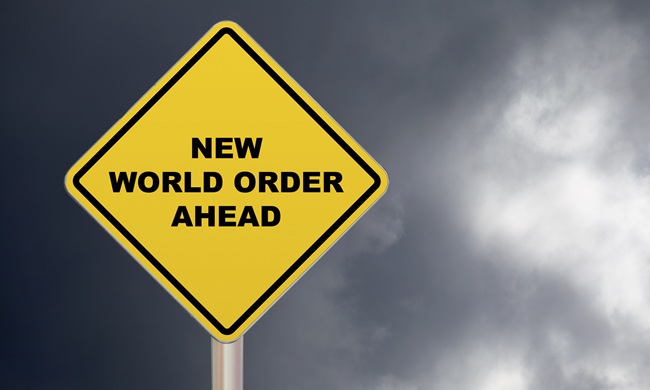
I and many others like me feel betrayed by the so called police of the world. The power block now demands a new world order to actually maintain the old wotld order. The supremacy of currency, control over data, and therefore AI are the hot frontiers now. The world order after the World War II was based on certain values and a certain pattern of hierarchy. Currency, weaponry, production and global policing - they were neatly distributed and the USA was raken to be the lead state without stating it as such. All UN activities of that time can be understood in this light. The interests of the ruler were not to be messed up with. The economic well-beingb of any country depended on the ruling country. The system needed perpetual wars. It also meant huge disparity in terms of wealth and good life. Only the USA chain-link benefitted in the real sense. All other countries, blocks and regions were merely dependent on the running order of the day. For the USA also, the dangerous part was that it did not build anything. It outsourced it's production.
All this seems to be coming to an end. Countries are teaming up. It is as though the world was living a collective lie. The so called rule-based international world order was not only partly false, it also resulted in financial and human injustice. Now we see leaders talking about self-sustainability. When the USA started using tarrif leverage against India, one sentence by PM Modi is worth quoting and worth remembering, "Dependence on other countries is India's biggest enemy." This really sets the tone. A leader trying to protect the country's poor masses realizes that what once was free flow of trade has now become dependence. For India and many other countries around the world, it is time to build their own chain. This line of thought and action will lead our discussion to systems within India; their efficiency or lack of it. We may reserve it for some other day.
One thing which all of us can do and should do is cautious use of words. When we say something devastatingly negative, we only add to deterioration and degradation. Instead of writing off the whole system, we may pinpoint the particular flaw. That is constructive feedback. We should abstain from calling someone outrightly as a terrorist or the system dictatorial etc. It is alwats better to bring attention to what we consider to be a mistake or shortcoming. The public discourse should not become acidic or otjerwise it loses all legitimacy.
The second thing which we can do is to clear the air about artificial intelligence, especially in our own heads. The fear in the public is palpable. AI might take away all jobs. The survival instinct fears, "I might become irrelevant" or even worse, "Human might get re-placable". What will happen to us as a species? Things might not just get out of controls. What will happen if AI turns a monster and gets hold of nukes? Any such reaction is coming from fear and responses which spring from fear are generally wrong. What we see or try to foresee today is limited to the immediate impact of AI in a narrow sphere. What we do not see is the new emerging pattern of human work.
As is said, change is the only constant. As the era of AI dawns, the very nature of human work will alter. There will be new roles, new industries and even new ethics. If we look into history, similar fear responses happened to mechanization, industrialization and commercialization.
Kings in the days of yore denied entry of railways, highways and even schools in the shadow of fear. This kind of response fails to sense the vistas that are about to open up. If the study of human history teaches is anything, it is a perpetual cycle of change. Every age thought that it was going through critical transformation and it was.
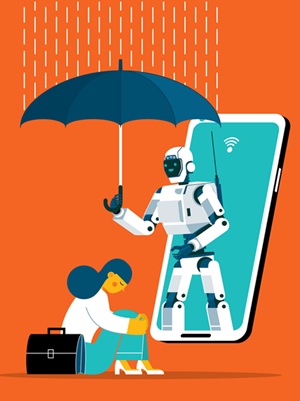 AI might bring many pathbreaking solutions to serious problems like climate or critical diseases. Human work will be of higher order. It might become more creative, commanding, and controlling of automation. Formation of ideas, patterns, critical thinking, and deeper connections will get prioritized. New projects will come up. Humans will change. People sometimes think that AI is a Frankestein hitherto unknown to humankind because of irs soeed and its vast range. But of we look at it, AI is a tool in the hands of humankind. It is human wisdom, knowledge and skill collected and automated. Even earlier ages thought that their case was different.
A good learner has to use AI tools smartly. Instead of talking about it, we will be working with it. We wilk have to raise our expectations from ourselves. Each human oight to sharpen her or his natural cognitive skills, human relationships, connection, cultural understanding, problem solving and personal maintenance mechanisms.
We will have more time to run, talk, connect and grow together. We should learn from generations of humans which have gone by. AI is not dangerous; our fear mindset is. Even a ctastrophe like COVID taught us the value of hygiene, remote work, work from home, use of technology, and the joy of family time. In near furure, the nature of human work and employment will evolve. We just have to keep ourselves flexible and skill-ready. As the Bayes' theorum teaches us, our thinking should be evidence-based.
The coming decade looks uncertain. We have to embrace that uncertainty. The traditional definitions of democracy, freedom, protest, liberalism, conservatism and sovereignty wilk evolve and take new shapes and colors. For the individual, self-management, micro-planning and active implementation of ideas on one's own self seem to be more imporatnt than ever. The self has to be prepared for the fast-changing times.
Images (c) istock.com
28-Feb-2026
More by : Prof. Shubha Tiwari
Top | Perspective | Home

|
Great points, ma'am, on self management in the times of uncertainty... thanks... |
|
|
It is an extraordinary piece in the sense that complicated international order and future trends have been made simple and understandable. It benefitted me a lot. |