Oct 26, 2026
Oct 26, 2026
Dr. B.R. Ambedkar –
‘I am of the opinion that the most vital need of the day is to create among the mass of the people, the sense of a common nationality, the feeling that they are Indians first and Hindus, Mohamedans or Sindhis and Kanarese afterwards. That they are Indians first and Indians last.’
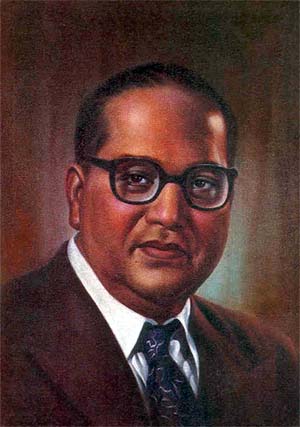 Dr. Ambedkar was a powerhouse of intellect. Many have misunderstood the suit clothing worn by Dr. Ambedkar and the formal English spoken by him as a kind of proof that he had allegiance to the British. Nothing could be further from the Truth. Dr. Ambedkar utilised his triple capabilities of a strong and sharp mind, strong speaking and writing skills along with his magnificent personality as a scholar to induce the British to help the Indian side. Another reason for him to wear the suit was because he wanted to display his defiance to the so-called ‘upper-caste Hindus’. He wanted to show them that he had risen by dint of his merit and was a scholar.
Dr. Ambedkar was of the view that the depressed classes should receive social justice before India would receive her independence. He was also of the view that social justice was more important than economic justice.
He was repeatedly hurt as he belonged to the depressed classes. He was forced to remain thirsty in school, could not sit with or touch high caste Hindus and was mis-treated and ill-treated by them. Yet, he never chose to abandon his nation. He obtained higher education abroad, which he used to help his fellow less fortunate Indians. Can a person greater than Ambedkar be found in the living world save for The Buddhas. In my opinion, he was a Buddha himself! He was an enlightened soul.
Ambedkar felt liberated when he went to study at Columbia University in New York and later at London backed by the financial support of the Maharaja of Baroda. The freedom and equality in the United States of America and Europe made him almost forget that he belonged to the depressed class. He was cruelly reminded of his social outcaste status in Bharat when he returned to India to work at Baroda by the call of the Dewan of Baroda. He went from place to place looking for shelter and no one was willing to take him in. He had to lie that he was a Parsi in order to get accommodation at a Parsi guest house in Baroda.
Dr. Ambedkar was a quiet nationalist. He was able to expose the cruelty and the exploitation of India and Indians by the British in a scholarly manner. Dr. Ambedkar wrote elaborately about the Administration and Finance of the East India Company in the book, ‘Administration and Finance of The East India Company’. The administrative set up of the East India Company consisted of the Court of Proprietors and the Court of Directors. There was also a Board of Commissioners for The Affairs of India. Dr. Ambedkar used his piercing intellect to expose the cunning economic machinations of the British imperialists in looting the wealth of India in a systematic way through highly exploitative tax systems and monopoly in tax collection. Taxes were not progressive and fair. They were regressive and unfair. Dr. Ambedkar exposed the thieving and conniving nature of the East India Company under the guise of writing a scholarly book. He exposed the British high-handedness and colossal dishonesty in a measured and erudite manner backed by data, logic and other evidences.
He rightly brought out the excesses of the British Government, which brought India under its direct administration instead of through the East India Company through the Act of 1858. In the same book, Dr.B.R. Ambedkar writes, “The arrangements regarding the stock of the East India Company are in the same iniquitous strain. The stock of the Company was redeemed by a loan which was also added to the already enormous debt consolidated into what is known as the India Government Debt. What the Act really did was to annihilate the Board of Control: The Company though legally extinct continues to live for all practical purposes and enjoys her dividends even to this day in the shape of interest paid out of Indian revenues. The astounding result of this policy was gain to England and costs to India.’
Dr. B.R. Ambedkar was quite misunderstood by the Congress. Dr. Ambedkar had conflicts with Gandhi. He denounced the British regime. According to Dr. B.R. Ambedkar, Gandhiji and the Congress did little for the amelioration of the sufferings of the untouchables. All that they did was just an eye-wash and nothing substantial.
Dr. B.R. Ambedkar was called as a British Stooge by those who had no understanding of his intellectual grandeur and potency of thoughts. Dr. Ambedkar was called a ‘serpent in the grass’ or a traitor or an enemy of the country and Hinduism by those who had no idea of his underlying great love for Bharat as well as her customs and traditions. In this, Dr. B.R.Ambedkar was like Shri.Veer Damodar Savarkar. Both Savarkar and Ambedkar were very brilliant persons, who knew how cunning and cruel, the British were. They knew that the British could only be destroyed by intellectual ammunition and not by physical ammunition. Hence, both of them used the velocity of words to injure the British interests by exposing the British exploitation of Indians.
Outwardly, Dr. Ambedkar was considered as being pro-British but the facts couldn’t be further from The Truth. It is not common knowledge that sometimes, to defeat the Enemy or Opponent, it is important to befriend them and study about them, first. This is what Dr. Ambedkar did. Dr. Ambedkar also knew the value of civil behaviour and etiquette. He won over both Indian and British hearts with his gigantic intellect and all-encompassing goodwill. In this, Dr. Ambedkar was like his ideal – The Gautama Buddha. Dr. Ambedkar did not have enemies, as such. His mild manners, excellent etiquette, noble nature and gigantic intellectual prowess endeared him to all. He didn’t oppose individuals. He didn’t have any hatred for anyone. He only had a strong dislike for certain ideologies and ways of thinking. He did not hate any anyone. He was a blessed and blissful soul who followed the path of non-violence, love and compassion. He didn’t oppose the British rule, outwardly but implicitly exposed the excesses of the British rule including economic exploitation in many of his works – especially his Major Economic Works including 1. The Problem of The Rupee 2. Provincial Finance 3. Ancient Indian Commerce 4. Administration and Finance of the East India Company.
He was a True Patriot and an even more ardent nationalist. It is not that he was opposed to Hinduism or Bharat as such. He was only against the excesses in Hindu religion and longed for reforms in Hinduism. In the beginning, he wanted to become a part of Hindu society if the latter was willing to reform. He was for social justice before seeking political freedom and economic justice. He questioned the intentions of the Indian National Congress. He wanted to know if the Indian National Congress would first fight for the rights of the depressed classes.
There were leaders like Dewan Bahadur Raghunath Rao and Justice Mahadev Govind Ranade who felt that the National Movement should not be just political in nature but should consider the social questions as well. Thus, persons like Raghunath Rao, Mahadev Govind Ranade, Narendranath Sen and Janakinath Ghosal founded the Indian National Social Conference. The First session of The Indian National Social Conference was held in December of 1887 at Madras under the Presidentship of Raja Sir. T. Madhav Rao. Meanwhile, the First Session of The Indian National Congress founded by A.O .Hume in 1885 had its First Session held at Bombay on the 28th of December of 1885 under the Presidentship of W.C.B annerjee.
In 1895, the Congress Session was held at Poona. The Anti-Social Reform Section led by Bal Gangadhar Tilak was completely against Social reforms. It was Tilak, who succeeded in separating the Indian National Social Conference from The Indian National Congress. Inspite of all this, the Indian National Social Conference did well in its endeavour to improve the lives of the depressed classes.
One of the six major aims of the Gopal Krishna Gokhale’s ‘Servant of India Society’ in 1905 was the elevation of the depressed classes. In his opinion, Bal Gangadhar Tilak, Bipin Chandra Pal, Lala Lajpat Rai and Aurobindo Ghose were among the first extremists, who sought only political freedom. They were all against British imperialism. Many of these ‘extremists’ were not lawyers. Many of the moderates were lawyers.
In 1905, the swadeshi movement started. There were also efforts made to take the INC into extremists’ stronghold. There was also Muslim revivalism started by Sir Syed Ahmed Khan.
The Morley-Minto Reforms of 1909 also known as The Indian Councils Act gave separate electorates to the Muslims. Then came the Home Rule Movement and the Chelmsford Government.
There are many who criticised the religious approach to the nationalist movement. There are many, who acknowledge the contribution of the Indian National Social Conference which did a notable job for the betterment of the depressed classes.
On one hand, there was Hindu Revivalism and on the other hand, there was Muslim Revivalism. Persons like Bal Gangadhar Tilak, Bipin Chandra Pal, Lala Lajpat Rai and the Ghose brothers were Hindu revivalists, who combined Nationalism with Hindu religion. There was also a period of Muslim revivalism by Sir Syed Ahmed Khan, who provided Muslims with Educational Centres at Aligarh and by organising Muslim Educational Conferences at different places, each year.
The Morley-Minto reforms of 1909 were not accepted by many Congress leaders, who felt religion for delivering political minority would create a rift in the solidarity of Indian Nationalism.
Dr. Ambedkar was not pleased by the Congress for having contributed very less for the emancipation of the depressed classes. He said, ‘Whatever may be its title, it is beyond question that the Congress is a body of middle-class Hindu capitalists, whose object is not to make Indians free but to be independent of British Control and to occupy places of power, now occupied by the British.’
The Congress was taken over by the ‘extremists’’ group, who were not ‘lawyers’ led by Tilak and others after Tilak’s return from Jail. The depressed classes were not recognised between 1886 and 1915 but after 1917, the depressed classes got political recognition and support from the British and the Indian Nationalists, mainly because of the efforts of Dr. B.R. Ambedkar.
Meanwhile, the Home Rule Movement was started by Annie Besant and Tilak. Then came the new Governor General – Lord Chelmsford (1916 -1921).
In 1917, the Congress be fooled the depressed classes by its resolution, which according to Dr. B.R. Ambedkar had a political motive. The First All India Conference of The Depressed Classes Mission of India was held on March 23rd to March 24th of 1918 at Bombay and presided over by the Maharaja Sayaji Rao Gaekwad of Baroda.
Gandhiji and Ambedkar were the twin shining lights who worked for the emancipation of the depressed classes but Dr. Ambedkar was the superior guiding light of the depressed classes because unlike Gandhiji, Dr. Ambedkar did not accept the Chaturvarna system. Gandhiji fasted and made sure to not to allow for separate electorates for the depressed classes – thus preventing the further alienation of the depressed classes from mainstream society. Both Gandhiji and Dr. Ambedkar wanted to emancipate the depressed classes but their styles were different.
Dr. Ambedkar had the capacity to become the Prime Minister of India. He also deserved to be Prime Minister of India. There was another person – Shri. Subhas Chandra Bose, who also deserved to be the Prime Minister of India but who also never got to be the Prime Minister of India. The reason was obvious. Gandhiji favoured Jawaharlal Nehru over the Intellectual Superpower, Dr. Ambedkar and the Courageous Subhas Babu.
Dr. Ambedkar was always proud of His People. He was always loyal to them and never disowned them. He was proud to share their happiness and misery all through his life.
Dr. B.R. Ambedkar presided over the 1st Conference of Untouchables at Malwen in Ratnagiri district in what is current Maharashtra region. He also supported Thiru. E.V.Ramaswamy’s passive resistance at Vaikom in Travancore State for securing the rights of untouchables. He was also part of the first Provincial Depressed Classes Conference at Nipail in Bombay Presidency.
Linguistic Provinces
According to Dr. Ambedkar, there are arguments made in favour of the creation of the linguistic provinces in India. Those who advocate for the creation of Linguistic Provinces do so because they believe that the provinces have different languages and cultures. They feel that they should have the fullest scope to develop their languages and their cultures. Dr Ambedkar agrees that different provinces in India have all the elements of a distinct nationality. All nationalities should be given the scope of freedom to their fullest extent. According to Dr.B.R. Ambedkar, Linguistic Provinces produce what democracy needs, namely, social homogeneity. The homogeneity of a people is based on the people having a belief in a common origin, in the possession of a common language and literature, in their pride in a common historic tradition, community of social customs, etc. He goes on to say further that the aforementioned is a proposition which no student of sociology can dispute. According to Dr. Ambedkar, it is necessary for a state to have social homogeneity which raised on a democratic structure. However, Dr. Ambedkar also places the opposite argument when he says that the creation of linguistic provinces would be fatal to the maintenance of the necessary administrative relations between the Centre and the Provinces and that if each Province adopts its own language as its official language, then the Central Government would have to correspond in as many official languages as there are Linguistic Provinces, which would be an impossible task. - Dr. B.R. Ambedkar. Maharashtra as a Linguistic Province. 1948
‘To co-operate with the Simon Commission the Central Government appointed a Committee for all British India, and every Legislative Council elected its Provincial Committee to work with the Simon Commission. On the Bombay Provincial Committee was selected Dr. Ambedkar along with other Members by the Bombay Legislative Council on August 3, 1928. The proceedings and tours of the Simon Commission lit up the Indian political firmament, and along with other forces it brought to the front the force, intellect and vitality of Dr. Ambedkar. Eighteen Depressed Class Associations gave evidence before the Commission and placed their memorandum before it. Sixteen of them pleaded for Separate Electorates for the Depressed Classes. On behalf of the Bahishkrit Hitkarini Sabha Dr. Ambedkar submitted a memorandum to the Simon Commission demanding Joint Electorate with reservation of seats for the Depressed Classes.’*
Dr. Ambedkar was also persistent in his demand for a Dominion Status for India. This revealed his Nationalistic bent of mind to both his fellow Indians and to the British rulers.
*Volume 17( Part 1) of Dr.B.R. Ambedkar’s ‘Writings and Speeches’
Dr. Ambedkar also gave his ideas on Franchise, Electorates and Distribution of States, which are very important for democracy in his appearance before the Simon Commission on 17th May 1929.
On behalf of All - India Scheduled Castes Federation, Dr. B. R. Ambedkar submitted a memorandum to the Cabinet Mission on 5th April 1946 demanding separate settlement of villages for Untouchables. Dr. Ambedkar right said, “The Britishers knew that it was no longer possible for them to keep India in bondage. So, on March 15,1946, the British Prime Minister, Clement Attlee, acknowledged India’s right to attain full independence within or even without the British Common Wealth and said that they would not allow a minority to place their veto on the advance of the majority.” (Keer; pp378-379)
Bhimrao R. Ambedkar, MA. Ph.D., D.Sc., Barrister-at-law, 22, Prithviraj Road, Member, Governor General’s New Delhi, Executive Council wrote a LETTER TO A. V. ALEXANDER ABOUT THE PROPOSALS OF CABINET MISSION dated, 14th May 1946.
‘To my mind, it is only right to say that the Hindus and the Muslims are today mentally incompetent to decide upon the destiny of this country. Both Hindus and Muslims are just crowds. It must be within your experience that a crowd is less moved by material profit than by a passion collectively shared. It is easier to persuade a mass of men to sacrifice itself collectively than to act. It is moved by motives which may be high or low, genial or barbarous, compassionate or cruel, but is always above or below reason. The common sense of each is lost in the emotion of all. It is easier to persuade a crowd to commit suicide than to accept a legacy. It is not for me to advise you how you should proceed. The Mission has found greater wisdom and higher inspiration in the Bhangi Basti and in 10 Aurangazeb Road. I would be the last person to say anything in depreciation of such wisdom and inspiration. But I do think that if the Mission were not to exhibit the pathetic spectacle of an old man in a hurry, a phrase used by Chamberlain to describe Gladstone engaged in his campaign for Irish Home Rule and allow that in diplomacy is called ‘Cooling period’ they will find that they have an easier situation to deal with. 3. That is a matter for the Mission, for the major parties and those who have put their faith in the major parties. I am concerned in knowing how you propose to deal with the problem of the Untouchables and their demand for constitutional safeguards.’*
Dr. Ambedkar in his work, ‘National Frustration’ says that all parties seem to be in agreement in as much as all of them have declared that the goal of India's political evolution is independence. ‘The Congress was the first to announce that its aim was to achieve political independence for India. In its Madras session, held in December 1927, the creed of the Congress was defined in a special resolution to the effect that the goal of the Indian people was complete national independence. The Hindu Maha Sabha until 1932 was content to have Responsible Government as the goal of India's political evolution. It made no change in its political creed till 1937 when in its session held at Ahmedabad it declared that the Hindu Maha Sabha believed in Poorna Swaraj i.e., absolute independence for India.
~*~
Dr. B.R. Ambedkar. The Untouchables. 1948
The Muslim League declared its political creed in 1912 to be the establishment of Responsible Government in India. In 1937 it made a similar advance by changing its creed from Responsible Government to Independence and thereby brought itself in line with the Congress and the Hindu Maha Sabha. The independence defined by the three political bodies means freedom from British Imperialism. But an agreement on freedom from the yoke of British Imperialism is not enough. There must be an agreement upon maintaining an independent India.’*
Thus, one can clearly understand that Baba Saheb was not just thinking about getting independence for India but he was also concerned about maintaining the independence.
~*~
Dr. B.R. Ambedkar. Pakistan or the Partition of India.1946. National Frustration.
Dr. Ambedkar on Partition
Dr. Ambedkar was critical of both Gandhiji and Jinnah. He neither liked the appeasement politics of Gandhiji nor did he like the want for partition of Mohammed Ali Jinnah. He was also critical of Jawaharlal Nehru, sometimes. He was never afraid to criticise anyone if they were doing wrong.
The timing of the taking up of the issue of the name of India for discussion in the Constituent Assembly is unfortunate given the nature of the painful PARTITION. India is a name of comparatively recent origin (some hundred years old). The name ‘India’ has little cultural or geographical context. On the other hand, the term ‘Bharat’ has massive cultural and geographical connotation and has been used since times immemorial to refer to our nation subcontinent.’ Bharat’ is the indicator of our motherland’s true traditions, languages, cultures and polities. It is a recorded fact that Emperor Bharat, the son of King Dushyanth and Queen Shakunthala (daughter of Sage Vishwamitra) ruled over a great area in Ancient India that corresponds to Modern India and the Subcontinent. So, ‘Bharat’ represents the original history and culture of India. It represents the SANATAN DHARMA traditions of the India people since times immemorial.
During Partition, there was great pressure put on the members of the depressed classes in Pakistan to convert to Islam. Dr. Ambedkar was opposed to the idea of forced Conversion and he asked the depressed classes of Hindus to flee from Pakistan and return to India in view of the ever-increasing atrocities upon Hindus in Pakistan like being forced to convert to Islam. Dr. Ambedkar did not like Islam or Christianity or Hinduism. He liked Buddhism and the Parsi religion. He was greatly influenced by his Best Friend for Life, Naval Bathena, who came to Ambedkar’s rescue, again and again, especially during the latter’s financial struggles and personal woes. Naval Bathena was a Parsi.
Dr. Ambedkar was extremely disillusioned by Partition. He was deeply affected by the atrocities committed by man upon man during Partition. He felt anger and frustration upon the bifurcation of Bharat on religious lines. He was appalled by the rapes, murders and all sorts of horrendous crimes committed during Partition. The sensitive and beautiful heart of Dr.B.R. Ambedkar was deeply affected by the Partition. May such acts of cruelty never arise in Bharat, ever again! In the preface to the second edition of the book, ‘Pakistan or the Partition of India’, Dr. B.R. Ambedkar writes, ‘The Problem of Pakistan has given a headache to everyone, more so to me than to anybody else ..the witness of history regarding the conflict between the forces of the authority of the State and of anti-State nationalism within, has been uncertain, if not equivocal.’ According to Dr.B.R. Ambedkar, the essence of Partition is the opposition to the establishment of one Central Government having supremacy over the whole of India. He also speaks about the cultural antipathy between the Hindu provinces. He said that the Hindu provinces are by no means, a happy family. The Hindu provinces have no common traditions and no interests to bind them. On the other hand, the differences of language, race and the conflicts of the past have been the most powerful forces tending to divide them. The Hindus are in the process of becoming a nation but they have not yet become a nation.’ - * Dr. B.R. Ambedkar. Pakistan or Partition of India. 1946
Dr. Ambedkar also spoke about the Financial Factor. He said that the total revenue of British India comes to Rs.194, 64,17, 426 per annum. The amount raised by the provincial governments from provincial sources, came annually to Rs.73,57,50,125 and that raised by the Central government from Central sources comes to Rs.121,06,67,801. He continued by saying that the burden of maintaining the Central Government, which the people have to bear is most unevenly distributed over the different provinces. According to Dr.B.R. Ambedkar, the Muslim Case of Pakistan includes points of ethnicity, homogeneous administrative areas. The Muslims see themselves as separate from the Hindus. Mr. Rehmat Ali founded the Pakistan movement in 1933. His idea was to have an ‘independent and separate Pakistan’, composed of five Muslim Provinces in the North as an Independent State and another Muslim state in the East. Lord Curzon had meanwhile, partitioned India.*
Dr. Ambedkar discusses about the impact of partition on the armed forces and National Security. Dr. Ambedkar was not happy with the partition but he kind of accepted it as inevitable. Dr. Ambedkar noticed that Muslims had the spirit of exploiting the weaknesses of Hindus. He also felt that they were more violent. Dr. Ambedkar was right in predicting that he be celebrated by future generations of Hindus for his services to Bharat. Dr. Ambedkar showed how to achieve success but quietly. He took on the British not with guns or ammunition or with power or money but with the sheer scale of his gigantic intellect.
~*~
* Dr. B.R. Ambedkar. Pakistan or Partition of India.1946
Thus, there are many lessons to be learnt from Dr. B.R. Ambedkar, the Quiet nationalist. First and foremost, he was a quiet personality and was never violent. He practised non-violence and eschewed the path of violence. He remained committed to the path of non-violence though he had to suffer from all kinds of painful social ostracization and failures in health and personal life. That is the greatness of Dr. Ambedkar. He practised what he preached. He was a ‘Mahatma’ or ‘a great soul’. He was also a tremendous patriot; albeit a quiet one. He was not the kind trumpeting his own achievements though they were mindboggling in number. He left it to the posterity to study his life and achievements and come to conclusions, themselves. In this way, he was like The Gautama Buddha. He was a ‘Marghdarshak’ or One Who Shows The Way to A Righteous Living with Prosperity. He was never running after material wealth. This is something that the youth of today must understand and learn. One must pursue goals with a larger vision. He was always for education and for prosperity of his countrymen. He loved his country, Bharat and worked relentlessly for the growth of Bharath. He was always kind and respectful to his countrymen, though he was humiliated several times. He was an Intellectual, who wanted to find answers to his legitimate and fair questions in a fair manner. Dr. Ambedkar was a logical thinker and he had critical thinking skills. He was also extremely hardworking. He never let anything to fate. He wrote, spoke and did. There was no dichotomy between his thoughts, words and deeds.
14-Apr-2026
More by : Dr. Padmapriya S
