Oct 24, 2026
Oct 24, 2026
by Hema Ravi
Volunteers headed to the banks of the Duwamish River on the eighteenth to prep native plants, clear out invasive species, and give new saplings a healthy start with fresh mulch.
One of our family members was a volunteer at the event; the other members were fortunate to visit, observe for a while, understand the work of the coalition, listen to a Duwamish tribe member’s song ( offering to the river and ancestors), gather insights into the history of the Duwamish watershed, and learn about how the clean-up of the river began.
This critical area for juvenile salmon, which includes the chinook, is of utmost importance as it offers them a place to rest and forage for food before entering Puget Sound - a large, deep fjord estuary in North Western Washington State, which supports over two-hundred fish species, marine mammals, and livelihood to people in the surrounding region.
The executive director of the coalition narrated the story of John Beal, a Vietnam War veteran, who, after suffering serious medical issues, was told that he only had four months to live. In those four months, he dedicated himself to cleaning up Hamm Creek, which feeds the Duwamish River, and was one of the first to acknowledge the Duwamish as a river instead of a waterway, leading to increased stewardship and care.
It is heartening to note that his determined pursuit helped him live for at least two decades after the initial prognosis.
The Duwamish River, aka the Green Duwamish River, is one of the most complex watershed systems in the United States. The river begins in clean, protected forests near Mt. Rainier. As the river flows downhill, it passes through forests, farms, neighborhoods, towns, and areas with light industry. In its lower section, it moves through zones with heavy industry.
Along the way, the river collects water from tributaries and storm drains in the many communities of the Green?Duwamish Watershed. The Green River Watershed is the area of land where rainwater flows into the Green-Duwamish River. This watershed is made up of several smaller streams and creeks, including the Black River. The last five miles of the Duwamish River towards Elliott Bay are among the most polluted areas.
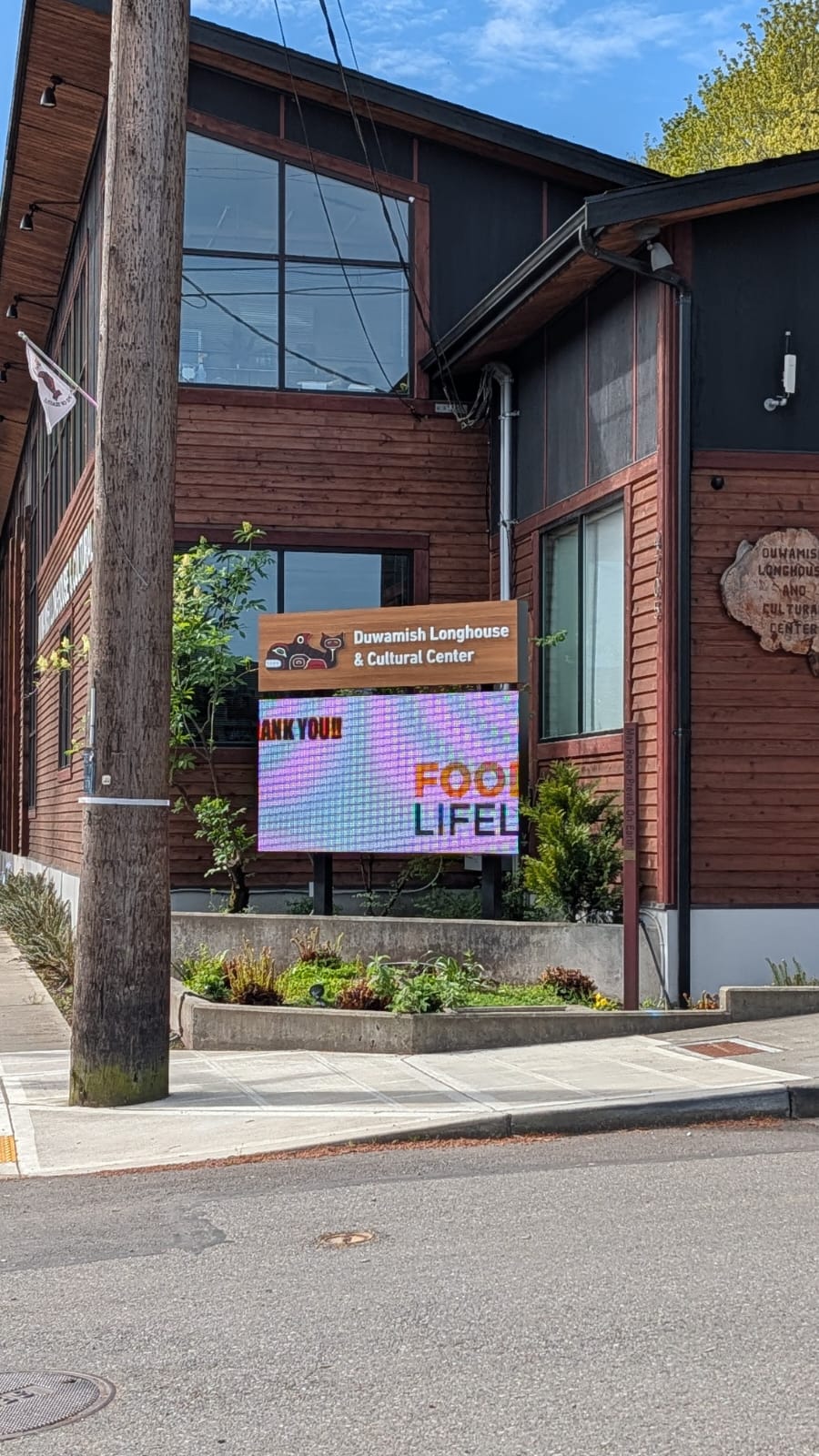
(Duwamish Longhouse & Cultural Center)
(Photo Courtesy: Aravind Ravi)
A visit to the cultural center not only helped to appreciate better the culture of the first people of Seattle – the descendants of Si ‘ahl (aka Chief Seattle) of this land, but also left this writer with greater humility and respect for the tribes and for those collaborating with them to safeguard the natural resources for the next generations.
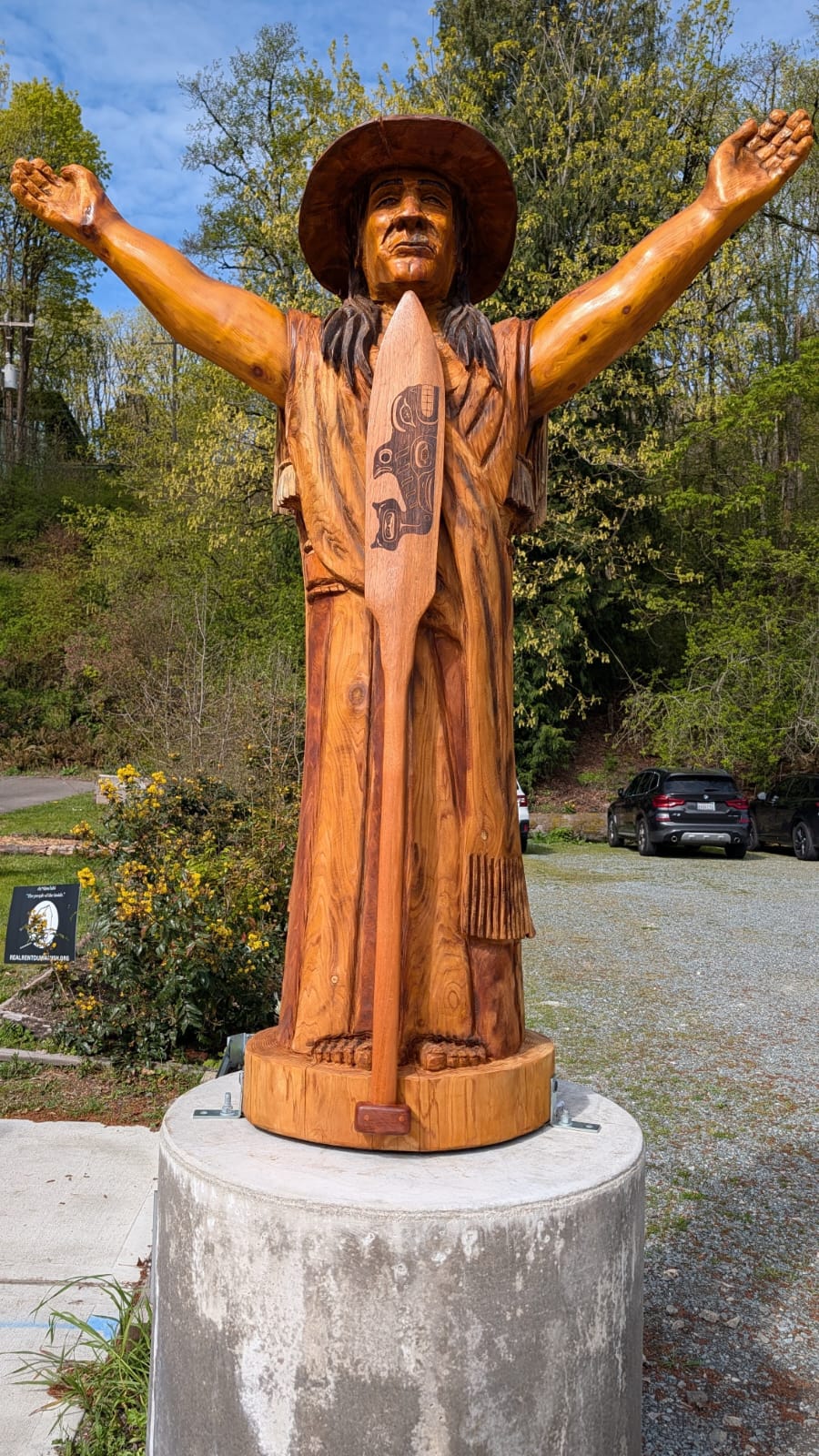
(Statue outside the Cultural Center)
(Photo Courtesy: Aravind Ravi)
I recall the quote shared by another family member earlier this morning:
"We do not inherit the Earth from our ancestors; we borrow it from our children."
Note: More details about this event can be viewed here.
25-Apr-2026
More by : Hema Ravi
Top | Environment | Home

|
Thank you dear Hema, for this intetesting and engaging article. Learnt something new. Hadn't ever heard before of Duwamish Water Shed! |