Oct 02, 2026
Oct 02, 2026
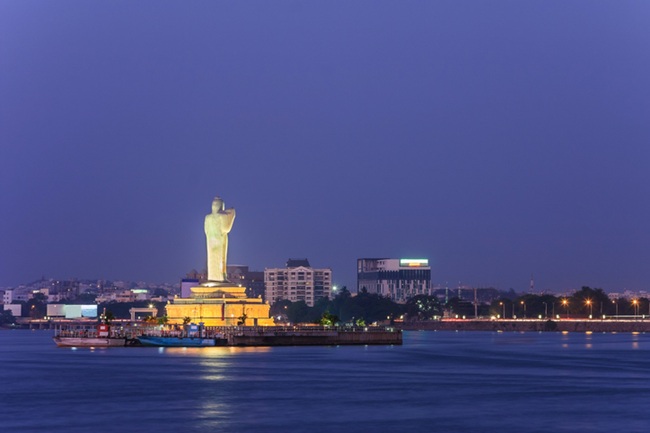
Orange sodium light turned Hussain Sagar’s surface into hammered copper. Traffic still growled along Tank Bund — autorickshaws, Swiggy bikes, RTC buses grinding through their last route — but at the southern parapet where the promenade curved away from the illuminated Buddha statue, the crowd had thinned to evening walkers and a man selling roasted corn from a pushcart, smoke curling up sweet and charred into warm air.
Sneha walked past him without registering the smell. Twenty one years old, wide hipped and heavy breasted in the way her PCOD had decided for her since fourteen, she wore a plain cotton salwar kameez — peacock blue, nothing special — that clung damply at the small of her back. Her round face, pretty in a way people rarely bothered telling her, was blank. Her phone buzzed in her side pocket — Amma. Nanna. Arjun. She silenced each call without breaking stride.
I am so tired of being someone else’s answer.
The parapet stood waist high, rough granite still warm from October sun. She placed both palms flat, felt the grit bite into skin, climbed, and jumped. No note. No last message. Just the enormous, annihilating relief of a decision finally made.
The splash reached Constable Kailasam thirty metres away before the visual did. He turned, caught a flash of blue fabric sinking under lamplight, blew his whistle hard enough to split the night, and vaulted the parapet. He hit the water chest first, surfaced gasping, locked one arm beneath her chin, and dragged her toward the stone steps while the promenade erupted — shouts, whistles, phone torches, the corn seller abandoning his cart to run.
~*~
Lake Police Station smelled of stale chai, petrol from the seized bikes, and the particular mustiness of government registers left too long in metal almirahs. Sneha sat on a wooden bench wrapped in a police issue blanket reeking of mothballs, wet hair dripping a slow puddle onto tile, eyes fixed on a crack in the floor.
Inspector Ishwar Reddy stood at the charge desk, rubbing his jaw. Thick moustache greying at the corners, broad shoulders straining a khaki shirt that had seen better years — a man who had processed enough student crises to distinguish theatre from genuine despair. Another one this month. God. He flipped open a fresh FIR form and hesitated.
Her parents arrived at quarter past ten. Madhusudan — late forties, still in the creased polo from his IT job in Gachibowli, steel rimmed glasses fogged from the night air — half ran through the entrance with Jayashri close behind, cotton saree hastily repinned, pallu crushed in one fist, gold mangalsutra swinging. They brought the smell of home with them — coconut oil, sandalwood agarbatti, and beneath it, faint but unmistakable, baby powder.
“Sneha!” Jayashri reached for her daughter. Sneha flinched as though touched by voltage. She was fine this morning. She was fine.
“Ishwar Reddy’s questions — harassment? ragging? breakup? exams? money? — met silence from the girl and defensive repetition from her father. “Our daughter isn’t like that,” Madhusudan said, jaw locked, repeating it like a mantra that might unmake lake water. Jayashri clutched Sneha’s phone. When the screen lit with Arjun, she killed the call and buried the device in her purse. Ishwar Reddy noted the name without comment.
Sub Inspector Supriya, summoned for a softer approach, extracted only deep, wrenching sobs that echoed off the station’s high ceiling and turned the constables at the far desk quiet.
“Get me Dr Bharati Devi, from Nampally CDEW,” Ishwar Reddy told the switchboard. “Tonight, not morning.”
She arrived at eleven fifteen — a woman in her early fifties, steel spectacles, grey streaked hair pulled back in a plain clip, a canvas satchel strung over one shoulder. She smelled faintly of neem soap. One look at the shrunken figure on the bench and she did not ask why she jumped.
This one isn’t heartbroken. Something structural has collapsed.
In the cramped counselling room — two plastic chairs, a tube light flickering in one corner — Bharati Devi began with college. “Which branch? CSE, EEE, or ECE?” Five minutes of harmless technical talk, a flimsy bridge of normalcy, before she leaned forward and said, quietly, “Tell me about home, Sneha.”
~*~
It came in fragments. Bharati Devi pulled each thread with the patience of someone untangling wet silk, and the story that surfaced had nothing to do with a boy, or exams, or money.
For eighteen years Sneha had been the centre of gravity in a three bedroom flat in Somajiguda. She described it with the particular ache of someone eulogising a living thing—late night ice cream runs with Nanna along Necklace Road, his Maruti’s windshield fogged with their breath; Amma braiding her hair before school, murmuring naa bangaram — my gold — while the pressure cooker shrieked in the kitchen; the two of them fussing over her PCOD diagnosis at sixteen as though managing her hormones were a joint family mission. Doctors had told Madhusudan and Jayashri not to expect more children. They never especially tried to prevent pregnancy — Bhagavantuni ishtam, Jayashri had always said, God’s will — because there seemed nothing to prevent.
Then, in Sneha’s first semester of engineering, God apparently changed His mind.
Jayashri, thirty nine, discovered she was pregnant. Four months after her missed period — she had assumed she had hit menopause — too late to do anything. The family was stunned, then ecstatic. The pregnancy became a miracle narrative among relatives, forwarded in WhatsApp groups with folded hands emojis and exclamation marks. When the twins arrived — Suhita and Suhas, seven pounds each, fair skinned and enormous eyed in the way that compelled every visitor to reach for superlatives — the flat rearranged itself around them like iron filings snapping toward a new magnet.
Sneha narrated the shift in small, precise details. Photo frames migrated: baby portraits claimed the hall wall; her school photographs moved to the bedroom shelf, then to a drawer. Her third semester results — top of the section — earned a glance from Madhusudan as he burped Suhas on his shoulder: “Good, good, Sneha. Did you see? He smiled today, real smile, not gas.” Her PCOD flare ups, the bloating that thickened her waist and swelled her cheeks until she flinched at mirrors, the sly “healthy girl” jokes from classmates — all absorbed into one parental refrain, “You’re grown up now, Sneha. You can handle it.”
She became Akka. Not as endearment but as assignment. Rocking cradles during exam revision. Babysitting weekends so her parents could run errands or attend functions. Fielding the twins’ colic at two in the morning because Amma was finally, blessedly asleep and Nanna had an early client call.
She told Bharati Devi twice, insistently, that she did not hate the twins. She loved the milky, powdery scent of their scalps, Suhita’s fist gripping her finger — no bigger than a walnut — Suhas’s gurgling belly laugh that could fill a room. She loved them. She just felt invisible beside them. Dethroned. Written into the margins of her own story to make room for characters the audience found more interesting.
There it is, Bharati thought, watching Sneha twist the blanket’s edge into a tight rope. The wound with a name.
~*~
Arjun entered the narrative like a footnote Sneha had been avoiding.
They met at a college tech fest — he was twenty four, alumni judge, already working at a multinational in Hitech City. Tall, lean, sharp jawed, an unremarkable face made entirely remarkable by the way he listened. He was drawn to her quick tongue, her knack for dismantling a bad UI design with two sentences and a raised eyebrow. Their courtship mapped itself onto Hyderabad’s evening geography — KBR Park’s dusty trails at dusk, pani puri near Charminar where the tamarind water could strip enamel, his Royal Enfield Classic 350 parked at Tank Bund where she leaned against his back with her arms loose around his waist and felt, briefly, like herself — not Akka, not the heavy girl with hormone problems, just Sneha, wanted.
She never told him about the twins. She mentioned “younger siblings” once, vaguely, and let the topic drown. She was afraid the truth would blur the image he held of her — an only daughter, self contained, worth choosing for herself alone. They kept the relationship secret. After B.Tech, they had decided. After she had something solid beneath her feet.
~*~
The wedding broke everything open.
A second cousin’s wedding in Jubilee Hills — five hundred guests, the mandapam draped in marigold, lilies, night queen, roses, and jasmine thick enough to taste, the nadaswaram competing with a DJ playing old Chiranjeevi hits at low volume. Behind the buffet, aunties debated gold prices; near the stage, children chased each other with balloons. On that same weekend, an uncle in Warangal collapsed with chest pain, and Madhusudan and Jayashri had no choice but to go — leaving the twins, two and a half years old and at peak adorable destruction, with Sneha.
“You’re their akka,” Jayashri said, adjusting her travel sari without looking up. “It’s just one evening.”
Sneha arrived at the function hall in the silk saree she had got for her half saree function nine years ago, ill fitting across her broad hips, hastily pleated, the twins’ diaper bag over one shoulder and a packet of ParleG in her purse. Suhita clung to her neck. Suhas toddled alongside, one fist gripping her pallu. She smelled of baby talcum and her own sweat and the jasmine someone had garlanded over the entrance arch.
The assumptions began within minutes.
“Ayyo, twins! Yours?” A pearl nosed great aunt, beaming. “So young and already blessed!”
“They’re my siblings. My parents — ”
“Second one planned or happy accident?” Laughter, already turning away.
It happened at the buffet, the mandapam, the ladies’ washroom queue. Young men who might once have offered polite attention gave her only the careful distance reserved for married women with toddlers on their hips. She overheard someone murmur behind a plate of pulao, “Paapam, so young, already a mother of two.”
Then she saw Arjun across the hall, in a pressed linen kurta, laughing with the groom’s college friends. His eyes found hers. His smile started and stalled. Those are — she has — what?
Because what he saw was Sneha in a dishevelled saree, one child balanced on her hip, the other tugging at her pleats, surrounded by the unmistakable choreography of young motherhood.
They found a quiet corner behind the floral arrangements, jasmine scent so dense it coated the tongue.
“They’re my brother and sister,” she said, too fast. “Unexpected. I never told you. I should’ve…"
He recovered. Touched her elbow, thumb circling the bone. “You’re getting good practice, wouldbe mother.” Light tone, but Sneha heard the strain beneath — thin as a hairline crack in porcelain.
A passing relative, biryani plate in hand, paused to squint at Suhas. “Your son’s a copy of you!” she told Sneha, then glanced at Arjun. “Husband? Handsome jodi!”
Arjun laughed. A half beat late.
He sees what they see, Sneha thought, the heat climbing her neck. Not a girlfriend. A mother. Used up. Already written off.
~*~
After the wedding, silence closed in.
Her parents asked about the function between anxious calls to the Warangal hospital. When she described the assumptions, Jayashri waved a hand. “Ayyo, that’s how people talk at weddings.”
Instagram, that night, delivered what remained — tagged photos captioned “Super Mom award goes to…” followed by a trophy emoji and a ‘face with tears of joy’ emoji. Arjun visible in nearby group shots. He had not messaged since the function.
The collapse was not dramatic. It was cumulative — the PCOD weight she could not shed, a bedroom wall of baby photographs where hers once hung, the echo of a stranger calling Suhas your son, Arjun’s ‘half second late’ laugh playing on loop behind her eyes. She was not a student, not a beloved only child, not a confident lover. She was a misread paragraph in someone else’s narrative, cast in a role she had never auditioned for, and the correction she kept offering — they’re my siblings, not my children — dissolved every time, like sugar in rain.
She left the flat at half past nine. Walked to Tank Bund. Climbed the parapet.
And the rest, Bharati Devi already knew.
~*~
Bharati Devi let the silence hold for a long minute after Sneha stopped speaking. The tube light buzzed in its corner. Beyond the door, a constable’s radio crackled and went quiet.
“You weren’t only sad,” Bharati Devi said. “You felt replaced. Misunderstood. And terrified that the man you love had started to see you the way those wedding guests did — already used up. Less desirable.”
Sneha’s face crumpled, but the grief had edges now, a shape it had lacked on the bench outside — and things with shapes could, eventually, be held.
~*~
Bharati Devi spoke to the parents separately, in the same small room. The questions landed like stones dropped into still water.
“When did you last spend a full day with Sneha? Just her. No twins.”
Silence.
“When she helps with the babies, do you thank her? Or just assume it’s her duty?”
Madhusudan’s knee bounced once against the chair leg. We gave her fees, food, safety. When did that stop being enough?
“Would you have accepted it, Jayashri garu? Being treated at twenty one as an unpaid babysitter for your parents’ younger children?”
Jayashri opened her mouth, closed it, and pressed her palms together in her lap as though the answer lived somewhere between her fingers and she could not reach it.
‘Ishwar Reddy, leaning in the doorway, stripped sentiment from the equation entirely. “Either we follow professional advice or we risk a second attempt. Gossip’s better than a funeral.”
They agreed. Reluctantly, tearfully, but they agreed.
~*~
The Nari Sadan sat on a back road near Secunderabad Junction — double?storey, lime?washed walls, the permanent smell of damp clothes and dal fry drifting from the common kitchen. Sneha shared a room with three women — one whose husband had fractured her forearm, one disowned for an intercaste marriage, one who had walked out of her life and could not quite explain why. Against their stories, her own felt small, almost indulgent.
“Pain isn’t a competition,” Bharati Devi told her, during one of their sessions in the shelter’s cramped office with its single window and a money plant curling along the sill. “You don’t need to be the most damaged person in the room to deserve a chair in it.”
Group discussions. Individual sessions. Bharati Devi was precise rather than gentle. On family, she told her, “You didn’t choose your parents. They didn’t choose twins after eighteen years. Life isn’t a menu, Sneha — it’s a thali. Everything arrives at once and you eat what you can.” When it came to her body, Bharati said, “PCOD is a condition, not a verdict. Your waistline doesn’t determine your worth, your fertility, or your right to be desired.” On the ground beneath all of it, her voice turned almost soft. “We arrive alone and leave alone. Attachments, while beautiful, are temporary. If you stake your worth entirely on someone else’s attention, you’ll feel half dead every time they look away.”
Three weeks in, she rang Arjun.
He picked up before the first ring finished. “Sneha? Oh God — where’ve you been? I’ve been losing my mind. I went to your flat and your parents wouldn’t — ”
She told him. The twins, the wedding, the lake, the women’s shelter.
“Why didn’t you tell me?” His voice cracked at the edges, raw and almost angry. “D’you really think that little of me?”
“I thought you’d see me differently.”
“Because your parents had more kids? I wasn’t disappointed at the wedding, Sneha. I was confused. I didn’t understand why you’d hidden something that enormous. That’s what actually hurt.”
He stayed on the line for a whole hour, Bharati noted from beyond the observation glass, pen tapping her notepad. That says more than any of his words.
She told Sneha later, “If he leaves because your parents had twins, he wasn’t worth the grief. If he stays, it’s his free choice. You aren’t defective because life surprised your family.”
~*~
Madhusudan and Jayashri attended their own sessions. Bharati Devi asked them to imagine Suhita at twenty one — sidelined for new grandchildren, told to manage alone because she was old enough. The thought landed heavily.
We did that, Madhusudan realised, unable to meet his wife’s eyes. We did exactly that.
Specific commitments replaced tears. Childcare divided fairly. Sneha’s time and space protected. Her relationship with Arjun acknowledged openly. “Part of her despair was uncertainty about her future,” Bharati Devi told them. “If you support something stable with someone she loves, that anchor heals more than a hundred apologies.”
The reunion took place at Bharati Devi’s office six weeks after the lake — neutral ground, afternoon sun through blinds, distant traffic on the flyover. Sneha spoke without being interrupted, perhaps for the first time in three years. She described the quiet sidelining — never cruelty, she emphasised, never cruelty — but the steady erasure that felt, to the person being erased, indistinguishable from vanishing.
“I love Suhi and Suhas,” she said. “But the night of that wedding, I felt like my life had been rewritten without anyone asking me.”
Jayashri wept into the heel of her hand. Madhusudan held both his wife’s wrist and his daughter’s gaze, and for once did not reach for easy words. He simply nodded — a small, heavy motion — and Sneha felt it settle somewhere behind her ribs like a key finally turning.
Madhusudan met Arjun’s parents the following month. The conversation was careful, unhurried, and nobody pretended the past carried no weight.
~*~
January. A Sunday afternoon. Cool and breezy. Tank Bund again, but the light was different — winter gold instead of October sodium, the lake crowded with tourist boats, the walkway thick with families and vendors and selfie sticks.
Sneha walked beside Arjun. She wore jeans and a kurti bought with her own stipend from the Madhapur internship she had landed the previous month, hair loose and shifting in the breeze that carried the familiar lake smell of algae and diesel. His hand found hers, warm and unselfconscious.
“You’ll crack TCS in your sleep,” he said, running through her placement schedule.
“Don’t jinx it.”
“Fine. You’ll bomb spectacularly and I’ll have to fund you forever. That better?”
She drove an elbow into his ribs. He grinned.
They passed the southern parapet and Sneha slowed — not in any way he noticed, but the way a person pauses at a threshold once crossed in another life. Waist high granite. Dark water below. She remembered the cold, the silence, Constable Kailasam’s arm locking under her chin.
Thank you, she thought — to Constable Kailasam, to Inspector Ishwar Reddy and his blunt mercy, to Dr Bharati Devi’s unromantic precision, to the women at the Nari Sadan who had taught her that surviving did not require shrinking.
Her phone buzzed. Video call. She answered and the screen filled with two small shrieking faces — Suhi and Suhas, three and a half now, shouting “Akka! Akka!” while brandishing a crayon drawing. The picture showed their family — Nanna tall and stick figured, Amma a triangle in a saree, and in the centre, drawn bigger than both parents in bright orange with a wide grin, Sneha — holding the twins’ hands.
“They made it themselves,” Jayashri’s voice said from behind the camera. “Wouldn’t let me help.”
Sneha pressed the phone against her chest for a moment, then held it out so Arjun could see.
“Excellent likeness. Very faithful proportions.”
She laughed — the real kind, the sort that shook her shoulders and loosened something in her throat — and pocketed the phone. The breeze off Hussain Sagar pushed hair across her face as she took Arjun’s arm and kept walking, past the parapet, past the corn seller already lighting his coals for evening, into the long gold spill of a Sunday she had almost never lived to see.
Image (c) istock.com
16-May-2026
More by : Prof. Rajeshwar Mittapalli

|
Sister & Mother is wonderful unique story of an adolescent girl who is herself marriageable and at the same time her mother also pregnant. This information spread like wild fire in forests. This psychological situation of an adult girl is explained by Dr. R.Matapali in unique manner. In my openion this story is narrated by the author like a picture. The talks of the town, openions of masses, social talks and difficulties of parents well wishers police and Psychologists are all very well written |
|
|
As someone who teaches fiction semester after semester, I’m really impressed by how clinically yet compassionately Mittapalli charts Sneha’s psyche – from dethroned only child to overburdened ‘Akka’ to would be suicide. PCOD, body image, sibling displacement, fear of romantic rejection are handled with real psychoanalytic finesse. You can sense the scholar behind it, yet it never feels like a dry case study. Dr. Yakaiah Kathy University of Hyderabad |
|
|
Reading this story felt like someone had finally put words to that quiet, horrible feeling of being edged out of your own life. Sneha’s not “overreacting” – she’s just swallowed one sacrifice too many. I loved that the story didn’t romanticise family duty or therapy, yet still gave her a way back. As a woman, the mix of body shame, caretaking and being misread hit hard – the ending felt properly earned, not tidy. |
