Oct 24, 2026
Oct 24, 2026
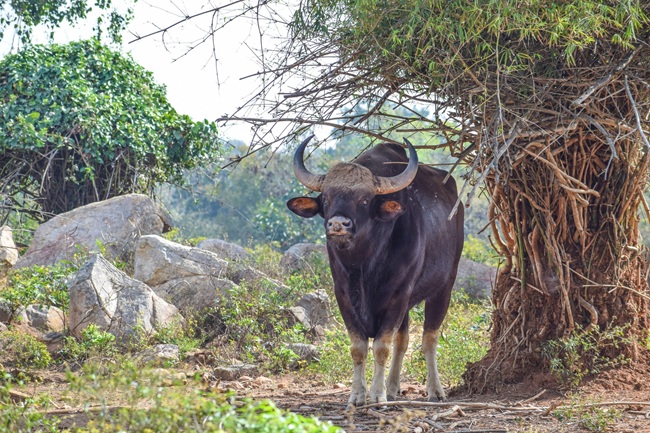
My name is Basava. I am a bullock, harnessed to ploughs and carts, to puddling for paddy in knee-deep slush, levelling the land for ploughing, threshing grain endlessly circling over spread-out stalks—tasks that begin before dawn and cease with the dark. But once, not so long ago, I was simply Basava the calf, drunk on colostrum and sunlight, full of mischief and dreams I did not yet know the names of.
This is my story.
My master’s story too.
I an animal, he a man—beasts of burden both.
~*~
I was born on a cool Margashira morning in Pullur village outside Siddipet, when mist still clung to the paddy stubble and the air tasted of damp red earth and fresh gobar. My mother, Gopi, bent over me the instant I slid wet and trembling into this world. She licked me clean with long, rough passes of her tongue, working with a desperate tenderness, as though she meant to scrub away the thin membrane between life and death by sheer insistence. She was fiercely possessive from the first breath I drew. Any creature that wandered too close, man or mongrel, met the warning crack of her horns and a look from those gentle brown eyes that was not gentle at all.
Her udder hung heavy and veined with warmth, its tips swollen tight, milk beading at the ends. All of it meant for me. But between my hunger and her body stood another power entirely.
Our master, Keshav patel, arrived each dawn with a steel pail and a grip practised over decades. He crouched beneath her, stripped the milk points in quick rhythmic pulls, and streams of white frothed against metal. I would stand close, nostrils flaring at the thick, sweet smell of what was mine, watching it fill a vessel that would be carried away to the house, to the tea stall in the village, to anyone but me. Only after Keshav rose and walked off did my mother swing her flank toward me and let me suckle what remained—her eyes soft with an apology she had no language for.
“This is how it is, beta,” she said quietly. “This is how it’s always been.”
I did not understand. I understood only the ache in my belly and the maddening knowledge that something which ought to have been entirely mine was always measured, portioned, and taken.
~*~
For all that theft of milk, my first year was the happiest I have ever known.
I roamed the yard at will. I galloped clumsily behind my mother through Keshav’s cotton fields on the outskirts of Siddipet, chasing blue-winged jays I could never catch, kicking my hind legs skyward for the pure animal joy of feeling muscle obey nerve. The world seemed endless and astonishing. The snap of dry jowar stalks underfoot. The cool black mud of the paddies squelching between my hooves after rain. Sparrows quarrelling on the neem tree at dusk. The particular burnt-sugar smell of jaggery boiling somewhere beyond the cowshed wall.
At the end of that golden year, my sister Brinda arrived.
Mother treated her no differently. She licked the birth-slick from Brinda’s coat with the same rough devotion she had shown me, nudged her upright when her legs buckled, let her nuzzle for milk with identical patience. There were no special favours for the heifer, no extra harshness for the bull calf. To mother Gopi, we were simply her children.
I think of that sometimes. In the animal world there exists a rough, honest sort of equality that humans write speeches about but rarely practise. A calf is a calf to its mother. Male or female, it does not matter in those first tender months, when the world is nothing but warmth and grass and the sound of your mother chewing cud beside you in the dark.
If only that innocence could have lasted!
~*~
Around the time I turned two, something ignited in my blood.
I had no word for it then. Now I do. It was kama—desire, raw and electric, a restlessness that colonised every muscle and nerve. Standing still became a kind of torture. My nostrils widened at scents I had never noticed before, pheromonal trails that drifted across Keshav’s fields like invisible rivers of fire. When a beautiful heifer came into heat somewhere upwind, the smell hit me low in the belly, sharp and musky and absolutely overpowering. I stirred with a deep, urgent hunger—my breathing thickened, and I broke into wild, directionless sprints, crashing through fences, snorting, bellowing, pawing the red earth until dust rose around me like smoke.
I chased young cows across three neighbouring farms. I pleasure one behind old Siddaiah’s paddy-straw stack, clumsy and urgent, my whole body shuddering with an instinct older than thought. Complaints arrived at Keshav’s door before I did.
“Your bull’s been at our heifers again!”
“He’s smashed the barbed wire, anna. Who’ll pay for it?”
“He’ll ruin the breeding schedule. Do something, or we will.”
Keshav already had plans for me. Plans that had nothing to do with what my body so desperately wanted.
One morning he slipped a rope around my neck and led me down the Siddipet-Medak road for nearly an hour. I obeyed out of sheer force of habit.
The red laterite path narrowed. We turned off into a dusty compound where a man with scarred forearms and flat, practised eyes sat on a cement bench, smoking a beedi. The air smelt of dung and old blood.
He was no veterinarian. He was a village quack, a local peddakapu whose only qualification was that he had done this many times before and most of the animals had survived.
That day he held my fate in his cracked, tobacco-stained hands.
~*~
They threw me. Four men hauled the ropes until my legs buckled and I crashed onto my side, the impact punching the air from my lungs. A fifth wound a rag tight around my muzzle so I could not even bellow. I thrashed, but their weight pinned me, knees grinding into my neck and haunches, the smell of their sweat and beedi smoke filling my flaring nostrils.
The quack slid a flat iron slab beneath my scrotum. I felt the cold metal against that tender, heavy sac, and a terror I had never known before flooded my chest.
Then the hammer came down.
Not a blade. Not a surgeon’s careful incision. A blunt iron hammer, striking the nerves and vessels through the skin, crushing what lay between flesh and anvil. The first blow sent a white-hot shockwave ripping upward through my spine and into my skull. The second was worse. I tried to scream, but the gag held, and all that escaped was a strangled, wet gurgle, thick with saliva and helplessness.
He struck again. And again.
Time dissolved. The world shrank to the rhythmic, merciless thud of metal on metal and the pulverising agony in between. I ceased to be Basava. I became only pain.
But that was not all. There was more pain to come. The men held my neck in a wooden frame so I could not move my head. Then the quack pushed a sharp iron rod through the soft wall between my nostrils, twisting it several times to widen the hole. Hot blood poured down my nose, a thin thread running over my lip. His assistant pulled a smooth rope—the mukku thadu—through the hole and tied it behind my horns.
It was the leash by which I would be led for the rest of my life. One tug and the pain would bloom fresh in that tender, never-healing hole, and I would follow. I would always follow.
When it was over I lay on my side in the red dust, legs twitching, breath arriving in shallow, ragged hitches. Over the following days my testes swelled grotesquely, then shrivelled, darkened, and all but vanished, like fruit left to rot on the vine.
From a bull I had been unmade into a bullock. From a creature of desire, into a tool.
The desire drained out of me slowly, the way floodwater recedes from a field, leaving behind only cracked mud and silence. Cows in heat drifted past and I smelled them, yes, but the scent no longer ignited anything. They were just animals. Just bodies moving through grass. The ache between my hind legs was not longing anymore. It was only a phantom, the ghost of something amputated.
~*~
Keshav’s logic was brutally simple. A bull chases. A bull fights. A bull breaks fences, gores rivals, wastes energy on rut and fury. A bullock, emptied of that storm, can be yoked and driven until his legs give out. Keshav did not need a lover bull. He needed a machine.
And so, with a crude operation in a dusty compound, he severed me from fatherhood, from lineage, from the possibility of ever passing on my genes, a single thread of what I was. I learned later that barely one or two bulls in a hundred are ever chosen to breed. The rest of us are gelded and put to work, and when we are old we are sent to the kabela—slaughterhouse. The slaughterhouse smells of rust and fear. I have never been inside one, but I have smelled it on the wind, carried from the Irkode abattoir when the breeze blows south.
I could not blame Keshav for what he did to me. He was a short, wiry man with sunken cheeks, a jaw like the blade of a ploughshare, and hands thickened into something closer to hooves than fingers from twenty years behind the plough. There was a sadness about him, as if he carried a secret burden heavier than any load his beasts ever pulled.
~*~
My sister Brinda walked an entirely different road.
No hammer awaited her. No iron slab. No gag. She grew into a sleek, glossy-coated heifer with wide hips and a calm, contented gaze. While I was harnessed to the plough before sunrise, shoulders already raw from yesterday’s yoke, Brinda grazed freely within the safe perimeter of Keshav’s land, wandering between the neem shade and the water trough at her own unhurried pace.
When she came into season, her body announced it boldly: the slick discharge, the restless pacing, the tell-tale way she stood braced and willing. Keshav would select a bull from the neighbouring farm, a massive Ongole specimen with a hump like a hill, and Brinda would be covered in the open field, the bull’s weight driving her hooves into the soft earth while she lowed, deep and guttural, a sound that carried across the paddies.
She was fed the choicest fodder. Hybrid Napier grass, thick and green. Oil cakes fragrant with groundnut. Grain mash laced with minerals. Each pregnancy brought her garlands and turmeric on her forehead, the master’s wife, Lakshmi, murmuring prayers, the children stroking her distended belly.
Her work was elemental. Eat. Rest. Mate. Calve. Give milk. Repeat.
Life was soft for Brinda. Life was the plough and the stick for me.
~*~
One evening, after a day so punishing that my legs shook beneath me and I passed water tinged with blood, I went to my mother, Gopi. She was old by then, spine curved, eyes milky with cataract, but she still chewed her cud with a calm that felt almost holy. The shed smelt of warm dung and dry straw and the faintly sour sweetness of her ageing body. She did not have any more calves after my sister, but Keshav took good care of her and fed her well.
“Amma,” I said, “why is it that I’m worked half to death while Brinda lives like a princess? I pull the plough. I drag the cart. I slog through paddy mud, haul stone for walls, and drag grain carts till my legs shake. I’m lashed, I’m starved when I refuse. But Brinda, she stays home, eats the best fodder, does no labour, and even gets to enjoy herself with the bulls. Why this difference?”
My mother chewed slowly, then raised those clouded eyes to mine.
“Basava,” she said, “this is the dharma our masters have written for us. Among cattle the males are meant to work hardest. Pull, drag, lift, break the soil, haul the loads. The females, cows like me and your sister, they’re valued for different things. Milk. Calves. The gentle centre of the household’s affection. We live longer too, because we aren’t driven to the edge of collapse the way you bullocks are.” She swallowed. “The codes say it’s a male’s duty to provide and protect and keep the females comfortable. If the males can’t do that, they say it isn’t proper bovinity. The way humans might say it isn’t proper mardangi—masculinity.”
Her words burned. But they carried a sad, immovable truth, and I felt it settle into my bones the way monsoon damp settles into old walls.
~*~
Years passed. I pulled Keshav’s plough through the black-cotton soil outside the village until foamy sweat ran down my flanks in streams. I hauled cartloads of cotton bales along the road to the agriculture market, my shoulder muscles knotting into ropes of chronic pain. I slogged through knee-deep paddy mud, levelled field after field, and trudged back and forth with grain carts until my hooves throbbed.
When I slowed, the bamboo stick came down across my spine with a crack that echoed off the compound walls. When I balked, the pointed mulukola—prod—bit into my flank, and I felt blood bead and trickle warm down my hide, drawing flies.
When I refused outright, Keshav simply withheld food. One day without fodder. Two. By the third morning I would walk to the yoke on my own, head low, because hunger is a master more persuasive than any goad.
I began to wonder if this was all my life would ever amount to. Work. Pain. Sleep. Work again. A closed loop, tightening with every season, until the day my legs could no longer hold.
~*~
In the middle of that grinding darkness I found one consolation. Vrishab.
He was younger than me, a compact Hallikar-cross bullock with a dark muzzle and intelligent, watchful eyes. Keshav had bought him at the Nirmal cattle fair and yoked him beside me at the plough. From the first day our shoulders pressed together under the wooden beam, our breaths falling into shared rhythm, and when one of us stumbled the other instinctively slowed, redistributing the weight without a word.
Misery shared is misery halved. In our common misery we grew closer than brothers. On rest nights I would stretch my neck across and lick the raw patches on Vrishab’s nape where the yoke had rubbed the hair away, grooming him the way my mother once groomed me, tasting salt and dust and the faint iron tang of dried blood. He would press his muzzle against my jaw, a silent acknowledgement that in this brutal world we at least had each other.
Vrishab had served four masters before Keshav. He had pulled timber in the Adilabad forests, hauled sugarcane near Nizamabad, and once been hired out to drag a ceremonial wedding cart through the narrow gullies of the old city in Hyderabad, past Charminar, where the air was thick with attar and exhaust fumes and the sweet rot of overripe bananas. He had seen more of Telangana than most men—certainly more than most bullocks.
I called him, in the privacy of my own mind, Vrishab the Wise.
~*~
Then my mother died.
She weakened over several weeks, her legs trembling, her appetite vanishing. One grey morning she lay down in the shed and did not rise. Her breath came in thin, rattling whispers. Her eyes looked past me, past the walls, past everything, as though she were already studying a field none of us could see.
By afternoon she was gone.
Keshav treated her passing with surprising reverence. He called the priest—the village folk came on their own. The priest lit agarbatti and camphor and chanted mantras, and they buried her beneath the old tamarind tree at the edge of his eastern field. Flowers. Turmeric. A small stone slab set at her head, her name scratched into it with a nail.
I watched from across the fence, a heaviness in my chest that had no bottom.
A question crept into me like a shadow through a crack in the wall. When I grow old and can’t pull anymore, will he honour me the same way? Will there be incense and prayers and a grave beneath a tree?
I doubted it. But doubt is a restless animal, so that night I carried the question to Vrishab.
~*~
The sky over Siddipet was black and salted with stars. The shed smelt of old straw and the warm, grassy breath of resting cattle.
“Vrishab,” I said, “when I’m old and useless, do you think Keshav will honour me the way he honoured my mother? Rituals, burial, all of it?”
Vrishab chewed his cud for a long time before answering, his jaw working in slow, meditative circles.
“Basava,” he said gently, “don’t expect that. Cows like your amma, they’re sometimes treated as sacred, especially if they’ve given plenty of milk and calves. But bullocks like you and me, we’re valued only while we can work.” He blinked slowly. “At my second master’s farm near Kamareddy I saw what happened to an old bullock. His legs had gone weak. His pace had slowed to nothing. One morning the master just led him onto a trolley and sold him to Al Kabeer kabela outside Hyderabad. There weren’t any rituals, any tears. Just a few currency notes changing hands, and the old fellow was gone.”
He turned his dark eyes toward me, full of a quiet, unbearable understanding.
“We male beasts of burden should expect the same, Basava. Not honour. Not a grave in the field. Just sale, slaughter, and silence.”
The words landed on me like cold monsoon rain on cracked earth, soaking in fast, reaching places I had no defences for.
~*~
For days I turned wild fantasies over in my mind. Run. Snap the tether. Bolt through the cotton and just keep running. But where? Beyond Keshav’s land lay other men’s land. Beyond that, more villages, more masters, more ropes and yokes. A masterless bullock wandering the Medak highway is not a free soul. He is a traffic hazard, a rupee sign on four legs, something to be caught, sold, or struck by a lorry at dawn.
I imagined the recapture. The beating. The starvation. The yoke again, heavier than before because now it would carry the extra weight of failed rebellion.
Running would solve nothing.
~*~
It was Vrishab, as always, who pulled me back from the brink.
“Basava,” he said one evening as we rested beneath a sky bruised purple and orange by the setting sun, the air carrying the smell of woodsmoke and roti from Keshav’s kitchen, “do you know that human males aren’t so different from us?”
I turned my head, curious despite my exhaustion.
“Look at Keshav,” Vrishab continued, his voice low and almost philosophical. “He works hard. Harder than us, sometimes, in his own way. He’s in debt to the moneylender. The borewell’s gone dry. Cotton prices have crashed again. He’s got to feed his wife, his parents, his three children, pay for the eldest girl’s wedding. He doesn’t sleep properly. I’ve watched him pacing the veranda at two in the morning, muttering numbers to himself.”
Vrishab shifted his weight, the straw crackling beneath him.
“You and I pull the plough, Basava. He pulls the weight of his entire household. We’re valued for the loads we haul. He’s valued for the money he earns, the walls he builds, the fields he keeps producing. The moment he can’t earn, can’t provide, can’t carry that weight anymore, what do you think happens?” Vrishab flicked an ear. “They don’t beat him with a stick, no. But they write him off all the same. Quietly. In the corners of the heart where people hide the truths they won’t say aloud.”
I thought of Keshav’s father, old Narsing, once called Narsing patel, now just Narsi tata—an old man with a spine curved like a sickle blade, left to sit all day on the veranda edge in the same stained dhoti. No one consulted him. The grandchildren ran past as though he were a post, and Lakshmi set his food beside him the way she set water in our troughs—without greeting, without a glance—a man reduced to furniture in his own house.
“Our bodies are tools,” Vrishab said. “So are theirs. That’s why so many human males work themselves into early graves. They believe they’ve got to keep producing, keep giving, or they’ll lose everything. Their place, their respect, their very name.” He flicked his tail against a persistent fly. “If human males themselves are treated like beasts of burden, Basava, then we bullocks shouldn’t expect to be treated any better.”
~*~
Vrishab’s words were painful. They were also the most illuminating thing I had ever heard.
I had always imagined a vast, uncrossable gulf between Keshav and me. He, the human. I, the beast. He, the owner of the stick. I, the back it fell upon. But Vrishab had sketched a different picture, and once I saw it I could not unsee it.
Yes, Keshav held the goad and I felt its point. Yes, he decided my fate and I had no voice in the matter. But he too was yoked, harnessed to expectations of mardangi—of provision, of protection, of parental investment—driven forward by a society that measured his worth the same way it measured mine, in what he gave, not in what he simply was.
He drove me like a beast of burden. His world drove him the same way.
From that evening on, whenever my shoulders burned beneath the plough-beam or my split hooves throbbed on the kutcha village roads, I would lift my head and look at Keshav walking beside me, his own face drawn and grey with exhaustion, his own back bent under debts and duties he could not put down, and a strange, aching recognition would pass between us, unspoken, impossible to articulate, but as real as the red dust beneath our feet.
You and I. We both pull. We both carry. We are both valued for what we give, never for what we are.
Two beasts of burden. One with horns, one without. Yoked to the same merciless plough, turning the same hard earth, beneath the same indifferent sky.
~*~
A Note from the Author
“Of Beast and Man” enacts Midgley’s claim, in her book Beast and Man: The Roots of Human Nature (1978), that humans are “animals among animals,” but gives it a sociological and gendered twist. Basava and Keshav are paralleled as male bodies harnessed to labour, their worth measured by productivity, not intrinsic being. The story links animal castration and draught work with human mardangi, and shows how masculinity is a social construct built on endless provision and endurance. Family obligation, debt, and agrarian precarity yoke man and beast alike, suggesting that patriarchy and tradition discipline male humans much as humans discipline draught animals, within one shared system of burdens.
Image (c) istock.com
23-May-2026
More by : Prof. Rajeshwar Mittapalli

|
Basavan the male calf born at farmer's house, its description of birth is wonderfully explained by author. The life is tough of margashira born ox/farmer, is in India!! its popular saying in entire indian panensula. The tough life of Indian peagent as well as the Basavan and his youthfulness is crushed by the owner to convert him in a working machine till death. The youthfulness Basavan never enjoyed !!! In my openion the life of Indian peagent is too hard to enjoy because farming is too tough. |
|
|
From Bull to Bullock : Erosion of humanity. Really touchy Prof Mittapalli. You deserve a big applause for true depiction of animal suffering and emotions !! |
|
|
Of Beast and Man” stages gender as a hierarchy of different but unequal vulnerabilities. Male bodies—Basava, Vrishab, Keshav—are harnessed to hard labour, their worth tied to productivity; once they weaken, they become disposable. Female bodies—Gopi, Brinda, Lakshmi—are spared the plough but confined to reproduction, nurture, and symbolic purity. The story shows patriarchy rewarding neither gender with full dignity, only differently managed forms of control. Yakaiah kathy University of Hyderabad |
|
|
The story reflects the hidden human nature. Congratulations |
|
|
The love of mother is same in all the creation. Through your writing you narrated beautiful verse, sir. I'm very much privileged to receive and read such a beautiful narration, sir. Thank you sir |
|
|
Reading this story, I’m struck by how male labour keeps civilization going yet rarely gets real credit, and how male bodies are treated as expendable. Basava is literally turned from a desiring bull into a mute machine. Keshav, though human, is just as tied down by debt, duty, and mardangi. Both matter only while they’re useful, then get ignored or cast aside. By pairing man and bullock, the story shows how males quietly bear the heaviest burdens. |
|
|
I truly admire “Of Beast and Man.” It powerfully depicts rural Telangana before economic liberalisation, showing how peasants and animals alike were yoked to the burdens of debt and tradition. It reminds us to respect humans and animals not merely for their productivity, but for their selfless lives and intrinsic being. Congratulations on this profound work. Professor Bala Ramulu Chinnala, CESS, Hyderabad |
