Sep 20, 2026
Sep 20, 2026
by B.S. Ramulu
Contemporary Challenges and Solutions
Introduction
Women’s empowerment is not merely a foundational principle for societal progress—it is a fundamental imperative for the protection of human rights. No society can claim holistic development if half its population—women—are denied equal opportunity and dignity. Only when women can make autonomous decisions across economic, social, political, literary, and cultural spheres can a nation advance with genuine pride.
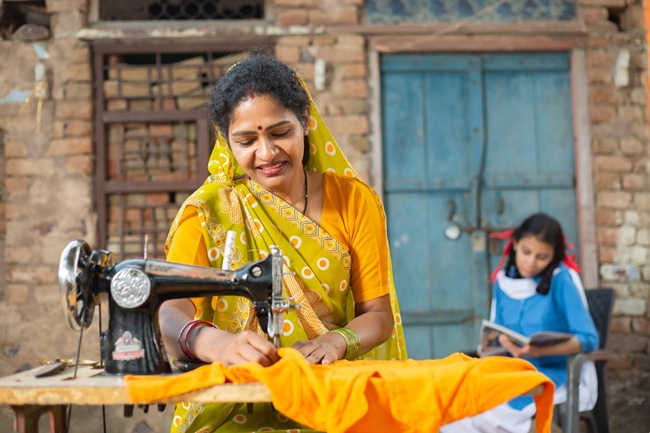
Over the past decades, countless debates and conferences have addressed women’s consciousness, yet substantive change at the grassroots remains unfinished. True empowerment cannot be achieved through legislation and reservations alone. It demands a revolutionary shift in patriarchal mindsets, in attitudes toward love and marriage, child-rearing, domestic labor, unpaid care work, and the very structure of the family system. In this context, there is an urgent need to critically examine the challenges women face in today’s modern era and to articulate actionable solutions.
Gender Equality – Transforming the Family System
The condition of women in India remains distressing. Due to poverty, they are denied even basic human rights. Caste discrimination, patriarchal condescension, sexual discrimination, and everyday humiliation continue to oppress women. From childhood, girls are conditioned to excel in discipline and time management. Boys, too, must be taught all life skills on par with girls from an early age. Men must be seen as equals to women. Since mothers are the primary caregivers, the maternal gaze itself must change. Sons must be raised the same way as daughters. Only then will structural inequalities disappear.
The birth of a girl child is still met with parental disappointment. This early devaluation translates into a lifelong negligence toward a girl’s upbringing. Boys are allowed to grow with freedom, exempt from household chores and cooking. Girls, by contrast, are burdened with all domestic work. Even in nutrition, women are served leftovers after everyone else has eaten—stale rice and vegetables become women’s share, while fresh, hot meals are reserved for men. The practice of sending girls to government schools while boys attend private schools must end.
Equal Partnership in Household Management:
Men must view child-rearing, cooking, and domestic labor as their equal responsibility and share half the burden with their spouses. When the home and family belong to both partners, the labor that sustains them cannot remain women’s exclusive domain. Only when men participate equally in household management will women gain the time and mental well-being necessary to advance in other spheres. “Menial” tasks, housework, cold rice, cold curries—all must be assigned and served equally to boys and girls. No form of labor should be stigmatized.
Educational Revolution and Digital Consciousness
Boys are enrolled in private English-medium schools with fees paid, while girls are sent to Telugu-medium government schools. Their education is often terminated at the local village level; parents refuse to send them to the neighboring towns. Dismissed with the notion that “a daughter is meant for her in-laws’ home,” girls are systematically neglected. They are pulled out of school to work as wage laborers or to roll beedis. If they cry, they are told, “Study while you roll beedis.” Deprived of time for play, friendships, and learning, they fall behind. Boys, meanwhile, continue their education and can refuse work with a simple “I won’t do it.” Girls have no such exit; they cannot storm out or run away to someone else’s home.
Language is taught by the mother; hence we call it the mother tongue. In families that have fully adopted the “one or two children” norm of family planning, acceptance of the girl child is rising. Among middle-class households, girls are now being educated on par with boys. For instance, in Karimnagar town, a women’s degree college that once saw enrollment drop to 150 students and faced closure now thrives with 4,000 students in well-equipped buildings.
In today’s smartphone era, formal schooling alone is insufficient. Rural women must receive targeted training in online banking, applying for government schemes, and managing digital wallets (UPI). This reduces financial dependence on men. Equally, girls must not be confined to traditional disciplines; they should be actively encouraged toward Science, Technology, Engineering, Mathematics (STEM), and emerging fields like Artificial Intelligence (AI). Only then will women secure an equitable share in the jobs of the future.
Financial Independence – Delayed Marriages: Emerging Social Challenges
In the modern era, the number of women with independent incomes and high-paying jobs has risen significantly. While this is a remarkable development, it is also generating new tensions within the institution of marriage and broader social relationships. Economically stable women are increasingly postponing marriage until after thirty or expressing disinterest in marriage altogether. They are choosing love, friendship, cohabitation, live-in relationships, or solitary living without formal wedlock. Globally, marriage is perceived as a burden, and childbearing as an even heavier one.
Governments and NGOs must implement this collectively as a cultural, Vedic, environmental, psychological, physical, and health revolution. If every individual practices this _Pancha Kosha Shuddhi_ yoga–meditation training for 15 days each year, major problems will vanish on their own. Implementation is feasible through Gram Panchayats and municipal local bodies.
Ground-Level Realities: Challenges and Solutions for Rural and Migrant Women
The condition of women in Palamuru district is dire. Until recently, 1.4 million people were migrating to other regions. Women bear the double burden of strenuous physical labor plus cooking and child-rearing, while children’s education is disrupted. People from Bihar, Odisha, and Chhattisgarh continue to migrate and work in the construction sector. The education of their children and the condition of their women are precarious—there is no certainty of how long or where they will stay. They face countless challenges related to climate, shelter, and healthcare. The policy allowing rice to be collected anywhere with a ration card has provided some relief.
Women walk long distances barefoot for drinking water. Tribal women face even greater hardships. Healthcare and education remain inaccessible to them, and infant mortality is high.
On another front, modern women balancing jobs and homes are experiencing severe mental stress. It must become the minimum responsibility of governments and employers to provide women-friendly workplaces, day-care centers for children (Care Economy), and free mental health counseling services. To overcome these ground-level problems, the following measures must be implemented without fail:
A Woman’s Absolute Right Over Her Body
The physical and mental capacity to carry a new life in the womb and bring it into the world belongs exclusively to women. Whether to conceive or not is entirely her choice. The Supreme Court of India has clarified that women’s reproductive rights fall within the ambit of Article 21 of the Constitution—the right to life and personal liberty. Only a woman has full authority to decide about her body and her future.
Under the Medical Termination of Pregnancy (MTP) Amendment Act, 2021, every woman—married or unmarried—has the legal right to safely terminate a pregnancy up to 24 weeks. The consent of a husband or family members is not required for this decision.
The uterus is the most vital and distinctive organ in a woman’s body. It is not limited to reproduction and childbearing. It is central to a woman’s overall physical equilibrium, hormonal regulation, bone strength, and mental health. Unfortunately, in today’s commercialized medical system, the uterus has been turned into a profit-making commodity. Unnecessary cesarean sections and unjustified hysterectomies are severely damaging women’s health.
Childbirth was once a natural process. Cesarean surgery was performed only in emergencies where the life of the mother or child was at grave risk—it was a life-saving procedure. Today, corporate hospitals push C-sections for profit, or due to obsession with auspicious timings, or because women cannot tolerate brief labor pains, sidelining natural deliveries.
The uterus regulates the production of crucial hormones like estrogen and progesterone. It acts as an anchor stabilizing the kidneys, intestines, and pelvic organs. Removing the uterus (hysterectomy) for minor issues brings women to devastating consequences:
Premature Menopause: Hormone production stops regardless of age, bringing old age prematurely. Bone Weakness: Hormonal deficiency leads to osteoporosis, resulting in lifelong knee and joint pain. Heart Disease and Mental Disorders: Increased risk of heart disease, along with severe depression, irritability, inability to regulate emotions, and aversion to sexual life.
In erstwhile united Andhra Pradesh, 3 million hysterectomies were performed—mostly for money. This stands as evidence of how inhumanely doctors are treating women’s health.
Modern Social Crises: The Hardships of Single Women
The greatest invisible crisis confronting women in contemporary society is loneliness and betrayal of trust. Women are experiencing severe mental anguish due to being deceived in the name of love or facing betrayal and breakups after live-in relationships or marriage. When neither the natal family nor the in-laws extend support, a woman becomes utterly isolated. Society views her as a “burden” or treats her with contempt.
On another front, due to rising alcohol addiction among men, countless women are widowed at a young age. In some families, husbands incur reckless debts and die by suicide, unable to repay them. Before the grief of a husband’s death subsides, creditors descend on the home, subjecting the wife and children to a living hell. Many women do not remarry—either from distrust of society or fear that a second husband may not care for their children properly. They sacrifice their lives for their children. Raising children as a single mother is like walking on a sword’s edge.
Legal Aid: “Women’s Legal Cells” must be established in every district to provide free legal assistance to women who have been deceived or separated.
Protection from Husband’s Debts: Stringent laws must be enacted to protect single women and their children from harassment over illegal or private debts incurred by husbands.
Free Education for Children: Children of single mothers must be provided completely free education from Class 1 through higher studies, with special quotas allocated in government residential schools.
Political and Institutional Empowerment
Reservations for women have enabled many to emerge as leaders in politics. With the 33% reservation law in legislatures coming into force, women’s participation has increased further. However, some still remain as proxies—“wives behind their husbands”—serving as nominal representatives. In certain places, dominant castes do not allow Dalit representatives to even sit in the Sarpanch’s chair. Women must collectively treat this as an insult to all women and resist it. Women must rise to the level of making independent decisions and framing laws on their own. They must determine their own autonomous demands, leadership, movements, and programs.
Prohibition of Alcohol and Cyber Protection
Alcohol is destroying families. Alcoholism suppresses the rights of women and children, depriving them of nutrition and leaving them unable to pay school fees. Therefore, women must once again launch a movement to demand prohibition of alcohol.
Alongside this, the internet age poses new threats to women’s safety. To protect women from social media harassment, predatory loan-app intimidation, and misuse of deepfake technology, special cybercrime helplines and stringent laws are urgently needed.
Infrastructure, Economic Security, and Universal Provident Fund (PF)
Raising girls’ literacy rates is imperative. For this, the government must establish as many hostels for girls as there are for boys. All girls studying beyond Class 7 must be given free bicycles by the government.
Women agricultural laborers must be allotted 3 acres of land in their names. Agricultural laborers and the poor above 50 years of age must be given a pension of Rs.3,000 per month. Girls studying in Class 10 and above must receive a stipend of Rs.2,500 per month.
Along with the unorganized sector, a Provident Fund (PF) account and social security schemes must be made mandatory for every woman. If domestic workers, wage laborers, and homemakers are provided with PF facilities with government contribution, they will gain independent financial security in old age or during emergencies.
New-Age Professions and the Gig Economy
Women must enter all sectors. Women are being forced to carry the burden of traditional caste-based occupations. They must be given training to enter modern professions. Women who have advanced must mentor other women. Women should play the central role in building model villages.
In today’s modern era, ‘Work from Home’ facilities, freelancing, cottage industries, and the gig economy are gaining momentum. Governments must provide subsidized loans and marketing platforms so that women can sell products they make directly through e-commerce (online markets). Extensive grassroots awareness campaigns must be conducted on the Domestic Violence Act.
The Final Chapter of Life: Issues of Elderly Women
Because women’s average life expectancy is higher than men’s, the number of elderly women in society is greater. Among women who have toiled their entire lives for home and children, 80% have neither independent income nor property rights in old age. If the husband dies, they face severe economic and social neglect. When chronic illnesses like arthritis and dementia set in, they suffer immensely, unable to afford medical expenses. Through the Aasara scheme, 4.6 million elderly persons, single women, and beedi workers are benefiting. The majority are women, and this provides them considerable relief.
12. Future Course of Action
The sex ratio in the population must be balanced. No one else in the world can render the services a woman provides as mother, sister, elder sister, wife, aunt, paternal grandmother, or maternal grandmother. Therefore, Central and State governments must allocate 50% of the budget to women. Along with this, ‘Gender Budgeting’ must be introduced to earmark funds for women’s safety in every government department. Women must constitute 50% of entrepreneurs. Only when women advance to 50% in all sectors, on par with men, will Women’s Day attain true meaning.
Reviewing women’s conditions today in 2026, two decades after this essay was written, immense technological progress is visible. Women are now creating wonders in IT, space research, startups, and the digital economy. The passage of the Women’s Reservation Bill in Parliament stands as a milestone for political empowerment. Yet, the digital divide continues to trouble rural women. Cybercrimes and online harassment have emerged as new challenges for women today.
Only when mental and technological empowerment are achieved alongside material empowerment will women have comprehensive protection in contemporary society. Governments must not limit themselves to welfare schemes but must allocate budgetary funds to transform women into skilled human resources. For the world of women, we dreamed of in the past to become reality today, every household must ensure equal rights for the girl child, digital education, financial autonomy, protection in old age, and equal partnership of men in domestic work. Only then will the construction of a new India be possible.
Image (c) istock.com
20-Jun-2026
More by : B.S. Ramulu