Sep 23, 2026
Sep 23, 2026
– A Comprehensive Literary Review
Introduction to the Author
Literature is not merely a medium for expressing emotions. It is an art form shaped by a person's life experiences, social consciousness, humanistic outlook, depth of study, and creative ability. While some writers confine themselves to one or two literary genres, a few distinguished authors excel in poetry, short stories, novels, literary criticism, research, translation, and language teaching. Dr. Katta Rajamouli is one such rare and versatile literary personality.
 Born into a humble family in Ramakrishnapur village of Karimnagar district, Telangana, to Katta Lakshmikanta and Katta Lakshmi Veeraiah, Dr. Rajamouli built an extraordinary literary career from an ordinary background. From his student days, he displayed remarkable talent and continued his journey simultaneously as an English lecturer, researcher, mentor, literary critic, poet, short story writer, novelist, and translator. Along with his academic research and long years of service in the field of education, he never neglected creative writing, which remains one of the most distinctive aspects of his career.
A close examination of Dr. Rajamouli's literary contributions reveals a monumental literary endeavour that goes far beyond the achievements of an individual writer. His works extend across poetry, short stories, novels, one-act plays, translations, research publications, critical essays, books on English language teaching, grammar, educational studies, socio-cultural writings, travelogues, and many other literary forms. Besides publishing nearly one hundred books, hundreds of his poems, stories, and essays have appeared in national and international journals, reflecting his remarkable literary enthusiasm and commitment.


The greatness of a writer cannot be measured merely by the number of books produced. The real measure lies in the world of ideas reflected in those works, their humanistic vision, social responsibility, and artistic excellence. Dr. Rajamouli's writings repeatedly explore themes such as nature, love, human relationships, the spirit of the times, social inequalities, the decline of moral values, patriotism, and humanitarian ideals. However, these themes never appear as mere slogans; instead, they emerge naturally from lived experiences and intimate observations, which is one of the distinguishing features of his writings.
Another notable quality of Dr. Rajamouli's poetry is its simplicity of language combined with depth of thought, vivid portrayal of nature, and unwavering commitment to human values. He possesses the rare ability to transform ordinary incidents of everyday life into profound philosophical reflections. Instead of relying on ornate language and excessive literary embellishments, he conveys complex emotions through simple and graceful expressions, making his poetry accessible to readers from diverse backgrounds.
One of the remarkable strengths of his literary career is its diversity. Rather than repeating the same themes, he adopts forms appropriate to each literary genre. While his poetry mainly explores nature, time, love, and human relationships, his short stories portray social realities, his novels deal with contemporary issues, his translations serve as cultural bridges, and his research works demonstrate academic discipline and scholarly rigor. Therefore, it is impossible to define him merely as a poet or solely as a researcher.
His long experience as a student and lecturer of English language and literature is also reflected throughout his writings. His books on English language teaching, communication skills, grammar, and literary theory have been designed in a way that benefits students, teachers, and researchers alike. His personality has evolved simultaneously as a creative writer and a scholarly researcher. Consequently, emotion and analytical thinking remain perfectly balanced throughout his works.
Another noteworthy aspect is the appreciation his writings have received from poets, writers, and critics in India and abroad. A common observation found in their opinions is that Dr. Rajamouli's writings are not confined to personal emotions but address humanity at large. His commitment to preserving human values forms the central thread running through all his literary works. Several literary scholars have recognized him as a writer who observes nature, humanity, and society through a unified and deeply humanistic perspective.
Such a vast literary universe cannot be understood from a single perspective. Only by comprehensively examining the artistic vision, ideological direction, and social consciousness reflected in every genre—from poetry to novels, from translations to literary criticism—can one fully appreciate the literary personality of Dr. Katta Rajamouli.
A Comprehensive Review of His Literature
A comprehensive study of Dr. Katta Rajamouli's literary works reveals that while the range of genres he has explored is extraordinarily wide, the philosophical foundation underlying them remains remarkably consistent. Though the literary forms differ, his vision never changes. Themes such as humanity, nature, society, time, moral values, love, and patriotism appear repeatedly in different forms throughout his writings. Many critics have identified this consistency as the central strength of his literary contribution.
Critics who have analysed Dr. Rajamouli's poetry have generally emphasized three major aspects. The first is clarity of thought, the second is his portrayal of nature and human relationships, and the third is his sense of social responsibility. In his poetry, nature is not presented merely as an object of beauty; rather, it becomes a guide for human life, a symbol of values, and even a force that questions society itself. By drawing inspiration from ordinary scenes in nature and revealing profound truths about human existence, he gives his poetry a unique identity.
Another aspect frequently appreciated is the simplicity of his language. Without burdening the reader with excessive literary ornamentation, he succeeds in expressing profound ideas through simple words. As a result, his poetry becomes accessible to ordinary readers while simultaneously providing sufficient depth for literary scholars and researchers.
The concept of "Time" appears repeatedly throughout Dr. Rajamouli's writings. Questions such as: How does time influence human life? How do moral values change over time? How should people understand the transformations taking place in society?—are explored in many of his poems. Instead of treating time merely as a measure recorded by a clock, he presents it as a profound philosophical experience, thereby adding remarkable psychological depth to his literary works.
As a short story writer, Dr. Rajamouli primarily focuses on the realities of contemporary life. Changes in the family system, the complexities of human relationships, social inequalities, the decline of moral values, and the contrasts between rural and urban life frequently appear in his stories. Without resorting to unnecessary melodrama, he realistically portrays everyday experiences, giving strength and authenticity to his narrative style.
As a novelist, he has consistently chosen themes closely connected with society. World peace, child psychology, the Telangana movement, tribal issues, women's empowerment, the education system, farmers' problems, and the dowry system are among the diverse social issues he has transformed into compelling novels. Through these works, he clearly demonstrates his belief that literature should function as an instrument of social awareness rather than merely a source of entertainment. His novels encourage readers not only to enjoy the story but also to think deeply about society.
Humanism stands out as one of the most significant characteristics of Dr. Rajamouli's writings. Rising above barriers of religion, region, class, and language, he consistently places human beings at the centre of his literary vision. His writings directly or indirectly respond to social injustice, inequality, violence, corruption, and the decline of ethical values.
His contribution as a translator has also received considerable appreciation from literary critics. His translations have been regarded as bridges connecting Telugu and English literary traditions. His sincere effort to preserve the spirit of the original text while expressing it naturally in the target language deserves special recognition. Through these translations, he has made a valuable contribution to promoting dialogue and cultural exchange between languages.
As a researcher and literary critic, Dr. Rajamouli reveals yet another dimension of his personality. Beyond being a creative writer, he has established himself as a critic capable of analysing literature with scholarly objectivity. His research on English literature, Indian English poetry, literary theories, language teaching, and grammar clearly reflects his academic excellence and intellectual discipline.
Overall, Dr. Katta Rajamouli's literary works present a clear and consistent vision. His writings embody not only artistic excellence but also social responsibility. His commitment to strengthening human values through literature, his ability to view ordinary life from a philosophical perspective, his equal mastery over diverse literary genres, and his creativity supported by rigorous scholarship distinguish him as a unique literary figure. Nevertheless, every writer should be examined critically rather than through personal admiration or emotional attachment. Only through an objective and comprehensive evaluation of his literary personality, strengths, limitations, and place in contemporary literature can Dr. Katta Rajamouli's true contribution be fully understood.
Poetry
1. Beauty in Variety
This poetry collection appears to be a strong foundation for the poet's creative journey. It reflects a harmonious blend of themes such as love, nature, human relationships, patriotism, the spirit of time, social realities, and the philosophy of life. The poet adopts a simple and natural style of expression that enables readers to connect with the poems effortlessly. Human values, aesthetic sensitivity, and an optimistic outlook towards life are evident throughout the collection. Instead of depending on artificial ornamentation, the poet conveys profound emotions through natural and graceful language. This volume may therefore be regarded as one of the most significant collections representing the diversity and maturity of the poet's creative vision.
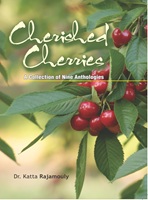
2. Cherished Cherries
In this collection, the poet explores life, time, nature, and human relationships from a deep philosophical perspective. The poems gently reveal universal truths hidden behind ordinary experiences of life. Particular attention is given to themes such as time, human values, and social transformation. Clarity of expression, poetic naturalness, humanitarian vision, and philosophical depth constitute the major strengths of this volume. It stands as an important reflection of the poet's intellectual and creative maturity.
3. Peas of Insight
This collection examines nature, life, society, patriotism, and human values from multiple perspectives. The poet responds thoughtfully to the decline of moral values, the struggles of human life, and contemporary social realities. Nature is portrayed not merely as a descriptive element but as a guiding force for human existence. The ability to express profound thoughts through simple language is one of the defining qualities of this work. As such, this volume successfully combines philosophy, humanism, and social awareness.
4. Voices of Silence
In this collection, the poet gives an inner voice to silence itself. The poems explore joy, sorrow, nature, love, and changing social values with emotional intimacy. They reveal deep insight into human experiences while maintaining simplicity of expression. Each poem contains a philosophical dimension that encourages readers to reflect upon life. This collection may therefore be regarded as one of the finest examples of the poet's literary maturity.
5. Kavitanjali – Poem Offerings
This poetry collection revolves around the values of love, nature, human relationships, devotion, and world peace. Through these poems, the poet suggests that humanity should follow eternal values such as truth, love, and righteousness. Nature, spirituality, and humanitarian ideals appear consistently throughout the volume. Simplicity of expression, broadness of vision, and universality of message make this collection particularly significant.
6. Melodies of Hues and Perfumes
This volume presents nature, life, society, and human relationships from an aesthetic perspective. Nature is portrayed not merely as an object of beauty but as a force that guides human life. Humanitarian concern, social responsibility, and artistic sensibility are harmoniously woven into every poem. The poet's ability to give philosophical meaning even to ordinary experiences makes this collection a notable milestone in his creative journey.
7. New Horizons
This collection presents themes such as life, nature, love, society, and human values from an optimistic perspective. It encourages readers to overcome life's challenges and move towards higher goals. Natural expression, broad thinking, and commitment to human values distinguish this volume. By blending personal experiences with universal emotions, the poet creates works that inspire thoughtful reflection.
8. Strides of Tides
This collection reflects the changing nature of life, the influence of time, the value of human relationships, and the contradictions of contemporary society. The poet uncovers profound truths hidden behind ordinary experiences. Through the harmonious integration of nature, philosophy, and human life, these poems encourage readers to engage in self-reflection. Clarity, emotional warmth, and philosophical depth define this collection.
9. Moonbeams in Clouds
Love, human relationships, nature, social life, and the philosophy of existence are beautifully portrayed in this collection. The poems display delicate emotions, admiration for nature, and an optimistic view of life. Though the language remains simple, the emotional depth is striking. Along with celebrating the beauty of life, the collection also emphasizes the importance of preserving human values. It stands as a valuable representation of the poet's creative breadth.
10. Beams of Blooms
This collection is enriched with themes such as nature, love, society, time, patriotism, and human relationships. It includes songs, sonnets, children's lyrics, and haiku, demonstrating the poet's mastery of multiple poetic forms. Diversity of themes, experimentation with literary forms, and artistic craftsmanship distinguish this work. Alongside its critical perspective on social evils, the collection reflects the poet's commitment to protecting human values. It is a remarkable example of his literary innovation and versatility.
11. Notes of Mute Lutes
This volume centres on love, nature, philosophy of life, peace, and human values. By combining ordinary experiences with creative imagination, the poet gives familiar situations new meaning. The poems reveal emotional sincerity and an optimistic attitude towards life. Through the harmonious blending of nature, love, society, and human relationships, the collection creates a deep emotional connection with readers. Its simplicity of language and richness of thought make it one of the representative works of the poet's mature phase.
12. Musings, Lightnings
In this collection, the poet relates human life to contemporary social realities. Themes such as time, war and peace, patriotism, love, and human relationships are explored from different perspectives. Every poem reflects thoughtful observation and clarity of expression. The poet's determination to preserve human values while responding to social change is evident throughout the volume. This collection successfully combines creativity, social awareness, and philosophical reflection.
13. Traverse in Time
This collection is primarily built around the themes of time, the past and the present, nature, love, and human experiences. While remembering the past, the poems also offer guidance for the present. The poet's remarkable ability to discover universal truths within ordinary incidents becomes even more evident here. The combination of simple language, profound thought, and poetic treatment of time gives this volume its distinctive character.
14. My Motherland
This collection expresses the poet's deep love for India, his patriotism, and his national consciousness. India's history, culture, contemporary realities, and social issues are presented with genuine emotional involvement. The poet reminds readers of the values and responsibilities necessary for national development while blending patriotism with humanitarian ideals. Instead of becoming preachy, the poems touch the hearts of readers through sincere poetic expression.
15. Symphony in Harmony
This poetry collection revolves around love, human relationships, nature, poetry, and the beauty of life. Through the harmonious expression of diverse emotions, the poet suggests that life becomes meaningful only through mutual understanding, love, and cooperation. Simplicity of expression, broadness of vision, and dedication to human values remain the greatest strengths of this work. It clearly reflects the poet's balanced literary philosophy.
16. Flights to Heights
This collection promotes optimism, self-confidence, the pursuit of higher ideals, and the appreciation of nature. The poet inspires readers to overcome obstacles through perseverance and continuous effort. The harmonious blending of natural beauty with human values gives this volume a unique charm. Its positive outlook and natural language make it highly appealing to readers.
17. Musings of Muse
This collection represents a more mature stage of the poet's creative consciousness. Themes such as society, time, nature, love, and patriotism are examined from a contemporary perspective. The poet's determination to guide human life towards a positive direction through poetry is clearly visible. The simple diction, profound ideas, and thought-provoking quality of the poems constitute the greatest strengths of this collection.
Haiku
18. Coo… Coos of Cuckoos
This collection of haiku demonstrates the poet's keen observation and remarkable ability to express profound ideas with extreme brevity. Within just three lines, he effectively captures nature, life, human relationships, time, and emotions. Each haiku begins as a simple observation but gradually unfolds into a broader truth about life. Economy of words, richness of meaning, and the harmonious relationship between nature and human existence are the defining qualities of this collection. Inspired by both Telugu and English haiku traditions, the author successfully develops a distinctive poetic style of his own.
Short Story Collections
19. Post-Gandhian Days
This collection portrays the transformation of Indian society after Independence, highlighting changing values, political developments, and the realities of ordinary people's lives. Through these stories, the author sensitively depicts the gradual disappearance of Gandhian ideals. The characters are natural and convincing, while the endings encourage readers to reflect deeply. Social responsibility, moral values, and a humanitarian outlook form the major strengths of this collection.
20. Thorns in the Path
These stories portray the obstacles, struggles, and complexities of human relationships encountered in life's journey. While realistically depicting the hardships faced by ordinary people, they also inspire courage to overcome difficulties. This collection successfully combines realism, emotional depth, and social awareness.
21. Shadows of Realities
This collection focuses on social inequalities, human selfishness, and the decline of moral values. The realities of life are presented honestly without unnecessary embellishment. Every story conveys a meaningful social message and encourages readers to think critically about society.
22. Naked Truths
These stories boldly expose the harsh realities of society. The author realistically portrays family life, social injustice, and the weaknesses of human nature. Natural characterization, realistic narration, and social commitment are evident throughout the collection. It may be regarded as a work that critiques society while advocating positive change.
23. Tales for a New Sunrise
Optimism is the central theme of this collection. Through these stories, the author expresses the belief that social transformation is both possible and necessary, and that even the impossible can become possible through determination. Human values, mutual cooperation, and ethical living are presented from a positive and inspiring perspective.
24. Time Tells Tales
These stories reflect the lessons that time teaches humanity. Life experiences, moral values, and changing social conditions are effectively expressed through engaging narratives. The collection consistently conveys the idea that although times may change, human values remain eternal.
25. Marriages, Mirages
These stories realistically explore married life, family relationships, dowry, misunderstandings, and social pressures. They suggest that marriage should not merely be regarded as a social institution but should be built upon mutual understanding, respect, and love.
Children's Literature
26. Mini Tales for Tiny Tots
These stories are designed to nurture values such as discipline, honesty, kindness, and love for nature among children. Simple narration, clear moral lessons, and a style suited to young readers make this collection especially valuable for children's character development.
27. Dazzles of Darkness
These stories convey the message that hope continues to shine even in the midst of despair, suffering, and injustice. The author expresses his faith that human values can survive even under the most difficult circumstances.
28. The Past I Live In
This collection explores memories, childhood, family relationships, and the influence of time with emotional sensitivity. Rather than merely recalling the past, the author demonstrates how past experiences can guide and enrich the present.
29. Mahatma Sheds Tears
Through these stories, the author critically examines the gap between Gandhian ideals and present-day society. Issues such as corruption, violence, inequality, and moral decline are powerfully portrayed. The stories ultimately call upon society to return to the path of humanity and ethical values.
Novels
30. Rajarishi in Quest of Peace
This novel focuses on universal themes such as world peace, human values, and ethical living. The author naturally presents the idea that the welfare of humanity is greater than individual self-interest. The characters and unfolding events encourage readers to engage in self-reflection. The novel effectively conveys the message that true peace is not merely the absence of war but the presence of love, compassion, and tolerance within the human heart.
31. Smart Child
This novel realistically portrays child psychology, family environment, education, and personality development. The author beautifully explains the care and attention that parents and teachers should provide to children. It emphasizes that education should not be confined to academic scores alone but should contribute to the holistic development of personality. Its thoughtful understanding of children's mental world gives the novel its unique significance.
32. Tears and Smiles of Telangana
This novel sensitively reflects the social, political, and cultural circumstances behind the Telangana Movement. It captures the pain, hopes, aspirations, and eventual joy experienced by the people during the struggle. Appreciating the spirit of the Telangana movement centred on the issues of "water, funds, and employment," the novel also reflects the author's commitment to social justice and regional self-respect.
33. Tears of Tribal Hamlets
This novel realistically portrays the lifestyle of tribal communities, their struggles, and the conditions that have kept them away from development. Life in the forests, lack of educational and healthcare facilities, and social exploitation are depicted from a deeply humanitarian perspective. The author's concern for the welfare and empowerment of tribal communities is evident throughout the novel.
34. Ebb and Flow
This novel takes women's empowerment as its central theme and portrays the challenges women face within the family, society, and personal life. The author emphasizes that women should not be confined to traditional domestic roles but must preserve their individuality and self-respect. The values of equality, self-confidence, dignity, and equal opportunities resonate strongly throughout the narrative.
35. Shadows Shattered
This novel analyses the transformation of the education system across four generations. It critically examines the decline of educational values, commercialization of education, and the increasing physical, mental, and emotional pressures experienced by students. The novel strongly argues that education should serve not merely as a means of employment but as the foundation for personality development and nation-building.
36. Life Tides
Centred on the lives of farmers, this novel movingly portrays agricultural crises, indebtedness, natural calamities, and market-related problems. The author expresses deep concern over the lack of recognition given to the hard work of farmers. The novel powerfully reinforces the belief that agriculture is the backbone of the nation.
37. Dowry Venom
This novel realistically exposes the tragedies caused by the dowry system. The author strongly criticizes the social tendency to reduce marriage to a financial transaction. Emphasizing women's dignity, family values, and social responsibility, the novel firmly advocates the eradication of the dowry system.
38. Love... Love... Love
This novel explores love, family life, inter-caste marriages, and social restrictions from a contemporary perspective. The author argues that love should not be viewed merely as an emotion but as a relationship founded upon mutual respect, trust, and responsibility. By questioning social prejudices and emphasizing humanitarian values, the novel presents a progressive vision of human relationships.
One-Act Plays
39. Visual Wonders (A Collection of One-Act Plays)
This collection of one-act plays has been written with social reform as its primary objective. The plays offer not only entertainment but also powerful social messages. Through these dramatic works, the author vividly presents the idea that life itself is a stage. One of the major strengths of this collection is its ability to combine effective storytelling, natural dialogue, wit, satire, and moral instruction within a short dramatic form. By questioning social evils and inspiring public awareness, these plays have earned a distinctive place in contemporary literature.
Translated Works (Radiant Renderings)
40. Kavita Vaidesiki (108 Poems Translated from English into Telugu)
Through this translation volume, the author has successfully attempted to present the beauty and emotional richness of English poetry in natural Telugu. The special quality of this work lies in preserving the essence of the original poems while maintaining the fluency and elegance of the Telugu language. The author's mastery of both languages and his deep understanding of poetry are clearly reflected throughout the book. This volume demonstrates that translation itself is a creative literary art.
41. Rays from the Roots (Translated from Telugu into English)
This valuable translation volume was prepared with the intention of introducing the richness of Telugu poetry to readers across the world. The author has made every effort to preserve the sweetness of the Telugu language and its cultural background while expressing them naturally in English. The greatest achievement of this work is its ability to retain the spirit of the original poems despite the change of language.
42. Vemana–Baddena Poems (English Translation)
This book may be regarded as an attempt to introduce the ethical and philosophical wisdom of Telugu Sataka literature to the international literary community. By rendering the profound thoughts of Vemana and Baddena into clear and simple English, the author successfully demonstrates their universal relevance. Preserving the soul of the original poems while giving priority to meaningful translation is one of the outstanding qualities of this work.
43. The Voice Knows No Age
Through this translation, the author has attempted to make an important Telugu literary work accessible to English readers. By maintaining a careful balance between meaning, language, and literary quality, he has successfully conveyed the essence of the original text. This volume stands as another fine example of his ability and excellence as a translator.
Critical and Research Works (Crystal Critiques / Research)
44. Neo Renaissance
In this research work, the author analytically examines various literary movements. By studying their historical background, ideological foundations, and influence on literature, he clearly demonstrates his scholarly approach and critical insight.
45. Philip Larkin's Poetry – A Critical Study
This scholarly work presents a detailed critical analysis of the poetry of the distinguished English poet Philip Larkin. Using established literary theories, the author examines the poet's thematic concerns, artistic craftsmanship, social perspective, and linguistic style. The comprehensive nature of this study reflects the author's depth of research and academic excellence.
46. Essence of Poetry
This valuable critical work discusses the nature, purpose, and beauty of poetry, the responsibilities of a poet, and the principles of poetic expression from a theoretical perspective. The author's profound understanding of poetry is evident throughout every chapter, making this book an important contribution to literary criticism.
47. Art of Speaking – The Foundation of All Skills
This research-based work analyses the importance of communication, public speaking, language use, and interpersonal skills. The author convincingly argues that language is not merely a tool for conveying information but also the foundation for personality development, leadership, and self-confidence.
48. Inconsistencies and Inadequacies of Traditional Grammars
In this research work, the author critically examines the limitations of traditional approaches to grammar teaching and proposes perspectives that are better suited to modern educational needs. Critical analysis, logical argumentation, and constructive alternatives make this book a significant contribution to linguistic and educational research.
Language Teaching and Communication Skills
49. Silver Tongues
In this book, the author explains the importance of effective communication skills in a practical and systematic manner. Through numerous examples, he discusses the role of communication in personal, academic, and professional life, presenting language as a powerful tool for building confidence and developing one's personality. The balanced combination of theory and practice, simple explanations, and learner-friendly structure make this book highly useful for students, teachers, and aspiring professionals.
50. Communicative English
This book has been designed to develop learners' practical ability to use English effectively in real-life situations. It integrates the four essential language skills—listening, speaking, reading, and writing—while promoting a learner-centred approach to language teaching. Practical exercises, contextual examples, and activity-based learning strategies make this volume an effective resource for English language learners.
51. Professional Communication
This book comprehensively discusses the communication skills required in professional, administrative, and corporate environments. It covers interviews, presentations, meetings, official correspondence, reports, and other workplace communication practices from a practical perspective. Designed to meet the demands of the modern professional world, this book serves as a valuable guide for students and working professionals alike.
English Language Teaching (ELT – Pedagogy Panorama)
52. Pedagogy Panorama
This book presents a comprehensive discussion of modern theories, teaching methods, and classroom practices related to English Language Teaching (ELT). The author offers valuable insights into learner-centred education, the role of the teacher, and various methods of assessment. Reflecting contemporary trends in language teaching, this work serves as a useful reference for teachers, teacher educators, and researchers.
53. Modern Trends in English Language Teaching
In this book, the author examines recent developments in English language teaching, including the use of technology, digital learning resources, communicative approaches, and activity-based teaching methods. By proposing learner-oriented alternatives to conventional teaching practices, the book effectively addresses the changing needs of modern education.
54. Development of Language Skills
This work analyses the methods and strategies required for developing the four fundamental language skills—listening, speaking, reading, and writing. Along with theoretical discussions, the author provides practical suggestions and classroom applications, making the book highly beneficial for teachers, trainers, and students of language education.
55. Teaching Skills for Teachers
This book discusses in detail the essential qualities and professional competencies required of an effective teacher, including lesson planning, classroom instruction, assessment, and interaction with learners. The author strongly emphasizes that teaching is not merely the transmission of information but a creative process that nurtures critical thinking, intellectual growth, and lifelong learning among students.
Conclusion
Overall, the literary journey of Dr. Katta Rajamouli emerges as a rare and remarkable creative achievement that encompasses poetry, short stories, novels, one-act plays, translations, literary criticism, research, language teaching, and communication skills with equal excellence. Throughout his writings, one consistently finds a harmonious blend of humanitarian values, social responsibility, educational awareness, moral commitment, simplicity of language, and depth of thought.
In my personal opinion, these works are not merely literary creations but thoughtful contributions that offer direction and inspiration to society. Their thematic diversity, social consciousness, scholarly depth, and linguistic elegance have established Dr. Rajamouli as a truly versatile literary personality whose contributions deserve serious academic attention and critical appreciation.
08-Aug-2026
More by : Prof. Dr. K. Ram Kishore
Top | Book Reviews | Home
