Oct 12, 2026
Oct 12, 2026
A Threat to the Country's Dominance?
The US economy has been kept the most powerful in the world by several factors, including the dominance of the dollar, vast capital markets, technological leadership, large-scale arms production, nuclear power, and the military strength of its three armed services. But behind these strengths, a serious economic weakness is now growing. That is the country’s rapidly increasing government debt. The problem is not simply that the debt is large; the real danger is that the government has to keep borrowing more and more not only to repay its debt but also to pay interest on it.
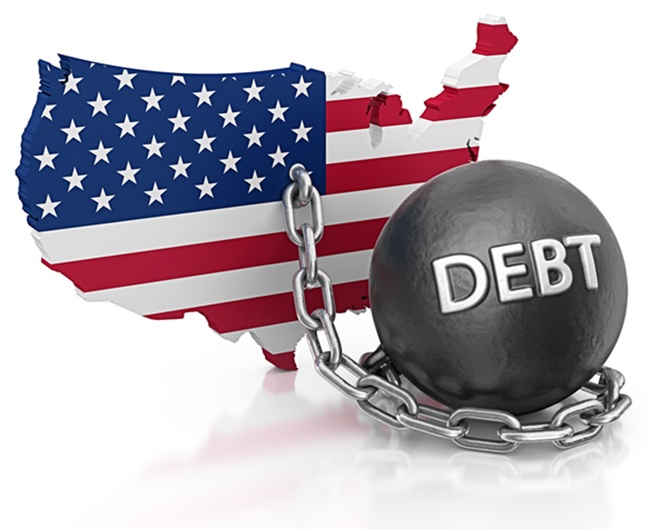
With US gross debt crossing the $40 trillion level in 2026, this problem has become more visible. However, it would be wrong to look at this number alone and conclude that America is about to go bankrupt. The US has a financial advantage that other countries do not have because the dollar is the world’s principal reserve currency and the country has the world’s largest and deepest government bond market. The real question is: How long can America continue to use this special advantage irresponsibly?
America’s current debt problem cannot be blamed on a single government or a single political party. For decades, both Democratic and Republican administrations have maintained budget deficits through tax policies, social security spending, defence spending, and emergency economic packages. The 2008 financial crisis and the massive government spending during the COVID-19 pandemic accelerated the growth of the debt. Moreover, as the American population enters an ageing phase, spending on programmes such as Social Security and Medicare continues to increase. According to the Congressional Budget Office, the US budget deficit is expected to be about $1.9 trillion in 2026. If current policies continue, it could reach $3.1 trillion by 2036.
The most worrying aspect is the interest burden. In 2026 alone, US federal net interest spending is expected to exceed $1 trillion. The Congressional Budget Office says it could reach $2.1 trillion by 2036. This means that the government is using future revenues not only to repay debt but also to pay interest on borrowing from the past. As interest payments increase, the need for new borrowing also increases; as new borrowing increases, the interest burden rises again. In this way, a cycle is developing in which debt continues to grow on its own.
Trump’s economic policies must also be examined critically in this context. Tax cuts may provide some stimulus to economic activity, and tariffs may generate additional government revenue. But if large tax concessions reduce government revenue while spending is not reduced significantly, the deficit will increase further. The Congressional Budget Office has estimated that the tax-and-spending legislation approved in 2025 would increase deficits by about $4.7 trillion between 2026 and 2035; it also noted that the revenue generated by higher tariffs would offset only part of this increase.
Therefore, the argument that “tariffs will make America richer” has a fundamental weakness. When taxes are imposed on imports, the burden is ultimately borne by American consumers, importers and manufacturers as well. Tariffs may bring some production back to the United States. But if supply chains are disrupted, production costs may rise. International trade uncertainty can also discourage investment. Therefore, treating tariffs as a permanent solution to the debt problem means ignoring economic realities.
At the same time, it is also not correct to compare America simply with Japan or China on the basis of the debt-to-GDP ratio. Japan has special circumstances, including the fact that most of its debt is held by domestic investors and that it has its own currency. The US also has the unique protection of dollar dominance. Countries around the world hold dollars as part of their foreign-exchange reserves. The dollar continues to have enormous importance in international trade and financial transactions. As a result, demand for US government bonds continues around the world.
But this advantage is not a permanent guarantee. If international confidence in America’s economic discipline weakens, investors may demand higher interest rates. Then every new loan taken by the US government will become more expensive. A debt crisis does not necessarily mean that the bond market suddenly collapses. It can also mean that the government has to allocate an increasing share of its revenue to interest payments, leaving less money for development and investment.
According to the Congressional Budget Office’s projections, assuming current laws remain in place, federal debt held by the public would rise from about 101 percent of GDP in 2026 to 120 percent by 2036. The agency has also indicated that it could reach 175 percent of GDP by 2056. This would represent an unprecedented fiscal challenge in American history.
Therefore, the real question facing America is not simply, “How much debt does it have?” The bigger questions are: “How fast is the debt growing? And is there sufficient political will to stop it?” Without taking difficult decisions on defence spending, an ageing population, healthcare costs and tax policy, this problem cannot be solved merely through tariffs, immigration controls or monetary policy. Economic experts suggest that four approaches must be pursued in balance: increasing revenues, reducing unnecessary expenditure, undertaking long-term reforms to social security programmes, and promoting economic growth.
American global dominance cannot be protected merely by aircraft carriers, missiles and military bases. The foundation of that dominance is economic credibility. The main reason the world continues to buy US government bonds is not some imaginary belief that America is invincible. It is the continuing strong confidence that people and institutions around the world have in the American system. If that confidence is weakened by political arrogance, persistent deficits and uncontrolled debt expansion, the dominance of the dollar could also gradually weaken.
Therefore, blaming Trump alone for this crisis may be politically attractive, but it is economically incomplete. Trump’s policies may worsen the problem. But the roots of the problem were established long before him. America’s debt crisis is not the failure of one president. It is the result of decades of political compromise, economic imbalance and decisions taken for short-term political popularity.
For nearly two and a half centuries, America has influenced the global system through its economic power. Now the world expects a different kind of leadership from America. Not merely military leadership, but leadership based on economic responsibility. Whether America can preserve its dominance while continuing to accumulate debt, or whether it can build new strength through fiscal discipline, is a decisive question not only for the American people but also for the future of the global economic system.
Image (c) istock.com
29-Aug-2026
More by : Prof. Dr. K. Ram Kishore
