Sep 19, 2026
Sep 19, 2026
by Sahithi B
How Artificial Intelligence Is Changing Lunar Exploration!!!
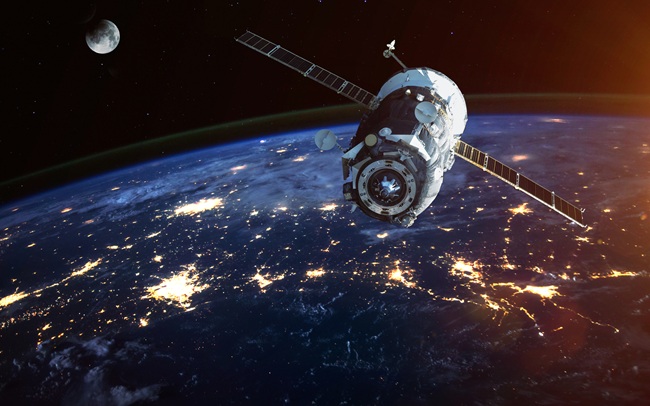
“Exploration is in our nature. We began as wanderers, and we are wanderers still.”
— Carl Sagan
For thousands of years, humans have looked at the Moon with curiosity. We have observed it from Earth, sent spacecraft around it, landed on its surface, and even walked on it. But now, something new is helping us study the Moon in a completely different way — artificial intelligence.
On September 10, 2026, NASA and IBM announced the open-source NASA-IBM Lunar Foundation Model, an artificial intelligence model designed specifically to help researchers analyze lunar science data. The model is trained primarily on observations collected by NASA's Lunar Reconnaissance Orbiter and incorporates data from several other lunar missions. This development represents an exciting meeting point between space exploration and artificial intelligence.
The question is no longer only: “Can we reach the Moon?”
It is increasingly becoming: “What can AI help us discover once we get there?”
The Moon data has a problem!!
The Moon may look simple when we see it shining in the night sky, but its surface contains an enormous amount of information.
NASA's Lunar Reconnaissance Orbiter has been studying the Moon for around 17 years, producing an enormous archive of high-resolution observations.
The NASA-IBM model was trained using roughly 2 million image tiles from this lunar dataset, including more than one million high-resolution camera images and nearly 964,000 multispectral images. It also incorporates data from missions such as NASA's GRAIL and Lunar Prospector and Japan's SELENE mission.
For scientists, the challenge is no longer simply collecting data.
The challenge is: How do we understand all of it?
Scientists could manually examine maps and images, but doing this across enormous datasets takes time.
AI offers another approach.
Instead of looking at every image individually, machine-learning models can analyze huge quantities of information and identify patterns that researchers can investigate further.
As NASA's Chief Science Data Officer Kevin Murphy explained, collecting data is only part of the job; scientists also need ways to make large amounts of data easier to explore and use.
Teaching AI the Language of the Moon
So, what exactly does this lunar AI do?
The NASA-IBM Lunar Foundation Model is a foundation model.
Unlike a traditional machine-learning system built for one narrowly defined task, a foundation model is pre-trained on large datasets and can later be adapted to different tasks.
Think of it as giving AI a basic understanding of the Moon's surface.
Researchers can then adapt the model to investigate different questions, such as:
NASA says the model can be adapted for tasks including crater mapping, identifying young volcanic features and estimating where ice may be stable near the lunar poles.
This is an important distinction:
AI isn't replacing the spacecraft.
It is helping scientists understand what those spacecraft have observed.
Searching for Water on the Moon.
One of the most exciting applications is the search for lunar ice.
Near the Moon's poles are permanently shadowed regions where sunlight does not directly reach the surface. These areas can remain extremely cold, allowing ice to survive for extremely long periods.
Why is this important?
Because water could become one of the most valuable resources for future lunar exploration.
Water can be separated into hydrogen and oxygen. In future exploration scenarios, these elements could potentially support life-support systems and the production of rocket propellant.
The NASA-IBM model can help researchers estimate where ice may be stable on and beneath the lunar surface. NASA reports that the model showed a particular advantage in estimating polar ice stability compared with several baseline models.
But there is an important scientific distinction:
An AI prediction of ice prospectivity is not the same as directly discovering or confirming ice.
Instead, it helps researchers identify places that deserve closer investigation.
That could make future exploration more targeted and efficient.
AI Can Read the Moon's Scars
Look at almost any photograph of the Moon and one feature immediately stands out: Craters. The lunar surface is covered with them.
These craters are much more than interesting shapes. Each crater is evidence of an impact, and studying their number, size and distribution can help scientists understand the history of the lunar surface and even reconstruct parts of the history of our Solar System.
AI can help researchers locate and map these craters across enormous areas.
The NASA-IBM model has demonstrated the ability to identify and analyze lunar craters efficiently. NASA also describes a test in which the model detected a newly formed impact crater in imagery taken after a rocket-body impact.
“That's one small step for [a] man, one giant leap for mankind.”
— Neil Armstrong
Armstrong spoke those famous words when humans first stepped onto the Moon in 1969.
More than half a century later, our exploration of the Moon continues — but the tools have changed dramatically.
Discovering the Moon's Volcanic Past
The Moon also has a fascinating geological history.
Although the Moon is generally considered to no longer be volcanically active, evidence of ancient volcanic activity remains across its surface.
The NASA-IBM model can help researchers identify unusual volcanic features called irregular mare patches.
These features are particularly interesting because some appear relatively young compared with other lunar geological formations. Studying them could help scientists better understand the Moon's thermal evolution and how it cooled over time.
AI can therefore help scientists move from simply seeing these features to systematically mapping and studying them.
The Moon may look quiet today.
But its surface contains a geological record stretching back billions of years.
From Data to Future Moon Missions
The timing of this technology is particularly interesting because humanity is preparing for a new era of lunar exploration.
Future lunar missions will require much more than powerful rockets.
They will require:
Imagine a future rover exploring a lunar crater.
The rover could collect photographs, geological measurements and other observations. AI systems could help researchers identify interesting features and prioritize which observations deserve closer examination.
The NASA-IBM model itself is a scientific research tool rather than an autonomous lunar explorer. But it demonstrates how AI can become part of the technological infrastructure supporting future exploration.
And this is where the partnership between humans and AI becomes particularly interesting.
Humans + AI: A New Era of Exploration
It is tempting to think of AI as something that could replace human scientists.
But space exploration may offer a different model.
Humans ask the questions.
Spacecraft collect the data.
AI helps analyze the data.
Scientists interpret the results.
That collaboration could become increasingly important as missions become more complex and the amount of scientific information grows.
The NASA-IBM Lunar Foundation Model is also open-source, with the model and supporting resources made available to the wider research community. NASA says this approach is intended to support reproducible research and allow scientists around the world to build on the technology.
This means the future of lunar AI isn't limited to one laboratory.
Researchers around the world can experiment with the technology and develop new applications.
Why This Matters for Computer Science
Space exploration was once seen mainly as a field for astronauts, astronomers and aerospace engineers.
That is changing.
Modern space missions increasingly depend on:
Artificial Intelligence + Machine Learning + Data Science + Robotics + Computer Vision + Aerospace Engineering
For computer science students, this opens up an exciting possibility.
The code running on a computer on Earth could help a spacecraft understand an environment millions of kilometres away.
Sometimes, they may be sitting behind a computer, building the algorithms that help humanity understand another world.
From the Moon to Other Worlds
The lunar AI model is also part of a much larger effort to use artificial intelligence for scientific research.
NASA and IBM have developed other AI foundation models for applications involving Earth observation and space weather. The broader goal is to use AI to analyze huge scientific datasets and help researchers extract useful information from them.
And this raises an exciting possibility.
If AI can help us understand the Moon, similar approaches could eventually contribute to exploration of Mars and other worlds.
Mars presents an additional challenge: it is much farther away from Earth, meaning communication delays make constant real-time control impossible.
More capable autonomous systems could therefore become increasingly valuable for future deep-space exploration.
The Bigger Picture
Arthur C. Clarke, the renowned science-fiction writer and futurist, once wrote:
“We stand now at the turning point between two eras.”
— Arthur C. Clarke
Clarke wrote these words in The Exploration of Space in 1951, during the early years of the space age.
We are not simply sending machines into space. We are developing machines that can help us understand what they discover.
Conclusion: Looking at the Moon Differently
Humanity has spent decades collecting photographs, maps and measurements of the Moon.
Now, artificial intelligence is helping us look at those observations in a new way.
From identifying craters to studying volcanic formations and estimating where lunar ice may be stable, AI is becoming a powerful tool for lunar science.
Carl Sagan once wrote:
“We are ready at last to set sail for the stars.”
— Carl Sagan
Our journey has already taken us to the Moon.
Now, the next stage may involve something different — not simply traveling farther, but becoming better at understanding what we find.
We once asked:
“Can humans reach the Moon?”
Then we asked:
“Can humans live and work there?”
Now perhaps we should ask:
“What can artificial intelligence help us discover there?”
The answer could be hidden somewhere among the Moon's mountains, craters and permanently shadowed regions — inside billions of pieces of scientific data.
The next great lunar discovery may not necessarily require a completely new spacecraft.
It might come from looking at the Moon's existing data in an entirely new way.
And perhaps that is the most exciting part of this new era:
The future of space exploration isn't simply humans or AI. It's what humans and AI can discover together.
The Moon has been our companion
Image (c) istock.com
19-Sep-2026
More by : Sahithi B
