Oct 02, 2026
Oct 02, 2026
Gandhi Jayanti, 2nd October 2026
“For me, Gandhi Jayanti is not only a day to remember Bapu, but also a reminder to examine my own behavior towards others.”
Every year, Gandhi Jayanti calls upon us to do more than simply commemorate the birth anniversary of Mahatma Gandhi. Observed on 2 October, it offers an occasion to reflect on the ethical values that can make the world more peaceful, just, and worth to dwell for all. Mahatma Gandhi’s message of truth, non-violence, tolerance, and mutual respect extends far beyond India; in recognition of his enduring influence, the United Nations observes 2 October as the International Day of Non-Violence.
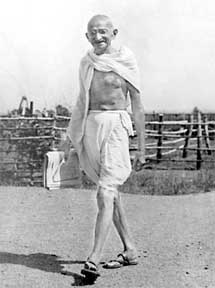 At a time when the world is troubled by conflict, inequality, environmental degradation, misinformation, and increasing intolerance, Gandhi Jayanti becomes an opportunity for serious self-reflection. It urges us to consider whether our personal choices, social conduct, and public institutions are helping people live with dignity or adding to their difficulties. Gandhi should not be viewed only as a historical figure or a leader of India’s freedom struggle. His life and thought must be understood from many perspectives: as a moral philosopher, a social reformer, a political leader, a champion of human equality, and above all, a practical guide for everyday life.
Mahatma Gandhi’s journey was, at its heart, a movement from the self to the world. He believed that enduring social transformation could not arise merely from speeches, laws, or demands placed upon others; it had to begin with the moral awakening of the individual. Before urging society to become truthful, disciplined, compassionate, and non-violent, Gandhi sought to embody these values in his own conduct. His simplicity, self-restraint, spirit of service, and readiness to endure discomfort were not gestures for public admiration; rather, they reflected his conviction that personal refinement forms the basis of social harmony. In an age often attracted by display, luxury, and unnecessary extravagance, Gandhi’s life reminds us that true progress lies in making life more convenient, dignified, and secure for everyone—not in pursuing comfort or status for oneself alone. His idea of simplicity was never a rejection of human needs; it was a rejection of excess when others lacked even the basic necessities of life. When an individual becomes more honest, patient, responsible, and considerate, that transformation naturally reaches the family; a responsible family helps build a healthier neighborhood, a healthy neighborhood strengthens society, and society, in turn, shapes the character of the nation and the wider world. Gandhi’s journey from self to society therefore teaches us that reform must not end with private goodness; it must expand into active concern for others—especially the poor, the excluded, the vulnerable, and those whose voices are too often unheard.
From Self to Society
Gandhi’s life teaches us that social transformation begins with self-transformation. He did not believe that we should wait for other people, governments, or institutions to change before improving ourselves. He believed that every individual has a responsibility to live according to moral values. If we want honesty in society, we must practice honesty in our own homes, schools, workplaces, and relationships. If we want peace in the world, we must learn to control anger, avoid insulting others, and solve disagreements respectfully. If we want a clean environment, we must reduce waste, avoid unnecessary consumption, and respect public spaces.
|
We but mirror the world. All the tendencies present in the outer world are to be found in the world of our body. If we could change ourselves, the tendencies in the world would also change. |
This journey from the self to the world is one of Gandhi’s most meaningful lessons. An individual is not separate from society. Every small action creates an effect beyond the person who performs it. For example, a student who refuses to cheat in an examination protects the value of education. An employee who does not accept or offer a bribe strengthens public trust. A family that treats domestic workers with dignity teaches children the meaning of equality. A person who chooses not to spread an unverified rumor on social media prevents fear and hatred from growing. These may appear to be small actions, but together they build the moral character of a nation.
Gandhi’s own life reflected this principle. He believed that leadership should not be based on power, wealth, or status alone. A leader should first learn discipline, self-control, humility, and service. He lived simply not because he rejected comfort for its own sake, but because he wanted to remain connected with the lives of ordinary people. He understood that a person who consumes excessively while others lack basic needs cannot truly claim to work for justice. His simplicity was therefore a form of social responsibility.
The journey from self to society can also be understood through the idea of harmony. Harmony does not mean that everyone must think alike. People naturally differ in religion, language, culture, caste, gender, occupation, political opinion, and way of life. Harmony means learning to live with these differences without hatred. Gandhi believed that disagreement should never destroy respect. In a democracy, people may have different views, but they must still recognize one another’s humanity. This lesson is extremely important in today’s world, where arguments often become personal and differences can quickly turn into hostility.
Truth, Experiment, and Self-Correction
One of Gandhi’s greatest contributions was his lifelong commitment to truth. For him, truth was not simply the act of speaking correct words. Truth means being honest with oneself, accepting reality, questioning one’s own motives, and refusing to act against one’s conscience. Gandhi’s life was a continuous search for truth. He did not present himself as a perfect person who never made mistakes. Instead, he openly admitted his limitations and treated life as a field of learning.
His method can be described as a meaningful sequence: truth, search, experiment, mistake, acceptance, modification, and re-experiment. First, a person tries to understand what is right. Then, instead of blindly accepting an idea, the person searches for deeper understanding. After that comes experimentation—putting values into practice in real life. Sometimes the experiment succeeds; sometimes it fails. When mistakes occur, Gandhi’s approach was not to hide them, blame others, or become discouraged. He believed in accepting them honestly, modifying one’s behavior, and trying again.
This sequence is useful for everyone. Students learn through practice, correction, and effort. Scientists conduct experiments, analyze failures, and improve their methods. Artists revise their work repeatedly before creating something meaningful. In the same way, people must learn to improve their character through self-examination. We should regularly ask ourselves: Did I speak respectfully today? Did I hurt someone through my words? Did I act selfishly? Did I ignore an injustice because it was convenient? Did I decide based on truth, or was I influenced by fear, greed, or pressure?
Self-examination is not meant to create guilt; it is meant to create growth. A person who recognizes an error can change. A person who refuses to recognize an error remains trapped in it. Gandhi’s courage lay not only in resisting injustice outside himself, but also in confronting weaknesses within himself. This is why his message remains relevant in a time when many people find it difficult to say, “I was wrong.”
In modern society, this principle is especially important because people are often quick to judge others but slow to examine themselves. Social media has made it easy to react immediately, share opinions, and criticize strangers. However, Gandhi’s philosophy reminds us to pause before reacting. We should verify facts before forwarding messages. We should avoid humiliating people online. We should listen before judging. We should apologize when we are wrong. Such habits may appear simple, but they are powerful forms of truthfulness and non-violence.
Non-Violence Beyond Physical Conflict
Gandhi is most widely remembered for his belief in non-violence, or ahimsa. However, non-violence is often misunderstood as weakness, silence, or fear. Gandhi showed that non-violence requires immense courage. It does not mean accepting injustice quietly. It means resisting injustice without hatred, cruelty, or revenge. It means standing firmly for what is right while refusing to destroy the dignity of another person. During India’s freedom struggle, Gandhi used non-violent resistance as a powerful method against colonial rule. He encouraged people to protest injustice through peaceful marches, civil disobedience, boycotts, and sacrifice rather than through violence. His idea of Satyagraha—the force of truth—demonstrated that moral courage could become a source of political strength. Gandhi’s leadership in the independence movement and his commitment to non-violent social change made his message influential across the world.
Today, non-violence must be practiced in new forms. It means refusing to use abusive language at home, in school, at work, or online. It means rejecting bullying, harassment, caste prejudice, religious hatred, gender discrimination, and racism. It means solving conflicts through dialogue rather than intimidation. It also means speaking out when someone is being treated unfairly. Silence in the face of injustice can sometimes allow violence to continue.
Non-violence is also connected with the environment. When human beings exploit forests, rivers, animals, land, and natural resources without care, they create suffering for present and future generations. Gandhi’s emphasis on simple living encourages us to question unnecessary consumption. Do we need to waste food, water, electricity, plastic, clothes, and other resources? Can we repair, reuse, and share instead of constantly buying more? Can we choose a lifestyle that respects the limits of nature? These questions connect Gandhian thinking with the urgent environmental challenges of our time.
A Call to Young People, Elders, and Women
Gandhi’s message belongs to every generation. Young people have a particularly important role because they will shape the future of the country and the world. They possess energy, creativity, courage, and a strong desire for change. They also have access to knowledge and technology in ways that previous generations could not imagine. If young people combine these strengths with truth, responsibility, and compassion, they can create a more just society.
Young people can apply Gandhi’s values in practical ways. They can refuse to cheat in examinations, avoid substance abuse, respect people from different backgrounds, volunteer in their communities, protect the environment, and use social media responsibly. They can challenge unfair practices without becoming hateful. They can express disagreement without using abusive words. They can use technology to spread awareness, support education, help disaster victims, promote mental-health conversations, and connect people with useful resources. The tools of the present may be different from those available in Gandhi’s time, but the ethical question remains the same: Are we using our abilities for selfish gain, or for the welfare of others?
Elders also have a valuable role in preserving and renewing Gandhian values. They have experience, memories, and lessons gained from life’s difficulties. Their guidance can help younger people develop patience, discipline, empathy, and emotional strength. At the same time, elders should remain open to learning from young people. Gandhi himself believed in growth, reflection, and experimentation. Therefore, respect between generations should not mean that one generation controls the other. It should mean that both generations learn from each other and work together for the common good.
Women were an essential part of Gandhi’s vision for social transformation. He encouraged women to participate in public life and recognized their strength, courage, and ability to lead movements for justice. Women contributed actively to India’s struggle for freedom through protest, sacrifice, organization, and service. Gandhi believed that a society cannot become truly free if women are denied equality, safety, education, and dignity.
Even today, women continue to face discrimination, violence, unequal opportunities, and social restrictions in many parts of the world. Honoring Gandhi’s ideals requires more than praising women on special occasions. It requires creating safe homes, fair workplaces, equal educational opportunities, respectful public spaces, and freedom from violence and harassment. Men and boys must also take responsibility by rejecting harmful attitudes and treating women as equal human beings with independent voices and rights.
Following Gandhi does not mean copying every practice of his time exactly. Society has changed, and new challenges require new methods. The aim is not blind imitation but thoughtful adaptation. For example, truth today includes identifying misinformation and refusing to spread fake news. Non-violence includes preventing cyberbullying and online hate. Swadeshi, or support for local self-reliance, can inspire people to value local workers, artisans, farmers, and sustainable businesses. Simplicity can mean reducing wasteful consumption. Service can include supporting mental health, digital literacy, climate action, and inclusive education.
A Living Tribute to the Father of the Nation
The greatest tribute to Gandhi is not limited to placing flowers before his portrait, singing devotional songs, or delivering speeches on 2 October. These acts may show respect, but Gandhi’s legacy becomes meaningful only when his values are practiced in daily life. If we choose truth when lying is easier, peace when anger is tempting, and service when selfishness is convenient, we carry forward his message.
Gandhi is called the Father of the Nation because of the extraordinary role he played in India’s freedom struggle and the moral leadership he provided to millions of people. This recognition was not obtained through force, wealth, or personal ambition. It was earned through sacrifice, dedication, courage, and deep concern for ordinary people. He travelled across the country, lived among people facing poverty and injustice, and attempted to unite communities divided by caste, religion, language, and social status. His life showed that leadership is not about being above people; it is about serving them.
A true tribute to Gandhi can begin with simple resolutions:
These resolutions may seem small, but they have the power to change relationships, institutions, and communities. Gandhi himself believed in the power of ordinary individuals. He showed that when people develop moral courage and act together with discipline, even a powerful system can be challenged.
Conclusion
In conclusion, nothing truly good can remain meaningful without constant reflection, renewal, and reconstruction. Each generation must, therefore, examine the values it inherits and apply them sincerely to the realities of its own time. The Gandhian Ideologies continue to matter not because the world has remained unchanged, but because it has changed rapidly while still struggling with hatred, injustice, violence, inequality, and environmental degradation. Gandhi Jayanti calls upon us to rethink the way we live and to nurture a culture of truth, dialogue, cooperation, and compassion in our families, schools, workplaces, and public institutions. Gandhi does not ask us to imitate every aspect of his life; rather, he inspires us to become more truthful, responsible, courageous, and humane in our own circumstances. If we learn to respect differences, acknowledge and correct our mistakes, resist injustice without hatred, and work for the welfare of others, we can keep his vision of a peaceful and harmonious world alive. Gandhi Jayanti will then become more than a day of remembrance—it will become a renewed commitment to personal transformation and social progress.
02-Oct-2026
More by : Dr. Punam Pandey