Oct 11, 2026
Oct 11, 2026
From Being Welcomed to Being Empowered
International Day of the Girl Child — 11 October
 A girl is born. A name is chosen. A cradle is decorated. Books are brought home. A schoolbag finds its place on her shoulders. And one day, she walks out into the world with dreams of her own. But has it always been this way for every girl in India?
On the occasion of the International Day of the Girl Child, celebrated every year on 11 October, let us look at how the life of a girl child in India has changed across generations — from the days of our grandmothers to the girls growing up today.
From our grandmothers' days to ours
Think of our grandmothers. Many grew up in times when a girl's opportunities were limited by family circumstances, social expectations and traditional ideas about what a girl should or should not do. Some were fortunate enough to receive an education, while others had to give it up early. Their lives often revolved around the home and family, and their own dreams sometimes took a back seat. Yet, these women were not without strength. They managed households, raised children, preserved traditions and faced difficulties with courage. Some may never have had the opportunity to discover what they could achieve beyond the roles society assigned them.
Today, many girls have a wider world open to them. They aspire to become scientists, doctors, teachers, authors, sportspersons, pilots, entrepreneurs and leaders. They ask questions, express opinions, explore their interests and imagine lives that previous generations could only dream of. The change is remarkable, even though it has not reached every home or every community equally.
1. The way a girl child is welcomed
The birth of a child should be a moment of happiness, regardless of whether the child is a boy or a girl. For generations, son preference has influenced the way some families viewed the birth of a girl. A daughter's arrival was sometimes accompanied by anxiety about expenses, marriage and social expectations. In some families, the welcome she received was not as joyful as that given to a son. Thankfully, attitudes are changing in many homes. Parents celebrate their daughters, share their photographs, announce their names proudly and make plans for their future. A girl is increasingly seen not as a responsibility to be managed but as a person with potential to be nurtured. However, we must be honest: discrimination has not disappeared. The real change will come when every girl is welcomed with equal joy, given equal care and allowed to grow without having to prove that she is as valuable as a boy.
A daughter's birth is not a compromise. It is a celebration.
2. Naming her, recognising her
A name is often the first gift a child receives. It becomes part of her identity, her story and the way she introduces herself to the world. Girls today are growing up in families that celebrate their individuality. Their names may reflect family traditions, languages, literature, nature or the hopes their parents hold for them. More importantly, girls are increasingly encouraged to develop an identity beyond being someone's daughter, sister, wife or mother. They can be all these things and still be individuals with interests, ambitions and opinions of their own. A girl's identity should not be defined only by her relationships. She deserves to be recognised for who she is.
3. From being sent to school to being encouraged to dream
Education is one of the most significant ways in which the lives of girls have changed. In earlier generations, many girls had to leave school to help at home, care for younger siblings or enter marriage at a young age. Some families believed that educating a daughter was less important than educating a son. Today, girls across India attend schools and colleges, pursue professional courses, prepare for competitive examinations and enter fields that were once difficult for women to access.
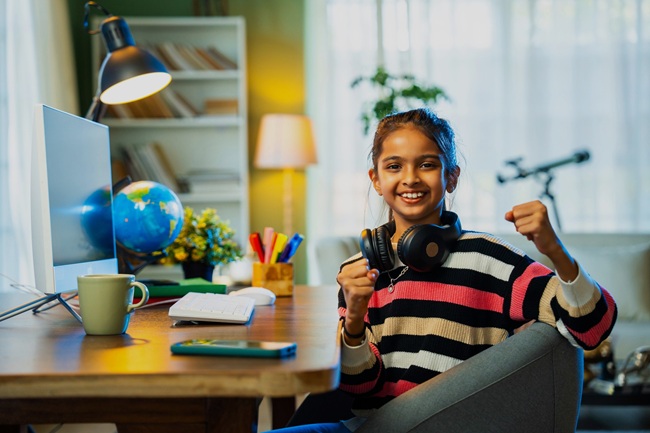
A schoolbook does more than teach a girl to read. It introduces her to possibilities. A science lesson might awaken the curiosity of a future researcher. A history book might inspire a future civil servant. A story about a brave young protagonist might encourage a child to question an unfair rule. But enrolment alone is not enough. Girls need safe schools, supportive families, good teachers, access to books, digital opportunities and the freedom to continue their education. The goal is not merely to help a girl finish school. It is to give her the confidence to decide what she wants to do with what she has learned.
4. Books that give girls a voice
As a blogger who loves books, I believe literature has an important role in shaping how children see themselves and others. Imagine a little girl opening a book and finding a character who looks like her, speaks her language, comes from a family like hers or shares her dreams. She discovers that a girl can be adventurous, intelligent, funny, curious, inventive and courageous. She can make mistakes, solve problems, lead a team and change the course of a story. Children's literature can help challenge stereotypes. Girls need stories in which they are not always waiting to be rescued, and boys need stories that teach them to respect girls as equals. Books can introduce young readers to women who broke barriers in science, sports, literature, social reform and public life. They can also introduce girls to ordinary heroines — a mother who returns to education, a teacher who encourages a struggling student, or a young girl who speaks up when something is unfair.
Representation matters because a girl who sees possibilities in a story may begin to imagine them in her own life. And let us remember the importance of books in Indian languages, too. Every girl should be able to discover stories in the language she understands best, whether it is Hindi, Tamil, Telugu, Bengali, Malayalam or another language.
5. From the pages of books to the big screen
Movies and television also influence how society perceives girls and women. For a long time, many popular stories placed women in supporting roles, defined them through their relationships with men or expected them to sacrifice their ambitions for others.
Over the years, Indian cinema has offered more varied portrayals of girls and women: young athletes pursuing their goals, women challenging injustice, daughters questioning family expectations and women navigating careers, friendships and difficult choices.
Films such as Dangal, Nil Battey Sannata and Secret Superstar, Gunjan Saxena have brought different aspects of girls' ambitions, education and determination to the screen. Such stories can start conversations in our homes. They can encourage parents to support a daughter's sporting ambitions, help a child believe in her musical talent or remind families that education need not end because circumstances are difficult. Of course, not every portrayal is empowering, and a film alone cannot transform society. What matters is whether the stories we tell allow girls to be full human beings, with choices, flaws, aspirations and agency.
6. Strong, stronger, strongest!
This is perhaps the most exciting change to observe.
Strong. Stronger. Strongest. A girl becomes strong when she is encouraged to speak up. She becomes stronger when she is allowed to make decisions, learn from failure and stand by her convictions. She becomes strongest when she knows that she does not have to face every challenge alone — that her family, school, community and society will support her right to live with dignity.
Look at girls participating in sports, learning martial arts, climbing mountains, exploring technology, starting businesses and speaking on public platforms. Look at those who question unfair rules and those who quietly persist in pursuing an education despite difficult circumstances.
Courage does not always look dramatic. Sometimes it is a girl travelling a long distance to attend school. Sometimes it is a young student asking a question in class. Sometimes it is a teenager telling her family what she hopes to become. And sometimes, it is simply a girl saying no when she is expected to remain silent. Being daring does not mean being reckless. It means having the confidence to explore, the freedom to choose and the ability to recognise when something is wrong. But we must not make girls solely responsible for becoming strong enough to overcome every obstacle. Families and institutions must also become stronger in protecting their rights and supporting their ambitions.
7. What has changed — and what still needs to change?
India has made progress in girls' education, public awareness and opportunities for women. Yet the experiences of girls vary considerably according to their circumstances, location, family income, disability and access to education and safety. Some girls still face discrimination before they are even born. Others leave school because of financial pressures, household responsibilities, early marriage or a lack of safe transport. Many face restrictions on their mobility that boys of the same age do not.
The digital world brings new opportunities to learn and express oneself, but it also brings risks, including online harassment and unequal access to technology. So, on this International Day of the Girl Child, let us celebrate progress without assuming that the work is finished.
What can we do?
Small actions, repeated consistently, can help build a more equal world.
A message to every girl child
Dear girl,
You are welcome here.
You deserve to be loved, educated, protected and heard. Your dreams need not be smaller than those of your brother, your friend or anyone else. You do not have to excel at everything to deserve respect, and you do not have to be fearless to be courageous.
Read the books that interest you. Ask questions. Learn a skill. Play a sport. Discover your strengths. Make mistakes and begin again. Be gentle when you want to be gentle. Be bold when you need to be bold. You can honour your traditions while choosing your own path. And remember: being strong does not mean never asking for help.
You are not merely the future of the country. You are a valuable part of its present.
A thought to leave you with
When I think of the journey from our grandmothers' days to the lives many girls lead today, I see change in the welcome a daughter receives, the books she reads, the education she pursues, the stories told about her and the confidence with which she enters the world.
Our grandmothers had their own strength. Our mothers and their generation opened doors in different ways. Today's girls are walking through those doors, sometimes opening new ones themselves. The journey is not complete, and not every girl has the same opportunities. But every step towards equality matters.
Let us create an India where the birth of a girl is celebrated without hesitation, her education is supported without discrimination, her voice is heard without fear and her dreams are encouraged without limits.
Strong. Stronger. Strongest. Not because girls must fight every battle alone, but because they grow up in a world that gives them the freedom, confidence and support to thrive. Happy International Day of the Girl Child!
A question for readers
What is one change you have noticed in the lives of girls between your grandmother's generation and today's generation? Share your thoughts in the comments. Your story may inspire another reader to see how far we have come — and how far we still have to go.
Images (c) istock.com
11-Oct-2026
More by : Anuradha Sowmyanarayanan
