Oct 17, 2026
Oct 17, 2026
A Return to Nature
Food connects our everyday lives to the natural world. Every meal depends on soil, water, seeds and the labour of farmers, yet these connections are easily overlooked when food reaches us neatly packaged on supermarket shelves. As the American writer Wendell Berry observes, “I begin with the proposition that eating is an agricultural act.” His words remind us:
that eating is not merely a private activity:
it connects consumers to the land and to the systems
through which food is produced.
Viewed in this light, the growing interest in organic food is more than a passing lifestyle trend. It reflects a desire to understand what we eat, how it is grown and what its production means for human health and the environment. However, meaningful choices require more than enthusiasm. They require a balanced understanding of the benefits, limitations and responsibilities associated with organic agriculture.
Understanding Organic Food
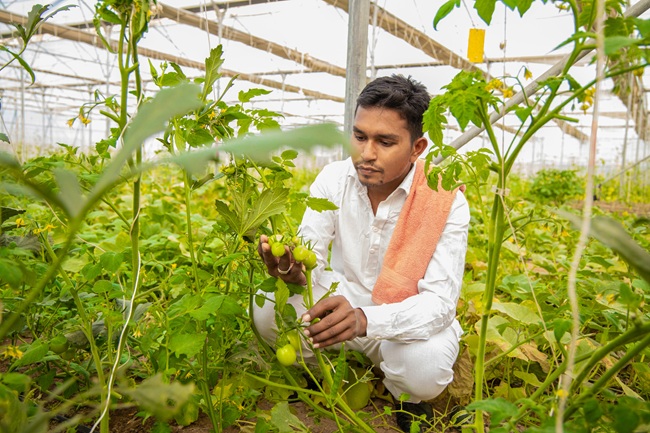
Organic food is produced through agricultural practices that emphasise soil fertility, biodiversity and ecological balance. Rather than relying primarily on synthetic fertilisers and pesticides, organic farming uses methods such as composting, crop rotation, green manure and biological pest management. The use of genetically modified organisms is restricted under applicable organic standards. Organic production is therefore best understood as a regulated farming system, not simply as a claim that food is “natural.”
This distinction matters because consumers often associate organic food with absolute purity or guaranteed nutritional superiority. Such expectations can obscure the more important question: how can agriculture provide nutritious food while protecting the resources on which future harvests depend?
Health Begins with Informed Choices
One reason consumers choose organic food is the possibility of reducing their exposure to certain synthetic pesticide residues. Organic production can reduce exposure to some of these substances, although the presence of residues in conventionally grown food does not automatically mean that it is unsafe. The issue calls for informed judgment rather than fear.
Equally, organic food should not be presented as a guarantee of better nutrition. Scientific evidence does not establish that every organic product is nutritionally superior to its conventional counterpart. Both can contribute to a healthy diet, and the greater priority remains eating a varied selection of fruits, vegetables, whole grains, pulses, nuts and other nutritious foods.
The value of organic food, then, cannot be judged by nutritional claims alone. Its wider significance becomes clearer when we look beyond the plate to the soil from which food grows.
Healthy Soil, a Sustainable Food Supply
The Food and Agriculture Organization of the United Nations expresses this connection simply: “Healthy soils are the basis for healthy food production.” Soil is not merely a surface in which crops are planted; it is the foundation of agriculture and the medium in which nearly all food-producing plants grow.
Organic farming places considerable emphasis on maintaining this foundation. Composting returns organic matter to the land, crop rotation diversifies cultivation, and biological approaches to pest management seek to support ecological balance. These practices can improve soil structure, sustain beneficial organisms and, under suitable conditions, reduce agricultural pollution. Diverse cropping systems can also provide habitats for pollinators and other useful species.
Nevertheless, environmental responsibility cannot be measured by a label alone. Crop yields, land requirements, water use, transport and farming methods all influence the environmental impact of food. Organic farming is not automatically superior in every setting; its contribution must be assessed alongside the need to produce an adequate and affordable food supply.
The goal should therefore be neither unquestioning celebration of organic agriculture nor wholesale rejection of conventional farming. It should be the adoption of practices that protect natural resources while meeting society’s nutritional needs.
India’s Organic Opportunity—and Its Challenges
This search for sustainable agriculture has particular relevance to India, where farmyard manure, composting and mixed cropping have long formed part of agricultural practice. Organic farming offers an opportunity to build on such knowledge while creating markets for products ranging from rice, millets and pulses to spices, tea, fruits and vegetables. It can also open avenues for small farmers, rural enterprises and agricultural cooperatives.
Yet opportunity does not automatically translate into secure livelihoods. Farmers may face complicated certification procedures, transition costs, lower yields in some circumstances and uncertain access to buyers. Inadequate storage and weak distribution networks can further reduce the benefits of entering organic markets.
For this reason, promoting organic consumption must go hand in hand with supporting producers. Training, scientific guidance, accessible certification and dependable market connections are essential. Farmer-producer organisations, agricultural universities and public agencies can help bridge the gap between environmentally responsible cultivation and economically viable farming. Direct sales and local markets may also strengthen connections between farmers and consumers.
A sustainable food system must protect both the land and the people who cultivate it.
Beyond Attractive Labels
As organic markets expand, consumer trust becomes increasingly important. Terms such as “natural,” “farm-fresh” or “chemical-free” should not be treated as substitutes for recognised organic certification. Attractive packaging may suggest quality, but reliable information is a stronger basis for purchasing decisions.
In India, the Food Safety and Standards Authority of India recognises two certification systems under the organic food regulations: the National Programme for Organic Production (NPOP) and the Participatory Guarantee System for India (PGS-India). Its Jaivik Bharat initiative helps consumers identify organic food and access information about standards and certification.
Certification, however, does not remove the need for proper storage, hygienic handling or washing fresh produce. Nor should a certified label distract consumers from the overall nutritional quality of their diet. Organic status is one consideration in food selection, not a complete measure of healthfulness or safety.
Making Responsible Food Accessible
Trust alone is not enough if responsibly produced food remains beyond the reach of ordinary households. Organic products may cost more because of labour, certification, production and distribution expenses. For families managing limited budgets, affordability can matter more than production labels.
The discussion must therefore move beyond individual purchasing power. Better supply chains, accessible certification and fair market arrangements can help connect farmers with consumers without treating organic food as an exclusive lifestyle product. At the same time, improving food safety and sustainability across conventional agriculture remains essential.
The objective is not to divide consumers into those who can afford organic food and those who cannot. It is to make nutritious, safely produced food more widely available.
A Shared Responsibility for the Future
Organic food invites us to reconsider the relationship between personal well-being and environmental care. It encourages questions that every food system should be able to answer: Where was this food grown? How were the soil and water managed? Were farmers fairly rewarded? Can these methods sustain future harvests?
Berry’s description of eating as an agricultural act gives these questions their wider meaning: consumers do not stand entirely outside agriculture; they participate in it through their relationship with food. That participation, however, must be matched by responsible farming, transparent markets and evidence-based public policy.
Choosing organic food where it is affordable and reliably certified can be one expression of this responsibility. It is not the only one. Reducing pesticide misuse, strengthening sustainable practices across farming systems and ensuring access to nutritious food are equally important goals.
Ultimately, the promise of organic food lies not in an idealised return to the past, but in a more thoughtful approach to the future—one that brings scientific knowledge, agricultural experience and ecological responsibility together. A healthier food system begins when care for what we eat becomes inseparable from care for the land and the people who feed us.
Image (c) istock.com
17-Oct-2026
More by : Prof. Dr. Mahammad Ghouse Shaik
