Oct 24, 2026
Oct 24, 2026
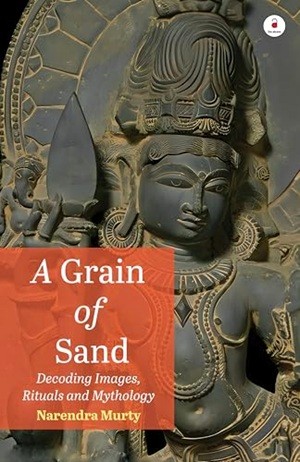 Rama means “Sarveshu Ramante Iti Ramah” – that which revels in every one of us, the pure light of consciousness, the Atman, the Self. So symbolically, in the Ramayana, Rama represents the Divine principle. And understandably, he is the Avatar as well. The specific purpose of the Rama avatar has been discussed in the chapter on the Ten Avatars. Here we would focus on the symbolism of the epic of Ramayana itself.
Sita represents the individual human ego, the jeeva. King Janaka had found her while plowing the earth as a part of a Vedic ritual he was performing. She was found in a furrow on the earth. Since Sita was born of Mother Earth, she is also called Bhumija – born from Bhumi. In other words, Sita represents the material nature of man. Man is also a creature of the earth – his very existence is a material existence. Hence man is also called Bhumi putra. Just as Sita is called Bhumija.
The ideal state of existence for a man is when he is always devoted and faithful to the Divine. This is represented by Sita’s marriage to Rama. In the union with the Divine – man is ever happy and peaceful. As long as Sita’s attention was on Rama, she was ever blissful - be it in the luxuries in the palace or in the hardships of the forest. Similarly man is happy as long as he is attuned to the inner Self. Prosperity or poverty would make no difference to the inner state of bliss. The true devotees of the Lord are ever blissful in their inner attunement to the Lord. This is represented by the perfect union of Rama and Sita. Even when Rama chose to go into exile to protect the honour of his father, Sita gladly accompanied him to the forest. In the forest too she was blissful because she had Rama by her side. In our lives too, if we have really succeeded in establishing the Divine in our hearts and are in a state of mental union with the Lord, then the external circumstances would have no effect in the inner peace and happiness that we would enjoy in that Divine company. That is the meaning of Sita’s happiness in the company of Rama even in the forest where she had none of the luxuries of the palace that she had left behind voluntarily.
The troubles for Sita started when she saw the golden deer and was enchanted by it. An irresistible desire arose in her bosom to possess it. She asked Rama to fetch it for her. He asked her to desist from the desire but she was adamant. This is what we also do. We ask for material things for sense gratification from God. Material success, wealth, power, position – these are the things we beg from God when we are caught in the spell of the golden deer. Sita’s aspiration changed – from a blissful union with her Lord to the intense desire to possess the golden deer. As soon as her aspiration changed from the spiritual to the mundane and her desire was focused on a sense object of the world, her Lord had to move away from her. Because now instead of being inwardly oriented, the jeeva had become outwardly driven allured by an attraction of the world. A golden deer is a Maya mriga – the deer of illusion, a mirage. The objects of the world with their alluring sights, tastes, smells, sounds and tactile pleasures tempt and seduce us. But all such pleasures are fleeting like the swift footed deer – they don’t last and bring untold misery in their wake. Similarly our attempt to find happiness in the material things of the world is nothing but chasing after a Maya mriga.
When Rama shot an arrow piercing the golden deer (actually the Rakshas Maricha in disguise), the demon let out a cry imitating the voice of Rama. Hearing this Sita ordered Lakshmana to go to Rama’s aid. In spite of Lakshmana’s assurance that nothing can happen to Rama, Sita insisted on his leaving. Lakshmana is considered an Avatar of Seshnag, the ever faithful companion of the Lord. Lakshmana personifies tapas, austerity and single mindedness. He voluntarily chose an austere life because he was under no obligation to go to the exile and did it purely out of his devotion to the Lord. When desire overtakes us, our self-control and tapas also leaves us. But even if we are desiring and covetous, still we may not come to harm if we remain within the confines of discipline and self-control. This is known as the Lakshman Rekha. As long as we remain inside the Lakshman Rekha (self-control and discipline) we would still be protected.
But once tapas has been given up, such lines are of no use. And when we violate the Lakshman Rekhas of life and step out of them, we are captured by the ten headed monster in the form of Ravana (Dasanana). Ten headed=five sense organs + five organs of action driven by Rajas. Ravana represents Rajas. Desire, lust, passion, greed, anger, pride, the tendency to grab what belongs to others, power hunger, overweening ambition – all these traits are Rajas. When we become covetous and desirous for the material objects of the world, then we come under the spell of Ravana. The ten headed monster of Rajas seizes and puts us under his control and captivity. That is the meaning of Sita harana – the abduction of Sita.
Ravana who symbolizes Rajas takes Sita to Lanka. Lanka is a materially affluent city and is supposed to be made of gold! After the golden deer comes the city of gold! Lanka could be equated to our modern, swanky cities where people live an extreme material life in the midst of luxuries devoid of an iota of spirituality. So when Sita is overpowered by Ravana, she becomes exiled in a materially affluent world (Lanka) away from the peace and bliss of her Lord. This is an eternal metaphor which is very relevant to the modern world. We should realize that we too are all at this moment “Sitas in exile.” If we are living a purely material life devoid of any spirituality in a city in the midst of the lure of gold, we are in the golden Lanka. Trapped amidst the technological splendours and an endless lure of sense objects of commercialized, modern cities – we too are living in Ravana’s Lanka.
But here the story of Sita begins to take a different turn. Does she enjoy the material affluence and luxuries offered by Ravana? NO! She realizes her mistake and rejects everything that Ravana has to offer. She wants only one thing in life now: Being reunited with her Lord. Desire is given up and she forgets all about the golden deer and even the city of gold has no more any attraction for her. She takes up Tapas and Bhakti and brings back Rama into her thoughts again. When man takes up the practices of tapas and bhakti, he gains peace and contentment which is symbolized by Sita remaining in the Ashokavan. Shoka is grief; Ashoka is non-grief. So A-shoka means a transcendental state above the dualities of pain and pleasure. Rejecting all the temptations and seductions of the city of gold, spurning all the rewards that Rajas offers, Sita continues to remain in a state of A-shoka and steadfast in sadhana.
When we are in a state of Sadhana and are sincere in our aspiration for the divine, then Divine help is always at hand. As Sri Aurobindo writes in The Mother: A fixed and unfailing aspiration that calls from below and a supreme Grace from above that answers.
The Lord is happy that we have turned to him again in spite of our falls and stumbling which are part of our fallible human nature. We receive indications and intuitions that we have not been abandoned. We receive intimations of the Lord. Our spiritual strength and faith arrive as represented by Hanuman. We regain the confidence and assurance that the Lord is always with us. Hanuman who also represents absolute surrender, loyalty to the Divine, service and tremendous strength tells us that our ordeal would soon be over since the Lord himself has taken it upon himself to rescue us from the golden city of Lanka. Esoterically, Hanuman also represents the principle of breath and control of our Pranic energies (he is Pawan putra – son of the Wind element) – that is, the discipline of Pranayama which is an ingredient of Yoga.
After this meeting, Hanuman burns down Lanka. The burning of Lanka indicates that material splendor has no more any value or attraction to the one who is spiritually awakened and is in a state of A-shoka and immersed in the devotion towards the Lord. Sense objects lose their allure and the golden city becomes irrelevant. This is symbolized by the burning of Lanka.
We have already stated that Ravana represents Rajas. Now we shall take a look at his other two brothers. If Ravana represents Rajas, then Kumbhakarna represents Tamas. According to a boon he himself asked of Brahma, he would sleep for six months and wake up to eat to his heart’s content and again go to sleep for another six months. So sleeping and eating was the sum total of Kumbhakarna’s life. An extreme case of Tamasic existence of gluttony, sloth, inertia, laziness, dullness and heaviness.
And finally we have Vibhishana who represents Sattwa. He possesses the qualities of wisdom, righteousness, aversion to wrong doing, devotion to the Divine etc. Since Vibhishana represents Sattwa, he acts as the only voice of conscience in a sinful Lanka. So he repeatedly admonishes Ravana and warns him of the consequences of his extremely Rajasic acts of violence and wrongdoing. But since it is Ravana who is the ultimate ruler of Lanka, a Sattwik person like Vibhishana is powerless to bring about any change in Ravana. In a fit of anger, Ravana actually kicks him out of Lanka. This is exactly the behaviour of all Rajasic persons. They pay no heed to the good advice of parents, spouse or well-meaning friends. They carry on in their own ways of self aggrandisement.
When Vibhishana is driven out of Lanka, he aligns himself with Rama. That is because Sattwa always seeks light and liberation. That is the significance of Vibhishana deserting Lanka and the camp of Ravana. Because Sattwa is always attracted to the divine. Ravana, Kumbhakarna and Vibhishana being three brothers also represents the fact that the gunas of Rajas, Tamas and Sattwa reside within the same human being.
On the opposing side, the attack on Ravana is launched by the Vanara sena - the monkey forces. The monkey forces represent again, the human mind with its numerous, scattered thoughts. A monkey, like human thought, has two distinct qualities: asthira (unstable) and chancala (always in movement). The thoughts keep jumping from one to another. These monkeys were under the domination of Vali who represents lust (for flesh and power). He had seized the kingdom and was living with the wives of Sugreevaa (an act of greed and lust). We too are like Vali. We seek power by all means and appropriate what belongs to others to satisfy our greed and lust. In order to gain one’s spiritual nature, one has to divert the mind from lust and greed to self-control and sacrifice. Hence, Vali has to be destroyed from behind, not in a frontal attack. We cannot defeat lust in a direct fight. So when we are overpowered by lust, we have to keep away from the object of our lust and destroy it from a distance. This is the significance of Rama killing Vali from behind. Then the leadership of the monkeys (thoughts) passes on to Sugreeva (meaning well-reined/well controlled). When the thoughts are under one’s control and become single pointed, then great things can be achieved in life. Even the seemingly impossible task of crossing the sea and rescuing Sita from the golden city of Lanka.
However, before taking on Ravana, Rama invokes the power of Divine Shakti to ensure his victory in the battle. We know that Rama was himself an Avatar of Vishnu. Then why would he require the blessings of Devi to kill the Asura Ravana which was indeed his own divinely ordained mission? That is because Rajas is an extremely powerful Asura who has in his arsenal such formidable forces like lust, greed, anger, pride, ambition and self-aggrandizement. Ravana is human ego itself representing all these powers of Rajas. Tremendous amount of power and force is required to kill such a demon. And it is not possible without the grace of the ultimate power – the Divine Shakti represented by the Devi. And when Devi appears and blesses Rama, victory is assured against the Rajasic demon Ravana.
But even then the battle goes on for ten days! To kill the ten headed Rajasic Dasanana who has overpowered and has cast his spell over our five sense organs and five organs of action, it is understandable that the battle would go on for ten days. Then finally, victory is achieved on the tenth day of the battle – the day of Vijaya Dashami. To celebrate the occasion, we celebrate Rama Lila across the length and breadth of this land where we burn the effigies of Ravana, Kumbhakarna and Meghnada – who represent the forces of Rajas and Tamas.
And Vibhishana is coronated as the king of Lanka representing the rule of Sattwa – the rule of Dharma and righteousness established by divine sanction, i.e., Vibhishana crowned by Rama himself.
Thereafter, Sita, the jeeva is rescued from Lanka. However, the Lord before taking us back into his bosom, would put up a test for us (Agni pareeksha) in some form to measure our sincerity and to remove all stains of impurity that we may have unknowingly acquired during our stay in Lanka. Once we pass this test, we are reunited with our Lord. That is the rescue of Sita from Lanka.
And finally, the victorious warriors go to Ayodhya – meaning Not to be fought against – that is, an abode of peace and happiness where Rama Rajya is established. This then, is the symbolism behind the epic tale of Ramayana rendered by Maharshi Valmiki.
24-Oct-2026
More by : Narendra Murty
Top | Literary Shelf | Home