The Negative Disposition (Hindsight Bias) Towards New Inventions:
An Analysis from Historical Resistance to the Era of Artificial Intelligence (AI)
Abstract
Throughout the journey of human civilization, every new technological innovation has faced anxiety, fearmongering, and resistance from society. This research paper analyzes the psychological and social disposition of negative forces that rely on 'hindsight' rather than 'foresight'. Tracing the history of negative campaigns from early inventions like cameras, railways, electricity, and computers to the modern era of Artificial Intelligence (AI), this paper demonstrates how technological disruptions do not destroy human labor. Instead, it highlights how they serve as powerful vehicles for social justice, dismantling caste discrimination, creating unprecedented employment, and fostering modern educational advancement.

The central objective of this paper is to illustrate how marginalized sections can leverage advanced thinking to leapfrog traditional legacy structures through new technologies.
1. Introduction
Change is a continuous, natural process in the evolution of human civilization. Every new invention and technological revolution has emerged solely to elevate human living standards and establish social equality. However, a close examination of history reveals that whenever a breakthrough innovation entered society, it was met with fierce opposition rather than a warm welcome. A certain segment of society always prefers to look backward with hindsight bias and cling to obsolete methods, rather than looking forward with 'foresight' to embrace future opportunities.
Their primary tendency is to create widespread panic and fearmongering within society by blowing temporary initial struggles out of proportion, completely failing to scientifically study the revolutionary long-term benefits of the new invention. The core objective of this paper is to analyze these negative campaigns, from historical inventions and social integration mechanisms to modern education, global economic opportunities, and the current era of Artificial Intelligence (AI) and unravel the socio-psychological truths behind them.
2. Basic Inventions – Historical Fears & Early Inventions
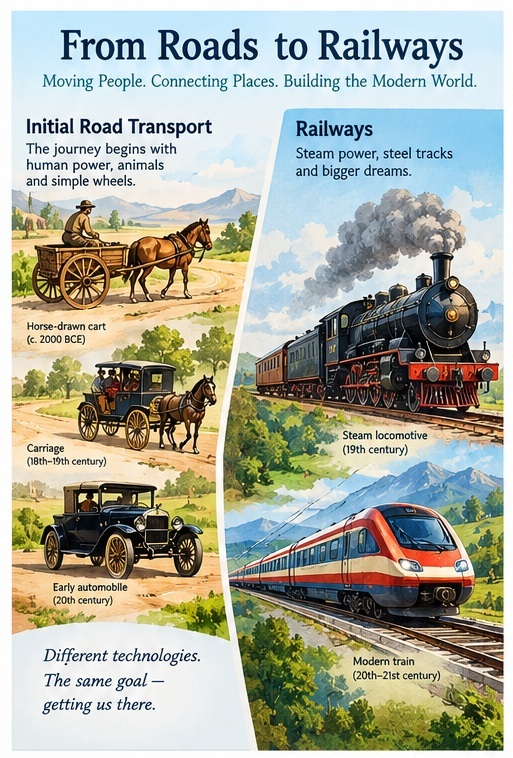
Even the most fundamental human attempts to reduce physical labor and accelerate progress were vehemently opposed in the past. The purveyors of fear depicted every minor shift as an impending catastrophe.
- Modes of Transport: The Fear of Accidents: When humanity transitioned from walking to the wheel, and subsequently to bicycles, motorbikes, and cars, immense fear was manufactured under the guise of safety. People were warned, "If you ride a bicycle, you will fall and break your limbs," and "If you ride a motorbike, you will meet with a fatal accident." While it is true that hundreds of thousands die in road accidents today, the root cause is human error or lack of traffic regulation, not the technology itself.
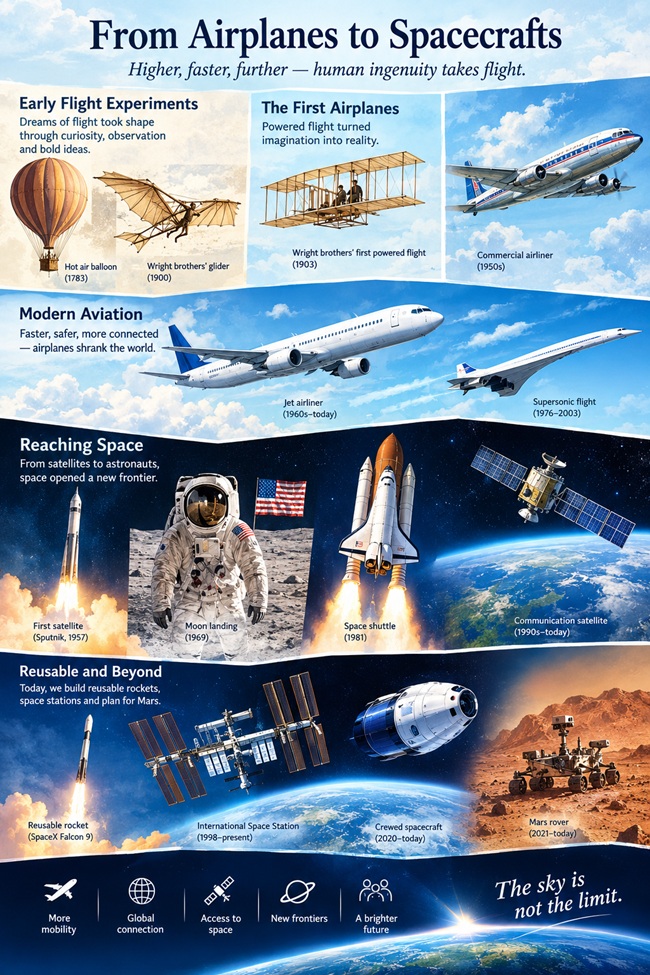
- Railways and Aviation: When the steam locomotive railway engine was first invented, rumors were spread that its smoke would cause cattle to stop yielding milk and ruin agricultural crops. When it came to aviation, terrifying negativity was propagated, claiming, "If an airplane falls from the sky into the ocean, not a single soul will survive." Yet today, aviation has seamlessly transformed the world into a global village. If humanity had chosen the path of fear, we would still be languishing in the age of bullock carts.
- Space Technology – From Airplanes to Spacecrafts: As human ambition climbed higher, from airplanes to spacecrafts, the manufactured skepticism reached cosmic proportions. When India initiated its space program under ISRO, short-sighted domestic critics fiercely ridiculed it, shouting, "Why waste public money on rockets when we have poverty on the streets?" They predicted that trying to touch the moon would bring celestial bad luck or squander valuable national wealth. Yet today, India stands proudly as an undisputed global space power, successfully executing cost-effective Moon and Mars missions like Chandrayaan and Mangalyaan.
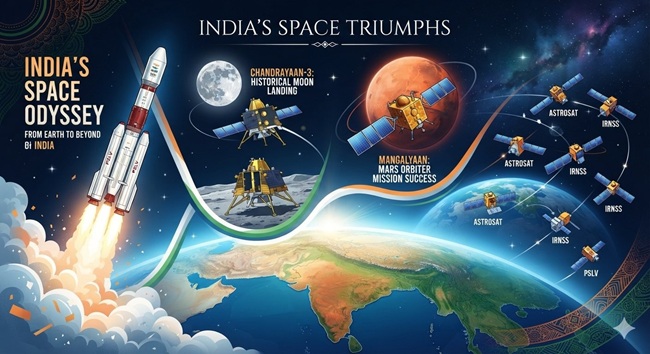
This space sovereignty did not deplete the country; instead, it revolutionized national telecommunications, localized weather forecasting to save millions of farmers from cyclones, and generated a highly advanced homegrown aerospace engineering industry that employs hundreds of thousands of youth.
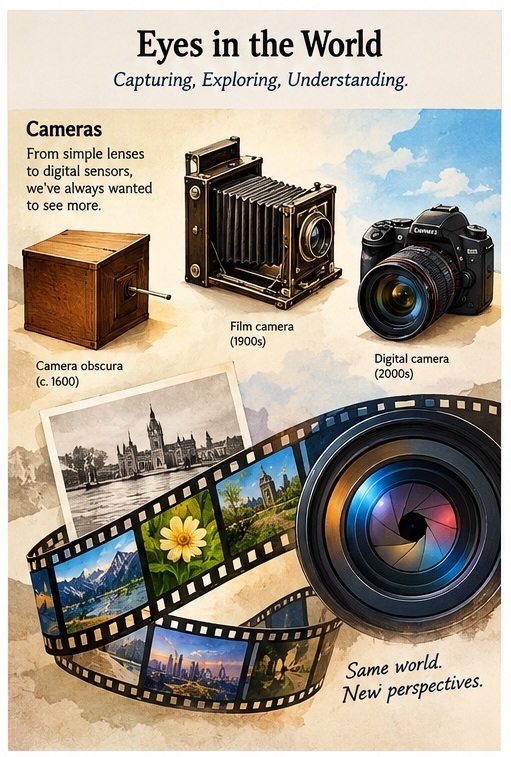
- The Invention of the Camera: Superstitions on Lifespan: The dawn of photography is a prime example of how ignorance towards technology breeds paranoia. In its early days, people genuinely believed that getting photographed would capture their shadow or trap their soul, thereby drastically reducing their lifespan. This superstition was aggressively preached by conservative factions. Today, that very camera archives world history and keeps the memories of great personalities alive forever.
3. Mass Transit Inventions Accomplishing What Reformers Couldn't
In India, countless social reformers dedicated their entire lives to eradicating deep-rooted social evils like caste discrimination and untouchability. Despite their monumental ideological struggles, structural change in society did not manifest at the desired pace. Strikingly, mass transport innovations like buses and trains achieved this miracle naturally at the grassroots level.
- A Direct Blow to Untouchability: When railways were introduced, orthodox groups warned that traveling together would pollute and destroy the caste system. However, driven by the absolute necessity of survival and travel, people from all castes and walks of life were forced to sit side by side on the same seats in the same railway compartments.
- Social Integration: Railway travel treated everyone equally, irrespective of caste, creed, or religion. It rendered physical segregation impossible during transit. Thus, this transportation revolution naturally dissolved centuries-old practices of untouchability and social distancing. Today, the Indian Railways directly employs over 1.2 million people, serving as the backbone of the national economy while fostering unhindered social mobility for billions.
4. Electricity, Printing, and the Mass Media Revolution
Energy systems, the printing press, and mass media have played a foundational role in universalizing human intellect and information distribution. Yet, their initial phases were met with severe resistance.
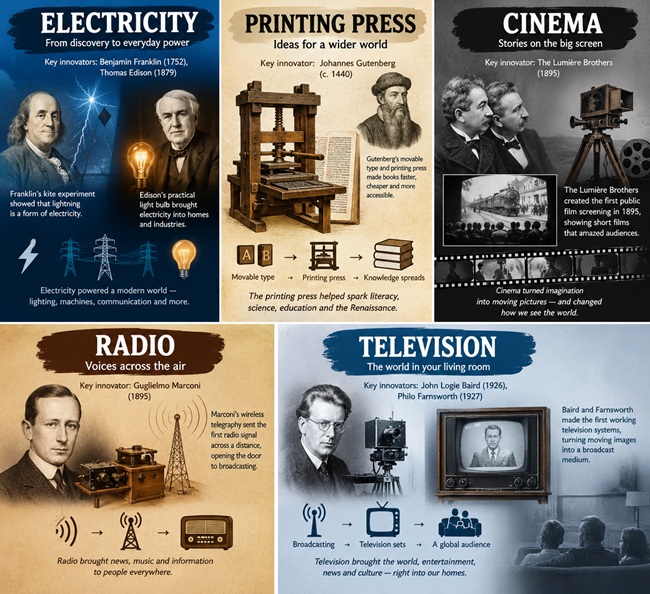
- The Invention of Electricity: When electricity was discovered, campaigns warned that people would be electrocuted and die, making citizens terrified of taking electrical connections into their homes. In reality, the arrival of electricity catalyzed billions of new jobs, created brand-new industries, enabled night shifts, and boosted manufacturing, entirely altering the destiny of human productivity.
- The Printing Press: Prior to the printing press, knowledge was strictly monopolized by a privileged few. When the printing press emerged, critics argued that it would flood society with unnecessary information and corrupt public morality. Instead, the printing press democratized knowledge, making books accessible to the common man. The subsequent rise of newspapers ensured equal distribution of information, fortifying the foundations of modern democracy.
- The Impact of Cinema, Radio, and TV: When entertainment and information media like cinema, radio, and television arrived, alarmists claimed they would misguide the youth and waste precious time. Contrarily, these platforms allowed exceptionally talented artists and technicians to achieve international renown, turning into a massive industry that supports millions of livelihoods today.
5. The Industrial Revolution and Agricultural Mechanization
When machines began replacing manuals, grueling physical labor, anxieties rose that employment would be entirely wiped out, a fear that panic-mongers quickly capitalized on.
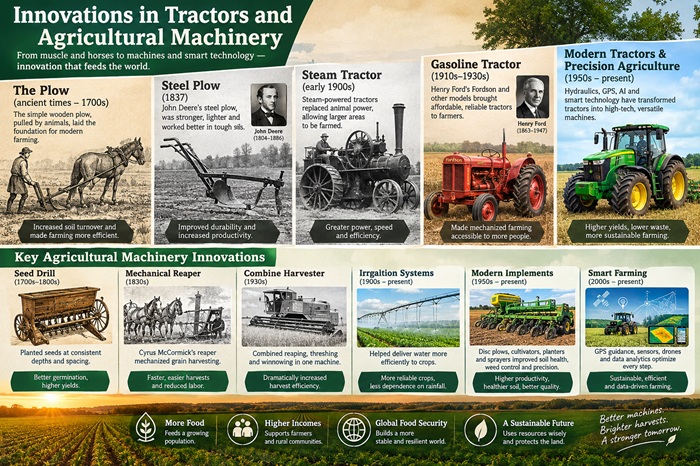
- Tractors and Agricultural Labor: When tractors and harvesters entered the agrarian sector, massive campaigns declared that agricultural laborers would lose their livelihoods, leading to widespread starvation. In truth, mechanization multiplied agricultural productivity, saved immense time, and allowed laborers to transition towards more skilled sectors in the expanding industrial and service economies.
- Machines and Traditional Occupations: The narrative that modern machinery ruined traditional artisanal crafts was widely circulated. What these critics ignored was the 'foresight' that occupations must modernize with changing times. Machines drastically reduced backbreaking labor and made high-quality goods accessible to the common consumer at affordable prices.
6. Globalization and the Computer Revolution: A Historical Truth
During the 1980s and 90s, India witnessed massive nationwide protests and agitations opposing the introduction of computers and the policies of economic globalization.
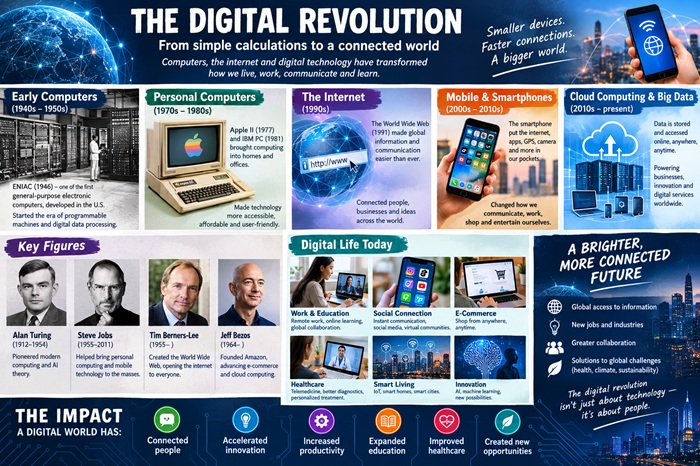
- The Opposed Computers and Today's IT Boom: Slogans were raised claiming, "One computer will snatch away the jobs of ten people, banking systems will collapse, and unemployment will skyrocket." Protesters held dharnas outside offices to block computers. What did time prove? Today, software and IT jobs outnumber traditional government jobs by hundreds of folds. The computer revolution transformed India into a global IT superpower. Those who fiercely opposed computers back then now take pride in seeing their children thrive as global IT professionals.
- The Hypocrisy in Anti-Globalization Campaigns: The very factions that filled the streets protesting against globalization, alleging that multinational corporations (MNCs) would plunder the nation and reduce us to corporate slavery, were the first to enroll their children in English-medium schools, send them abroad, and eagerly reap the lucrative corporate benefits offered by those exact MNCs.
7. The Digital Revolution: From Canvas Artists to Digital Designers
Every time technology touches the creative domain, campaigns instantly emerge claiming the extinction of artists.
- Computer Composing and Software Designs: Once, movie posters, shop banners, and book covers were painstakingly hand painted by artists. When computer graphics, Photoshop, digital typesetting, and flex-printing technology arrived, it was decried as a plot that would starve thousands of painters and kill the essence of art.
- The Evolution of Artists: While traditional sign-board painters did lose their conventional jobs, those who upgraded their skills and learned the technology evolved into digital designers, animators, and UI/UX specialists, earning hundreds of times more. Technology did not kill art; it expanded its horizons and multiplied its commercial viability.
8. Biotechnology in Healthcare – Conquering Disease Amidst Paranoia
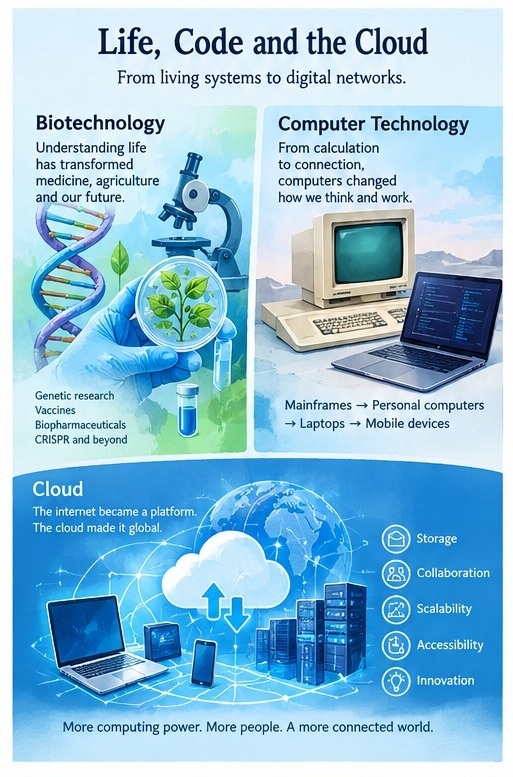
The baseline resistance to innovation is not restricted to machines or electronics; it extends deep into biological sciences. The arrival of modern Biotechnology in Healthcare serves as a paramount testament to how fear-mongering targets life-saving solutions.

- The Fear of Intervening with Nature: When revolutionary biotechnological advancements—such as recombinant DNA technology, genetic engineering, stem cell therapy, and mRNA vaccines—were introduced, doomsayers immediately raised alarms. Critics and conservative factions declared that biotechnology was "playing God," claiming that genetically altered medicines would cause permanent deformities, turn humans into mutants, or trigger global health collapses. Every major medical milestone, from the mass production of biosynthetic insulin to modern gene-editing tools like CRISPR, was initially wrapped in layers of synthesized panic and distrust.
- The Egalitarian Miracle of Life Extension: Despite the loud resistance, biotechnology has democratized healthcare and saved hundreds of millions of lives, particularly among the lower economic strata who historically bore the brunt of untreatable pandemics and chronic diseases. Breakthrough vaccines eradicated fatal diseases, while mass-produced bio-engineered drugs plummeted treatment costs. Biotechnology transformed terminal conditions into manageable illnesses, drastically raising the average human lifespan. By choosing scientific rigor over superstitious fear, healthcare evolved from a luxury of the elite into a universal right, proving once again that biological innovation elevates human existence.
9. New Technology – The 'Leapfrog' Revolution for Marginalized Masses
We must critically observe a highly revolutionary and socially just dimension of technological evolutions: New technology provides a level playing field for the marginalized (the historically backward and oppressed sections at the tail end of society).
- Simultaneous Novelty for All: When radically new technology hits the market, it is equally new to the billionaire and the commoner alike. No one possesses a legacy advantage or prior experience in it. In this precise window, while traditional elite forces are comfortably basking in their past glory and exhibiting 'hindsight bias', the youth from marginalized communities, armed with Advanced Thinking, can rapidly grasp the new change and dash forward. In socio-economic science, this phenomenon is called 'Leapfrogging'—skipping multiple traditional developmental stages to jump straight ahead of everyone else.
- Delayed Entry of Industrial Giants – A Historical Example: Indian corporate history offers a spectacular proof of this principle. When the Information Technology (IT) and Telecom revolutions first took off, century-old traditional industrial houses like the Tatas or massive industrial empires like Reliance Ambani were not the ones leading the charge. Instead, it was first-generation IT professionals with zero industrial backgrounds (such as N.R. Narayana Murthy of Infosys, Azim Premji of Wipro, and the founders of Tech Mahindra) who anticipated the shift with advanced thinking, mastered the knowledge, and rose to become international industrial icons.
Long after these new forces built monolithic empires and dominated the global IT sector, traditional giants like the Tatas (via TCS) and Reliance had to enter the IT, mobile, and communication sectors as later entrants.
The Takeaway: Societies and individuals who continuously update themselves and swiftly adopt new innovations will lead. Even if traditional powers are currently ahead, if they succumb to hindsight bias and delay adaptation, they are bound to be left behind. History proves that the IT revolution favored the swift, not just the historically powerful.
10. The Modern Challenge: Artificial Intelligence (AI) and Present-Day Resistance
Currently, the world is witnessing the Fifth Industrial Revolution led by Artificial Intelligence (AI), and it is facing the exact same negative, backward-looking resistance seen in previous eras.
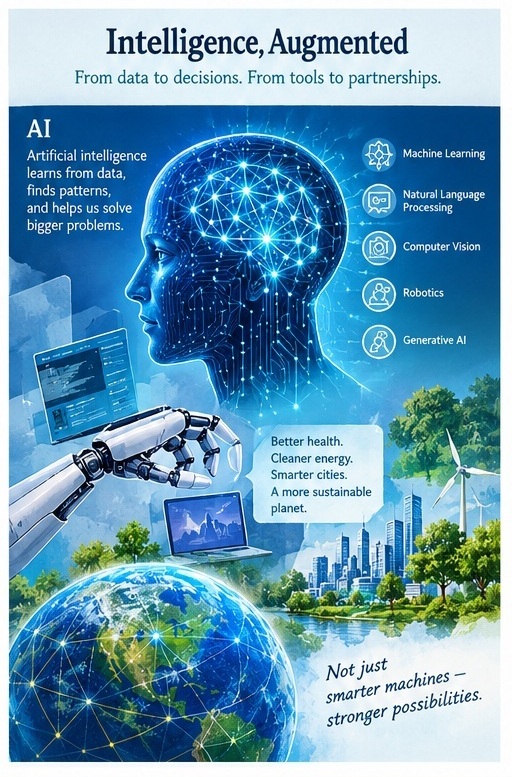
- Propagating Paranoia: People are being terrified with science-fiction-like narratives disguised as facts, claiming, "AI will cause millions to lose their jobs globally," and "AI will surpass humanity and reach a stage where it enslaves and rules over humans."
- Masking Incompetence: The driving force behind this negative campaign is the short-sightedness of certain individuals who are incapable of upgrading themselves to match changing times. Those who lack the capacity to guide society or teach students "how to efficiently harness AI (via Prompt Engineering and AI-driven automation)" are the ones loudest in expressing hostility towards it. They blame AI simply to mask their own professional stagnation.
- The Reality: AI is not a tool designed to replace humans; it is a powerful Co-pilot meant to amplify human intellect. Just as marginalized youth bypassed Tatas and Ambanis to seize the IT boom, the youth from oppressed backgrounds who embrace the AI revolution with advanced thinking are the ones who will govern the future world.
11. The Dawn of Modern Development – Expansion of Education, Employment, and Comforts
It is solely because of modern technological and industrial progress that society today enjoys high educational standards, vast employment avenues, and unparalleled lifestyle comforts.
- Modern Education: The fact that digital classrooms, online learning, and global knowledge repositories are accessible to a student in a remote village today is a direct miracle of the IT revolution.
- Modern Employment: Youth have successfully migrated from grueling physical labor and traditional agrarian limits to the intellectual heights of the Knowledge Economy. This has brought structural economic equilibrium to society.
- Comforts: Robotic surgeries in healthcare, tele-medicine, high-speed metro trains, and instantaneous online services have made human life secure and comfortable. The root of all these comforts lies in welcoming 'the new'.
12. Socio-Psychological Analysis of Those Who Oppose the New
Those who oppose new innovations generally exhibit three distinct behavioral traits:
- Inability to Leave the Comfort Zone: Living in habitual, old patterns requires no extra effort. Learning something new requires intellectual labor, unlearning, and mental exertion. Those who resent this effort naturally choose to oppose innovation.
- Lack of Deep Study: Evaluating a technology based entirely on immediate, temporary disruptions rather than scientifically analyzing its long-term socio-economic balance sheet.
- Exploiting Easy Publicity: Fear and sensationalized negative news spread far quicker in society than rational, positive facts. Capitalizing on public anxiety is a calculated strategy for some to remain relevant.
13. Conclusion
History leaves us with only one absolute truth: "Change cannot be stopped by anyone. Those who oppose change fade into the footnotes of time; those who anticipate and embrace it create history."
The same doomsayers who manufactured panic around the camera, bicycle, train, electricity, globalization, and computers are manufacturing the exact same paranoia around AI today. Just as those who cursed computers eventually found employment through them, those who curse AI today will become the primary users tomorrow.
Therefore, as intellectuals and educated citizens, our duty is not to retreat in fear under the pretext of risk and struggle. Our responsibility lies in deeply studying new technologies, rectifying their flaws, and teaching society how to efficiently and ethically utilize them for the collective welfare of humanity. A society driven by fear stagnates; a society that embraces challenges marches triumphantly into progress.
All images generated using ChatGPT
Bibliography (References)
- Toffler, Alvin. (1970). Future Shock. Random House. (A study on human psychological resistance to rapid technological change).
- Sastri, Department of Social Analysis. Railways and the Social Revolution in India – The Process of Caste Annihilation.
- ISRO Historical Review Board (2025). Space Technology in Developing Nations: From Skepticism to Global Economic Sovereignty.
- Global IT Industry Report (2024). Post-Computerization Employment Generation and Leapfrogging Trends.
- Watson, James D. & Biotechnology Assessment Board (2025). Biotechnology for Healthcare: Breaking Down Economic Disparities and Public Skepticism.
- Ramulu, B.S. Modern Social Philosophy and the Impact of Technological Evolutions.
