Oct 24, 2026
Oct 24, 2026
KairosNexus, by Rama Chandramouli, translated from Telugu by Durga Sasikiran Vellamcheti, Warangal, RaaMaa Maison Imprints, 2026, pp. 642, Price Rs. 1200; USD 60
Introduction
KairosNexus comes as a demanding yet deeply rewarding work of historical fiction in translation. Written first in Telugu in 2017 as Kaalanalika, a major novel that soon became a finalist for the Central Sahitya Akademi Award and won high praise in Telugu literary circles, and now available in English, it gathers roughly eighty years of conflict and aspiration in Telangana into a long novel that tracks events from around 1934 to 2017.
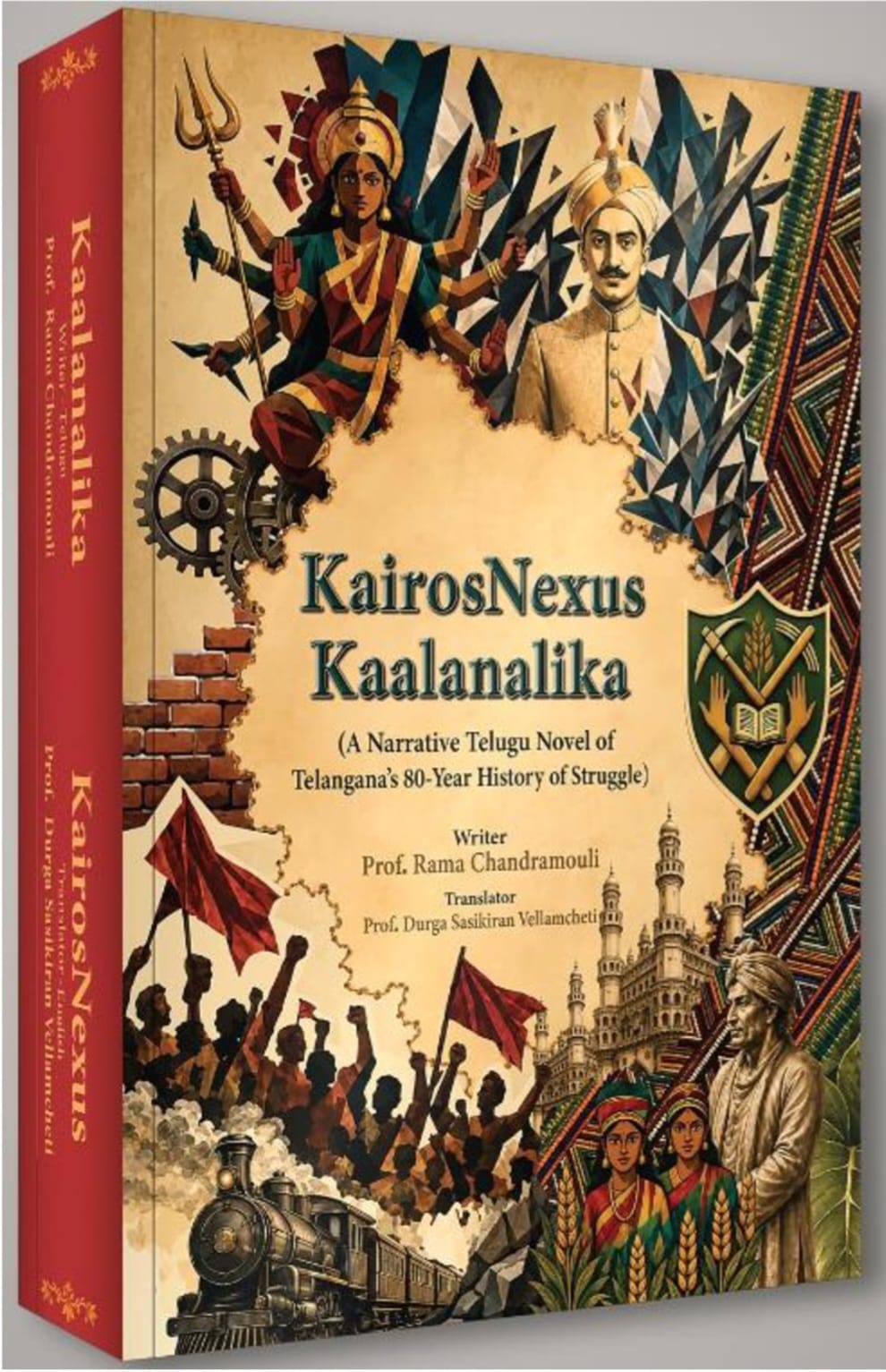 The subtitle, “A Narrative Telugu Novel of Telangana’s 80 Year History of Struggle,” signals both scope and ambition. This is not a mere backdrop of political events. History becomes the very substance of the story, pressed into scenes of hunger, clandestine meetings, family quarrels and sudden uprisings.
Set against the violent histories of land tenure, bonded labour, caste hierarchy and the repressive machinery of princely and democratic states, the novel speaks to global conversations about voice and memory. It belongs with writing that treats peasant risings, workers movements and women in resistance as central to the story of modernity rather than as local disturbances. At the same time it is unmistakably rooted in the specificities of Telangana’s armed peasant struggle, the Bairanpally massacre, the trauma and ambiguity of the 1948 “Police Action,” and the long, stop–start movement for a separate state. The book also enters larger debates on people centred historiography. Official accounts of Telangana often compress the region into a tale of underdevelopment corrected by statehood. KairosNexus (Kaalanalika) counters that facile story with stubborn attention to long duration struggle, fractured subjectivities and half realised hopes.
Author and Translator
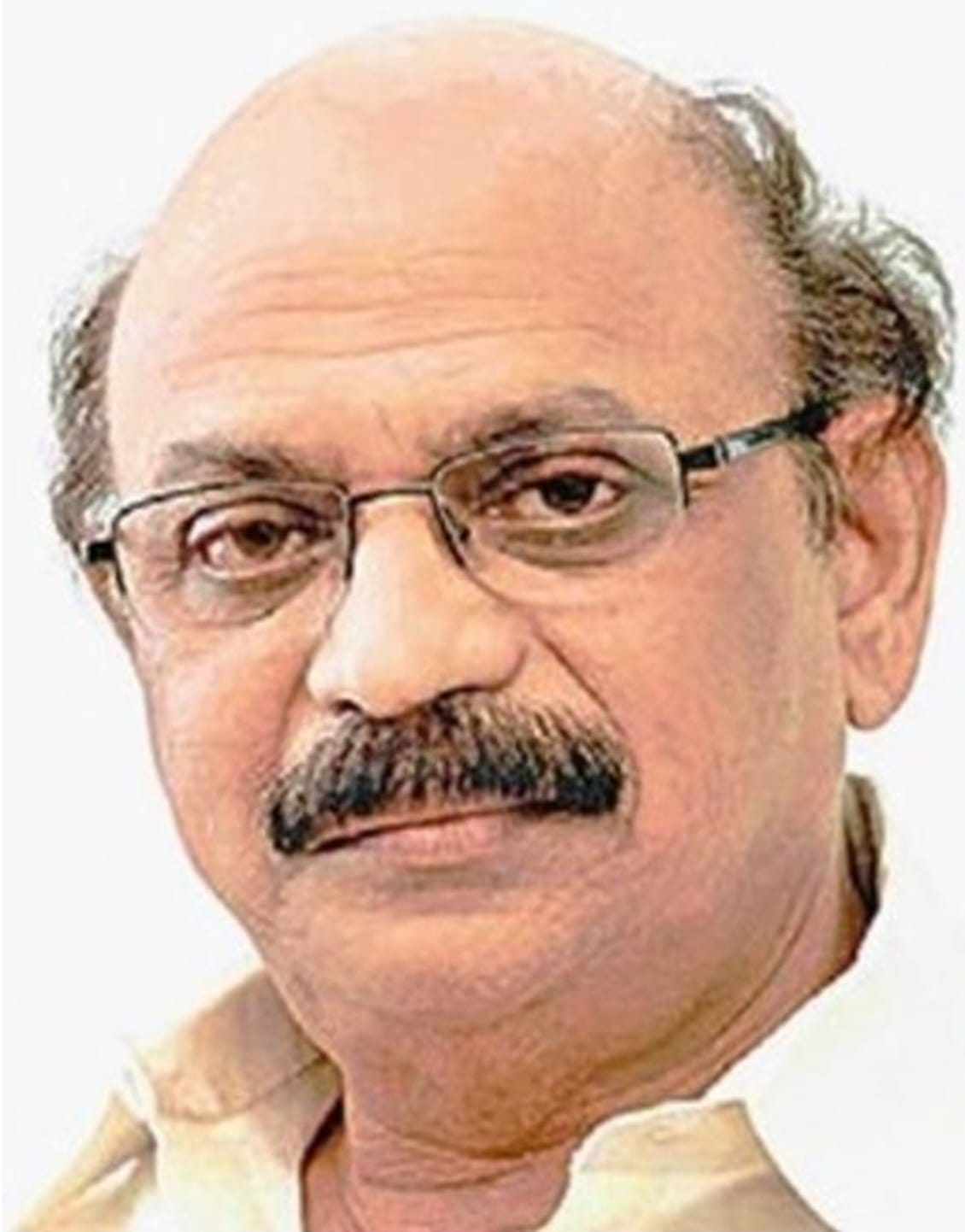 Rama Chandramouli writes from Warangal, at once an engineer by training and a major Telugu author whose work spans poetry, fiction and criticism over five decades. His contribution to Telugu letters is enormous—more than three dozen novels, nearly twenty volumes of poetry, plays, hundreds of short stories and essays, and an ongoing engagement with progressive and dalit literary currents. That unusual combination of technical discipline and poetic imagination shapes his approach here. He brings to the novel a patience with process, a fascination with cause and consequence, and a sympathy for those at the margins of state and capital. Long engagement with the literary and political life of Telangana feeds into the texture of the book. One senses familiarity with both progressive literature and dalit writing, with campus agitations and village level organising. It is no accident that he has been repeatedly honoured with major regional and international prizes: from the Kaloji Narayana Rao Literary Award in Telangana to lifetime?achievement recognitions and international distinctions that underline his standing beyond Telugu.
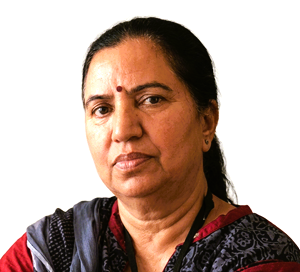 Durga Sasikiran Vellamcheti has built her academic life around English studies and translation. Trained across literature, linguistics and communication—with degrees ranging from an MA in English to an MSc in Information Technology, a PGDTE, MPhil, PhD, and a Cambridge CELTA—she brings a rare interdisciplinary confidence to her work. She has translated Chandramouli before, most notably the poetry collection Atma, and has written on Telugu-English translation in scholarly contexts. That double orientation, creative and critical, gives the present work a considered tone. She understands the ideological freight of word choice, rhythm and register. Her Translator’s Note “Bridging the Epoch: KaalaNalika to KairosNexus” unveils a scholar who treats language not as a neutral conduit but as an arena where power, memory and desire clash. In KairosNexus she explicitly frames her task as carrying a people’s history from Kakinada and Warangal into a wider Anglophone public sphere without sanding away its texture.
Narrative and Stylistic Analysis
Formally, KairosNexus unfolds as a sequence of chapters that bear striking titles. “The Generation,” “To Live Is To Wage War,” “When Time Itself Surrendered,” “When A Name Became A Weapon,” “The Land That Refused To Bow,” “Each One Has To Choose Their Path,” “Working Is Only For The Elite.” The titles offer more than signposts. They act as mini manifestos that inflect the reading of each section. The result is a novel that feels modular yet cumulative. Each chapter carries its own emotional climate, but the reader also senses an overall movement from feudal dark to incomplete emancipation.
The narration ranges widely. At points it closes in on one farm labourer, one student organiser, one police constable torn between livelihood and conscience. At other moments it steps back to describe the tightening of state repression or the spread of a slogan through villages and colleges. This rhythm between close focus and wide angle offers a persuasive sense of historical pressure. Time in the novel does not rush forward in heroic leaps. It thickens. Episodes of apparent stasis, such as a farmer bargaining in the market or a woman waiting for her jailed husband, carry as much weight as scenes of armed confrontation. Several chapters are anchored in emblematic historical flashpoints—the armed peasant mobilisation against feudal doras in the late 1940s, the brutal crackdowns around 1969, the demoralising compromises of the 1970s and 80s, the resurgence of regional assertion after 2001—yet the book constantly returns to how these public watersheds refract inside homes, fields and classrooms.
Stylistically, Chandramouli’s prose moves between lyrical metaphor and sharply colloquial turns. Descriptions of drought or flood acquire a mythic glow. At the same time, dialogue retains the rough humour, sarcasm and anger of Telangana speech. The English version keeps this range. Rural meetings, clandestine party cells, city tea stalls and bureaucratic offices all sound distinct without tipping into caricature. The overall tone remains passionate yet controlled, sceptical toward grand rhetoric, and tender toward ordinary bodies that bear the cost of ideology. Vellamcheti often mirrors the long, rolling cadences of Telugu in English sentences that build clause upon clause, then suddenly snaps them with a short, stinging line—a rhythm that keeps the reader alert to both oratory and afterthought.
Thematic Exploration
The novel reveals an intricate weave of themes. Land and livelihood form the core. Early chapters linger on bonded labour under the Nizam and on the entwined oppression of caste and class. Later chapters track the afterlives of that past in canal projects, land alienation and the precarious lives of migrant workers. The title “When A Name Became A Weapon” hints at the manner in which community labels, caste surnames and political party tags mark bodies for punishment or protection. Historic figures such as Kaloji Narayana Rao, Jayashankar and K. Chandrashekar Rao appear not as statues but as flawed, passionate presences woven into the fabric of mass politics, rubbing shoulders with anonymous workers and students.
Another strong theme concerns women’s labour and desire. Chapters such as “When A Woman Becomes A Weapon” and “The House Is Not A Safe Place” disrupt any temptation to treat women only as icons of sacrifice. Women in the book farm, organise, argue about ideology, and also seek personal pleasure and autonomy. Their bodies become literal battlegrounds in moments of state violence and communal conflict, yet their voices cut through the machismo of party rhetoric. Some of the novel’s most affecting passages involve women who refuse both feudal control and the more subtle patriarchies of revolutionary groups, insisting that freedom from hunger and caste humiliation cannot be separated from freedom within the household.
The novel also turns repeatedly to questions of language and region. Telangana’s distinctive Telugu, mocked and suppressed in many official and cultural spaces, becomes a resource of pride and defiance. Characters debate school syllabi, university appointments, slogans for rallies. These arguments remind the reader that state formation in 2014 did not guarantee cultural justice. The chapters on the contemporary Telangana movement — with titles such as “The Moment When The Land Found Its Voice” and “The Victory Chariot” — do not close the story with easy triumph. Hard fought statehood appears as another beginning, shadowed by the risk of new elites inheriting old structures of power. The book is explicit that its “sole objective” is to preserve and pass down the harrowing record of exploitation and resistance so that future generations do not mistake present institutions for gifts from above but recognise them as won, and therefore alterable.
Translation as Interpretation
Vellamcheti’s note, Bridging the Epoch, makes explicit her decision to keep the novel’s layered temporality and rooted idiom visible in English. She speaks of time as a river that bends through feudalism, armed struggle, neoliberal reform and regional assertion. In her English sentences one hears the pressure of that river. She tends to favour long periodic constructions that carry multiple clauses, broken by rhetorical questions or sharp verbs, much like a public speech in a village square. At other times she cuts to short, clipped lines that mimic slogans or whispered warnings.
Culture specific vocabulary is handled with a light hand. Crucial terms for feudal lords, bonded labourers, caste names or forms of collective action often remain in transliterated Telugu, with meaning carried by context or a brief in text gloss. This choice honours the grain of the original while trusting readers to listen closely. Songs and protest chants keep their compact, percussive energy. The English reproduces repetition and internal rhyme rather than forcing them into polished rhyming couplets.
The translation does lose some density of pun and proverb that Telugu allows, especially where caste inflection depends on subtle shifts in suffix or phoneme. Yet it gains reach. A reader who has no direct access to Telangana villages or colleges can now inhabit those worlds through English that rings with regional cadence rather than generic metropolitan polish. The translator manages an impressive balance between accessibility and rootedness. Given that Kaalanalika has already been treated in Telugu criticism as a ‘modern epic’ of the Telangana liberation struggle, KairosNexus feels less like an ancillary product than like the novel’s second life, crafted with a view to international readerships without sacrificing its politics.
Critical Positioning
Within Indian historical fiction, KairosNexus perhaps stands beside works such as Mahasweta Devi’s fiction on tribal insurrections or U.R. Ananthamurthy’s engagements with caste and modernity. What distinguishes Chandramouli’s book is its sustained attention to one region through cyclical waves of revolt and repression. Telangana appears not as a peripheral theatre of national history but as a crucible where questions of land, labour and language are argued with ferocity. That the original Telugu text has been widely reviewed in mainstream newspapers and literary magazines, and accorded special issues and supplements, underlines how deeply it has already entered public conversation before this English incarnation.
The novel also converses with subaltern historiography. It stages, almost scene by scene, problems that historians have debated in theoretical prose. How does one record the testimony of a peasant woman who cannot read or write? How does one treat armed struggle that slides into factionalism? What happens when the children of martyrs become upwardly mobile professionals? Through chapters such as “When History Betrays Its Children” and “When Working Becomes A Privilege,” the novel keeps raising such questions, without smoothing them into a single moral. It presses the reader to notice how quickly yesterday’s rebels can become today’s establishment, and how easily the vocabulary of revolution can be redeployed to mask new forms of inequality.
Conclusion
KairosNexus deserves attention as one of the more ambitious treatments of Telangana’s long struggle in recent decades. It brings together painstaking historical reconstruction and emotionally charged storytelling. Chandramouli’s command of both poetic image and social observation sustains the large canvas. Vellamcheti’s translation carries that energy into English with care and flair, opening the book to readers far beyond the Telugu speaking world. For all its historical density, the novel never feels like a lesson imposed from above; its authority comes from the way it stays close to field, factory, hostel room and jail cell, allowing history to be felt before it is interpreted.
The novel will matter for future discussions of Telangana history, because it insists that memory of struggle must live not only in archives and monuments but in the language of fiction. For Telugu literature it confirms that regional experience can speak with wide reach without surrendering its idiom. For Anglophone readers it offers a dense, unsettling journey through eighty years in which peasants, workers, students and writers attempt to seize time itself. KairosNexus emerges as a bold contribution to world writing on resistance, and as a meditation on how the fight over land and dignity is also a fight over who gets to narrate the past and imagine the future.
~*~
Note: KairosNexus, the magnum opus of Rama Chandramouli, will be released in Shanghai, China, on the occasion of the “10th World Telugu Literary Conference – 2026,” 24-25 October 2026. This review commemorates the event.
24-Oct-2026
More by : Prof. Rajeshwar Mittapalli
Top | Book Reviews | Home
