Nov 06, 2026
Nov 06, 2026
The 2026 US Midterm Elections
The 2026 US midterm elections have delivered an important political message to President Donald Trump and the Republican Party. The results are not merely a setback for the GOP; they represent a broader rejection of several aspects of Trump's leadership, governing style, economic policies, and foreign policy decisions. More importantly, they demonstrate how a president can undermine his own electoral success by alienating the very coalition that brought him to power.
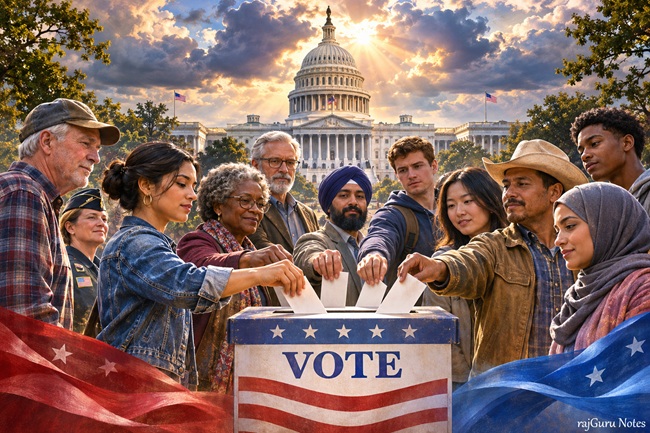
Trump and the MAGA movement entered the 2024 presidential election with considerable political momentum. His victory was made possible not only by traditional Republican voters but also by a broader coalition of independents, moderates, Hispanics, African Americans, Hindu Americans and other non-white voters who were attracted by his promises of economic revival, border security, national strength, and an end to unnecessary foreign entanglements.
However, the political circumstances changed considerably after he assumed office. Unfortunately for Trump and the Republican Party, many of the decisions taken by his administration gradually weakened this broad electoral coalition. The 2026 midterm results suggest that the consequences of these decisions have finally caught up with them.
The Dismantling of Trump's Electoral Coalition
One of Trump's most significant political mistakes was his inability to distinguish between illegal immigration and legal immigration. His initial emphasis on securing the southern border and controlling illegal immigration enjoyed substantial public support. Border security was an important electoral issue, and many Americans, including immigrant communities, supported the principle that immigration laws should be enforced. However, the administration's approach increasingly extended beyond illegal immigration. Deployment of ICE agents in American cities resulted in death of US citizens, harassments and detention of legal immigrants and citizens by brute force by ICE agents left a sour taste in the mouth of civil society in the US.
Restrictions and uncertainty surrounding H-1B visas, student visas, employment-based immigration, and other legal immigration pathways created anxiety among communities that had previously supported Trump. This was particularly consequential for Indian Americans, professionals, students, entrepreneurs, and technology-sector workers. Many had supported Trump's emphasis on economic growth, entrepreneurship, national security, and a more business-friendly environment. They did not necessarily support every aspect of his immigration agenda, but they expected a distinction between illegal entry and lawful immigration.
The administration's broader immigration rhetoric, combined with the increasingly hostile attitudes expressed by sections of the MAGA movement, alienated many of these voters. While freedom of expression is enshrined in the US constitution, Hindu Phobic statements and bigotry displayed by Republican candidates turned a large section of Hindu American electorate against the Republican party. The problem was not simply immigration policy. It was the perception that the Republican Party was becoming increasingly hostile, toward communities that had helped expand its electoral base.
The unilateral tariff policy further complicated the economic situation. Trump's decision to impose tariffs on trading partners across the world created uncertainty among businesses, investors, consumers, and international partners. Although the administration presented tariffs as instruments of economic leverage and national development, their consequences included concerns about higher consumer prices, disrupted supply chains, and retaliatory measures. The increasingly confrontational rhetoric toward traditional trading partners, including Canada, Mexico, EU and India, also damaged confidence among communities that had viewed the Republican Party as a natural partner in strengthening US-India relations. When these developments were combined with inflation, rising living costs, and the consequences of international conflicts, the administration began losing the political support of voters who had helped secure its victory in 2024. Trump had successfully expanded the Republican coalition beyond its traditional base. Yet, through his own political decisions, he progressively dismantled it.
Seven Major Reasons Behind the Republican Defeat
The 2026 midterm results can be understood through seven interconnected political and economic developments.
First, economic frustration became a decisive factor. Inflation, high living costs, tariffs, and uncertainty about the economic future weakened public confidence. American households are primarily concerned with the cost of groceries, housing, healthcare, education, transportation, and energy. Political promises of national greatness have limited electoral value when ordinary citizens struggle to manage their household budgets.
Although the administration could point to certain positive economic indicators and stock-market performance, these indicators did not necessarily reflect the financial experiences of ordinary Americans. Economic growth at the national level does not automatically translate into economic security for individual households.
Second, the Iran War became an important political liability. The conflict contributed to rising fuel prices and concerns about the wider economic consequences of military escalation. Higher petroleum prices affect transportation, agriculture, manufacturing, fertilizers, and food distribution. Consequently, the economic impact of war extends far beyond the battlefield. Americans who had supported Trump's pre-election promises to avoid unnecessary foreign wars increasingly questioned the justification for another prolonged military engagement in West Asia.
Third, independent and moderate voters moved away from the increasingly racist and Xenophobic MAGA Republican Party. Trump's declining popularity and increasingly polarizing political style weakened his appeal among voters who were not firmly aligned with either party. Midterm elections frequently become referendums on the incumbent administration, and independents often play a decisive role in determining the outcome.
Fourth, candidate selection became a significant problem. Loyalty to Trump and the MAGA movement increasingly appeared to take precedence over competence, experience, and general electoral appeal. The systematic displacement of established Republican candidates by more ideologically aligned alternatives by contrived primaries created vulnerabilities in constituencies where moderate candidates might have performed better. The example of Texas, where a sitting moderate Republican Senator such as John Cornyn faced a challenge from the MAGA-aligned Ken Paxton, illustrates the potential consequences of prioritizing ideological loyalty over broader electoral considerations.
Fifth, concerns about constitutional checks and balances influenced voter sentiment. The American political system is built around the separation of powers and institutional accountability. While voters may support a strong presidency, they do not necessarily support the excessive concentration of political authority in one individual. The perception that executive power was being exercised without sufficient institutional restraint contributed to dissatisfaction. Republican controlled Congress essentially gave a pass to the administration on accountability and checks and balances.
Sixth, questions surrounding credibility, accountability, and personal interests damaged public confidence. Concerns about the Trump family's financial interests, the relationship between presidential responsibilities and private business activities, e.g., investments in cryptocurrencies and stock market trades and the broader issue of political accountability became part of the national debate. Even when supporters considered these controversies politically motivated, they remained damaging among voters who expected greater transparency and ethical standards from public officials. Lack of transparency on Epstein files issue drove away college educated women voters from the Republican party that was perceived as protecting the President and his cronies from prosecution and social embarrassment.
Seventh, the Democrats benefited from anti-Trump sentiment. Their electoral success should not automatically be interpreted as a broad endorsement of socialism, democratic socialism, or the far-left ideological agenda. In many constituencies, voters may have supported Democratic candidates primarily because they wanted to register their dissatisfaction with the Republican administration. This distinction is essential to understanding the election. A vote against Trump is not necessarily a vote for every element of the Democratic Party's political program.
The Iran War: When Foreign Policy Adventure Becomes Domestic Politics
Among the developments influencing the 2026 elections, the Iran War deserves particular attention. Trump's administration had projected an image of strength and decisiveness in foreign policy. However, military action against Iran created a different set of political and economic consequences. The administration's stated objective of bringing about fundamental political change in Iran did not necessarily translate into the removal of the Iranian political system. Even if military operations eliminated important political and military figures, the survival of the governing structure would raise serious questions about the strategic effectiveness of the intervention.
There is also a historical dimension to this issue. In 1954, the United States and British intelligence services participated in the overthrow of Iran's democratically elected Prime Minister, Mohammad Mosaddegh. The subsequent consolidation of power under the Shah contributed to a political environment that eventually culminated in the 1979 Iranian Islamic Revolution. The 1979 revolution brought together different opposition forces, including Islamist and communist elements, against the Shah's government. Ultimately, the Islamic Republic emerged as the dominant political authority.
The American experience with Iran also has an electoral dimension. The 1979 hostage crisis and the unsuccessful rescue operation in 1980 severely damaged President Jimmy Carter's political standing. The crisis became one of the important factors contributing to his defeat in the presidential election. The historical lesson is that American military and foreign policy decisions can have consequences far beyond their immediate objectives. Foreign conflicts can influence domestic political stability, economic confidence, and presidential elections.
The 2026 experience illustrates a similar possibility. By engaging in a conflict that contributed to economic uncertainty and rising energy costs, the Trump administration exposed itself to domestic political consequences. There is an irony in the situation: an administration seeking to influence political developments and regime change in Iran found its own domestic political position weakened by the consequences of the conflict and mid-term electoral losses.
It is important, however, not to attribute all American economic difficulties to the Iran War. The United States faces deeper structural challenges, including substantial federal debt, persistent fiscal deficits, economic inequality, and uncertainty about employment in sectors undergoing technological transformation. The Iran war may have intensified these problems, but it did not create all of them.
The Problem of Presidential Accountability
Another important feature of the post-election political debate concerns Trump's response to the Republican defeat. Reports and public statements suggesting that he attributed the losses primarily to the Iran War and inflation raise a larger question about presidential accountability. These factors undoubtedly deserve consideration. However, they cannot explain the entire electoral outcome. A president must recognize that election results are usually determined by multiple factors, including economic performance, candidate selection, public trust, foreign policy, immigration, political rhetoric, and the administration's relationship with different demographic groups. Blaming individual circumstances, media organizations, or your own candidates does not address the larger strategic mistakes that may have contributed to the defeat.
Trump's political style has often emphasized personal loyalty and the attribution of responsibility to external opponents. However, leadership requires the ability to acknowledge mistakes, reconsider policies, and accept responsibility for their consequences. The statement that Trump is still the president is constitutionally correct. He retains the authority of the presidency for the remainder of his term. Nevertheless, the loss of congressional control changes the political environment in which he must operate.
The president may continue to exercise executive authority, including the use of vetoes and executive orders within constitutional limits. However, the administration will face greater legislative resistance, congressional investigations, oversight, and political scrutiny. A president who loses control of Congress cannot govern as though the electoral verdict has no significance.
The Iran War and the Future of US-Israel Relations
The American electoral outcome also raises questions about the future trajectory of the Iran conflict and the relationship between Washington and Jerusalem. Midterm electoral losses forced Donald Trump to announce discontinuation of annual aid of $4 billion to Israel ostensibly with concurrence of Netanyahu. The jarring note was sounded by the Israeli President who expressed consternation about end of US aid to Israel. Israeli Prime Minister Benjamin Netanyahu has had compelling political and strategic reasons to maintain pressure on Iran. However, the interests of the Israeli government and those of the United States are not necessarily identical in every respect. There are serious questions about Israel’s geopolitical interests being similar to Netanyahu’s personal and political interests.
For Washington, prolonged military engagement carries substantial economic, diplomatic, and domestic political costs. For Israel, Iran represents a major national security concern, and its government may view continued military pressure as necessary. The challenge for American policymakers is to ensure that US foreign policy is determined by American national interests, rather than by the domestic political calculations of any foreign government.
The political situation in Israel also reflects the difficulties of maintaining stable governing coalitions in a fragmented parliamentary system. Netanyahu's political future, coalition arithmetic, and domestic legal controversies form part of a separate but interconnected political equation. The American election results may influence the political calculations of Israeli leaders by demonstrating that prolonged military conflicts can generate significant political costs for their international partners. Ultimately, both countries must recognize that military power alone cannot provide a sustainable political solution to the wider West Asian crisis.
A Historical Comparison of Midterm Electoral Losses
The Republican setback in 2026 should also be viewed in the context of previous American midterm elections. US presidents have historically faced substantial electoral setbacks during their first or second terms. Midterm elections frequently provide voters with an opportunity to express dissatisfaction with the incumbent administration. Since the end of World War II, there have been three previous upheavals in midterms when both the houses went to the opposition party, in 1946, 1994 and 2006.
The historical comparisons provided for this analysis are as follows:
| President | Midterm Election |
Hose and Sentate Seats Lost by the President's Party |
| Barack Obama | 2010 | 63 6 |
| Bill Clinton | 1994 | 54 9 |
| Donald Trump | 2018 | 42 (gained 2) |
| Donald Trump | 2026 | 39 (so far) 7 |
Trump's reported loss of 39 House seats in 2026 is therefore not unprecedented in American political history. Obama and Clinton experienced even larger setbacks during their respective presidencies. Trump’s party also lost at least 7 senate seats ( two results still pending) and five governors’ slots. However, the significance of the 2026 election is not merely the number of seats lost. It is the political context in which the defeat occurred.
Trump had entered his second presidency with considerable political momentum and a broad electoral coalition. The subsequent erosion of that coalition suggests that the Republican Party's challenge extends beyond the ordinary midterm backlash experienced by incumbent administrations. The GOP must now determine whether its electoral difficulties represent a temporary reaction to economic and foreign policy developments or a deeper structural problem associated with the MAGA political approach.
The Dilemma Facing Republican Supporters
Despite the Republican defeat, it would be simplistic to conclude that the answer lies in transferring political power to the Democratic Party without examining the consequences. There are legitimate concerns among Republican supporters, particularly regarding the ideological direction of the Democratic Party, the influence of the Democratic Socialists of America, and the positions of its more progressive elements on economic policy, national security, immigration, and international relations.
The possibility of ideological alliances between radical left-wing movements and Islamist-Jihadist political groups also deserves scrutiny where specific political positions and activities support such concerns. However, these concerns should be examined through evidence and policy analysis rather than generalized labels.
Similarly, the criticism directed at fringe sections of the MAGA movement must not be confused with the official policies of the Republican Party or the administration. Some fringe MAGA voices have expressed hostility toward immigrant communities and used derogatory language against non-white Americans especially against Hindu-Americans. Such rhetoric is unacceptable and deserves to be challenged. However, the appropriate response is to engage in dialogue, challenge discriminatory attitudes, and demand political accountability rather than automatically abandoning the broader political coalition.
The United States needs a political environment in which national security, economic development, legal immigration, individual freedoms, and constitutional principles can coexist. Trump's supporters may reasonably argue that his administration has taken important steps toward securing the southern border, strengthening national security, and pursuing economic development. They may also argue that his personal financial controversies should be evaluated in the context of his wealth before entering politics and the legal expenses he incurred. However, these arguments do not eliminate the need for transparency, accountability, and appropriate safeguards against conflicts of interest. Any financial arrangements involving the president must be judged by applicable ethical and legal standards, not simply by whether the president was wealthy before taking office. The greater good requires independent judgment rather than unconditional loyalty to any political personality.
The Biggest Political Lesson: Leadership Must Preserve Coalitions
The most important lesson of the 2026 midterm elections is that electoral coalitions cannot be taken for granted. Trump's 2024 victory demonstrated that a Republican presidential candidate could attract voters beyond the traditional Republican base. Hispanics, African Americans, Indian Americans, independents, moderate Democrats, and other non-traditional Republican constituencies contributed to the political environment that made his victory possible.
However, political support is conditional. Voters expect their concerns to be recognized and their interests to be respected. A political leader cannot indefinitely expect support from immigrant communities while creating uncertainty around legal immigration. Nor can an administration promise economic prosperity while pursuing policies that contribute to higher consumer costs and economic uncertainty. Likewise, a president who promises to avoid unnecessary foreign wars must explain cogently why military intervention has become necessary and how its costs will be managed.
The lesson is equally relevant to the Democratic Party. Electoral victories achieved primarily through opposition to a particular leader do not necessarily represent a permanent ideological realignment. Democrats must demonstrate that they can govern effectively, address economic concerns, maintain national security, and provide practical solutions to the problems facing ordinary Americans.
The 2026 election was, therefore, more a rejection of Trump's leadership and governing performance than an unambiguous endorsement of socialism or the far-left agenda. Trump remains president, but the political mandate he received in 2024 has been weakened. His remaining years in office will require a different approach to governance.
Conclusion: The Greater Good Must Prevail Over Political Personalities
The 2026 midterm elections offer an important lesson not only to Donald Trump and the Republican Party but also to American democracy. Trump's political success was built on his ability to challenge the established political order, mobilize dissatisfied voters, and attract constituencies that traditionally did not vote Republican. Unfortunately, his subsequent governing approach appears to have alienated many of those same voters.
The Iran War, inflation, tariffs, immigration uncertainty, political polarization, candidate selection, corruption and questions about accountability collectively contributed to the Republican setback. No single issue can adequately explain the outcome.
The president must recognize that political leadership involves more than exercising executive authority or maintaining the loyalty of a committed electoral base. It requires building consensus, respecting institutional constraints, listening to dissenting voices, and recognizing the legitimate concerns of different communities. At the same time, Republican supporters must avoid the temptation to respond to electoral setbacks by abandoning their broader political principles or handing the country to an ideological alternative without carefully considering the consequences.
The United States needs a strong Republican Party and a responsible Democratic Party without extreme fringe elements. It needs competition between ideas, not unconditional allegiance to political personalities. It needs national security without unnecessary wars, border security without hostility toward legal immigrants, economic development without protectionist excesses, and political conservatism without racial or religious prejudice.
Trump has two years remaining in his now lame duck presidency. Whether he uses this period to rebuild his political coalition or continues with a confrontational approach will determine not only his legacy but also the future of the Republican Party in 2028. The fundamental political lesson is simple: Trump did not merely lose congressional seats in 2026; through his own decisions, he weakened the broad political coalition that had brought him to power in 2024. Political leaders must always remember that the greater good of the nation is more important than the political survival of an individual. No leader, however powerful or popular, is indispensable to a democracy. Ego and narcissism of a leader is no substitute for political sagacity.
Image courtesy rajGuru Notes
05-Nov-2026
More by : Dr. A. Adityanjee
