Nov 07, 2026
Nov 07, 2026
In most temples, the presiding deity is ritually installed and consecrated by human agency. In contrast, when a deity is believed to have manifested on its own, without human intervention, such a shrine is called Swayambhu. The word derives from swayam (self) and bhu (to be born). Devotees firmly believe that Swayambhu temples possess exceptional spiritual potency, as the divine presence is considered self-revealed.
Sangameswara Temple
One such sacred site is Koppolu Sangameshwara Temple, located about three kilometres from Pedda Shankarampet in present-day Sangareddy district (formerly Medak). Lord Sangameshwara resides here. This temple deserves special mention among the many shrines situated in the catchment area of the Manjira River, a tributary of the Godavari. Originating in Karnataka and flowing through Medak, Nizamabad, and Karimnagar districts, the Manjira-also revered as Garuda Ganga-merges with the Godavari at Kandukuru in Nizamabad district.
During the construction of the Nizam Sagar Project, several villages were submerged, along with their temples, royal inscriptions, and records of temple lands-lost largely due to administrative neglect. Yet, upon a nearby hillock, the Koppolu Sangameshwara shrine emerged intact, in a striking and mysterious manner. The deity came to be known by the name of the nowuninhabited village, Koppolu.
Telangana Women Empowerment
In later years, a small mandapam was built before the cave sanctum. To one side, Uma Maheshwari was installed, and since then the Lord has been worshipped as Uma Sangameshwara. A spacious Maha Mandapam was subsequently constructed, with a Nandi statue measuring four and a half feet at its centre. Images of Dattatreya Swamy and Gayatri Devi adorn either side. The architectural idiom reflects the refined artistic sensibilities of the Kakatiya period.
Local belief holds that on any Monday in the sacred month of Shravana, precisely at midnight during Lingodbhava, the sanctum mysteriously fills with water. Its source and disappearance remain unknown. Devotees collect this water from vessels placed inside the sanctum and revere it as tirtham, known locally as Kashi Bugga. Every year, a grand seven-day jatara is held during Shivaratri. Nestled amid the backwaters of Nizam Sagar and lush greenery, the hilltop temple offers a serene and enchanting atmosphere. Visiting this shrine repeatedly during my childhood remains one of my most cherished memories.
Rajarajeswara Temple
Another renowned Swayambhu shrine is the Rajarajeswara Temple, located about 160 kilometres from Hyderabad, with frequent bus services from JBS. Here, Lord Rajarajeswara, worshipped along with Goddess Rajarajeswari, is enshrined in the form of a Linga and is affectionately known as Vemulawada Rajanna. Dating to the Chalukya period, the temple is believed to have been constructed by Rajaditya (Narasimhudu), grandson of Yuddhamalla (Vijayaditya I). It finds mention in Kasiyatra Charitra by Enugula Veeraswamyy. The adjacent temple tank (Koneru) adds to its charm. A unique feature is the performance of Ekarudrabhishekam by one hundred priests on Shivaratri. Devotees traditionally offer bull calves (kodela) in fulfilment of vows. Remarkably, a ninety-yearold dargah stands within the temple ?????, symbolising Telangana's syncretic culture. The temple sculptures also reflect Jain and Buddhist influences.
Pachala Someswara Temple
The Pachala Someswara Temple in Panagal village mesmerises visitors with its architectural splendour. Built in the 12th century by the Chola ruler Udayaditya, who ruled from Panagal, the temple features a massive black stone Nandi before the sanctum. The Deccan Crown mandapam pillars are exquisitely carved with scenes from Kshirasagara Mathanam, the Ramayana, Mahabharata, and other Puranas.
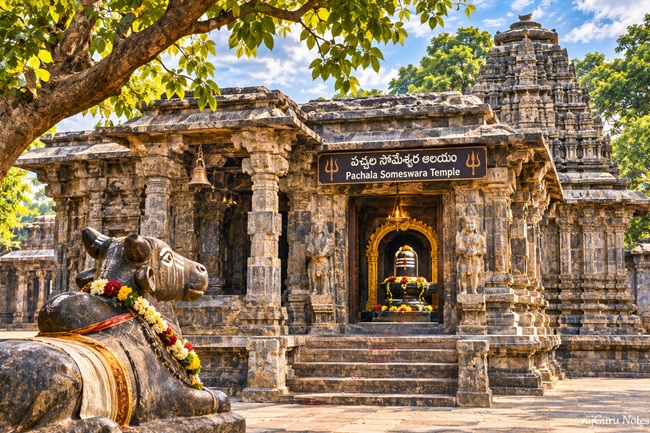
A distinctive feature here is that the chief priest (archaka) is a woman, Sarojanamma. After her husband's demise, she is said to have been spiritually instructed at Srisailam to assume priestly duties, a role she continues with devotion and dignity. The temple's name is associated either with emerald garlands once offered to the Lord or with the green granite of the Shivalinga, which also bears Brahma Sutras-a rare attribute. Alongside her, Elugu Ramulamma deserves special mention for guiding visitors through the temple's architectural marvels with remarkable insight. A small museum nearby further enriches the experience. That two women safeguard this ancient shrine is truly commendable.
Erukeswara Temple
When one hears Pillalamarri, the famed banyan tree of Mahabubnagar often comes to mind. However, the Erukeswara Temple stands in the Pillalamarri village of Nalgonda district. Built in 1208 CE by Erukasani, wife of Bethireddy of the Recherla Reddy lineage (feudatories of the Kakatiyas), the temple is believed to have arisen after Shiva appeared in her dream, declaring his selfmanifestation there. Its design echoes the Thousand Pillar Temple of Orugallu.
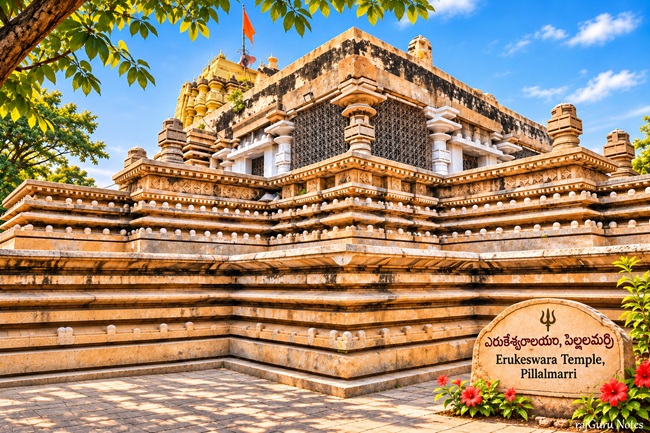
Uniquely, instead of a Nandi before the sanctum, a circular dance platform stands, perhaps a testament to ancient traditions of worshipping Nataraja through dance. The Shivalinga and even the temple structure lean slightly, attributed by locals to an ancient earthquake. The villagers themselves diligently protect this remarkable monument.
Jadala Ramalingeswara Temple
The Jadala Ramalingeswara Temple, about eighty kilometres from Hyderabad, is another powerful Swayambhu shrine, also known as Cheruvu Gattu. Believed to date to the Kakatiya era, it attracts thousands of devotees on every Amavasya, many of whom
Telangana Women Empowerment stay overnight. A road now leads up the hill, and a pristine temple tank lies nearby. According to legend, Parashurama consecrated the final of 108 Shivalingas here in expiation for his sins. Axe marks said to be visible on the Linga resemble jadalu (matted locks), giving the temple its name. Nearby caves are associated with Parashurama's Atmalinga and the presence of joginis. Climbing the massive boulders-via iron stairs or narrow rock passages believed to be the Moksha Margam-is both adventurous and spiritually stirring, with panoramic views of hills, greenery, and a distant lake.
Someshwara Temple
The Someshwara Temple near Palakurthi is equally revered. Tradition holds that sages performed penance here in the 12th-13th centuries, leading Lord Someshwara to self-manifest. Uniquely, both Shiva and Vishnu are worshipped here, with Lakshmi Narasimha Swamy said to have appeared in a nearby cave. A local legend recounts that Shiva split the hill to create a pradakshina path for an elderly devotee. The narrow passage between the hills is believed to lead to salvation. At the hill's base lies the samadhi of the eminent Telugu poet Palkuriki Somanatha.
It is a common misconception that Swayambhu refers only to Shiva. Vishnu, too, is believed to have self-manifested at places such as the Padmanabha Temple at Ananthagiri near Vikarabad, the Sri Ramalayam at Jeedikallu, and Yadadri. Many other Swayambhu shrines-Ketaki Sangameshwara at Jarasangam, Uma Maheshwaram in the Achampet Nallamala forests, and the Thousand Pillar Temple at Warangal-remain beyond the scope of this article. All these sacred sites lie roughly within a hundred to one hundred and fifty kilometres of Hyderabad. There is a pressing need to document them comprehensively, preserving their legends, architecture, and living traditions for future generations.
Illustrations courtesy rajGuru Notes
07-Nov-2026
More by : Girija Paidimarri