Nov 14, 2026
Nov 14, 2026
Freedom Fighter and Visionary of the Handloom Movement
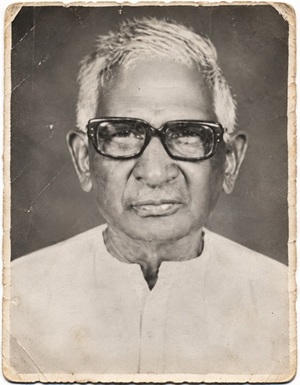 Sri Pragada Kotaiah (1915–1995) stands as a towering figure in the history of Andhra Pradesh and modern India—a freedom fighter, legislator, social reformer, and the foremost champion of the handloom industry. Born into a traditional weaving community, he devoted his entire life to the twin causes of national independence and the economic and cultural upliftment of weavers and the rural poor. His work spanned the tumultuous years of the freedom struggle, the formative decades of independent India’s democratic institutions, and the long, patient labour of building cooperative institutions that protected one of India’s most ancient crafts. Affectionately known as “Prajabandhu” (Friend of the People), Kotaiah’s life remains a living example of how technical knowledge, political commitment, and genuine love for the common person can transform the destiny of an entire community.
Early Life and Education
Pragada Kotaiah was born on 26 July 1915 in Nidubrolu village of Guntur district, then part of the Madras Presidency, into a Padmasali family traditionally associated with handloom weaving. His parents, Sri Pragada Veerabhadrudu and Srimati Kotamma, raised a large family in modest circumstances. From an early age, young Kotaiah displayed exceptional academic promise. He completed his school education in Ponnur and passed the Secondary School Leaving Certificate (S.S.L.C.) examination in 1931 with distinction.
Recognising both the needs of his family and the importance of technical knowledge for the weaving community, Kotaiah pursued specialised training. At the Madras Textile Institute he studied spinning, handloom weaving, dyeing, and printing, emerging with a first-class certificate. Not content with domestic qualifications, he further obtained a certificate in Chemistry as applied to the Cotton Textile Industry from the City and Guilds of London Institute, again with first-class honours. This rare combination of formal education and practical textile expertise equipped him uniquely for the work that would define his life. The scientific understanding of fibers, dyes, and processes that he acquired became the foundation for his later insistence that traditional handloom weaving must be strengthened, not abandoned, through modern technical knowledge and cooperative organization.
Role in the Freedom Struggle
Like many young men of his generation, Kotaiah was deeply influenced by Mahatma Gandhi’s call for Swaraj and the constructive programme that linked political freedom with economic self-reliance. He actively participated in the Civil Disobedience and Quit India movements. His commitment was not limited to speeches or symbolic gestures; he organised and led satyagrahas that directly challenged colonial authority. In Madras he endured a 75-day satyagraha; in Andhra he led another 20-day protest. These actions resulted in repeated arrests and court sentences. Far from dampening his spirit, imprisonment only deepened his conviction that true independence required both political freedom and the economic empowerment of ordinary producers—especially the millions of handloom weavers whose livelihoods had been systematically undermined by colonial industrial policy.
The experience of struggle taught him the value of organisation, discipline, and moral courage. These qualities later shaped his approach to the handloom movement, where he consistently preferred patient institution-building and cooperative action over short-term agitation alone.
Leadership of the Handloom Movement
The handloom sector became the central mission of Kotaiah’s life. In 1942 he was appointed General Secretary of the State Handloom Weavers’ Congress for Madras and Andhra. Three years later, in 1945, he played a pivotal role in the establishment of the All India Handloom Weavers’ Congress at Nagpur and served as its General Secretary. Through these platforms he travelled extensively, studied the problems of weavers, diagnosed the weaknesses of existing cooperative societies, and worked tirelessly to organise primary weavers’ cooperatives across the region.
He understood that the crisis facing handlooms was multi-dimensional: scarcity and high prices of yarn, competition from power-looms and mills, lack of marketing infrastructure, absence of technical training, and the indebtedness of weavers to middlemen. Kotaiah responded by promoting cooperative spinning mills, yarn distribution systems, and marketing federations. His efforts laid important groundwork for institutions such as the Andhra Pradesh State Handloom Weavers’ Cooperative Society (APCO). He insisted that the handloom industry was not merely an economic activity but a cultural treasure that embodied centuries of Indian craftsmanship, design sensibility, and rural employment. Protecting it was therefore both an economic necessity and a civilisational duty.
In recognition of his lifelong service, the Government of Andhra Pradesh established the Sri Pragada Kotaiah Memorial Indian Institute of Handloom Technology (SPKMIIHT) at Venkatagiri in 1992. One of only a handful of such specialised institutes in India under the Ministry of Textiles, SPKMIIHT continues to train weavers and technologists, introduce appropriate modern techniques, and keep alive the vision of its namesake.
Political Career and Social Service
Kotaiah entered formal politics after Independence with the same spirit of public service that had animated his freedom-struggle days. He served as a Member of the Legislative Assembly from 1952 to 1962, representing constituencies first in the composite Madras State, then Andhra State, and finally Andhra Pradesh. Later he was elected to the Andhra Pradesh Legislative Council and, from 1990 until his death in 1995, served as a Member of the Rajya Sabha. Throughout these years he consistently raised issues concerning the handloom sector, rural development, and the welfare of backward classes in the legislature and in parliamentary committees.
Beyond the legislative chambers, his practical developmental work was remarkable. In 1954 he founded the Romperu Development Committee in Chirala taluk. Through this body, approximately 16,000 acres of land were distributed to landless and poor farmers—an early and significant experiment in land reform and rural empowerment. He also championed the Totavaripalem Lift Irrigation Project, which brought much-needed water to agricultural fields and increased productivity in the region. These concrete achievements, more than any title, earned him the affectionate name “Prajabandhu.”
On the occasion of his 70th birth anniversary in 1985 at Chirala, the then Governor of Uttar Pradesh, Bejawada Gopala Reddy, formally conferred the title “Prajabandhu” upon him, recognising a lifetime of service that had touched the lives of countless ordinary people.
Contributions to Education
Kotaiah believed that lasting social change required educational opportunity. He played a decisive role in securing sixty acres of land near Chirala for the V.R.S. & Y.R.N. College, ensuring that higher education became accessible to students from rural and weaving communities. He was instrumental in the establishment of the Andhra Kesari Prakasam Junior College and provided crucial support, together with Bandla Venkateswara Rao, for the Junior College at Vetapalem. He also assisted the S.U.S.I.T.I. institution at Vetapalem. These institutions opened doors of learning for generations of young people who might otherwise have remained trapped in cycles of poverty and limited opportunity.
As a member of the Senate of Andhra University, he contributed to policy discussions on higher education, always emphasising the need to link academic learning with the practical requirements of rural and industrial development.
Enduring Legacy
Sri Pragada Kotaiah passed away on 26 November 1995 at the age of eighty, while still serving as a Member of the Rajya Sabha. Even in his last years he remained actively concerned with the problems of weavers and the rural poor. His death was widely mourned across Andhra Pradesh and among handloom communities throughout India.
His legacy, however, did not end with his life. The SPKMIIHT at Venkatagiri continues to train new generations of weavers and technologists. Statues and memorials in Chirala and other places keep his memory alive. Most significantly, the Andhra Pradesh government has declared his birth anniversary, 26 July, an official state function. Every year officials, weavers’ organisations, and citizens gather to remember the man who fought for both political freedom and economic dignity.
In Chirala he arranged for the installation of a statue of Andhra Ratna Duggirala Gopalakrishnayya, demonstrating his respect for earlier freedom fighters and regional leaders. Public representatives of successive generations have held him up as a model of integrity in both private and public life. As The Hindu noted in 2011, his life continues to inspire new generations.
Sri Pragada Kotaiah was far more than a freedom fighter or a politician. He was a bridge between the struggle for national independence and the quieter, harder struggle for economic justice in independent India. He understood that political freedom would remain incomplete unless the millions of artisans and farmers who formed the backbone of Indian society could live with dignity and self-reliance. Through cooperative organisation, technical education, land redistribution, irrigation projects, and educational institutions, he translated that understanding into lasting institutions and tangible improvements in people’s lives.
His technical knowledge of textiles, gained through rigorous study in Madras and London, was never used for personal advancement. Instead it became a tool for empowering the very community from which he came. His political career was marked by consistency of purpose rather than pursuit of power. And the affectionate title “Prajabandhu” was not a ceremonial honour but a recognition earned through decades of concrete service.
Today, as India continues to grapple with the challenges of protecting traditional crafts, generating rural employment, and ensuring inclusive growth, the life and work of Pragada Kotaiah remain profoundly relevant. He showed that genuine leadership combines moral courage with practical competence, vision with organisation, and love for the nation with concrete care for its poorest citizens. In the story of India’s freedom and nation-building, the name of Prajabandhu Sri Pragada Kotaiah will continue to shine as a beacon of selfless service and constructive patriotism.
14-Nov-2026
More by : Prof. Dr. Vanapalli Venkata Rao
