Nov 14, 2026
Nov 14, 2026
Civilizations across the world have been invoking the all-powerful gods from time immemorial in times of dire need. In Ancient Greece, the oppressed Prayed to their gods to intervene in human affairs to mitigate their sufferings or to punish the mighty wrong doers.
The Iliad, the epic poem of Homer, opens with the mortal wrath of Phoebus Apollo-the sun god. King Agamemnon, the overlord and commander in chief of the Achaean army, refused to release the daughter of the priest of Apollo despite his entreaties to pay handsome ransom. The priest prayed fervently to Apollo-who descended from the Olympian heights. The angry god, though invisible to the mortal eyes, rained arrows, inflicting deadly plague causing death and destruction in the Achaean army for nine days. The soothsayer, on assurance of his life, points to the discourtesy shown to Apollo by King Agamemnon and asks for return of the daughter of Apollo’s priests. Apollo relents when the daughter of the priest is returned by the King.
The ancient Greek and Latin literature abounds such stories.
However, there is something unique about Dev Bhoomi Uttarakhand (UK), the Himalayan hill State of India as there is ancient unflinching belief in the power of the gods who speak through the human beings. There are widely believed stories of the gods dispensing instant justice to the aggrieved who invoked them.
I recall two vivid instances.
The daughter in law of a poor man from some adjoining village was abducted by the wantonly amorous sons of a hereditary village chief. The old man came to the door of the village chief and begged to free his daughter in law. But he was rebuked and threatened not to loiter around and be off with him at once and not to provoke if he wanted to save his skin. The poor man made a hasty retreat fearing for his life. But on reaching a nearby hillock, crestfallen and humiliated, he looked towards the yonder hill, the seat of his deity- Dhaundiya Narsingh, and prayed. Daundiya Narsingh, one of the twelve Narsinghs, heard his prayer, and in his devastating fury he is known for, unleashed terror in the family of the wrongdoer. Sensing the consequences of their wrongdoing, the abducted women was released with apologies appeasing the god.
In yet another case, the village money lender sent his musclemen for forcible recovery of his loan. The poor family had no money to pay immediately. Irked, the musclemen were bent to take household utensils including the pot on the hearth, cooking the food. The poor family pleaded that they may be allowed to cook the food before taking the utensils. But the brazen musclemen kicked the utensils on the hearth/chullah and the food scattered all around and took away the utensils. The hapless family, left with no recourse, invoked their goddess- Kalinka. The goddess heard their prayer and let loose untold sufferings on the family of the money lender. Village elders used to say that the families cursed by the gods faced divine wrath in one form or the other for succeeding generations. There are multiple instances of the gods intervening in human affairs and dispensing divine justice, often punishment being disproportionate and poetic.
The unwavering belief in the powers of the gods impels generation of Uttarakhandese, whether living outside Uttarakhand or outside Bharatkhand, to pray and worship their gods. In some cases, it remains an unbroken convention to perform special poojas after twelve years. Large scale and constant exodus of people to greener pastures in search of better livelihood, has turned many villages into ghost villages.
The film Pyre, based on the ghost story of Uttarakhand, is being acclaimed globally on mass exodus of people from the hills. There was time when it was difficult to find the traditional hereditary artists of dhol and damaun and ghadela (the beaters of dauru-a typical small damru, and a bronze thali). The lament of one CM, some years ago, was that even the gods have deserted our villages. But, after Covid and increasing pollution level in cities and rising incomes of the migrants, more and more People, more so, the younger generation born outside Uttarakhand, are flocking to the places of their origin. There is much greater interest in revival of the poojas of the yore. There is certainly a renaissance of Dev Pooja in Uttarakhand. Happily, the time of animal sacrifices to appease the gods is a thing of the past. The gods, speaking through their paswa, that is the person through whom the god speaks in divine ecstatic frenzy for a shorter moment, appear with the beating of dhol, and the invariably accompanying damau and the recitations made by the accomplished instrument players. Dhol and Damau, the traditional sacrosanct musical instruments, when played in unison with invocation to the gods, make the gods to enter a human being or the paswa and to talk to the devotees.
UK is the eternal abode of Lord Shiva-Kedarnath and Lord Vishnu- Badrinath. The holy Ganga and the Yamnotri originate in the UK Himawant. Besides, and notably, there are other gods- Kuldevta, Sthan Devata and Bhoo Deveta. Kul Devata is the god of a particular clan or dynasty. Every place or region has its Sthan Devata or the local deity. The Bhoo Devta is the god protector of the soil, the land and agriculture, also known as Khetrapal. All hill people have their Raj Rajeswari, the revered patron goddess of the kingly dynasties. Of course, the kingdoms have dissolved into our Republic, but the goddess is worshipped as the protector guardian of the realm. Then, each clan or caste or village has its own god or goddess. For instance, there are many forms of the goddess Durga- worshipped as Dhari Devi, Naina Devi, Purnagiri Devi, Surkanda Devi, Mansa Devi, and her many other powerful incarnations worshipped across Uttarakhand.
Apart from the Durga, Nagaraja is worshipped in most of the villages. Nagaraja, literally- the snake god, is the embodiment of Lord Krishna. Sem Mukhem in Tehri Garhwal and Danda Nagaraja in Pauri Garhwal are the famous temples of Nagaraja. Gangu Ramola, closely associated with Nagaraja of Sem Mukhem, is part of folk lore, and his pashwa dances on fire unscathed in his momentary divine frenzy. The Chand dynasty rulers were ardent devotees of Binsar Mahadev. Ghantakaran or Ghandiyal devta- the official protector of Badrinath dham- is worshipped widely across Garhwal region. Many villages worship Heet Devta as their kuldevta, considered to be the brethren of Binsar Devta. Yet another notable god is Gureel Devta, believed to belong to the Naath tradition. Many peaks in Uttarakhand are named after the gurus of Naath parampara or order, like Dariyanath, Gorakhnath, Satyanath, etc. Badrinath and Kedarnath too are linked with the story of Naath order.
What is most astounding and incredible is that the spirits of gods, when invoked by the devout, speak through human being- the ‘paswa’. The bulanda or the speaking gods, is unique of Uttarakhand-verily, the Dev Bhoomi. It’s a culmination of Bhakti and unalloyed shradha, which can be, and must be, kept alive, if people stay firmly connected to their roots, visit their native villages and stay put there for a few days or weeks, periodically.
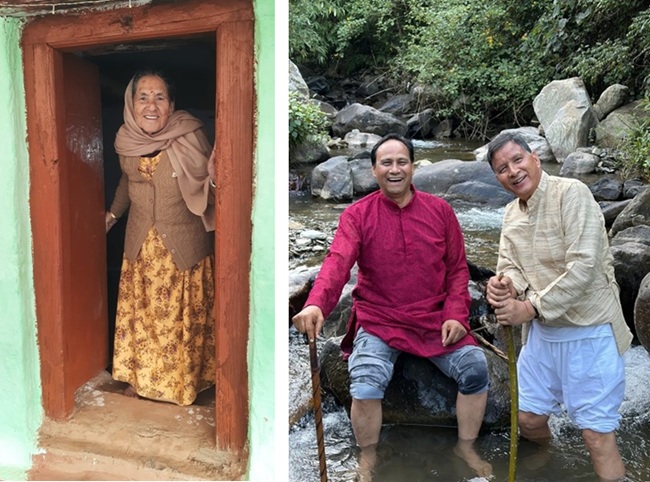
In my own village, yet to be connected by motor-able road, (Kapalkhil in Patti Bachhansyun, Rudraprayag district) when the community Pooja was performed after three decades, some gods did not manifest despite invocations. The other gods, who did, commanded to hold another Pooja after taking Ganga snan or the holy bath to facilitate descent of the gods. The Pooja was performed this year after the Ganga snan, and, lo! all the gods manifested in the paswas.
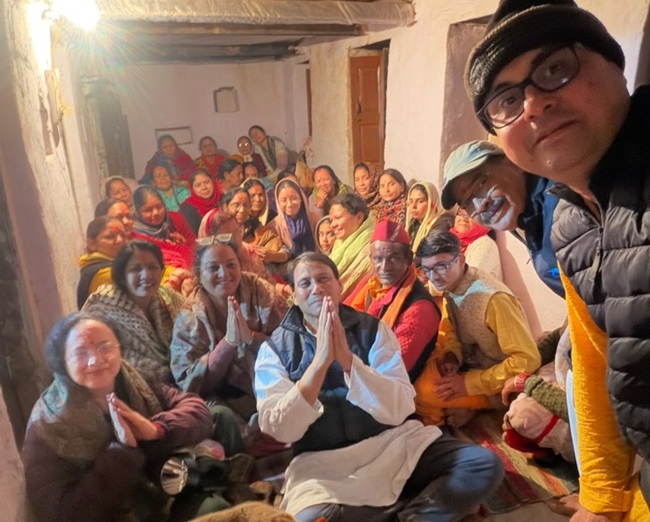
The gods-in-humans danced to the celestial beats of dhol- damau. The Nagaraja and Narsingh appeared when invoked by the Ghadelya, with the beats of dauru (a small handheld drum) and thali (bronze metal plate) - the instruments required for Ghadela. It was, indeed, incredible for outsiders and to those who witnessed the divine spectacle for the first time. The gracious presence of the Chairperson, Zila Panchayat, Rudraprayag (Ms Poonam Kathait) in the Pooja, after a long and arduous walk, gave hope that the village would be connected with road. May the Dev Pooja tradition of Dev Bhoomi remain intact. May the sacred tradition-the quintessence of Dev Bhhomi-flourish over generations to uphold the much-acclaimed title of Dev Bhoomi.
14-Nov-2026
More by : Devender Singh Aswal
