Sep 15, 2026
Sep 15, 2026
History is not merely about remembering the past. It is a life lesson that enables a nation to correct its present and build its future.
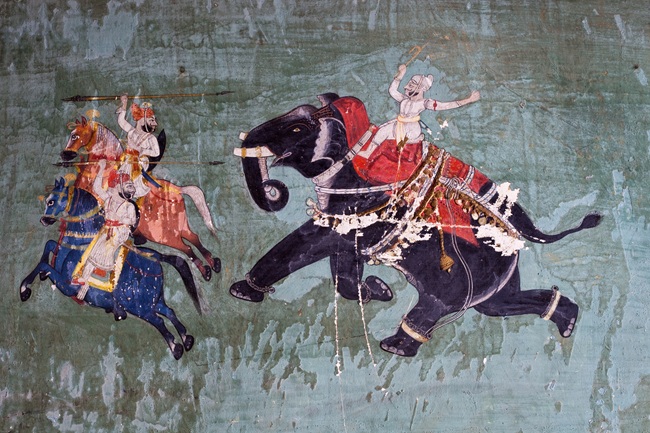
Just as memory is essential for an individual, history is essential for a nation. It is history that carries the experiences of victories and failures, wars and revolutions, reforms, the rise and fall of civilizations, people's struggles, and the emergence and decline of kingdoms from one generation to another. That is why every developed nation in the world treats history not merely as an academic subject but as a powerful instrument for building national consciousness.
The philosopher George Santayana famously said, "Those who cannot remember the past are condemned to repeat it." His words remain true even today. British historian E. H. Carr defined history as "an unending dialogue between the past and the present." British statesman Winston Churchill remarked, "The farther backward you can look, the farther forward you are likely to see." These three observations beautifully explain the significance of history. A nation that fails to understand its past is likely to repeat the same mistakes again and again.
Even some of the world's most feared dictators recognized the power of history. It is often said that Adolf Hitler believed the study of history encouraged people to question authority and inspired revolutionary thinking. Likewise, a famous quote attributed to Napoleon Bonaparte suggests that a few young people who have deeply studied history and politics can be more powerful than thousands of soldiers. Although historians debate the authenticity of these quotations, the message behind them is clear: history develops critical thinking, social awareness, and the courage to stand for change.
History occupies a central place among the social sciences. Political Science, Economics, Sociology, Public Administration, International Relations, and Law all draw their foundations from history. Without historical knowledge, it is impossible to understand the evolution of constitutions, the growth of democracy, the roots of social inequalities, or the impact of wars, peace treaties, revolutions, and reforms. That is why many scholars describe history as the backbone of the social sciences.
Developed countries realized this truth long ago. Prestigious universities such as Harvard University, Yale University, Princeton University, Oxford University, and Cambridge University have dedicated departments of history, research centers, digital archives, museums, and rare manuscript collections. Students there do not merely study textbooks; they examine inscriptions, historical documents, legal records, old newspapers, census data, and archaeological evidence through scientific methods. From the school level itself, students are encouraged to visit museums, historical monuments, and archives, helping them develop the habit of questioning, analyzing, and thinking critically.
In contrast, in some parts of India, particularly in the erstwhile united Andhra Pradesh, history gradually lost its importance. Educational reforms increasingly focused on subjects believed to offer direct employment opportunities, leaving social sciences like history neglected. As a result, the number of students opting for history at the Intermediate level declined significantly. In many government and private colleges, history teaching posts were reduced or merged with other social science subjects. The consequences extended beyond the classroom, weakening historical awareness, democratic understanding, and interest in regional history.
Ignoring regional history means weakening the collective memory of a region. Telangana is a clear example of this reality. Educational policy changes during the united Andhra Pradesh period contributed to the declining popularity of history at the Intermediate level. Greater emphasis was placed on Science, Commerce, and vocational education, leading to a sharp fall in the number of students studying history. Many junior colleges did not fill history lecturer posts, while in several institutions history and civics were taught under combined faculty positions. In Model Schools and some residential institutions, dedicated history teachers were often absent. These developments further reduced the importance of the subject.
The impact was not confined to education alone. Many scholars expressed concern that younger generations were becoming less aware of Telangana's history, culture, peasant struggles, social conditions during the Nizam era, linguistic identity, and regional movements. They argued that a generation unfamiliar with its own history can never fully understand its own identity. After the formation of Telangana, the state attempted to address this gap by giving greater importance to Telangana's history and the Telangana movement in competitive examinations such as Group-I and Group-II.
However, limiting the importance of history to competitive examinations alone is not enough. Whether a student becomes a doctor, engineer, lawyer, scientist, or civil servant, he or she is first and foremost a responsible citizen. Every citizen should possess a basic understanding of the nation's history, constitutional development, social reform movements, freedom struggle, and regional cultures. That is why many educationists recommend making history a common or compulsory subject at the Intermediate level. As one educational principle states, "History is the root; Civics is the fruit." Without history, civic consciousness can never be complete.
The experience of developed nations reinforces this idea. Countries such as the United States, the United Kingdom, France, Germany, and Japan use history not merely to teach about the past but to strengthen democratic values. Difficult subjects such as the Second World War, the Holocaust, colonialism, slavery, and civil rights movements are taught openly, critically, and based on evidence. They believe that democracy becomes stronger when students learn not only about their nation's achievements but also about its failures.
In recent years, history education in India has also become the subject of widespread public debate. Changes, deletions, and restructuring of certain chapters in textbooks prepared by the National Council of Educational Research and Training (NCERT) have drawn differing opinions from historians, educationists, and political parties. Critics argue that reducing certain sections related to medieval Indian history, the Mughal period, religious diversity, and social conflicts may weaken students' comprehensive understanding of history. On the other hand, the Government of India and NCERT have explained that these changes were intended to reduce academic burden, reorganize the syllabus, and align it with the National Education Policy. Rather than deciding which view is correct, one principle should always remain clear: the ultimate standard for writing history must be evidence, research, and scientific analysis—not political ideology.
History does not belong to any government, nor is it the property of any single ideology. If every new government rewrites history according to its own political preferences, future generations may lose access to historical truth. Therefore, the development of history curricula should primarily involve independent historians, university scholars, archaeologists, linguists, and social scientists rather than political considerations.
Today, history must be viewed not merely as an academic subject but as a lesson for life. As society changes rapidly, opportunities to learn from past experiences are diminishing. Although the information technology revolution has made the world smaller, without historical awareness people may fail to distinguish truth from falsehood. History teaches us not only about kings, wars, and treaties but also about how societies thought, evolved, made mistakes, and achieved progress.
In the context of Telangana, the history of the regional movement represents collective consciousness. Decades of struggle for linguistic and cultural identity and social justice are essential lessons for future generations. If this history is not properly taught in schools, the sacrifices behind those movements will remain nothing more than names in textbooks. A generation that forgets its past loses its direction for the future.
Another important aspect of history education is the development of critical thinking. Students should not merely memorize dates and events but should learn to ask why events occurred and analyze their social, economic, political, and cultural causes. Only then does history become a living discipline rather than a burden studied merely for examinations.
Although emphasizing skills in modern education is important, neglecting subjects that cultivate human values is dangerous. Even a technically skilled individual must understand history, ethics, and constitutional values to become a responsible member of society. Otherwise, development remains limited to economic progress while social harmony suffers.
Therefore, restoring history to a place of dignity in future educational policy is essential. Whether it becomes a compulsory subject or a common subject is a matter for policymakers to decide. However, history should never be pushed aside completely. A society that neglects history eventually loses the ability to understand itself.
Finally, history is not merely a mirror reflecting the past; it is also a mirror that helps us see the future. A nation that breaks this mirror loses its own direction. Studying history is not simply about acquiring knowledge; it is about accepting responsibility, nurturing awareness, and preserving the continuity of civilization.
Image (c) istock.com
