Oct 10, 2026
Oct 10, 2026
A Small Fruit with Big Value for India
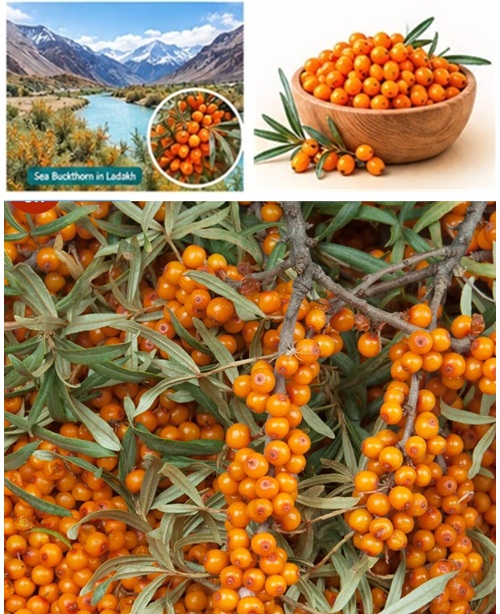
Sea Buckthorn, scientifically known as Hippophae rhamnoides, is a small, orange-colored berry that grows naturally in cold and high-altitude regions. In India, it is mainly found in the Himalayan region, especially in Ladakh, Himachal Pradesh, Uttarakhand, Sikkim and parts of Arunachal Pradesh.
Because of its bright orange color and nutritional richness, Sea Buckthorn is often called the “Golden Fruit of the Himalayas.” It can survive extremely cold temperatures, strong winds and poor soil conditions, making it a unique and valuable Himalayan plant.
Where Does Sea Buckthorn Come From?
Sea Buckthorn is naturally distributed across parts of Europe and Asia. In India, it is particularly important in the cold desert areas of Ladakh and the trans-Himalayan region.
The plant is a hardy shrub that can grow where many other crops cannot easily survive. Its berries grow in clusters along thorny branches and contain naturally occurring vitamins, minerals, fatty acids, carotenoids and other plant compounds.
For Himalayan communities, Sea Buckthorn is not just a wild fruit. It has potential value as a food, health product, agricultural resource and source of income.
Nutritional Value of Sea Buckthorn
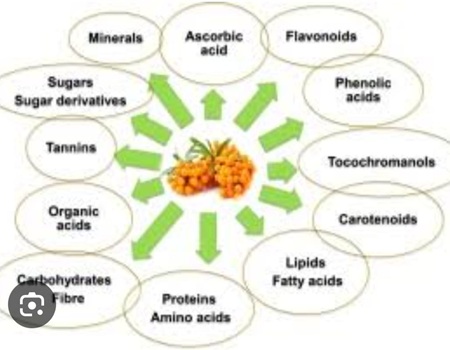
Sea Buckthorn berries contain a variety of nutrients and naturally occurring bioactive compounds, including:
- Vitamin C
- Vitamin E
- Carotenoids
- Flavonoids and other polyphenols
- Omega fatty acids
- Minerals
- Natural antioxidants
One interesting feature of Sea Buckthorn is that both the fruit pulp and seeds can be used to produce oil.
The exact nutritional composition can vary depending on the species, growing region, harvesting conditions and processing method.
Medicinal and Health Value
Sea Buckthorn has a long history of traditional use in parts of Asia. Modern research has also investigated its nutritional and biological properties.
1. Antioxidant properties: Sea Buckthorn contains compounds such as vitamin C, vitamin E, carotenoids and polyphenols that have antioxidant activity. Antioxidants help protect cells from oxidative damage.
2. Skin and cosmetic applications: Sea Buckthorn oils are used in some cosmetic and skincare products. The oils contain fatty acids and other compounds that are being studied for their role in maintaining healthy skin.
3. Heart and metabolic health research: Researchers have investigated Sea Buckthorn and its compounds in relation to cardiovascular and metabolic health. However, research findings do not mean that Sea Buckthorn should replace prescribed medical treatment.
4. Digestive health: Sea Buckthorn has traditionally been used as a food and health ingredient, and its fruit contains fiber and various bioactive compounds.
5. Nutritional support: Because the berries contain several vitamins, minerals and plant compounds, Sea Buckthorn can be considered a nutrient-rich fruit.
Important: Sea Buckthorn is a nutritious food and research subject, but it should not be presented as a guaranteed cure for diseases.
Sea Buckthorn Oil
Sea Buckthorn oil is one of the most valuable products obtained from the plant. There are two commonly discussed sources:
1. Seed oil – obtained from the seeds and containing various fatty acids.
2. Fruit-pulp oil – obtained from the fruit pulp and particularly known for carotenoids and other lipid-soluble compounds.
These oils are used in areas such as food products, cosmetics, nutritional products and scientific research.
Why Is Sea Buckthorn Important to India?
Sea Buckthorn has special importance for the Himalayan economy and environment.
1. Income for Himalayan communities: The berries can be processed into products such as juice, jam, beverages, oils and other value-added products. This creates possibilities for additional income for local communities.
2. Small-scale industries: Processing Sea Buckthorn can support businesses involved in food processing, oils, cosmetics, nutraceutical products and other products.
3. Employment opportunities: Its cultivation, collection, processing, packaging, transportation and marketing can create employment opportunities in remote Himalayan areas.
4. Environmental importance: Sea Buckthorn is a hardy plant with a strong root system. It can contribute to soil stabilization and reduce erosion, making it useful in fragile mountain environments.
5. Value of Himalayan resources: Developing useful products from native Himalayan plants can create economic opportunities while encouraging greater interest in conserving these ecosystems.
Dr. Brahma Singh and Sea Buckthorn Research
Dr. Brahma Singh is an Indian scientist associated with research and development related to Sea Buckthorn and Himalayan plant resources. His work helped bring greater scientific attention to Sea Buckthorn and its potential applications. Research in this field has involved areas such as nutrition, food products, agriculture, processing and the potential economic value of Himalayan plants.

Dr. Brahma Singh was honored with the Padma Shri, one of India's civilian awards, in recognition of his contribution to science and related work. His contribution is important because scientific research can help transform a naturally occurring Himalayan resource into products and technologies that can benefit local communities and the wider country.
Conclusion
Sea Buckthorn may look like a small orange berry, but it has significant nutritional, environmental and economic potential.
From the high mountains of the Himalayas to food, oil, cosmetics and research laboratories, this unique plant connects health, agriculture, science and sustainable development.
For India, Sea Buckthorn represents an opportunity to support Himalayan communities, create value-added products, generate employment and protect fragile mountain environments.
“A small golden berry from the Himalayas with the potential to create a healthier and more sustainable future.”
