Oct 24, 2026
Oct 24, 2026
When the Harvest Dries Up, So Do the Hopes of the Farmer
The fields that should be swaying with lush green paddy are instead staring back with parched, cracked earth, mirroring the shattered lives of those who toil upon them. The picturesque landscapes of yesteryear have been replaced by a grim reality in present-day Telangana. As unpredictable weather patterns—ranging from relentless rains to unforgiving droughts—wreak havoc, agricultural fields are withering away. While nature unleashes its fury on one front, the skyrocketing costs of cultivation and the persistent market failures that prevent farmers from realizing the true value of their produce are pushing the agrarian community to the brink of despair.
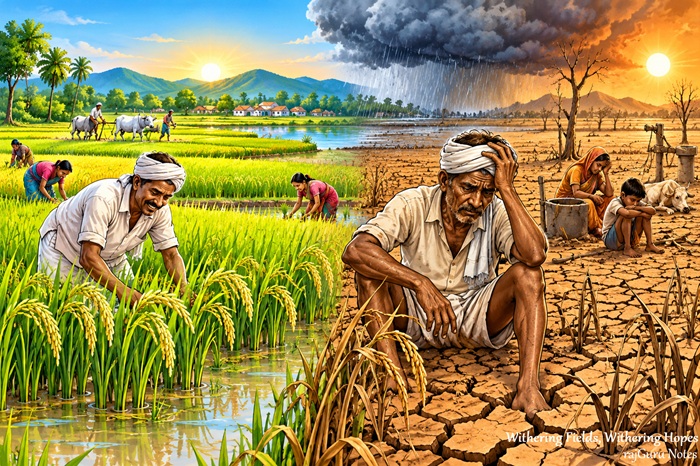
A recent report highlighting the plight of farmers cultivating the 'Erra Vari' (red paddy) variety, and the tragic consequences of crop failure, is nothing short of heart-wrenching. When the crops dry up, the aspirations of the farming community dry up with them, serving as a stark reminder of a deeply flawed system.
The root cause of this existential crisis is not merely the wrath of nature, but the glaring inadequacies embedded within our agricultural policies. As farmers transition from rain-fed agriculture to commercial crops, the government machinery has failed to provide the requisite market infrastructure and protective safeguards. The delayed disbursement of compensation, subsidies, and investment support leaves the distressed farmer trapped in a vicious cycle of debt. The ordeal doesn't end with the harvest; it continues at procurement centers, where farmers grapple with bureaucratic apathy and inadequate minimum support prices. As cultivation costs—seeds, fertilizers, and labor—skyrocket, farmers are forced to invest heavily, only to face the devastating blow of crop failure and diminished yields. Caught in this tripartite crisis of high investment, low yield, and total crop loss, the farmer is rendered utterly helpless. When a farmer takes his own life, it is not merely the death of an individual; it is the collapse of a generation's hopes and the economic ruin of an entire village. Unfortunately, in the current scenario, every farmer cultivating paddy is silently enduring this immense psychological trauma. Instead of rejoicing at the harvest, they are crushed under the weight of labor shortages and exorbitant machinery rents.
It is imperative to recognize that this is not just a farmer's crisis, but a systemic agricultural crisis. The struggles of paddy farmers in Telangana are a testament to this grim reality. Even the minimum support prices announced by the government fail to insulate the farmer from staggering losses when the crop is destroyed. Merely announcing compensation is insufficient; the government must ensure the robust implementation of crop insurance schemes and provide immediate financial assistance. Furthermore, there is an urgent need for long-term interventions: developing climate-resilient crop varieties, expanding irrigation infrastructure, and fortifying market linkages. To eradicate farmer suicides, the government, agricultural scientists, and society at large must work in unison. Only then can the farmer's life transform into a golden existence; otherwise, we will be left with nothing but parched fields and the endless tears of our food providers.
Image from the collection of rajGuru Notes - ChatGPT generated
