Oct 31, 2026
Oct 31, 2026
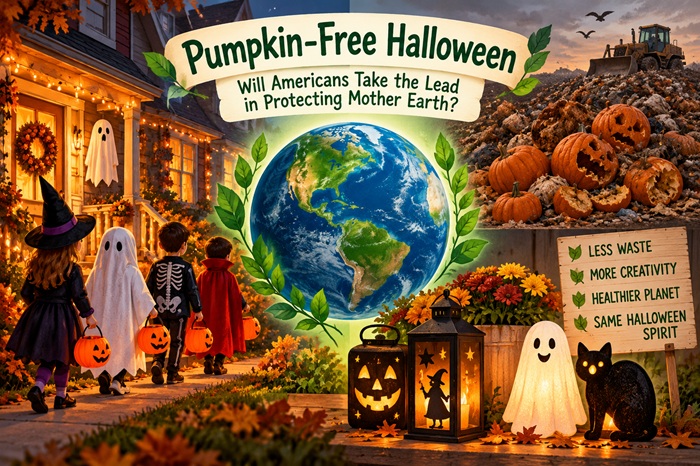
Will Americans Take the Lead in Protecting Mother Earth?
Introduction
The United States is constitutionally a secular country, founded on the principle of separation of church and state. Nevertheless, a significant segment of American civil society maintains that the nation’s cultural and historical foundations are deeply rooted in Judeo-Christian traditions. At the same time, American society is religiously diverse, with people belonging to different faiths and an increasing number identifying as religiously unaffiliated.
According to the Pew Research Center’s Religious Landscape Study (RLS) for 2023–2024, approximately 62% of American adults identify as Christians, including 40% Protestants, 19% Catholics, and 3% belonging to other Christian denominations or groups. Approximately 29% identify as religiously unaffiliated, including 5% atheists, 6% agnostics, and 19% who describe their religion as “nothing in particular.” Around 7% identify with non-Christian religions, including Jewish Americans (2%), Muslim Americans (1%), Buddhist Americans (1%), Hindu Americans (1%), and followers of other faiths.
This religious and cultural diversity provides an opportunity to examine American traditions through the broader lens of environmental responsibility. Halloween, one of the most popular annual celebrations in the United States, offers a particularly interesting example. Although the festival is enjoyed by millions of Americans, its environmental consequences, especially the enormous quantities of pumpkins discarded after the celebration, deserve greater public attention. As the world confronts climate change, resource depletion, and food insecurity, it is worth asking whether Americans can preserve the spirit of Halloween, essentially a pagan harvest festival, while adopting more sustainable practices. Could a pumpkin-free Halloween, or at least a Halloween that dramatically reduces pumpkin waste, become a meaningful contribution to protecting Mother Earth?
America’s Love Affair with Halloween
Halloween has historical roots in the ancient Celtic festival of Samhain, celebrated more than 2,000 years ago. Samhain marked the transition from the harvest season to winter and the beginning of a new year in the Celtic calendar. According to traditional Celtic beliefs, the boundary between the living and the dead became blurred on the night of October 31, allowing spirits to walk among the living. To protect themselves from potentially malevolent spirits, people lit large sacred bonfires and wore animal skins or disguises intended to confuse or ward off supernatural beings.
Over the centuries, these ancient customs evolved through interactions with Christian traditions and European folk practices. In the eighth century, Pope Gregory III designated November 1 as a day to honor all saints. The evening preceding All Saints’ Day became known as All Hallows’ Eve, a term that eventually evolved into the modern word Halloween. Although Halloween subsequently acquired Christian associations, many of its popular customs retain elements of pre-Christian European folklore.
One particularly enduring tradition involves carving frightening faces into vegetables to ward off evil spirits. Irish folklore tells the story of Stingy Jack, a wandering figure whose encounters with the devil inspired the custom of carving grotesque faces into hollowed-out turnips. People displayed illuminated turnips outside their homes to frighten away evil spirits or protect themselves from supernatural mischief.
During the nineteenth century, Irish and Scottish immigrants brought Halloween traditions to North America, including during the mass migration associated with the Irish potato famine. In their new homeland, they discovered that pumpkins, native to the Americas, were larger and easier to carve than turnips. Pumpkins gradually replaced turnips as the preferred material for Halloween lanterns, helping establish the jack-o’-lantern as one of the festival’s most recognizable symbols.
Modern American Halloween celebrations revolve around several familiar traditions, including pumpkin carving, trick-or-treating, and wearing frightening or imaginative costumes. The holiday holds particular significance for children, who travel from house to house requesting candy and other treats. This practice has historical connections to medieval European customs such as souling, in which poor people went from door to door requesting food, including soul cakes, in exchange for prayers for the dead. Other traditions, including Irish and Scottish mumming and guising, involved people dressing in costumes and visiting homes during seasonal festivities.
Today, Halloween has evolved into a major cultural and commercial event. Families decorate their homes with pumpkins, retailers sell seasonal ornaments, and communities organize festivals and neighborhood celebrations. Yet the popularity of these traditions raises an important question: should a celebration that is rooted partly in agricultural abundance or harvest contribute to the waste of valuable agricultural resources?
The Pumpkin Economy: A Celebration with an Environmental Cost
Pumpkins occupy an important place in American agriculture and seasonal commerce. The United States produces approximately two billion pounds of pumpkins annually, cultivated across tens of thousands of acres. Many households also grow pumpkins specifically for ornamental purposes, particularly during the Halloween season.
Pumpkins serve two principal markets. Some are grown primarily for decorative purposes, including carving jack-o’-lanterns and displaying them outside homes and businesses. Others are cultivated for food processing, supplying ingredients for pumpkin puree, pies, soups, and other food products.
The difficulty arises when pumpkins purchased for decoration are discarded shortly after Halloween. Large quantities of these pumpkins remain unused as food, even though much of their edible flesh and seeds could have been consumed. Estimates cited in discussions of pumpkin waste suggest that more than one billion pounds of pumpkins may be discarded annually in the United States, with some estimates placing the amount at approximately 1.3 billion pounds.
Such figures highlight the environmental costs of a seasonal consumption pattern in which agricultural products are purchased primarily for temporary decorative purposes and subsequently thrown away.
The production of pumpkins requires land, water, agricultural labor, energy, transportation, and other resources. When edible pumpkins are discarded after only a few days of decoration, the resources invested in growing and transporting them are effectively wasted. The problem is not necessarily the pumpkin itself, but rather the failure to use it efficiently throughout its life cycle.
Halloween does not have to become an environmentally damaging celebration. However, reducing unnecessary pumpkin purchases, extending the useful life of pumpkins, and ensuring that discarded pumpkins are directed toward food, animal feed, or composting could substantially improve the environmental sustainability of the festival.
Environmental Consequences of Pumpkin Waste
The environmental impact of pumpkin waste extends beyond the immediate loss of agricultural produce. When large quantities of organic waste are sent to landfills, they contribute to greenhouse gas emissions and place additional pressure on waste-management systems.
One of the most significant concerns is the production of methane. When organic material such as discarded pumpkins decomposes under oxygen-poor conditions in landfills, microorganisms produce methane, a greenhouse gas that has a substantially greater warming effect per unit of mass than carbon dioxide over a 100-year period. The precise emissions associated with discarded pumpkins depend on landfill conditions, waste-management practices, and methane capture systems. Nevertheless, preventing edible organic matter from entering landfills can contribute to climate-change mitigation.
The waste of pumpkins also represents an inefficient use of water. Growing crops requires water for irrigation and other agricultural processes, although the precise amount varies according to climate, soil conditions, rainfall, and farming methods. When pumpkins are grown, harvested, transported, and purchased only to be discarded after Halloween, the water and other resources invested in their production are squandered. In a world where many communities face water scarcity, the unnecessary waste of agricultural products deserves serious consideration.
Another concern is the potential impact of poorly managed organic waste on soil and water quality. As discarded pumpkins decompose, they release moisture and organic compounds. In inadequately managed waste sites, leachate can form when water passes through decomposing material and mixes with other waste products. If not properly collected and treated, contaminated leachate may threaten groundwater and surrounding ecosystems. Although pumpkin waste alone does not necessarily produce hazardous leachate, its disposal alongside other waste can contribute to the broader environmental challenges associated with landfills.
These consequences illustrate a fundamental principle of environmental sustainability: the impact of consumption does not end when a product is purchased or used. Responsible consumption requires consideration of the entire process, from agricultural production and transportation to reuse, recycling, and final disposal.
Pumpkins: From Agricultural Heritage to Food Security
Long before pumpkins became synonymous with Halloween, they were an important agricultural resource and a valuable source of nourishment in the Americas. Archaeological evidence suggests that pumpkins were cultivated as early as approximately 7,500 B.C. in what is now Mexico. For thousands of years, Indigenous peoples valued pumpkins and related squashes for their versatility, nutritional value, and usefulness as food.
Pumpkins are rich in nutrients and can be incorporated into a wide variety of dishes. Their flesh can be cooked into soups, purees, curries, and baked goods, while their seeds can be roasted and consumed as a nutritious snack. Depending on the variety and preparation, pumpkins can provide dietary fiber, vitamins, minerals, and other beneficial nutrients.
In contemporary American cuisine, pumpkin is particularly associated with pumpkin puree and pumpkin pie, a traditional dessert frequently served during Thanksgiving. However, the culinary potential of pumpkins extends far beyond these familiar uses.
The idea that pumpkins have only limited value beyond Halloween decorations overlooks their historical importance as a food crop. Instead of allowing edible pumpkins to become waste, households can rediscover their culinary uses and make better use of the resources invested in producing them.
There are several practical ways to accomplish this. First, households can purchase edible varieties, such as sugar pie pumpkins, and use their flesh to prepare soups, purees, pies, breads, and other dishes. Pumpkins intended for carving can also be used for food when they are fresh, food-safe, and have not been exposed to candles, paints, preservatives, or other potentially harmful substances. However, pumpkins that have been left outdoors for extended periods, exposed to contamination, or have begun to rot should not be consumed.
Second, pumpkin seeds can be separated from the flesh, cleaned, and roasted with a small amount of oil and salt. This simple practice turns a frequently discarded part of the pumpkin into a useful food product.
Third, suitable surplus pumpkins can be directed toward livestock feed, provided they are free from contaminants and are appropriate for the animals concerned. Farmers and livestock owners may be able to use pumpkins that are unsuitable for human consumption but remain safe for animal feeding.
Finally, pumpkins that cannot be eaten or safely used as animal feed can be composted. Households can participate in community composting initiatives, deliver pumpkins to participating farms, or use municipal organic-waste collection programs where available. Composting returns organic matter to the soil and can reduce the amount of waste sent to landfills.
These alternatives demonstrate that pumpkin waste is not inevitable. With modest changes in consumer behavior and better coordination among households, farmers, retailers, charities, and municipal authorities, much of this waste could be avoided.
Toward a More Sustainable Halloween
The challenge is not necessarily to eliminate every Halloween pumpkin. Rather, it is to reconsider a culture of seasonal consumption that encourages people to purchase agricultural products for short-term decorative use without considering their subsequent disposal.
A more sustainable Halloween could preserve the creativity, excitement, and community spirit of the celebration while substantially reducing unnecessary waste. Families could choose reusable decorations made of plastic, purchase fewer pumpkins, use edible pumpkins for cooking, and ensure that suitable leftovers are donated, repurposed, or composted.
Schools, community organizations, religious institutions, and local governments could organize pumpkin recovery and composting programs immediately after Halloween. Farmers and food-processing businesses could explore opportunities to recover suitable surplus pumpkins for food production or animal feed. Retailers could encourage responsible purchasing by providing information about food use and composting options.
Public awareness campaigns could also challenge the assumption that Halloween decorations must be disposable. A pumpkin does not have to be carved, displayed, and discarded within a few days to contribute to the enjoyment of the season. Reusable ornaments, creative decorations made from recycled materials, and other alternatives can provide festive appeal without generating comparable amounts of organic waste.
Such changes would demonstrate that environmental responsibility does not require abandoning cultural traditions. Instead, it requires adapting them to contemporary environmental realities.
From Pumpkin Waste to Humanitarian Responsibility
Reducing pumpkin waste also presents an opportunity to connect environmental responsibility with humanitarian concerns. While millions of pounds of edible pumpkins may be discarded in the United States, many people around the world continue to experience hunger and food insecurity.
The contrast is a reminder that agricultural abundance should not be taken for granted. Food that is safe and suitable for consumption should be used to nourish people rather than wasted unnecessarily. At the same time, the economics and logistics of recovering surplus pumpkins must be considered realistically: fresh pumpkins are perishable, transportation can be expensive, and food-safety requirements must be observed.
Consequently, the most practical way to help hungry communities abroad may not be to transport large quantities of fresh American pumpkins to Africa, South America or food-desert countries like Pakistan. Instead, individuals and families can redirect some of the money they would otherwise spend on decorative pumpkins toward reputable humanitarian organizations that provide meals to people experiencing hunger.
One such organization is Akshaya Patra, which works to address hunger through meal programs. Donations to organizations with established food-distribution networks can help support their efforts to provide meals for children and other vulnerable populations. Donors should verify an organization's current programs and ensure that their contributions support the intended charitable purpose.
This approach has two important responsibilities: reducing waste at home and helping address hunger elsewhere. It also emphasizes that environmental sustainability and humanitarian service are not competing priorities. Both reflect a commitment to using available resources responsibly and recognizing the dignity and needs of others.
A movement encouraging Americans to spend less on disposable Halloween decorations and contribute more to hunger-relief programs could turn an ordinary seasonal celebration into an opportunity for meaningful social action.
Conclusion: Will Americans Take the Lead in Protecting Mother Earth?
Halloween, essentially a pagan harvest festival, deeply embedded in American popular culture. Its traditions of costumes, trick-or-treating, neighborhood gatherings, and pumpkin carving bring enjoyment to millions of people. Yet the environmental consequences of the festival deserve greater attention, particularly when agricultural products are discarded on a massive scale after their brief decorative use.
The estimated billions of pounds of pumpkins produced annually in the United States represent a significant agricultural resource. Allowing large quantities of this produce to become waste is an inefficient use of land, water, labor, energy, and other resources. When discarded pumpkins enter landfills, they can also contribute to methane emissions and other waste-management challenges.
A more responsible approach would encourage Americans to purchase fewer decorative pumpkins, use edible pumpkins for cooking, roast their seeds, direct suitable surplus produce toward animal feed, and compost what cannot be used otherwise. Communities could organize pumpkin recovery programs, while households could redirect some of their Halloween spending toward organizations working to alleviate hunger.
Ultimately, the goal should be to transform Halloween from a celebration associated with excessive seasonal consumption into an example of responsible resource use. Americans have the opportunity to demonstrate that cultural traditions can coexist with environmental stewardship and humanitarian compassion.
Dear Americans, please reconsider spending money on pumpkins solely for carving this Halloween. Reduce unnecessary purchases, use pumpkins as food whenever possible, and ensure that suitable organic waste is composted rather than sent to landfills. Consider donating the money saved to reputable charities that provide meals to children and families experiencing hunger, including those working in Africa and elsewhere around the world.
Protecting Mother Earth begins with everyday decisions. A small change in how we celebrate Halloween can contribute to a larger movement toward sustainability, responsible consumption, and compassion for those in need.
The question is not whether Americans should celebrate Halloween, but whether they can celebrate it in a way that respects the planet and serves humanity.
Let us make Halloween a celebration of sustainability, not waste.
Original campaign reference: Dr. Adityanjee’s October 30, 2019, social media appeal encouraging Americans to reduce pumpkin waste and redirect charitable resources toward feeding the poor.
