Nov 02, 2026
Nov 02, 2026
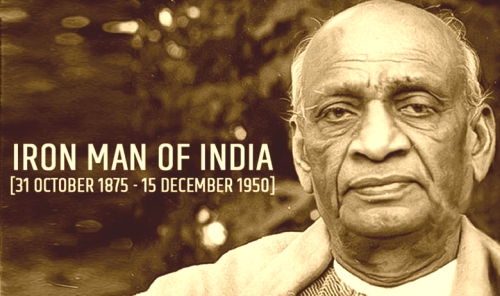
The Day before Yesterday, that is, October 31, marked the 151st Birth Anniversary of Sardar Vallabhbhai Patel. Known as “The Iron Man”, he was one of the leading freedom fighters. More importantly, he is also remembered for his post-independence contribution. He was responsible for integrating the several hundred fragments into a single entity called Akhand Bharat.
I was curious to learn of his role in the partition. I posed the following questions to GEMINI AI:
What were the views of Sardar Patel on partition?
Was he in favour of partition or otherwise?
I am reproducing verbatim the response from Gemini AI.
Sardar Vallabhbhai Patel ultimately favored Partition, becoming one of its earliest and most decisive supporters within the Indian National Congress leadership by late 1946 and early 1947.
However, his position was rooted in pragmatic political realism rather than ideological preference. Like Mahatma Gandhi and Jawaharlal Nehru, Patel initially desired a united, undivided India (Akhand Bharat). However, as events unfolded, he concluded that agreeing to Partition was a painful but necessary step to save the rest of India.
Why Sardar Patel Supported Partition
Patel’s transition from opposing Partition to supporting it was driven by several critical observations:
1. Dysfunction of the Interim Government (1946–1947)
Following the 1946 Cabinet Mission Plan, an interim government was formed containing representatives from both the Congress and the Muslim League. The Muslim League, led by Finance Minister Liaquat Ali Khan, actively sabotaged and deadlocked administrative functioning. Patel observed firsthand that running a government with two irreconcilable factions was impossible.
2. Averting Full-Scale Civil War
The breakout of severe communal violence—most notably the Direct Action Day in Kolkata (August 1946) and subsequent riots in Noakhali and Bihar—convinced Patel that forcing a united India under high tension would lead to widespread, uncontrolled civil war. As he famously remarked to V. P. Menon:
"We accepted partition in order to avoid greater bloodshed and destruction, not because we believed in it."
3. A Strong Central Government for the Rest of India
The proposals for keeping India united (such as the Cabinet Mission Plan) involved creating a extremely weak central government with highly autonomous provinces. Patel realized that a weak center would hinder nation-building, administrative efficiency, and economic development. Partition allowed the remaining part of India to have a strong, unified central administration.
4. Securing Punjab and Bengal
When Partition became inevitable, Patel fought fiercely to ensure that the non-Muslim majority regions of Punjab and Bengal remained with India, rather than allowing entire provinces to be handed over to Pakistan.
Differences with Mahatma Gandhi
While Mahatma Gandhi remained fundamentally opposed to the division of the country until the very end ("over my dead body"), Patel and Jawaharlal Nehru recognized the geopolitical deadlock and persuaded the Congress Working Committee to accept Lord Mountbatten's Partition Plan. Patel argued to Gandhi that refusing Partition would lead to the total collapse of state machinery and even greater chaos.
Summary
· Was he in favor? Yes, by 1947 he firmly supported Partition as the only practical solution.
· Was it his first choice? No; he accepted it out of necessity to guarantee a stable, strong, and sovereign Indian Union rather than a fragmented nation plagued by perpetual civil strife.
