Nov 19, 2026
Nov 19, 2026
A Reminder for Adults, a Lesson for Children
Every year, 19 November is observed as World Toilet Day. While it may not be a day that receives the attention of festivals, environmental days or other awareness campaigns, it addresses one of the most basic necessities of human life — access to a toilet, sanitation, hygiene and dignity.
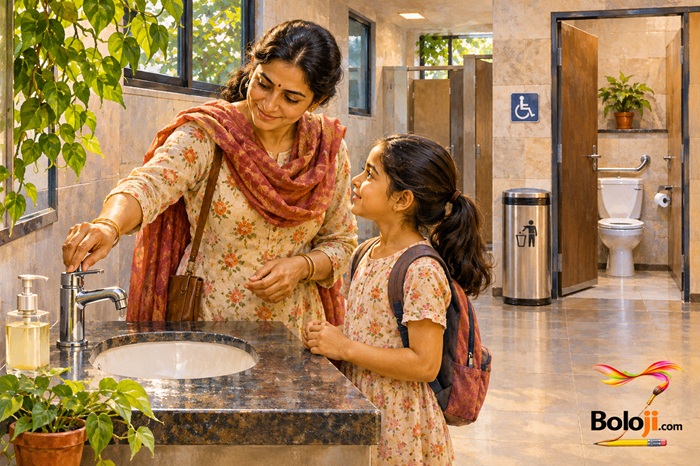
We often speak about cleanliness at home, personal hygiene, health, civic sense and protecting the environment. But how much of it is reflected in our behaviour when we use a public toilet, a restroom at a railway station, an airport, a shopping mall, a restaurant or any other shared facility?
World Toilet Day is not merely about the availability of toilets. It is equally about how we use them, how we maintain them and how we leave them behind for the next person.
How did World Toilet Day begin?
World Toilet Day was first established in 2001 by the World Toilet Organization, founded by Jack Sim of Singapore, to bring global attention to sanitation and the lack of safe toilets.
In 2013, the United Nations officially recognised 19 November as World Toilet Day. It became a global observance to highlight the sanitation crisis and encourage action towards safe toilets and sanitation for everyone.
The day reminds us that toilets are not a luxury. They are essential for health, safety, dignity, privacy and equality. Lack of proper sanitation contributes to disease, environmental pollution, unsafe living conditions and the loss of dignity, particularly for women, children, older people and vulnerable communities.
Sanitation is not just infrastructure. It is a basic human need.
India’s sanitation journey: How far have we moved ahead?
India has witnessed a major change in its sanitation landscape over the past decade. The Swachh Bharat Mission, launched on 2 October 2014, brought toilet construction, sanitation, cleanliness and behaviour change into the national conversation.
It was not just about constructing toilets but about encouraging people to use them, changing long-held practices and making sanitation a collective responsibility.
Some of the significant milestones include:
As reported by the Government of India in November 2025, over 5.67 lakh villages had attained ODF Plus status, and 4,692 cities had ODF status. The next challenge is to sustain these achievements, ensure functionality and cleanliness, and make sanitation a habit rather than a campaign.
We have made progress in awareness, infrastructure and accessibility. We see toilets in places where their absence was once taken for granted. Yet, the condition of many public toilets tells us that infrastructure alone cannot solve the problem.
A toilet built is not necessarily a toilet maintained. A toilet used is not necessarily a toilet left clean.
That is where our individual responsibility begins.
The real message of World Toilet Day is for adults
We are quick to complain when a public toilet is dirty. We blame the government, the municipality, the cleaning staff or the lack of maintenance. While these concerns may be entirely justified, how often do we pause to ask whether our own behaviour contributes to the condition of the toilet?
Do we leave the washroom the way we would like to find it?
Do we flush after use? Do we throw tissues, sanitary products, wrappers or other waste into the toilet? Do we leave water splashed all over the floor? Do we use the bin provided? Do we assume someone else will clean up after us?
The toilet is a shared space. The next person using it is just as entitled to cleanliness, comfort and dignity as we are.
World Toilet Day should remind adults that civic sense does not begin on the street; it begins in the smallest spaces we share.
Behavioural changes every adult needs to practise
It is time to move beyond awareness posters and take responsibility for our actions. These are simple habits, but when practised consistently, they make a difference.
1. Leave the toilet as clean as you would like to find it.
Flush properly. Check the toilet before leaving. Don't leave stains, waste or unpleasantness for the next person. Cleanliness is not the responsibility of the next user.
2. Use water responsibly.
Avoid unnecessary wastage. Ensure taps are closed properly. Use only the water you need. Water conservation and sanitation go hand in hand.
3. Dispose of waste correctly.
Sanitary napkins, tissues, diapers, wrappers and other waste must be disposed of appropriately. A toilet is not a waste bin. Improper disposal can block pipes, damage sewage systems and create hygiene problems.
4. Keep the floor dry and safe.
Avoid splashing water everywhere. A wet toilet floor can be dangerous, especially for elderly people, pregnant women, children and persons with mobility difficulties.
5. Wash your hands thoroughly.
Handwashing with soap after using the toilet is non-negotiable. It is one of the simplest and most effective ways to prevent infections and protect our family and community.
6. Respect sanitation workers.
The people who clean and maintain toilets deserve respect, safe working conditions, proper equipment and dignity. Cleanliness should never be achieved at the cost of another person's health or dignity.
7. Don't vandalise or misuse public facilities.
Don't damage taps, flush mechanisms, doors, locks, bins or other facilities. Public property belongs to all of us. Misuse eventually deprives everyone of a usable facility.
8. Don't treat cleanliness as someone else's job.
A cleaner may be employed to maintain the facility, but that does not give us permission to dirty it. Maintenance and responsible usage must go together.
Children learn sanitation from what we do, not what we preach
We teach children to flush, wash their hands, use a dustbin, keep their surroundings clean and not litter. We remind them repeatedly. We correct them when they forget.
But children are keen observers. They notice our habits much more than our instructions.
If an adult leaves a toilet unclean and walks away, a child learns that someone else will take care of it.
If an adult throws waste into a toilet instead of a bin, a child learns that convenience comes before responsibility.
If we complain about dirty public toilets but leave them dirty ourselves, our words lose their meaning.
If we practise cleanliness even when nobody is watching, children learn that responsibility does not need supervision.
The best sanitation lesson is not a lecture in school. It is an adult setting an example every single day.
Let us teach children to respect shared spaces, but let us first practise it ourselves. Let us not expect children to develop civic sense when adults conveniently ignore it.
Children will follow what they see at home, in public, while travelling, at restaurants, at schools and everywhere they observe the adults around them.
Sanitation is also about dignity, safety and equality
The importance of toilets goes beyond hygiene. For women and girls, safe, accessible, clean and functional toilets are closely linked to dignity, privacy, health, security and participation in education and work.
The 2026 World Toilet Day theme, “Sanitation and gender equality,” highlights the connection between safe sanitation and equal opportunities. A toilet that is broken, inaccessible, unsafe or unhygienic is not truly serving the people who need it.
We need toilets that are functional, accessible to persons with disabilities, properly maintained, safe for women, and available to everyone who needs them. We also need to stop treating toilet hygiene as an embarrassing topic. It is a matter of health, public responsibility and human dignity.
A toilet is a mirror of our civic sense
India has moved forward in building toilets and spreading awareness. We have made sanitation a national conversation. But the next step in this journey is not just building more facilities; it is building better habits.
We cannot expect government campaigns, signboards, fines or cleaning staff alone to change the way we use shared spaces.
Clean toilets need responsible citizens. Responsible citizens create cleaner communities. And cleaner communities begin with adults who practise what they teach.
This World Toilet Day, let us make a promise to ourselves — not just to use toilets, but to use them responsibly, leave them clean and respect the person who will use them next.
We do not need to wait for a cleanliness drive to behave responsibly.
We do not need someone watching us to do the right thing.
And we certainly do not need to tell children to practise habits that we ourselves refuse to follow.
Let us change our behaviour first. Let children learn by watching us. Let cleanliness become a habit, civic sense become our culture, and sanitation become a shared responsibility.
Because a cleaner India is not built only by constructing toilets. It is built by the people who use them.
This World Toilet Day, what is one sanitation habit you believe every adult should practise without fail? Share your thoughts in the comments.
