Nov 21, 2026
Nov 21, 2026
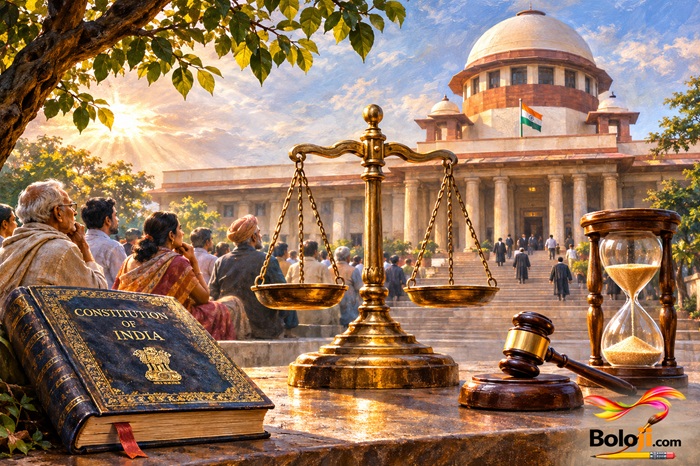
The judiciary occupies a pivotal position in a democratic system. It is entrusted with the responsibility of safeguarding constitutional values, upholding the rule of law and checking the arbitrary exercise of power by the legislature and the executive. It is, therefore, often regarded as the last refuge of citizens when other institutions fail them. Yet, those occupying the highest judicial offices cannot claim immunity from scrutiny, criticism or accountability. The credibility of the judiciary rests not merely on the stature of its judges but on their conduct, impartiality, integrity and unwavering commitment to constitutional principles.
A purported exchange between an advocate and Chief Justice of India Surya Kant, depicted in a widely circulated poster, has brought this larger question into focus. The advocate is shown expressing concern that he had received no response even after 15 days and insisting that the matter was urgent. The Chief Justice is portrayed as replying, "We will see. You just wait." The advocate then reportedly retorts that he would not wait and questions the Chief Justice's integrity and suitability for the office. However, the poster provides neither the details of the case nor the context or official verification of the exchange. Its contents must, therefore, not be treated as an established account of an actual courtroom incident. Nevertheless, the underlying issue provides an occasion to reflect on accountability within the judicial institution.
For litigants approaching courts in search of justice, time is an invaluable consideration. Delays in hearing cases, failure to respond to urgent applications and prolonged uncertainty can inflict immense hardship on those seeking relief. The consequences are particularly serious in matters involving personal liberty, the right to life, fundamental rights and grievances arising from arbitrary state action. The familiar judicial maxim that "justice delayed is justice denied" acquires particular significance in such circumstances. At a time when the accumulation of pending cases remains a formidable challenge across the country, the judiciary must strive for greater procedural efficiency, timely hearings and transparent mechanisms for addressing urgent matters.
At the same time, it is important to distinguish between legitimate criticism of judicial conduct, questioning of judicial decisions and personal attacks on judges. Safeguarding judicial independence is indispensable to democracy. Equally important is protecting the democratic right to scrutinise institutions exercising public authority. Judges must remain insulated from political pressure, executive interference and personal interests. Advocates, for their part, are expected to uphold courtroom decorum and respect the institutional dignity of the judiciary. Differences of opinion are an integral part of democratic discourse, but they must not degenerate into personal confrontations.
The more fundamental questions, therefore, go beyond an alleged verbal altercation between individuals. How transparent are the procedures through which decisions are taken in the higher judiciary? What priority is accorded to genuinely urgent matters? To what extent do mutual respect and accountability characterise the relationship between judges, advocates and litigants? Accountability does not mean that every judge must personally respond to every criticism. It means that judicial procedures must be transparent, decisions must be supported by reasoned explanations, legitimate grievances must have appropriate institutional channels for redress, and effective safeguards must exist against the misuse of authority.
The Constitution of India guarantees judicial independence. This independence, however, is not a personal privilege enjoyed by judges; it is a constitutional safeguard intended to ensure impartial justice for citizens. Consequently, judicial independence cannot become a justification for overlooking accountability. Equally, accountability must not be used as a pretext to exert improper pressure on judges. Maintaining a delicate balance between these two principles is essential to reserving public confidence in the judicial system.
In a democracy, no public office should be beyond scrutiny. Just as the Prime Minister, Chief Ministers, ministers and public officials are accountable to the people and the Constitution, the judiciary too must remain answerable to constitutional principles, the rule of law and public trust. The dignity of judicial office deserves respect, but that respect cannot be demanded merely by virtue of occupying a position. It must be earned through integrity, impartiality and principled conduct.
The prestige of the judiciary is not enhanced by suppressing criticism. It is strengthened by responding to legitimate concerns with dignity, restraint and fairness. Protecting the reputation of judges is important, but safeguarding the rights of ordinary citizens waiting for justice is equally imperative. Ultimately, people do not seek lofty assurances about the majesty of the courts; they seek the confidence that justice will be delivered promptly, impartially and without fear or favour. Only by sustaining that confidence can the judiciary truly remain the ultimate guardian of democracy.
