Oct 21, 2026
Oct 21, 2026
How Ajit Doval Turned ‘Demonetization’ Into A ‘National Security Weapon’
Most importantly — who really suffered when the racket was finally choked: the common man for a few weeks, or an ecosystem that thrived for decades?
The Counterfeit War India Never Saw
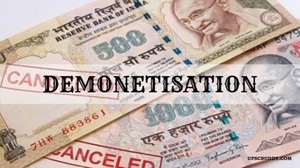 For most Indians, fake currency was a headline, a nuisance, an abstract “problem.” For the security establishment, it was something else entirely: a slow, silent economic attack. Not a neighborhood xerox shop printing bad quality duplicates. Not shady basements with crude scanners. This was industrial-grade counterfeiting.
High-quality fake Indian currency notes — so close to the original that even machines struggled to detect them — were being pumped into India through porous borders, hawala channels, and terror networks.
The scale ran into multi-crore operations. The objective was not just profit. It was destabilization. Every note that slipped into circulation:
But then came the shocker. This was not just Pakistan’s ingenuity. This was India’s betrayal.
The Ultimate Betrayal: When Power Sold the Plates
Somewhere in the corridors of power, far away from borders and bunkers, a deal had been struck. Not in Karachi. Not in Dubai. Inside India. The allegation within intelligence circles was chilling:
Original Indian currency printing plates — the holy grail of any counterfeit operation — had been compromised.
Not stolen from a warehouse. Not hacked from a system. But allegedly sold. Sold from the inside. Sold with access. Sold with authority. And not by a small cog in the machine — but by a senior minister in power.
Think about what that means for a moment. You are not just fighting an enemy across the border. You are fighting a betrayal sitting at the very heart of your own system.
Now imagine you are Ajit Doval.
You know what is happening. You know how deep it runs. You know who all are indirectly protected by that minister and that political ecosystem. You also know that if you act under that regime, it is not just your job at stake. It is your entire ability to fight future battles. So, he said one line that summed up both frustration and foresight:
“Kabhi koi sarkar aayegi jisko desh ki chinta hogi… tab kuch karenge.”
Someday a government will come that truly worries about the nation… then we will act.
This was not cowardice. This was strategic patience.
Strategic Silence: When Waiting Is Also Warfare
Chanakya never struck blindly. He waited for the right king, the right moment, the right climate. Only then did he unleash his full strategy. Doval’s silence was in that same tradition. Because under a government that is compromised, three things happen if you act:
So, the operation shifted from “strike now” to “wait for a government that will back the strike.”
Years passed. Fake notes kept moving. Terror modules kept receiving funding. Black money and hawala agents remained well-fed. And somewhere across the border, Pakistan smirked. Their attack on India was running on Indian-designed plates. Then, the political weather changed.
2014: When the Board Reset
In 2014, a new government came to power with a clear mandate and a nationalist plank.
You may agree with them. You may disagree with them. But one thing is undeniable: they were not obliged to protect the old network. This matters more than people realize. Because you cannot dismantle a nexus that the ruling ecosystem itself depends on. Now, for the first time in years:
The stage was set.
All that was needed was a move that would:
That move came in November 2016.
2016: Demonetization as a National Security Strike
Most people debated demonetization as an economic move. GDP. Cash crunch. Long queues. Liquidity. Informal sector. All of that is real. All of that is valid to debate. But that is only half the story. The other half lies in the underworld — where economic models are handwritten in hawala diaries, not Excel sheets.
On that November night, when Rs.500 and Rs.1,000 notes were declared invalid:
This was not just about black money lying under mattresses. This was about a war chest going up in smoke. A war chest that funded:
And here is the beauty of the move from a security standpoint:
You simply changed the rules of the game inside your own currency system.
“What About the Inconvenience?” — The Convenient Blindness
Yes, there were queues. Yes, there was discomfort. Yes, daily life was disrupted. But here is the uncomfortable counter-question:
Those who scream “inconvenience” the loudest — why are they so silent about:
It is easy to sympathize with a farmer standing in a queue. It is necessary to. But it is intellectually dishonest to talk only about him and conveniently ignore:
Ask yourself:
Who Really Lost That Night?
Let us be blunt. The average citizen lost:
But the entrenched networks lost:
Which loss is more painful to a nation? And which loss do critics obsess over in TV studios?
Final Thoughts: Learning to See the ‘Invisible’ War
Ajit Doval did not suddenly wake up in 2016 and discover fake currency. He had seen it years before. He had traced its trail. He had understood its source. He also understood something most people miss:
The next time someone dismisses demonetization with a lazy “it failed,” ask:
Because in the end, the real question is not: “Was demonetization comfortable?”
The real question is: “When your country is under slow, silent attack, do you want comfort — or courage?”
20-Dec-2025
More by : P. Mohan Chandran
Top | Perspective | Home

|
Only one question: When Demonetization was criticized, condemned and painted as failure, why no one from within government or outside revealed it? Why it took so long and that to for a movie like 'Durandhar' to expose the truth. Why the government kept tolerating wounds on itself but never opened its mouth? |