Sep 27, 2026
Sep 27, 2026
They Didn’t Teach You
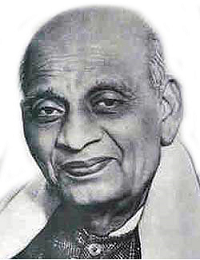 Why do our textbooks ‘remember’ some political murders in meticulous detail but ‘forget’ others entirely? Who decides which blood becomes “national memory” and which blood becomes a footnote? If Sardar Vallabhbhai Patel is celebrated as India’s ‘unifier,’ why is a violent attempt to remove him from history barely discussed in classrooms?
And if two young men reportedly died shielding him — why aren’t their names as familiar as the slogans we chant on national holidays? Most uncomfortably: when an incident is politically inconvenient, does it quietly “disappear,” or do we collectively look away because it is easier?
On May 14–15, 1939, Bhavnagar was preparing for what should have been a high-voltage political moment: the Bhavnagar State Praja Parishad convention, chaired by Sardar Patel. He arrived, a public leader in public view — an open procession, greeting crowds, the kind of scene that signals legitimacy and mass backing. And then, in seconds, Bhavnagar reportedly showed India something else: how quickly politics can turn into a knife.
The Moment the Crowd Turned Into a Kill-Zone
Multiple retellings and local memory converge on the core sequence:
You can argue politics all day. But that specific act — two young men turning their bodies into a human shield — belongs to a different category: raw civilizational courage. Not ideology. Not party. Not propaganda. Just the old Indian instinct of Raksha — protecting the leader, the cause, the moment — at the cost of one’s own life.
And here’s the detail that should sting: if a community preserves a martyr’s statue at the attack site, that’s not “hearsay.” That’s lived public memory trying to resist erasure.
What Happened After: Court, Convictions & Contested Numbers
This is where the story becomes politically loud — and evidentially messy.
A Times of India report (based on historian Rizwan Kadri’s access to the judgment) describes the Bhavnagar assault as the “Nagina Masjid case” and notes that the judgment indicates a death penalty for an attacker.
More recent political claims (carried by The Economic Times and also echoed in another TOI report) state that 57 accused were arrested, 34 were convicted, and two received death sentences, alongside allegations that the story was buried from mainstream telling.
So, what can we responsibly say without turning history into theater?
List of accused who got ‘life imprisonment’:
The Real “Eye-Opener”: Not Just the Attack — What We Did With It Afterward
Even if you strip away every partisan interpretation, what remains is still an indictment of how we handle national memory:
This isn’t just “history.” It’s institutional storytelling.
In Indian civilizational terms, this is the battle between Smriti (what society remembers) and Vismriti (what society is trained to forget). The tragedy is not that conspiracies happen—history is full of them. The tragedy is that we often don’t even allow our children to learn that they happened, because it complicates the neat moral cartoons we prefer.
And no — this isn’t a call to hate any community. That’s cheap politics. The mature takeaway is sharper: ideological machines exploit identity, and when the state or the curriculum becomes allergic to uncomfortable truth, the public becomes easy prey for future manipulation.
Final Thoughts
So, what do we do with Bhavnagar 1939?
Most importantly: if we don’t fix what we teach — and what we omit — how long before the next “forgotten attack” becomes the next “successful erasure”?
03-Jan-2026
More by : P. Mohan Chandran

|
Would be highly pleased to know - why it happened, why so many Muslims attacked him and the nitty gritty of the case. |
