Oct 26, 2026
Oct 26, 2026
When Procedure Replaces Dharma in Constitutional Justice
These questions sit at the heart of India’s constitutional moment today.
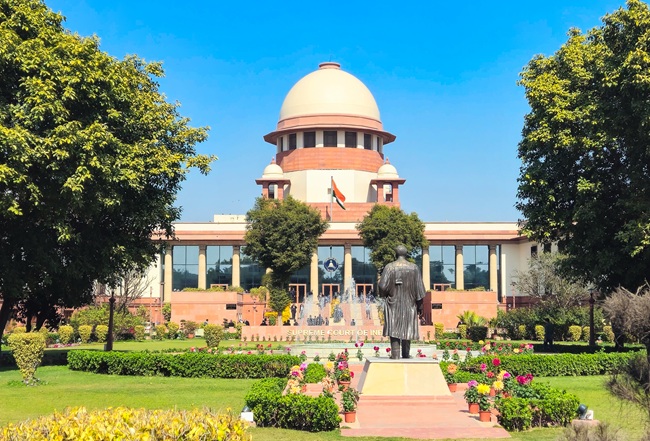
Nyaya & Karuna: Two Pillars, Not Competing Virtues
In the Indian civilizational imagination, Nyaya and Karuna are not adversaries. They are complements.
When Nyaya operates without Karuna, justice becomes mechanical. When Karuna operates without Nyaya, justice risks arbitrariness. Dharma exists only when both breathe together.
The Modern Constitutional Drift: Procedure as a Moral Alibi
Contemporary constitutional interpretation increasingly treats procedure as virtue and compliance as conscience. If a judgment is:
it is deemed ‘just’ — even if its consequences are ‘cruel, disruptive, or dehumanizing.’ This is where Nyaya mutates into legal minimalism, and Karuna is dismissed as sentimentality. But Dharma was never sentimental. It was always context-sensitive responsibility.
The Stray Dog Judgment: A Case Study in Karuna Deficit
In ordering the relocation of stray dogs into shelter homes, the Court may have followed:
But it failed the Dharmic test.
Why?
Because it treated living beings as problems to be moved, not lives to be understood.
Because it assumed ecosystems can be rearranged like furniture.
Because it privileged abstract order over concrete suffering.
This is Nyaya without Karuna — and therefore, incomplete justice.
Dharma Is Not ‘Blind Neutrality’
One of the great myths of modern jurisprudence is that neutrality equals fairness. Dharma rejects this. Dharma demands discernment, not detachment. It requires the decision-maker to ask:
In Dharmic jurisprudence, power carries asymmetrical responsibility. The more powerful the institution, the greater its duty to protect the voiceless.
Article 51A(g): Compassion is Not Optional
Article 51A(g) does not merely mandate environmental protection. It explicitly includes “compassion for all living creatures.”
This is not decorative language. It is not poetic excess. It is constitutional intent. To interpret this article expansively for corporations, but narrowly when inconvenient, is to fracture the Constitution’s moral coherence.
Nyaya as ‘Means,’ Not ‘End’
In the Dharmic framework:
A judgment that increases suffering — even if procedurally sound — demands re-examination.
The Judiciary as a ‘Dharmic Actor,’ Not a ‘Detached Arbiter’
The Supreme Court is not outside society. It is not above ecology. It is not immune to consequence. Every judgment reshapes:
To deny this is to deny reality.
Dharma begins where accountability is ‘internalized,’ not ‘outsourced.’
The Central Question We Must Ask
So, let us ask — not rhetorically, but seriously:
Because when law loses Karuna, it may still command obedience — but it will no longer command respect.
Is a judgment still ‘just’ if it ‘obeys’ the Constitution but ‘betrays’ its spirit?
Is procedure enough when compassion is constitutionally mandated? And if Dharma is balance, not bias — who will restore that balance when Nyaya walks alone? These are not philosophical indulgences. They are the questions upon which the ‘legitimacy of justice’ itself rests.
Image (c) istock.com
10-Jan-2026
More by : P. Mohan Chandran
