Oct 06, 2026
Oct 06, 2026
Lohri marks the end of winter month of Poh, and next day is the start of the month of Magh. It is a traditional welcome of longer days and the sun's journey to the northern hemisphere by people in the northern region specially in Punjab of the Indian sub-continent. The day after the Lohri festival marks the beginning of the Magh month and this day is called Maghi in Punjab, and as Pongal in Tamil Nadu and Makar Sankranti in most other parts of the country such as Karnataka, Kerala, Andhra Pradesh, Telangana, Maharashtra, Bihar, and Jharkhand. Lohri is special occasion, celebrated with gusto in those families where the new child is born, or a marriage has taken place.
Who celebrates Lohri?
Lohri is predominantly celebrated in Punjab (both west and east) and some parts of Haryana, Himachal Pradesh and Jammu. So, you will see bonfires being lit, eating, singing, and dancing having a good time. The children would go to house to house singing Lohri songs and asking for treats. It is in a way like a unique Halloween festival of the east, which happens as a first major festival of the year. The opening line of the most popular Lohri song is:
Sunder mundriye ho! Tera kaun vicaharaa ho!
Dullah bhatti walla ho! Dullhe di dhee vyayae ho!
The concluding line blesses the young married couple and asks family to give them the Lohri treat so that they can move on. This tradition of going door to door from the past is dying and those are being replaced with more choreographed and strictly by invitation Lohri events. Some even arrange DJs and Dholies to enliven the event.
Why do we celebrate Lohri?
For the farming community the harvesting period is the season of cheer and celebration. During those days when this tradition started most of the population was engaged in farming either directly or indirectly. So, the tradition of celebration for the bountiful harvest coincided with the winter solstice.
Lohri Celebration
A bonfire is lit and everyone gathers around the bonfire for some celebration and good cheer. The Dholi (who plays the big drum called Dhol) lights up the mood with the rhythmic beating. Soon everyone gathered around the fire starts dancing and singing the Punjabi folk songs. The bonfire provides the warmth and dancing flames provides the spectacle to set the celebration mood before the warmer and longer days become the new normal. As the new bride and groom sit at the center of celebrations, friends and family go up to them to wish them and give them gifts. The birth of a child is another reason for Lohri celebration as the occasion brings joy and hope in the family and so the family celebrates by organizing an elaborate Lohri feast for near and dear ones. The guests at the celebration are given gift pack of Lohri specialties as take away.
Gur (jaggery), solidified and unrefined sugarcane juice is a traditional festive sweet. In Punjab, the harvest festival Lohri is marked by eating sheaves of roasted corn from the new harvest. Sugarcane and nuts as sesame seeds, and peanuts are also harvested at the same time, so sugarcane products such as rewari, popcorns and gachak become central to Lohri celebrations. Unhusked roasted peanuts are also eaten, and shells get tossed into the bonfire along with some roasted peanuts and popcorns. Sarson ka saag (mustard greens dish) with makki ki roti (flat corn bread roasted on a pan), with the sugarcane kheer (pudding) as dessert are the special Lohri food items prepared on this day. Some even dress up in new clothes for the celebration. Some restaurants also run Lohri specials with special meals of Lohri food items.
The legend behind the origin of Lohri
Let us return back to the legend of Dulla Bhatti, an enduring figure of Punjabi folklore whose full name was Rai Abdullah Khan Bhatti. He is often compared to England’s Robin Hood. A sixteenth-century folk hero, Dulla Bhatti symbolized resistance against oppression and the protection of the vulnerable. He led a revolt and a guerrilla campaign against the Mughal Emperor Akbar’s harsh land revenue system, defending the rights of peasants and safeguarding the honor of village women.
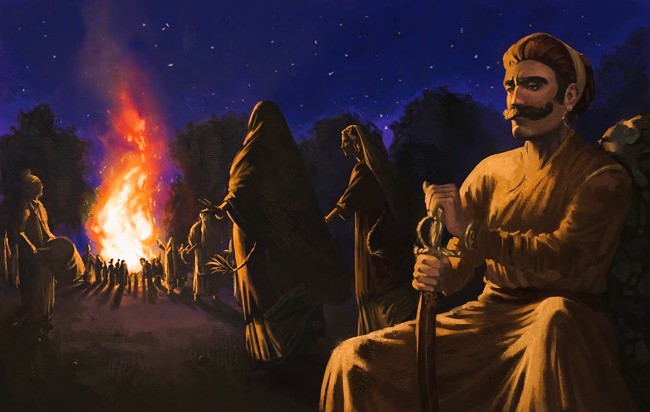
Dulla Bhatti (Source: Arsalan Khan / https://www.instagram.com/arsalanactual)
Dulla Bhatti came from a family of rural chiefs (zamindars), and his rebellion was fueled by personal loss: both his father, Farid Khan, and his grandfather, Sandal (or Bijli), were executed for opposing Mughal policies. One day, as a child he accidentally broke the pitcher of a village woman with his catapult. She mocked him, saying that instead of pretending to be brave by targeting “defenseless pitchers,” he should avenge the deaths of his grandfather and father. When he asked his mother what the woman meant, she told her son the whole story, upon which Dulla swore revenge. He took from the rich and gave the poor. A great rider and warrior, he achieved a legendary status by saving young girls from abduction and being sold as slaves.
To save one such girl called Mundri from an elderly zamindar, Dulla became the girl’s ‘godfather’ and is said to have her married to a suitable groom on the festival of Lohri, which is why he is remembered on this day. He famously arranged her marriage in the safety of the forest, using his own shawl to provide her dowry and lighting a bonfire to witness the vows. This tale of a Muslim Dulla Bhatti saving the honor of a Hindu girl Mundri became a symbol of the composite culture of Punjab and an icon of Lohri.
He was eventually captured and executed in Lahore in 1599, Dulla Bhatti’s martyrdom was immortalized by the contemporary Sufi poet Shah Hussain, who witnessed his death and wrote:
“Kahay Hussain Faqeer Sain Da, Takht Na Milday Mungyin.”
(Says Hussain, the Faqir of the God, Thrones are not gained by merely asking).
Shah Hussain was a disciple of Shah Bahlol, and is considered as legendary Sufi poet. This celebration is a living testament to the Punjabi reverence for the rebel—the social hero who stands up against an unfair system to deliver righteousness.
13-Jan-2026
More by : Bhupinder Singh

|
Thank you for writing in depth about Lorhi . I had guessed that the celebration of Lorhi was related to farming /harvest time. I could not understand the reason behind such enthusiasm behind celebration of this day. Historical relevance of this article is very interesting and indicative of the extent of research poured into your publications. |
|
|
Excellent information and presentation Thanks for sharing |
|
|
Great article. Hadn’t realised Shah Hussain poetry was linked to Dulla Bhatti! |
