Oct 24, 2026
Oct 24, 2026
by Varala Anand
...it lives in human breath
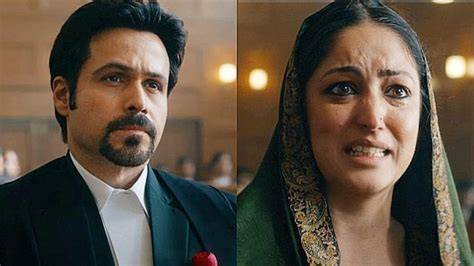
The case of Ahmed Khan vs. Shah Bano Begum stands as a landmark in Indian judicial history. Drawing upon this case and related real-life events, the film Haq was made now available on Netflix. At its core lies the life of Shah Bano Begum, a 62-year-old woman from Indore, who approaches the court seeking maintenance under Section 125 of the Criminal Procedure Code (CrPC). This secular provision was enacted to prevent divorced women from slipping into destitution. After being divorced through triple talaq under Islamic law, she invokes this section to claim her right to survival.
In reality, Shah Bano had spent over four decades as the wife of the eminent lawyer Mohammed Ahmed Khan. Following the divorce, she did not ask for charity or privilege—only the bare minimum required to live. Her husband refused, asserting that under Islamic law his obligation extended only through the three-month iddat period after divorce.
The case moved through multiple courts before reaching the Supreme Court. In a historic judgment, the Court ruled in Shah Bano’s favour, unequivocally stating that irrespective of religion, every divorced woman is entitled to maintenance under secular law.
The verdict triggered fierce political and social debate. Conservative Muslim groups opposed it vehemently, claiming it violated Sharia law. Haq draws its narrative strength from this very collision between law, belief, and human dignity.
Some films awaken the spectator within us; others quietly stir the human being. Haq belongs to the latter. This is not merely a courtroom drama. it is a question that circulates within a woman’s heart.
“Do I not have a right over my own life?”
In this film, the court is not just a physical space; it becomes the conscience of society. The judge does not merely deliver a verdict our own minds are compelled to do so.
The film avoids dramatic twists and cinematic shocks. Instead, it holds our breath through stillness and restraint. Scene by scene, it advances with quiet insistence.
A woman here does not demand the return of the life she has already lived. She asks only for the right that remains to her. Her struggle is not against her husband, not against religion, not even against the law. It is against entrenched ways of thinking against the question: What is a woman allowed to be?
Shazia Bano, played by Yami Gautam, is not performed; she is inhabited. When her husband Abbas Khan (Emraan Hashmi) divorces her and cuts off financial support, she approaches the court not to defeat him, but to steady herself. There is no anger in her eyes, no rhetorical aggression only a quiet, unwavering self-respect. Standing in court, she does not seem to fight for victory, but for the right not to lose herself this is not acting; it is a woman’s breath made visible.
Yami Gautam delivers what is arguably the finest performance of her career. Her pain, resolve, and emotional truth emerge through subtle voice modulation, restrained expressions, and measured dialogue. She compels silence. Emraan Hashmi, too, is rendered with nuance not as a conventional villain, but as a man shaped by selfishness, ego, and inherited certainties. He does not shout; he reasons. His arguments echo familiar voices from our own society. He is not merely an individual he is a system of thought.
The narrative does not rush. It lingers over emotional textures, allowing conflicts to unfold with clarity and depth. The director resists slogans, avoids manipulative music, and rejects thunderous dialogues. He trusts time. He trusts silence. He trusts the story.
This is not a film made for the age of reels. It is a film made for those who still pause to think.
Haq is not only about women. It is about what we are steadily losing in our attempt to be righteous, legal, and correct our humanity. When the film ends, it does not provoke outrage or demand applause. Instead, it leaves behind a question that refuses to fade. That is its achievement.
Haq does not make us cry.
It does not incite us.
It simply places us face to face with ourselves.
A right is not a judgment delivered by a court.
A right is the condition in which a human being refuses to abandon oneself.
This film is not about justice alone.
It is about remaining human.
Director: Suparn Verma
Producers: Vinite Jain, Vishal Gurnani, Juhi Paranik Mehta, Harman Baweja
Cast: Yami Gautam Dhar, Emraan Hashmi, Vartika Singh, Sheeba Chaddha
17-Jan-2026
More by : Varala Anand
