Oct 24, 2026
Oct 24, 2026
by Varala Anand
Today, colleges and universities are no longer sanctuaries that shape humane, sensitive individuals. They have turned into ticket counters issuing passes to employment. They have become production centers that package and release marks, ranks, and grades. Here, the student is not a thinking being, but merely a file — a hall-ticket number, a result.
Questions dwell in their eyes, yet beside those questions stands a red stop signal. The classroom no longer offers space for inquiry; it submits obediently to the timetable. What matters is how much of the syllabus has been “covered,” not what has truly been understood.
Culture enters these campuses occasionally like a guest. Once a year a stage, a selfie the next day a news clip, and then silence again. Poems lie asleep at the margins of the syllabus. Films are stamped as “distractions.” Languages shrink to the size of an examination paper. Education runs fast but depth lags behind. Certificates multiply awareness diminishes.
Education today manufactures not human beings, but CVs. It measures not thought, but outcomes.
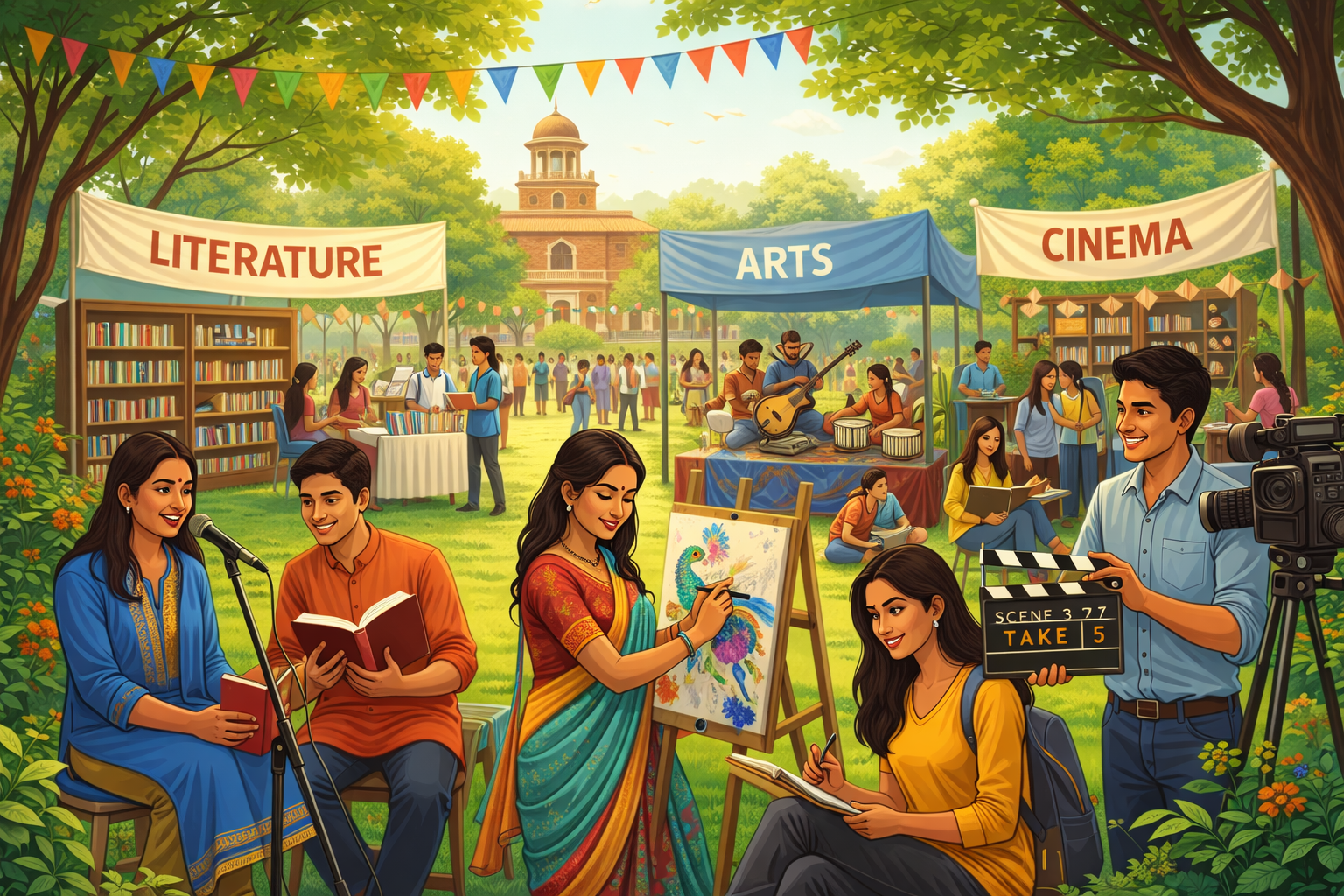
If this continues, colleges and universities will cease to be spaces that shape the future and will remain merely as training centers that conduct examinations. In truth, a college or university is not just a cluster of classrooms, corridors, and exam halls. It is a place where emotions breathe, where thoughts walk freely, where questions and answers sit beside each other. It is an atmosphere where young minds slowly learn how to become human.
The cultural environment is the invisible heartbeat of a campus. Without it, knowledge turns mechanical, degrees become lifeless pieces of paper, and education forgets experience.
When, at dusk, a poem is read aloud when, in dim light, a play is rehearsed when a song born in a hostel room merges into the night air it is there that education silently attains its fullness and perfection. For it is there that students learn not merely what to think, but how to see.
They learn to encounter other languages, histories, the pains and joys of others. They dissolve walls erected in the name of region, caste, religion, or gender, and create shared moments. A cultural atmosphere gives universities a conscience. A culturally alive university offers society thinking citizens, sensitive hearts, and minds that refuse to accept injustice as normal.
Such a campus does not end at its gates. It flows into society as questions, as art, as resistance, as hope.
There are many pathways to building culture within college and university campuses. Freedom of thought, respect for diversity and space for creativity must not remain slogans painted on walls they must become daily practice. Certain spaces on campus must always remain open. The auditorium must not be a locked room, but an evening ground where ideas gather. The library must not be a platform only for exams and marks, but a sanctuary where the mind finds quietude.
Culture never blossoms in fear.
Students are not mere consumers they are creators of culture. The syllabus, too, must converse with culture. Science must listen to poetry literature must question society; cinema must debate philosophy. The classroom should not stand as an island detached from life.
Teachers are not machines delivering lessons. They are lighthouses of culture. Recommending a poem, suggesting a film, encouraging a question without silencing it these are profound cultural acts. Teachers deserve respect.
Languages must be heard across campuses. Mother tongues, regional accents, folk songs when they all speak together, culture expand. A single voice is not culture. Cultural platforms must belong to all.
Campuses that nurture cultural maturity certainly need funds, rooms, books, and stages. But more than anything, they need resolve a resolve not fulfilled once in a while, but practiced daily and continuously. Campuses must converse with the outside world. Writers should visit artists must be invited . Society must enter the campus. Culture cannot survive in isolation.
Culture cannot be measured in numbers. Its results appear in questions they shimmer in tranquil minds they slowly unfold in the lives of students who step into society.
Only then does a college or university campus transform not merely into an institution, but into a living educational culture. A platform that creates a humane society.
22-Feb-2026
More by : Varala Anand
