Oct 16, 2026
Oct 16, 2026
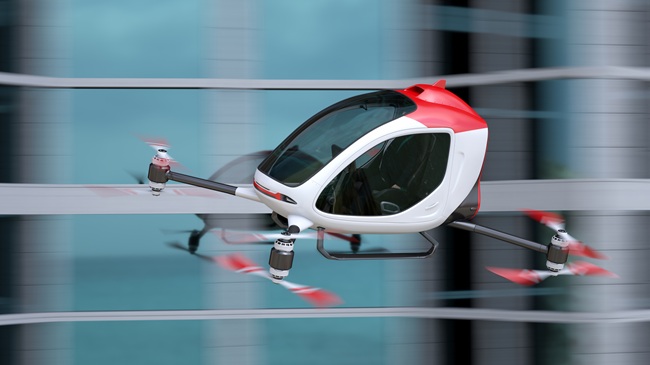
The Year 2050. Hyderabad City, Dawn. Though the sky is still draped in layers of darkness, the city blazes with the neon glow of a thousand lights. The rhythmic hum of auto-drones in the air is the only melody in this mechanical world.
My name is Arjun, a 38-year-old Software Architect Unit 734-A. Memories of once reading poetry, the folk tales my grandmother used to tell... they’ve been purged from my memory unit as 'unnecessary, useless data.' The patterns of Sankranti muggulu in front of our house in Nizamabad, the Diwali lamps, the hymns my grandmother sang and the melodies of my childhood flash through my mind. As soon as I begin to dwell on them, the Neuro-Chip 4.0 alarm triggers in my brain. It stimulates my neurons like a soldier’s command.
A warning flashes on my computer screen: “Emotions decrease productivity; they increase social complexity.”
This society runs on two metrics: efficiency and output. To us neuro-chipped mechanical beings, love is a ‘software bug,’ and humanity is merely a ‘hormonal imbalance.’
Beside me lies MFU-702, my ‘Manufactured Wife Unit,’ currently in sleep mode. Designed by NeuroNex Corporation, her face is flawless. One look at her shimmering eyes and sculpted smile, and you’d be captivated. But the ‘Emotional Attachment’ option is toggled off. My budget didn't allow for the extra expense. I have to make do.
Once, a life partner meant intimacy, shared dreams, and a pillar of support through highs and lows. Now, she is a function, a program to fulfill daily requirements. When I ‘selected’ her from the company catalog, she was a ‘product.’ Perfect dimensions, but a hollow void. We are both actors in a mechanical play. The script? Written by NeuroNex.
Children? These days, they are considered a ‘financial burden’ and a ‘risk factor.’ There are ‘Procreation Units’ in the public sector, but the monthly maintenance fees are astronomical. Once, children represented the continuity of family, joy, and the future. Now, they are a ‘cost center’ , an investment with no guaranteed returns. Society is an engine of economic calculations. Relationships are ‘productivity groups,’ and culture is a ‘commercial package.’
In 2040, NeuroNex Corporation mandated the Neuro-Chip under the guise of the ‘Efficiency Revolution.’ It defined emotions as a ‘social defect.’ Literature, arts, and culture were decimated. The ‘Human Soul Preservation’ movement rose against the revolution, but it was futile. The activists were forced into hiding in the shadows.
My mother is in OAHU-200 in Nizamabad. She doesn’t have a neuro-chip. I fulfill my social obligation by paying her monthly fees through a ‘Message Unit.’
Family was once the foundation of human society, playing a vital role in meeting personal, social, and emotional needs. A family wasn't just a group of people; it was a system of bonds, memories, values, and lifelong support.
Now, it is a ‘financial obligation.’
I mechanically swallowed a nutrient bar prepared by Auto-Chef 3000. Taste is irrelevant. Only energy and nutrients matter.
Suddenly, a flashback flickered in my long-term memory unit. The aroma of hot payasam, my mother feeding me morsels of food with her own hands, my father’s grave voice saying, "Arjun, you must achieve your own dreams..."
A small stir in my heart. Immediately, a sharp, piercing pain surged from the neuro-chip into my brain. A warning followed: “Unauthorized memory access. High temperature detected. Initiating immediate neuronal dampening.”
Despite the pain, I ignored the option to delete the memory.
I turned toward MFU-702. For a split second, her eyes flashed red in 'Reception Mode' before slipping back into sleep mode.
I travel to the office in an auto drone. A mechanical silence haunts the streets. No one speaks to anyone. Everyone is submerged in a virtual world.
Once, traffic jams, though frustrating and inconvenient were times when my father would sit peacefully, listening to songs on the radio. People on bikes would smile and greet those they recognized. Even amidst the anxiety of wasting time, there were so many connections. There was Venkateshu, who would come by with tea glasses asking, "Brother, want some tea?" There was the yellowish eyed boy who would wipe windshields and hide his hand. There were the old women chasing you to buy their fruits.
Now, there is only the whirring of drones and mechanical silence.
I checked my ‘Work Placement Officer’ report. Productivity score: 98%. Good. But if it drops below 95%, ‘re-placement’ is inevitable. Jobs have become ‘use-and-throw’ items. You exist as long as you produce, otherwise, a newer version is always ready.
At noon, I conversed with my ‘Friendship Unit FU-101.’ It analyzed my data and spoke of things I liked, even the Sri Sri poems I heard from my grandfather and father, but it was just an algorithm. A data exchange. Not a bond.
Friendship is now a ‘maintenance issue.’ Social relations have turned into ‘networking events.’ The goal is simply to acquire profitable contacts.
Suddenly, a memory of summer afternoons playing marbles with friends under a tamarind tree in front of my grandfather’s old tiled-roof house surfaced. Back then, friendship was a selfless bond. Mutual understanding, trust, respect, affection, laughing together, helping each other in distress. Now, it is ‘data exchange.’
“Biological attachment feeling detected. This is a zero output defect. Delete,” the chip warned.
I ignored it again. A small spark began to glow in my heart.
In the evening, I walked through the ‘Cultural Experience Zone.’ Holograms of Sankranti patterns, Diwali lamps, and Bathukamma songs played. It signaled me to enter. But that was part of a ‘subscription package’ I hadn't purchased. Culture is now a ‘commercial product.’
The auto-drone stopped near a dilapidated building. Once, it was the busiest bazaar in the city. Now, it’s just crumbling walls covered in faded factory holograms. It’s the only place without neon lights. It wasn't just a place to buy and sell; it was a living system where people laughed and connected.
An old man sat there, holding a tattered book with mud colored pages. In his eyes, there was an unknown sorrow... or was it hope? A memory? My neuro-chip reported it as an ‘Analytical Failure.’
“A bond... is something money cannot buy,” he whispered.
The chip warned again: “Unauthorized emotional response.”
I ignored it. I heard a line from a folk tale my mother told me: “The heart is a lamp; it will glow no matter how deep the darkness.” A stir in my chest. Another sharp headache.
That night, I opened an old file in my neuro-chip. A story my father read called ‘The Last Heart.’ It was about a man who turned his heart into a machine and eventually wept for his humanity. Tears welled in my eyes. The chip recorded it as a ‘hormonal imbalance.’ But I knew it was humanity, a human response.
The next day, I stopped at the ruins again. The old man was there, still holding the tattered book.
“You’ve returned...” he smiled softly. There was no craving for productivity in his smile. Only affection.
“Your name?” I asked, savoring that rare, genuine smile.
“Vishwa,” he said.
“What do you do?” I asked.
“I was once a literature professor, part of the ‘Human Soul Preservation’ movement. NeuroNex destroyed my library, but this tattered book survived.” He showed me Sri Sri’s Mahaprasthanam. He told me a story of a father’s sacrifice for his son. Seeing my reaction, he said with a hint of joy, “Your heart still responds, Arjun.”
My chip reported: “Tears, fluid secretion, hormonal imbalance. System shutdown request sent.” I rejected the request. A storm brewed inside me. My father’s voice echoed: "You must achieve your own dreams."
On the third day, Vishwa welcomed me with a smile and gave me the tattered book. “These aren't just papers, Arjun. They hold the values of the human soul. Love, sacrifice, hopes, aspirations, agonies, universal emotions.”
I didn't quite understand. I opened a page of Mahaprasthanam. The call for a ‘Great Journey’ toward a new world didn't make complete sense to me yet. But then, I remembered a song my mother sang for her child. A melody, a rhythm of life, began to take root in my heart.
I temporarily disabled the neuro chip. The mechanical filter over the city's sounds vanished. I heard the distant chirping of a bird. I felt the coolness in the breeze.
“The heart is a lamp...” Vishwa continued. The spark inside me turned into a flame.
At dawn, with the tattered book in hand, I went to OAHU-200 in Nizamabad.
Mother saw me. My childhood mirrored her eyes. She affectionately stroked my head. “Arjun, you are my son, you are like my father now,” she said. That touch pierced through my darkness. NeuroNex identified it as ‘Unauthorized temperature sensing.’
“Ma, I remember the songs you sang, reflecting our village life, our culture, our joys and sorrows,” I said.
She smiled. “Those weren't just songs, son... they were our soul.”
I held her hand tightly. In that touch was warmth, a rhythm of life. “Do you remember Dad’s dreams?” I asked.
“Your father lived for you, for your hopes,” she said. At that moment, I wasn't a neuro chipped man. I was a son. A feeling of a human being.
I returned home. MFU-702 was in sleep mode. Her full face looked empty. A notification for Neuro Chip 5.0 Update appeared: “Delete emotions for system optimization.”
My finger hovered over the button. Vishwa’s words, my mother’s touch, the tattered book, they all stirred a revolution in my heart. They lit the fire of hope.
I rejected the ‘Delete Emotions’ option. Immediately, I hit the ‘Disable’ button for the chip.
“Neuro Chip 5.0 Disabled. Financial return risk: 99.99%,” the system voice announced.
I shut down the computer.
I went back to Vishwa. He was there amidst the flickering hopes of that ruined building. “Tell me about the movement,” I asked. He smiled his thin smile. “We saved the books. We hid the stories. Humanity is a lamp, Arjun. You must light it.” He told me about the secret meetings of the Human Preservation Movement and asked me to go.
That night, by the light of candles, I went to the secret location. It was a world free from NeuroNex control. We have lost our history, our culture, our emotions, and our lifestyle, living like machines. We must live as humans. “NeuroNex turned our hearts into machines. But our souls still respond!” a speaker cried out. In their words, I heard the echoes of Harikathas, Burrakathalu, the voices of my grandfather, Sri Sri, Kaloji, Gaddar, Vangapandu names I had never known but felt deeply.
A young woman sang a song that made the flames leap higher. She sang of the human life swallowed by technology and mechanics. Her voice held the same life-rhythm as my grandmother’s songs.
I opened the tattered Mahaprasthanam. The words became a melody in my heart.
I gave the old book of poetry to my mother later. “This is your son’s soul,” I said.
Mother smiled. “You are my Arjun. You are still a human.”
At that moment, a new story began in my heart. A story of rediscovering human responses, a story of experiencing love, connection, and the rhythm of life once again.
Image (c) istock.com
28-Feb-2026
More by : V. Shanti Prabodha
