Oct 02, 2026
Oct 02, 2026
by Varala Anand
The Traveller Who Built Bridges Between Languages
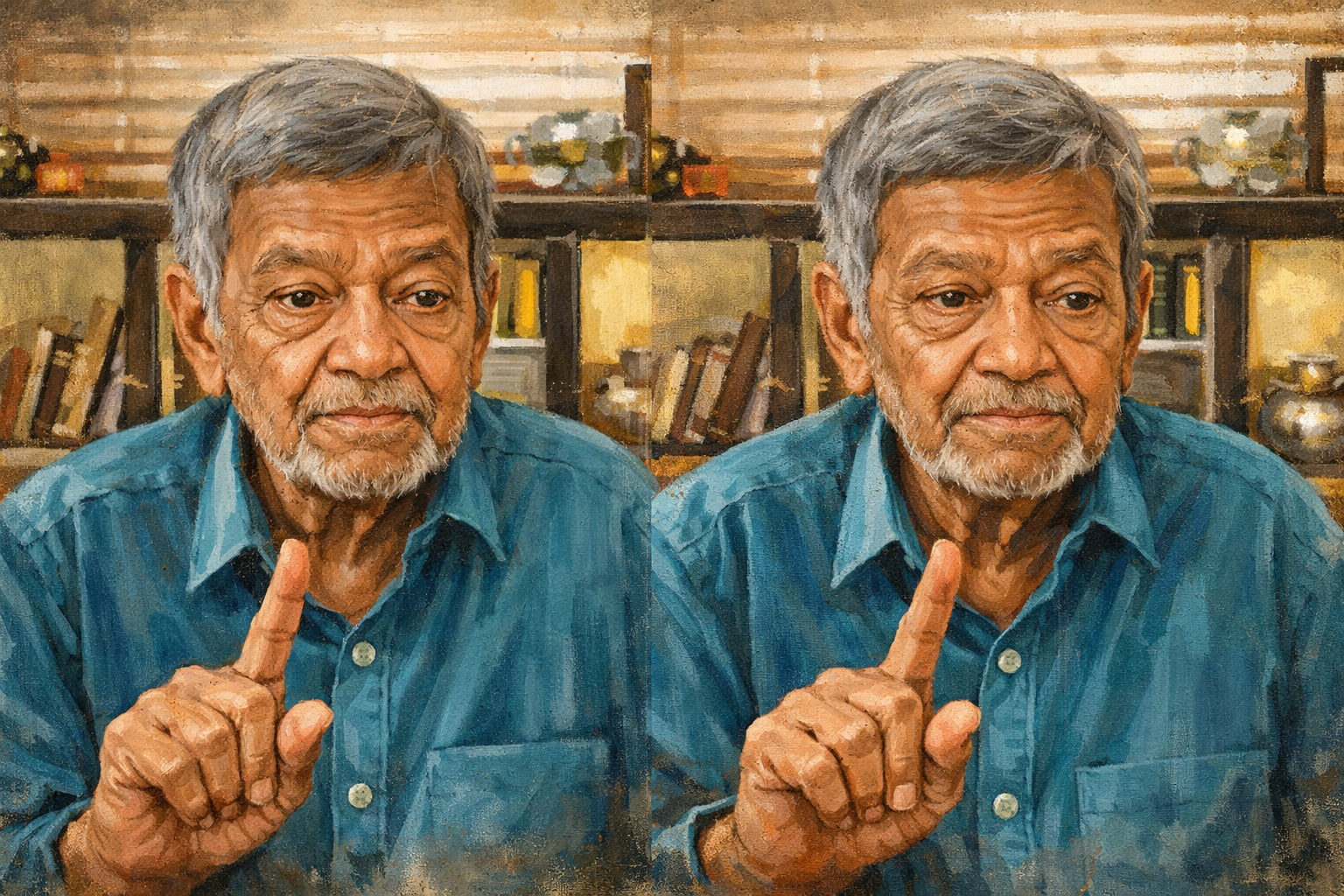
The Telugu language is a vast ocean. Upon its waves drift countless stories, poems, novels, cultures, and emotions. Yet the true breadth of that ocean cannot be fully experienced unless the rivers of the world flow into it. Muktavaram Parthasaradhi was the rare literary voyager who brought many such rivers, one after another, into the ocean of Telugu literature.
He was not merely a translator. He was a quiet wanderer of literature—one who created conversations between languages.
Born eighty-one years ago in Bhuvanagiri of Nalgonda district, Parthasaradhi grew into a craftsman of words shaped by the deep ink of human sorrow. From various languages of the world he gathered stories steeped in pain, reflection, and struggle, and gently placed them in the hands of Telugu readers. For him, sorrow and thought themselves became a kind of grammar. He was also a man who avoided publicity—uninterested in praise, ceremonial honours, garlands, or applause.
The rebirth of a story born in one language into another is never an easy undertaking. Words may change, but emotions must not. Cultures may shift, yet the pulse of human experience must remain intact. Parthasaradhi preserved this delicate balance with remarkable grace. Every story and novel he translated entered the minds of Telugu readers like a fresh breeze.
Stories that walked the streets of America, emotions born in the villages of Europe, voices rising from the sufferings of Africa—all quietly arrived in the living rooms of Telugu readers through his translations. Each of his works was a bridge laid from one culture to another. Across that bridge travelled words, emotions, and human experiences.
For Parthasaradhi, translation was never the mechanical exchange of words. It was the transformation of feeling—the moment when a thought born in one language acquires new breath in another. That is why his translations rarely feel like translations. They flow with the natural ease of stories that seem to have been born on Telugu soil itself.
There was a period when Telugu literature often moved within its own familiar boundaries. Parthasaradhi’s work opened a window during that time. Through that window the winds of the world began to enter. Stories from distant lands, the sensibilities of diverse cultures, and the sorrows of unfamiliar peoples suddenly found a place within the imagination of Telugu readers. It was a quiet, patient journey.
In the world of literature, the writer’s name usually shines in the spotlight. The translator often stands behind that light—unseen but indispensable. Though their names may not resonate loudly, translators often steer literature toward new directions. Parthasaradhi belonged to that noble tribe of silent craftsmen: a traveller who journeyed across languages while sitting quietly among his books.
His life reminds us of a profound truth: languages may differ, but human hearts do not. A story born in one country can move readers in another with the same emotional force. The quiet creator who carried that shared human experience into the hearts of Telugu readers was Muktavaram Parthasaradhi.
Even today, world literature continues to walk toward the Telugu language across the bridge he built.
His contribution was not merely translation—it was cultural mediation. By bringing stories, novels, and philosophical ideas from across the world into Telugu, he created a living bond between languages and cultures. For this reason, he occupies a distinctive place in the history of Telugu translation literature.
Among his important translations is An Autobiography of a Slave, a work that reflects the struggles against slavery, racial oppression, and the long fight for human rights. Through this book, Parthasaradhi introduced Telugu readers to the powerful idea of human equality, portraying the harshness of enslaved life and the deep social injustice behind it.
Ukku Paadam is his Telugu translation of The Iron Heel by Jack London—a political novel exploring capitalism, class struggle, and social revolution. Through this work he brought a crucial and tragic chapter of world political history into Telugu.
He also compiled Vishva Katha Shatakam, a collection of selected stories by great writers of the world, thereby introducing the global tradition of short fiction to Telugu readers. Stories of World Women Writers presented narratives by prominent women authors across different cultures. Kathala Vaachakam includes twenty stories from fourteen countries, each reflecting the cultural soul of its land.
In all his translations Parthasaradhi took meticulous care that the linguistic elegance and emotional integrity of the originals remained intact. His work Hundred Stories offers condensed versions of a hundred celebrated tales from world literature, while Nobel Tharalu introduces Telugu readers to writers who received the Nobel Prize.
His first short story, Swayam Krutaparadham, appeared in print in 1959. Over the years he wrote ten novels, including Shoonyam, Rangula Vala, Paruvu, Kaugili, Manasulo Chali, and Kinchid Vishadam. He also translated notable works such as The Iron Heel, Bury My Heart at Wounded Knee, and Love and Capital. His translations included stories by Anton Chekhov and William Shakespeare, Chinese folk tales, and narratives admired by Nelson Mandela.
The Telugu literary world recognised his immense contribution in many ways. His works received several honours, and many literary organisations—including the Sahitya Akademi—felicitated him. Universities in the Telugu-speaking regions incorporated his translated works into their academic curricula.
For Parthasaradhi, translation itself was a form of creative literature.
After battling illness, he breathed his last on Wednesday, March 4, while undergoing treatment at a hospital in Lingampalli.
A quiet bridge-builder between languages has departed. Yet the bridges he built continue to carry the footsteps of world literature into Telugu.
07-Mar-2026
More by : Varala Anand
Top | Literary Shelf | Home
