Oct 15, 2026
Oct 15, 2026
What ‘Mosquito Warfare’ Reveals about Drone Swarms, Hybrid Conflict & the Future of Strategy
The transformation of warfare in recent decades has been profound. Traditional paradigms — mass mobilization, territorial conquest, decisive battlefield engagements — have steadily given way to fluid, multi-domain conflict. Modern strategy increasingly revolves around drones, cyber infiltration, perception warfare, proxy conflicts, economic coercion, and information manipulation. In doctrinal language, this is often described as hybrid warfare, a complex blend of conventional and unconventional methods designed to exhaust, confuse, and destabilize adversaries.
Interestingly, the natural world has long practiced such hybrid doctrines.
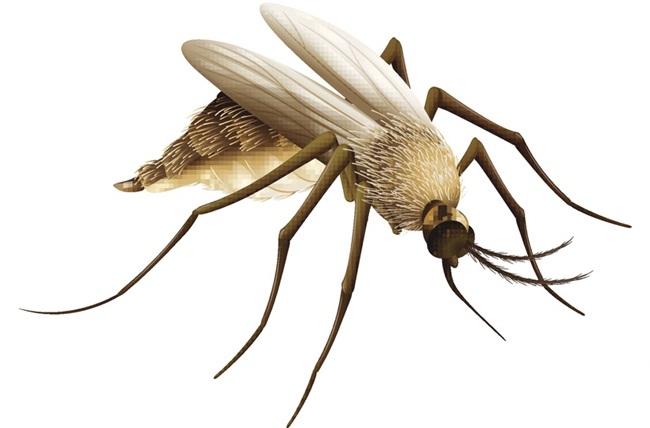
Nature does not wage total war in the classical sense. Instead, it employs precision, stealth, persistence, and decentralized coordination. The mosquito, often dismissed as a trivial irritant, offers a surprisingly accurate metaphor for the operational logic underlying drone swarm doctrine and contemporary conflict models.
Consider first the principle of distributed lethality.
Modern drone swarm strategies emphasize the deployment of numerous small, relatively inexpensive autonomous systems rather than a few highly sophisticated platforms. The logic is simple: overwhelm defensive systems through numerical agility and redundancy. Destroying one drone does not neutralize the swarm. The operational effect emerges from collective behavior rather than individual capability.
Mosquitoes exemplify this doctrine biologically. Their strategic success lies not in singular power but in systemic persistence. Their presence shapes human behavior, public health infrastructure, and economic productivity across continents. This mirrors the logic of distributed warfare, where cumulative disruption outweighs spectacular confrontation.
In defence planning circles, swarm technology is increasingly seen as a “democratizer of force.” Smaller states and non-state actors can deploy relatively low-cost autonomous systems to challenge technologically superior adversaries. The psychological and operational implications are significant. Air defence systems designed to counter large aircraft or ballistic threats often struggle against numerous small, fast-moving, low-signature objects.
Nature’s lesson is unmistakable: scale can be inverted.
Another striking parallel lies in stealth penetration and target acquisition.
Mosquitoes rely on multi-sensor detection — thermal gradients, carbon-dioxide concentration, biochemical cues — to locate hosts with remarkable accuracy. Modern drone warfare similarly integrates artificial intelligence, machine learning, and sensor fusion technologies to identify high-value targets with minimal exposure.
This convergence suggests a broader strategic shift. Warfare is no longer merely about destructive capacity; it is about informational superiority. The side that sees first, understands faster, and acts with precision often prevails without engaging in prolonged confrontation.
Hybrid warfare extends this logic beyond physical battlefields.
Cyber operations, economic sanctions, disinformation campaigns, and proxy engagements collectively form a mosaic of pressure points. Rather than seeking decisive victory, hybrid strategies aim to create continuous instability. They erode morale, distort decision-making processes, and stretch adversarial resources thin.
Mosquitoes, again, demonstrate the principle in miniature.
Their nocturnal buzzing is not merely an acoustic by-product; it produces psychological agitation. Sleep disruption reduces cognitive efficiency, weakens emotional resilience, and amplifies irritability. In strategic terms, this resembles cognitive warfare, an emerging domain in which influencing perception becomes as critical as kinetic capability.
Modern militaries increasingly recognize that wars are won not only on battlefields but also within minds — of soldiers, citizens, and policymakers. Information operations, narrative shaping, and digital propaganda campaigns have become integral components of national security strategies. The mosquito’s persistent harassment offers a biological metaphor for this continuous, low-intensity psychological engagement.
Equally relevant is the doctrine of resource asymmetry.
Drone swarms are attractive partly because they allow operational impact at comparatively lower cost. In contrast, defending against swarms often requires expensive intercept systems, advanced radar networks, and continuous vigilance. This imbalance can strain even well-resourced defence establishments.
Nature’s micro-strategists operate with extraordinary efficiency. Their logistical footprint is negligible. Their operational endurance is sustained by environmental adaptation rather than industrial supply chains. The strategic implication is profound: future conflicts may increasingly favor actors capable of combining technological ingenuity with frugal innovation.
Hybrid warfare further complicates traditional distinctions between war and peace.
Economic disruption, infrastructure sabotage, and digital intrusion often occur below the threshold of formal armed conflict. This “grey zone” environment demands strategic patience and adaptive leadership. Success depends on resilience as much as on offensive capability.
Nature embodies resilience through evolutionary feedback loops.
Mosquito populations develop resistance to chemical interventions, adjust breeding patterns, and exploit changing ecological conditions. Their survival strategy mirrors the adaptive cycles required in modern defence ecosystems, where rapid technological obsolescence demands continuous innovation.
From a leadership perspective, these patterns underscore the importance of anticipatory strategy. Leaders must move beyond ‘reactive postures’ toward ‘proactive scenario planning.’ The capacity to imagine unconventional threats — and to design flexible response architectures — will define strategic advantage in an era of unpredictable conflict.
There is also a deeper philosophical dimension.
Humanity often equates technological sophistication with strategic maturity. Yet, nature reveals that intelligence manifests not only in complexity but also in simplicity. The mosquito’s operational doctrine — observe, infiltrate, extract, withdraw, persist — resembles a distilled algorithm of survival.
This simplicity carries a cautionary message.
In an age of hypersonic weapons and orbital surveillance systems, vulnerabilities may emerge from overlooked domains: biological, cybernetic, psychological. Defence planners who focus exclusively on visible threats risk strategic surprise.
Humor offers an unexpected entry point into this serious discourse.
The nightly spectacle of humans battling mosquitoes with electric rackets and vaporizing liquids contains an element of civilizational irony. A species capable of designing intercontinental missile systems remains unsettled by a creature measured in milligrams. The metaphor is instructive. It reminds leaders that strategic dominance is rarely absolute. Power must be continuously negotiated, defended, and re-imagined.
The future battlespace is likely to resemble a complex ecosystem rather than a linear front. Drone swarms will interact with cyber networks, space assets, and human decision loops. Hybrid warfare will blur institutional boundaries between military, economic, and informational domains. Victory will depend less on spectacular displays of force and more on sustained adaptability.
Nature’s silent instructors have long rehearsed these dynamics.
Their lessons are not recorded in classified manuals or academic treatises. They are encoded in behavior, refined through survival pressures, and demonstrated nightly in the most ordinary of human environments. Perhaps the greatest strategic insight nature offers is intellectual humility.
Leadership in warfare demands not only technological competence but also openness to unconventional wisdom. Observing natural systems can expand strategic imagination, revealing patterns that formal doctrine may overlook.
As defence establishments worldwide grapple with the implications of autonomous systems, cognitive warfare, and hybrid conflict, they might find unexpected clarity in nature’s enduring theater. The mosquito, in all its irritating persistence, symbolizes a future in which warfare becomes subtler, more distributed, and more psychologically embedded.
The hum in the darkness, then, is more than a nuisance. It is a reminder that the evolution of conflict is continuous, and that the most ‘powerful strategic lessons’ may emerge not from the ‘roar of artillery’ but from the ‘quiet precision’ of survival itself.
Image (c) istock.com
28-Mar-2026
More by : P. Mohan Chandran