Oct 12, 2026
Oct 12, 2026
How Indian Traditional Knowledge Often Detects Nature before Science Does?
If a village elder predicts a drought by observing a fruit tree, should we dismiss it as folklore? If a grandmother's observation aligns with modern plant physiology, is it superstition or science expressed in a different language? How many scientific truths were once preserved not in laboratories but in stories, proverbs, and oral traditions? And are we overlooking valuable environmental intelligence hidden within India's traditional knowledge systems?
For generations, Indian households have preserved a vast reservoir of traditional ecological knowledge. Much of it was transmitted not through textbooks, research papers, or universities, but through grandparents, farmers, shepherds, forest dwellers, and village communities who closely observed nature over centuries.
One such fascinating observation concerns the jamun tree.
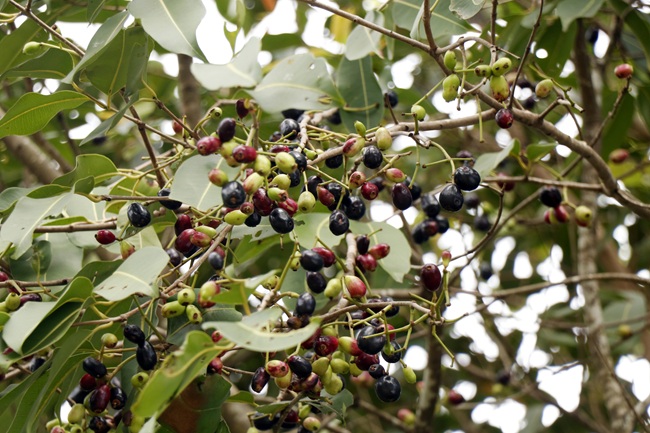
Across several parts of India, many people have recently reported unusually heavy fruiting in jamun trees. Trees that produced modest yields in previous years are suddenly laden with fruits. Roadsides, village paths, and markets are filled with heaps of fallen jamuns.
To many urban observers, this may appear to be a simple agricultural coincidence.
To many elders, however, it is something else.
Their interpretation is straightforward: "When the jamun fruits heavily, prepare for a difficult summer and possible drought."
Surprisingly, modern plant biology suggests that this traditional observation may have a scientific basis.
When Trees Anticipate Environmental Stress
Plants are far more intelligent than most people realize.
Although they lack brains and nervous systems, plants continuously monitor their environment. They detect changes in soil moisture, temperature, sunlight, nutrient availability, atmospheric carbon dioxide, and even chemical signals from neighboring plants.
Research over the last few decades has shown that plants possess sophisticated signaling systems that allow them to respond to environmental threats long before humans notice them.
When certain trees experience severe environmental stress, they sometimes enter a phenomenon known as masting.
Masting is a biological strategy in which trees produce exceptionally large quantities of flowers, fruits, and seeds during particular years.
Scientists studying forest ecology have documented masting in many species worldwide, including oaks, beeches, bamboo, and several tropical trees.
The objective is simple.
If survival becomes uncertain, maximize reproduction.
Instead of investing resources in new leaves, branches, or growth, the tree channels its energy into producing seeds that can carry its genetic lineage into the future.
In evolutionary biology, this is a highly effective survival strategy.
The individual tree may struggle.
The species survives.
Why Jamun Trees May Respond This Way
The jamun tree, known scientifically as Syzygium cumini, possesses an extensive root system capable of accessing deep groundwater reserves.
Because of this deep-rooted nature, jamun trees are often more resilient to dry conditions than many other fruit trees.
However, when even these deep groundwater reserves begin to decline, the tree experiences physiological stress.
Plant scientists explain that water stress triggers hormonal changes within the tree.
Levels of plant hormones such as abscisic acid increase, signaling adverse environmental conditions.
These hormonal signals influence flowering and fruiting behavior.

In certain situations, the tree may respond with unusually abundant fruit production.
Thus, what village elders interpret as a warning sign of drought may actually be an indirect observation of groundwater stress experienced by deep-rooted trees.
The grandmother may not know the terminology of plant hormones or stress physiology.
Yet her conclusion can still be remarkably accurate.
Traditional Knowledge as Long-Term Data Collection
Modern science values data.
Traditional societies collected data too.
The difference lies in the method.
A scientist may record observations for twenty years.
A farming community may preserve observations accumulated over two hundred years.
Traditional ecological knowledge is essentially long-term environmental monitoring transmitted through generations.
India possesses thousands of such observations.
For example:
Many of these observations have subsequently received scientific validation.
The knowledge itself may not have emerged through controlled experiments, but it emerged through centuries of repeated observation.
Science Is Beginning to Catch Up
Today, researchers worldwide increasingly recognize the importance of indigenous and traditional ecological knowledge.
Organizations such as the United Nations Educational, Scientific and Cultural Organization and the Intergovernmental Science-Policy Platform on Biodiversity and Ecosystem Services have repeatedly emphasized the value of indigenous and local knowledge systems in biodiversity conservation and climate adaptation.
According to IPBES assessments, indigenous and local communities manage or have tenure rights over approximately one-quarter of the world's land surface, areas that contain a significant proportion of global biodiversity.
Their environmental observations often provide early-warning indicators that complement modern scientific monitoring.
India's traditional knowledge systems have historically demonstrated a similar pattern.
Ancient agricultural calendars were linked to lunar cycles, star positions, seasonal winds, flowering patterns, and animal behavior.
Many of these observations helped communities manage water, agriculture, and food security long before modern meteorology existed.
Ancient India Understood Ecological Intelligence
Indian civilization never viewed nature as separate from human life.
The Vedas, Puranas, and classical agricultural texts consistently emphasize observing natural signals.
The ancient text Krishi-Parashara contains detailed observations about weather forecasting, crop management, rainfall indicators, and seasonal cycles.
Similarly, Brihat Samhita includes extensive discussions on rainfall prediction using environmental indicators.
While not every traditional belief is scientifically accurate, many were based on systematic observation accumulated over centuries.
This is precisely why traditional knowledge deserves investigation rather than dismissal.
Science progresses not by rejecting observations but by testing them.
A Lesson for Modern India
India today faces increasing groundwater depletion.
According to assessments by the Central Ground Water Board, several regions of the country continue to experience declining groundwater levels due to excessive extraction, urbanization, and changing rainfall patterns.
The country is also becoming more vulnerable to climate variability.
In such circumstances, environmental signals from nature become increasingly valuable.
If unusual fruiting patterns in jamun trees are indeed associated with groundwater stress and climatic shifts, they deserve systematic scientific study.
Imagine combining satellite monitoring, groundwater measurements, climate models, and traditional ecological observations.
Such integration could create a more robust environmental early-warning system than either approach alone.
Beyond Jamun: A Bigger Question
The larger issue is not whether every grandmother is always correct.
The larger issue is whether modern society has become too quick to dismiss traditional knowledge simply because it was not written in scientific journals.
Science and traditional knowledge are not enemies.
They are different methods of understanding reality.
One relies on controlled experimentation.
The other relies on long-term observation.
The strongest knowledge emerges when both work together.
Nature's Quiet Warning
The abundance of jamun fruits may simply be a favorable seasonal event.
Or it may be an ecological signal reflecting deeper environmental stress.
Only rigorous scientific investigation can determine the precise relationship.
Yet the broader lesson remains undeniable.
For centuries, Indian communities learned to read nature like a living book. They observed trees, rivers, birds, insects, winds, clouds, and seasons with extraordinary attention. Much of what we call traditional wisdom today may actually be accumulated environmental intelligence encoded in culture.
When a grandmother predicts a drought by looking at a jamun tree, is she rejecting science or practicing a form of science refined through generations of observation? As climate change accelerates, can modern researchers afford to ignore centuries of ecological wisdom? What other environmental signals are we failing to notice because they come from tradition rather than technology? And perhaps the most important question of all: if nature is speaking through the jamun tree, are we still listening?
Final Thoughts
The story of the jamun tree offers a powerful reminder that knowledge comes in many forms. Laboratories provide precision. Traditional wisdom provides continuity. When both converge, humanity gains a deeper understanding of the natural world. India's civilizational strength has always been its ability to integrate observation, philosophy, and practical knowledge. The humble jamun tree may therefore be teaching us something profound: respect tradition, verify it through science, and use both to prepare for the future.
Images (c) istock.com
11-Jul-2026
More by : P. Mohan Chandran
Top | Environment | Home

|
Valuable information |