Oct 24, 2026
Oct 24, 2026
Jaswant Singh Khalra was abducted from outside his Amritsar home on September 6, 1995, and murdered by Punjab Police personnel from Tarn Taran District. It happened soon after he exposed the alleged illegal cremations of at least 2,097 “unclaimed” bodies in the districts of Tarn Taran and Amritsar, following suspected fake encounters during the militancy era. His team estimated that upwards of 25,000 such illegal cremations took place throughout the state of Punjab.
One irony should not be lost while looking at this event in isolation. His grandfather, a fighter for India’s independence movement, was arrested by the British during the Raj. He was charged under the Lahore Conspiracy case and ended up spending decades in prison. Despite the high-handedness during the Raj, there were proper records of charges even if rigged, records of sentence even if no trial, and proper jail records. But in independent India, almost seventy-five years later, his efforts to document similar records and papers became his undoing.
Brief Early Life
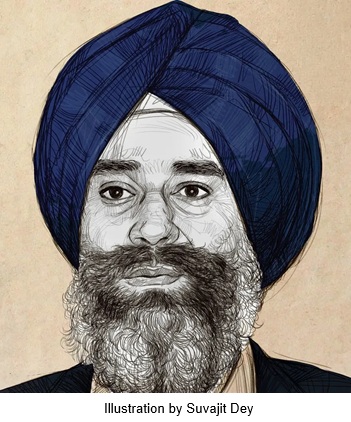 Born on November 2, 1952, in Punjab's Tarn Taran district, Khalra built a successful career working as a bank director in Amritsar. His life changed during the Punjab insurgency in the 1980s and 1990s, an era marked by sweeping police powers, unlawful detentions, and enforced disappearances. His shift from banking to human rights advocacy occurred when several of his friends and Sikh colleagues began to disappear in police custody. This personal loss motivated him to investigate enforced disappearances and the secret, unlawful cremations by state security forces. His investigations and search for answers eventually led him to find files from the municipal corporation of Amritsar, which had information containing the names, ages, and addresses of thousands of Sikhs who had been killed and illegally cremated by the Punjab Police.
In 1995, Khalra was last seen washing his car in front of his house when he disappeared. Although the eyewitnesses implicated the Punjab Police, they completely denied it. From his abduction on September 6, 1995, until his eventual murder on October 27, 1995, Khalra endured unspeakable torture and abuse in custody. He was in illegal detention and tortured for fifty-two (52) days, when he was shot dead at Jhabal police station around 7 PM on that fateful day. After Khalra’s custodial murder, his wife, Paramjit, campaigned for justice, forcing the government to order an investigation by India’s Central Bureau of Investigation (CBI) into the allegations. The story of Khalra’s death may have remained a complete mystery if not for Kuldeep Singh, a former Special Police Officer, who later came forward as a witness in the Khalra murder case. Kuldeep Singh was tasked with giving Khalra his meals during his illegal detention. As a result of the investigations, five police officials are serving life in prison for Khalra’s killing.
The Movie
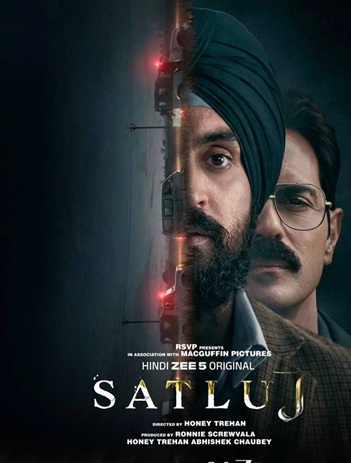 The movie Punjab 95 is a 163-minute biopic based on the life – and killing – of Khalra. The CBFC (Central Board of Film Certification) had demanded 127 cuts to the film Punjab 95 and required changing the name to Satluj. However, after a 3-year legal battle, the director Trehan bypassed the board, releasing the film completely uncut on the ZEE5 streaming platform on July 03, 2026. Strangely, it was mysteriously pulled from service 48 hours later. The justification provided was that Indian authorities are investigating whether a film based on a separatist insurgency in India’s Punjab state in the 1980s and early 1990s is fit for viewers. Other movies such as Kashmir Files, and Kerala Files, etc. continue to be screened in cinemas and OTT platforms and are officially patronized.
Unwittingly, by trying to suppress the movie, it is gaining more traction and viewership. More people are curious about it, because of the controversy surrounding it, which is translating into viewership. It can be said that through the efforts to squelch it, it is being provided with free publicity and thus whipping up interest in it. The producers may not profit from the film, but despite being pulled from the OTT platform, it will be viewed by more viewers than it would have garnered if it were normally released. Now, its recordings are being circulated on YouTube and other platforms, plus people are sharing their recording purchases for the benefit of others. At religious places, special screenings of this movie are being organized, and ordinary people are watching it keenly.
Diljit Dosanjh, one of India’s biggest singers and movie stars, plays the role of Khalra. He did not charge any money for acting in this movie. The film is narrated by the actor Arjun Rampal playing the police officer Samudra Singh who led the CBI probe. The abrupt takedown has sparked major debates regarding artistic freedom, censorship, selective bias and political pressure.
Senior Supreme Court advocate and human rights activist HS Phoolka says Satluj ultimately highlights “the strength of the Indian judiciary.” The film, Tarlochan Singh, EX-MP says, could serve as a reminder against abuse of power. He said, “Police personnel and their families also watch films, and they will think twice before showing such brutality ever again.”
One criticism is that Khalra sympathized with the Sikh separatist movement. But those close to him point to the legal path he consistently pursued and that he did not espouse the separatist movement. Another undeniable fact is that Punjab Police did carry out fake encounters of innocent Sikh youths in the name of eliminating militants. Tarlochan agreed, saying the film is fundamentally about state excesses and one man’s legal fight for justice. “The film doesn’t even mention any anti-Hindu sentiment. It shows how a man fought for human rights when Punjab Police brutality was at its peak.”
During his Canada visit in one of his public speeches, Khalra said that his campaign sought only answers through constitutional means. “We are not asking for anything; please tell us where you have cremated the son of a mother. Even the law says that photos and belongings of laawaris laash (unclaimed body) have to be preserved until the family claims it…We will…explore all legal options… Mainn iss hanere nu challenge kar daa haan (I challenge this darkness),” he had said.
Conclusion
Khalra talked about being a single candle which would fight this darkness. That candle has been extinguished, but its light has not died. Now more light is shining on that extinguished candle. We saw a couple of biographic books on Khalra that first hit the market. Now the movie on his life titled Satluj is on the market. With his dedication and inspiration, countless candles have been lit and will continue to burn until the darkness is finally dispelled.
This issue cannot be put under the carpet. It needs a healing touch, and it will only begin by setting up suitable memorial. Also, setting up a truth and reconciliation commission will surely act like a healing balm for an old wound. Closure of fractured times through inquiry and recognition of all cases of atrocities, punishment of perpetrators, including accountability for political failure and a moral willingness to live with the historical truth. If a country like South Africa can do it, India can also do it, but it needs an honest and sincere desire to come clean. Let us all pray for moral courage for this to transpire.
References:
1. Sharma, Manraj Grewal. Jaswant Singh Khalra: The man who counted the missing, The Indian Express, July 13, 2026.
2. Goyal, Divya. Satluj row: Spotlight on Supreme Court judge who passed landmark orders in Khalra case. The Indian Express, July 16, 2026. h
3. Kaur, Gurmeet. The Valiant Jaswant Singh Khalra.
25-Jul-2026
More by : Bhupinder Singh

|
Thanks for illustrating the significance of Khalra's wisdom, contributions, and sacrifices. I know more than one person whose sons were abducted and killed in such cruel manners. Many of them passed away and could not have a chance to learn what happened to their children before they got the news of their being kidnapped and burned, some of them while still breathing. |
|
|
Excellent Article and eye opener for young generation to know the hard truths about Indian Police atrocities during dark days of Punjab Movie is well directed and touches an important subject and wish ultimately it is screened in cinema halls world wide |
|
|
Thank you for writing on this important topic. The bravery of Jaswant Singh Khalra as shown in the movie and discussed in your article is extremely admirable. It is crucial for all of us (all of the world citizens) to do the morally correct thing. Unfortunately, that is something we are moving away from because of extreme polarization and zero tolerance for any opposing views. |