Oct 24, 2026
Oct 24, 2026
Modi’s 102 Foreign Itineraries & India’s Diplomatic Balance Sheet
Why the real measure of foreign policy is not how far a Prime Minister flies, but what the nation brings home.
Can a country aspiring to become a global power afford to conduct its diplomacy from behind the walls of South Block? Can economic partnerships, defense alliances, technology transfers and energy agreements be negotiated without sustained personal engagement? Should a Prime Minister’s foreign travel be judged by the cost of aircraft tickets or by the strategic value created for the country? Does every summit photograph represent diplomatic achievement, or do some merely decorate government archives? Most importantly, has Narendra Modi’s extraordinary international travel genuinely strengthened India, or has the spectacle occasionally exceeded the substance?
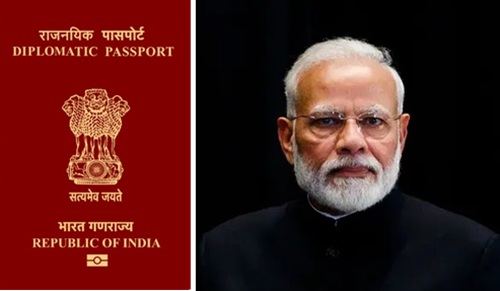
Since assuming office in May 2014, Prime Minister Narendra Modi has transformed foreign travel into one of the most visible instruments of Indian statecraft. He has visited traditional allies, strategic competitors, neighboring countries, island nations, emerging African economies, global financial centers, technology powers, energy suppliers and nations that had not received an Indian Prime Minister for several decades.
He has traveled not merely to Washington, Moscow, Paris, Tokyo and London, but also to Rwanda, Mozambique, Mongolia, Papua New Guinea, Guyana, Ghana, Namibia, Trinidad and Tobago, Palestine, Ukraine, Croatia, Slovakia and New Zealand.
Modi has not simply expanded India’s diplomatic calendar. He has expanded India’s diplomatic geography.
Yet travel, by itself, is not foreign policy. An aircraft can transport a leader across continents, but it cannot automatically transport investments, technologies, factories or strategic influence back home. Therefore, Modi’s foreign tours must be evaluated through a harder test: What did India gain?
First, Let the Numbers Speak Correctly
The Prime Minister’s Office maintains two official lists. The archived list contains 58 overseas itineraries between June 2014 and November 2019, while the current list contains another 44 itineraries from 2021 through the Indonesia-Australia-New Zealand tour of July 6–11, 2026. Together, they produce a total of 102 officially listed overseas itineraries.
A journey covering three countries is recorded by the PMO as one itinerary. Therefore, the number of tours is not the same as the number of country visits. A country-by-country tabulation of the PMO data, with city descriptions such as Dubai and Samarkand normalized under the United Arab Emirates and Uzbekistan, produces:
102 overseas itineraries
181 country-stops
80 named foreign destinations
Different databases may produce slightly different totals because they may separately count transit stops, multilateral summits, Vatican City, repeat visits within the same journey or visits made for funerals and ceremonial events. The methodology must therefore be stated before the achievement is advertised.
A May 2026 review of official records estimated that Modi had then completed 100 international visits covering at least 80 countries. The same review placed former Prime Minister Manmohan Singh at 71 visits to approximately 46 countries during ten years in office and Indira Gandhi at 69 countries over roughly 15 years. On the available evidence, Modi is clearly the most widely traveled Prime Minister in independent India.
However, the claim that no other head of government anywhere in the world has traveled as much cannot be responsibly presented as an established fact. There is no authoritative global database applying identical counting rules to every president, prime minister and monarch. In 2015 alone, Modi and Japanese Prime Minister Shinzo Abe each visited 23 countries, according to a Bloomberg analysis reported by Time. Modi’s global travel intensity is exceptional, but an unverified world record should not be converted into political scripture.
Modi’s Foreign-Visit Ledger
The following frequency count is based on the PMO’s official itinerary lists through July 11, 2026.
Most Frequently Visited Countries
10 visits: United States
8 visits: Japan
7 visits each: France, Russia and United Arab Emirates
6 visits each: China and Germany
5 visits each: Nepal and Singapore
4 visits each: Bhutan, Brazil, Indonesia, South Africa, Sri Lanka and United Kingdom
3 visits each: Australia, Italy, Malaysia, Maldives, Saudi Arabia and Uzbekistan
2 visits each: Afghanistan, Argentina, Bangladesh, Canada, Israel, Jordan, Kazakhstan, Kyrgyzstan, Laos, Mauritius, Myanmar, Netherlands, Oman, Qatar, Seychelles, South Korea, Sweden, Switzerland and Thailand
One visit each: Austria, Belgium, Brunei, Croatia, Cyprus, Denmark, Egypt, Ethiopia, Fiji, Ghana, Greece, Guyana, Iran, Ireland, Kenya, Kuwait, Mexico, Mongolia, Mozambique, Namibia, New Zealand, Nigeria, Norway, Pakistan, Palestine, Papua New Guinea, Philippines, Poland, Portugal, Rwanda, Slovakia, Spain, Tajikistan, Tanzania, Trinidad and Tobago, Turkey, Turkmenistan, Uganda, Ukraine and Vietnam.
This map reveals the architecture of Modi’s diplomacy. The United States, Japan, France, Russia, the UAE, Germany and China dominate because they represent the principal sources of technology, capital, defense capabilities, energy, markets and geopolitical leverage. Nepal, Bhutan, Sri Lanka, Bangladesh and the Maldives reflect the logic of “Neighborhood First.” Singapore, Indonesia, Malaysia, Vietnam, Australia and Japan embody the “Act East” and Indo-Pacific strategies. The Gulf visits respond to India’s energy requirements, commercial interests and enormous diaspora. The African, Caribbean and Pacific visits seek diplomatic constituencies beyond the traditional centers of power.
This is not random tourism. It is geographic portfolio management.
From ‘Diplomatic Reticence’ to ‘Diplomatic Activism’
Earlier Indian prime ministers certainly traveled abroad and cultivated consequential relationships. Jawaharlal Nehru shaped the Non-Aligned Movement. Indira Gandhi built international support during the Bangladesh crisis. P.V. Narasimha Rao opened India toward Israel, Southeast Asia and the post-Soviet world. Atal Bihari Vajpayee rebuilt relations with the United States after the nuclear tests. Manmohan Singh secured the India-US Civil Nuclear Agreement and deepened India’s integration with the global economy.
Modi’s distinction lies elsewhere. He converted prime ministerial travel from an occasional instrument into a continuous strategic campaign.
His approach rests on five propositions.
First, the personal presence of India’s Prime Minister signals political seriousness.
Second, repeated visits can sustain momentum after agreements are signed.
Third, diaspora gatherings can reinforce India’s influence within foreign political systems.
Fourth, summit diplomacy can directly connect Indian ministries and corporations with global investors.
Fifth, diplomatic relationships must be diversified so that India is never excessively dependent on a single camp.
This last element is particularly important. Modi has embraced Washington without abandoning Moscow. He has developed Israel as a strategic partner while becoming the first Indian Prime Minister to visit Palestine. He has strengthened relations with Saudi Arabia and the UAE while maintaining engagement with Iran. He visited Russia in July 2024 and Ukraine one month later. This is not classical non-alignment. It is multi-alignment designed to preserve strategic autonomy.
The United States: From ‘Political Distance’ to ‘Technological Partnership’
Modi’s ten visits make the United States his most frequently visited foreign destination. The frequency reflects the extraordinary breadth of the relationship: defense, semiconductors, space, higher education, pharmaceuticals, digital technology, energy, critical minerals, counterterrorism and the Indian diaspora.
The June 2023 state visit produced several high-value announcements. Micron committed more than US$800 million of its own resources toward a planned US$2.75 billion semiconductor assembly and testing facility in India, supported by the India Semiconductor Mission and the Gujarat government. Applied Materials announced a semiconductor commercialization and innovation center. GE Aerospace and Hindustan Aeronautics Limited signed a memorandum of understanding concerning the proposed manufacture of F414 jet engines in India.
These developments matter because India’s vulnerabilities are not limited to imported oil. They extend to semiconductors, aircraft engines, advanced electronics and critical manufacturing equipment. A country that imports the core technologies behind its weapons, telecommunications systems, automobiles and digital infrastructure may possess political sovereignty without possessing technological sovereignty.
Nevertheless, announcements must not be confused with completed projects. The Micron facility must deliver commercially competitive output. The F414 proposal requires regulatory approvals, contractual closure, technology absorption and production discipline. A joint statement is a diplomatic promise. A functioning factory is a national asset.
Modi’s American diplomacy has opened doors. Indian industry must now walk through them.
Japan: Patient Capital, Infrastructure & Strategic Trust
Japan has hosted Modi eight times, making it his second most visited destination. The relationship has been built around infrastructure finance, industrial cooperation, supply-chain resilience, maritime security and the convergence between India’s Act East policy and Japan’s vision of a free and open Indo-Pacific.
During Modi’s 2014 visit, Japan announced an objective of mobilizing approximately JPY 3.5 trillion in public and private investment and financing for India over five years. By the 2022 summit, the two governments stated that this target had been achieved. Japan then announced a further objective of JPY 5 trillion in public and private investment and financing over the succeeding five years.
Japanese support has been associated with the Delhi-Mumbai Industrial Corridor, dedicated freight corridors, metro systems, industrial townships and the Mumbai-Ahmedabad High-Speed Rail project. These are not glamorous one-day outcomes. They represent patient infrastructure partnerships whose value unfolds over decades.
Japan also offers something more valuable than capital: strategic reliability. Unlike speculative capital that enters during a boom and departs during uncertainty, Japanese finance generally arrives with long-term industrial planning, quality standards and institutional partnerships.
However, implementation delays remain India’s recurring weakness. Diplomatic warmth cannot compensate indefinitely for land-acquisition disputes, regulatory fragmentation or project-management failures. Japan may bring capital and technology, but India must provide administrative velocity.
The United Arab Emirates: When ‘Diplomacy’ Becomes ‘Commerce’
Modi’s seven visits to the UAE illustrate perhaps the clearest conversion of personal diplomacy into measurable economic results.
The India-UAE Comprehensive Economic Partnership Agreement was signed in February 2022 and entered into force in May that year. Bilateral merchandise trade nearly doubled from US$43.3 billion in FY2020-21 to US$83.7 billion in FY2023-24. Non-oil trade reached US$57.8 billion, while India’s non-oil exports to the UAE reached US$27.4 billion, recording average growth of 25.6 percent following the agreement’s implementation. Smartphone exports alone reached US$2.57 billion in FY2023-24.
In July 2023, the Reserve Bank of India and the Central Bank of the UAE created a framework permitting cross-border transactions to be settled in Indian rupees and UAE dirhams. This can reduce transaction costs, facilitate trade settlement and gradually reduce excessive dependence on third-country currencies.
The UAE relationship has also expanded into food security, ports, logistics, energy, financial services, digital payments and investment protection. What was once viewed primarily as an oil-and-expatriate relationship has been transformed into a broader geo-economic partnership.
This is where repeated diplomacy proves its worth. The first visit builds confidence. The second identifies sectors. The third creates agreements. Subsequent visits monitor implementation, remove obstacles and enlarge the partnership.
France: Strategic Independence & Solar Diplomacy
France has received Modi seven times. It occupies a distinctive position in Indian foreign policy because it combines defense capability, nuclear expertise, space cooperation, diplomatic independence and a permanent seat on the United Nations Security Council.
One of the most consequential outcomes associated with Modi’s France engagement was the launch of the International Solar Alliance by India and France at the 2015 Paris climate conference. The initiative sought to bring together solar-rich countries, particularly those located between the Tropics of Cancer and Capricorn, to accelerate solar deployment, mobilize finance and promote technological cooperation.
France has also remained a central partner in aviation, submarines, maritime security, space technology, nuclear energy and Indo-Pacific cooperation. Unlike alliances based on ideological conformity, the India-France relationship is strengthened by a shared preference for strategic autonomy.
Yet defense imports must eventually produce domestic capabilities. Buying sophisticated platforms improves immediate security. Absorbing technology, building components, developing intellectual property and creating exportable systems build enduring national power.
Russia: Preserving an ‘Old Relationship’ in a ‘Divided World’
Modi has visited Russia seven times. His continued engagement with Moscow has been one of the most controversial, yet strategically revealing, aspects of his diplomacy.
Russia remains important to India for defense equipment, nuclear energy, fertilizers, hydrocarbons, space cooperation and continental geopolitics. The July 2024 India-Russia summit set an objective of raising bilateral trade to US$100 billion by 2030.
When the Ukraine war divided the international system, India resisted pressure to dismantle its long-standing Russian relationship. At the same time, Modi later visited Ukraine, becoming the first Indian Prime Minister to do so. This dual engagement allowed India to communicate with both sides without formally joining either geopolitical camp.
That is strategic autonomy in practice. India cannot permit Washington, Moscow, Beijing or Brussels to exercise a veto over its national interest.
However, autonomy must not become complacency. India’s dependence on Russian defense platforms creates supply risks, while the widening Russia-China partnership may gradually reduce Moscow’s ability to balance Beijing. The purpose of engaging Russia must, therefore, be to preserve useful cooperation while accelerating defense diversification and indigenous production.
Bangladesh: Settling a ‘Boundary’ That History Had ‘Left Behind’
Modi’s 2015 Bangladesh visit helped operationalize the historic Land Boundary Agreement. The two countries exchanged instruments of ratification, enabling the settlement of a complex territorial and enclave problem that had survived Partition, war, constitutional amendments and decades of negotiation.
This was not merely a cartographic exercise. Stateless populations received clarity regarding citizenship. Administrative confusion was reduced. One of South Asia’s oldest unresolved border anomalies was addressed peacefully.
The agreement also demonstrated an important truth about diplomacy: some of its greatest victories do not involve defeating an adversary. They involve ending inherited absurdities.
India-Bangladesh relations have subsequently faced political and strategic tensions, proving that one agreement cannot permanently immunize a relationship from domestic upheaval. Nevertheless, the Land Boundary Agreement remains a concrete diplomatic accomplishment that changed lives on the ground.
Iran & Chabahar: ‘Geography’ Converted into ‘Strategy’
Modi visited Iran in May 2016. The visit advanced India’s participation in the development of Chabahar Port and the India-Iran-Afghanistan transport corridor.
By 2018, Phase One of the port had been inaugurated, the trilateral transport agreement had been ratified and Indian wheat had been shipped to Afghanistan through Chabahar. The corridor opened an alternative gateway to Afghanistan and Central Asia that did not depend on transit through Pakistan.
Chabahar is a classic example of geopolitical infrastructure. A commercial port acquires strategic significance because of its location. It gives India access, bargaining power and logistical alternatives.
Yet Chabahar also demonstrates the limits of diplomacy. International sanctions, financing constraints, regional instability and bureaucratic delays repeatedly slowed implementation. Geography may create opportunity, but execution determines whether that opportunity becomes power.
Singapore & Southeast Asia: From “Look East” to “Act East”
Modi has visited Singapore five times and Indonesia four times, besides traveling to Malaysia, Vietnam, Myanmar, Thailand, the Philippines, Laos and Brunei.
During the 2015 Singapore visit, bilateral relations were elevated to a Strategic Partnership, with cooperation covering skills, investment, defense, smart cities, connectivity and cultural engagement. The relationship was subsequently elevated further to a Comprehensive Strategic Partnership.
Singapore is more than a small island economy. It is a financial gateway, logistics center, technology hub and influential member of ASEAN. Engagement with Singapore provides India access to capital, urban-governance expertise and Southeast Asian commercial networks.
Similarly, India’s engagement with Indonesia, Vietnam and other ASEAN members supports maritime security and limits the possibility of the Indo-Pacific becoming the exclusive strategic domain of China and the United States.
India cannot become an Indo-Pacific power while remaining psychologically confined to the Indian subcontinent.
Africa, the Caribbean & the Pacific: Diplomacy Beyond Great Powers
Modi’s travels to Rwanda, Mozambique, Kenya, Tanzania, Uganda, South Africa, Ghana, Namibia, Ethiopia, Nigeria and Mauritius represent a deliberate African outreach. His visits to Rwanda and Papua New Guinea were firsts by an Indian Prime Minister, while several journeys to Africa and Europe occurred after gaps of three or four decades. His visit to Guyana came after a gap of 56 years at the prime-ministerial level.
Such visits may not immediately produce billion-dollar contracts. Their value lies partly in diplomatic coalition-building.
Every country has a vote in the United Nations General Assembly. African and island countries influence debates on climate finance, maritime governance, development lending, trade rules, institutional reform and India’s claim to greater representation in global institutions.
For decades, major powers treated smaller countries as diplomatic footnotes. Modi’s willingness to visit them communicates respect and creates political memory. A country remembers the leader who arrived when others merely issued statements from distant capitals.
This diplomatic capital contributed to India’s broader positioning as a voice of the Global South. Yet smaller-country diplomacy must be followed by timely credit lines, functioning development projects, scholarships, digital infrastructure and market access. Respect creates goodwill; delivery converts goodwill into influence.
New Zealand: Reopening a ‘Neglected Door’
Modi’s July 2026 visit to New Zealand was the first by an Indian Prime Minister in approximately four decades. It followed the signing of an India-New Zealand free trade agreement in April 2026, which is intended eventually to remove tariffs on all Indian goods and approximately 95 percent of New Zealand’s goods. During the visit, the relationship was elevated to a strategic partnership with expanded defense and maritime cooperation.
The visit demonstrated Modi’s tendency to reopen relationships that had remained below their potential for years. New Zealand is not a military or economic superpower, but it is an advanced agricultural economy, an Indo-Pacific democracy and an influential participant in regional institutions.
Foreign policy does not require India to treat every country as equally powerful. It requires India to recognize that almost every country can be strategically useful in a specific domain.
The Broader ‘Economic Balance Sheet’
Several macroeconomic trends coincide with Modi’s period of diplomatic activism.
India’s total foreign direct investment (FDI) inflows increased from US$36.05 billion in FY2013-14 to a provisional US$81.04 billion in FY2024-25. Over the 11 financial years from 2014-15 to 2024-25, India received approximately US$748.78 billion in FDI, compared with US$308.38 billion during the preceding 11-year period. The number of source countries increased from 89 to 112.
India’s combined merchandise and services exports reached a record US$824.9 billion in FY2024-25, compared with US$778.1 billion in the previous year. Services exports reached US$387.5 billion.
Defense exports reached a record Rs.23,622 crore in FY2024-25, with Indian defense products exported to approximately 80 countries.
These figures are significant, but intellectual honesty demands an important qualification. They cannot be attributed solely to Modi’s foreign visits. Investment and export performance are also shaped by domestic reforms, global demand, exchange rates, private entrepreneurship, production incentives, infrastructure, labor productivity and the work of thousands of officials and businesses.
A Prime Minister may open a door, but companies must invest, engineers must build, workers must produce and institutions must enforce contracts.
Similarly, gross FDI inflows tell only part of the story. India’s net FDI fell sharply to US$10.58 billion in FY2023-24 because of repatriation and outward investment. The merchandise trade deficit also reached approximately US$282.82 billion in FY2024-25.
Diplomacy has expanded India’s opportunities. It has not abolished India’s structural weaknesses.
The China Test: Where ‘Personal Diplomacy’ Met ‘Strategic Reality’
Modi visited China six times and held several high-profile meetings with President Xi Jinping, including informal summits at Wuhan and Mamallapuram.
Yet personal engagement did not prevent the 2020 border crisis and the prolonged military standoff that followed. Nor did it correct the economic imbalance. India’s trade deficit with China reached a record US$99.2 billion in FY2024-25, with imports rising to US$113.5 billion while Indian exports to China remained only US$14.3 billion.
This is perhaps the strongest warning against the excessive personalization of foreign policy.
Personal chemistry can facilitate diplomacy, but it cannot erase conflicting national interests. Civilizational greetings cannot replace military preparedness. Summit hospitality cannot substitute for supply-chain resilience. Photographs beside ancient temples cannot guarantee peace along disputed borders.
China teaches India that diplomacy must always walk beside deterrence.
What About the Cost?
Foreign travel by a Prime Minister involves aircraft, security, logistics, communications, accommodation and advance teams. Government data indicated that nearly Rs.295 crore was spent on Modi’s foreign visits between 2021 and 2024, while more than Rs.67 crore was associated with five reported country visits in 2025. Some additional bills were still under settlement when the information was disclosed.
Criticism of such expenditure is legitimate in a democracy. Public money must always face public scrutiny.
However, cost must be evaluated against purpose. If a Rs.20 crore visit helps unlock a multibillion-dollar investment, secure a defense agreement, protect energy supplies or obtain market access, the expenditure may be commercially rational. If a visit produces only ceremonial photographs and repetitive declarations, even a smaller expenditure deserves examination.
The correct question is neither “Why did the Prime Minister travel?” nor “How dare anyone question the travel?”
The correct question is: What ‘measurable national value’ emerged from the journey?
Diplomacy Cannot Become a ‘One-Man Institution’
Modi’s personal energy has undeniably increased India’s diplomatic visibility. His ability to cultivate leaders, mobilize diaspora audiences and communicate India’s ambitions has given foreign policy a level of public visibility rarely seen before.
But this very success creates a danger.
A great power cannot operate through personal relationships alone. Foreign ministers, diplomats, defense establishments, trade negotiators, state governments, universities, businesses and technology institutions must convert summit understandings into durable networks.
If an agreement survives only because two leaders enjoy personal chemistry, it is not yet an institution. If a project stalls when political leadership changes, it was never strategically secure. If every breakthrough requires the Prime Minister’s direct intervention, the administrative system remains underdeveloped.
India’s foreign policy must become ‘Modi-enabled,’ not ‘Modi-dependent.’
Final Thoughts: The World Has Seen India; It Must Now Experience India’s Delivery
Narendra Modi’s foreign-travel record is unprecedented in independent India. No previous Indian Prime Minister appears to have completed as many overseas itineraries, visited as broad a geographic range or maintained such continuous personal engagement with world leaders.
His diplomacy has produced tangible achievements: semiconductor investments, proposed aircraft-engine cooperation, Japanese infrastructure finance, the India-UAE CEPA, local-currency settlement arrangements, the Bangladesh Land Boundary Agreement, progress at Chabahar, deeper Indo-Pacific partnerships and renewed engagement with countries neglected for decades.
It has also enhanced something difficult to quantify but impossible to ignore: India’s diplomatic presence.
India is no longer content to attend the global conversation. It seeks to influence the agenda.
Yet the ultimate verdict must remain disciplined. Foreign tours are inputs, not outcomes. Agreements are beginnings, not achievements. Investment announcements are promises, not factories. Strategic partnerships are frameworks, not guarantees. Personal rapport is an asset, not a substitute for national capability.
Will India convert promised billions into functioning plants and high-quality employment? Will technology agreements produce indigenous intellectual property or merely licensed assembly? Will Chabahar become a major commercial corridor rather than an unfinished strategic aspiration? Will Indian exports grow faster than imports? Will partnerships survive changes of government in foreign capitals? Will India’s institutions become strong enough to sustain the diplomatic space that Modi has created?
History will not count the garlands placed around a visiting Prime Minister’s neck.
It will count the ports that handled cargo, the factories that created employment, the technologies that India mastered, the wars that diplomacy prevented, the markets that Indian businesses entered and the strategic choices that the country was free to make.
The aircraft may carry the Prime Minister abroad. The real test is whether his diplomacy carries India forward.
25-Jul-2026
More by : P. Mohan Chandran
