Sep 22, 2026
Sep 22, 2026
This article is written jointly with Dr. Dhananjhay Gangineni
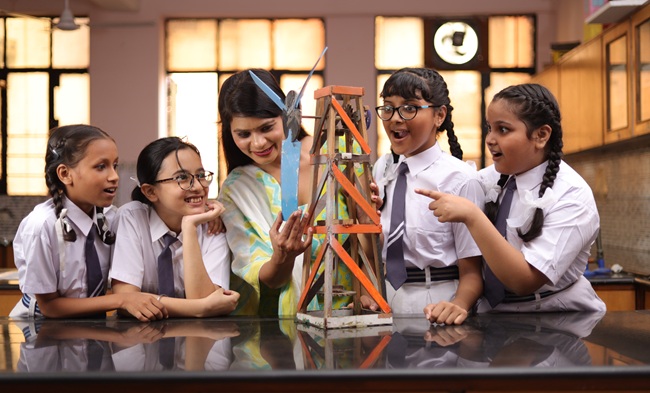
Building India's Next-Generation Talent Pipeline - When Classrooms Become ‘Innovation Labs’ & Campuses Become ‘Talent Incubators’
How can India continue to remain the world's preferred destination for Global Capability Centers (GCCs)?
How do universities ensure that graduates are employable on their very first day at work rather than after months of corporate training?
Can higher education move beyond awarding degrees to creating globally competent professionals?
More importantly, can industry and academia stop functioning as two parallel worlds and instead become partners in shaping India's future workforce?
These questions have become increasingly relevant as India enters the golden age of GCCs.
For decades, universities have focused primarily on imparting theoretical knowledge while companies have spent enormous resources retraining graduates to make them industry-ready. This disconnect has created a costly skills gap. The solution, however, is neither more degrees nor more corporate induction programmes. The solution lies in building a strong, institutionalized partnership between academia and GCCs.
The future belongs not merely to those who produce graduates, but to those who produce graduates who are immediately productive.
India today hosts one of the world's largest GCC ecosystems. As of FY2026, the country has 2,117 GCCs, employing nearly 2.36 million professionals and generating approximately US$98.4 billion in revenue. More than 500 Forbes Global 2000 companies now operate GCCs in India. These centers are no longer back-office support units; they have evolved into global hubs for AI, engineering, product development, cybersecurity, finance, analytics, R&D, and enterprise innovation.
This remarkable growth presents India with an extraordinary opportunity, but also a formidable challenge. The biggest challenge facing GCCs today is no longer infrastructure. It is talent.
The ‘Skills Gap’: Degrees Are No Longer Enough
A university degree today merely opens the door. It does not guarantee entry. Modern GCCs seek professionals who can solve problems rather than merely answer examination questions.
They require graduates who possess:
Unfortunately, many academic curricula still focus heavily on theoretical instruction while technological change occurs at an unprecedented pace. By the time a syllabus is revised, industry requirements may already have evolved. This is precisely where GCC–Academia collaboration becomes indispensable.
From ‘Recruitment Partners’ to ‘Knowledge Partners’
Most companies currently visit campuses during placement season. This model is outdated. Instead of engaging with students only during their final semester, GCCs should begin interacting with them from their very first year.
Universities should no longer be viewed merely as ‘recruitment destinations.’ They should become ‘innovation partners.’ The relationship must evolve from: Recruitment → Capability Building
Instead of asking, "Who are the best students available?" GCCs should ask, "How can we help create the best students?" That subtle shift changes everything.
A ‘Practical Framework’ for GCC–Academia Collaboration
A sustainable collaboration should rest on multiple pillars.
1. Joint Curriculum Design
Industry experts should work alongside university faculty in designing curricula. Courses must include:
Curricula should be reviewed annually rather than once every five years.
2. GCC Professors of Practice
Senior professionals from leading GCCs should teach selected modules as Professors of Practice. Students gain exposure to real-world business challenges rather than textbook examples. Faculty members, in turn, remain updated on current industry practices.
3. Live Industry Projects
Instead of hypothetical classroom assignments, students should solve actual business problems faced by GCCs. Examples include:
Such projects develop both technical and managerial competence.
4. GCC Innovation Labs on Campus
Every university should establish dedicated ‘GCC Innovation Labs’ jointly funded by industry partners.
These centers can house:
Students learn using the same tools employed by multinational corporations.
5. Mandatory Internships
Internships should become an integral academic requirement rather than an optional summer activity.
Students should complete:
6. Faculty Immersion Programmes
Faculty members should spend several weeks each year working within GCCs. This enables professors to bring current industry practices back into the classroom. Similarly, GCC professionals should spend time teaching on campuses. Knowledge must flow in both directions.
7. Joint Research Centers
Universities and GCCs should jointly undertake research in areas such as:
Research outcomes can lead to patents, publications and commercial innovations.
8. Continuous Skill Certifications
Students should graduate with multiple globally recognized certifications in addition to their degrees. These certifications may include cloud platforms, cybersecurity, AI, project management and analytics. The graduate's portfolio then reflects demonstrable skills rather than only academic performance.
The Mutual Benefits
The relationship is not one-sided. It creates value for both stakeholders.
Benefits for Students
Students gain:
They become professionals even before graduation.
Benefits for Universities
Universities benefit through:
Benefits for GCCs
GCCs receive:
Instead of searching for talent, they begin cultivating it.
Learning from ‘Successful Models’
Several Indian institutions have already demonstrated the value of close industry collaboration.
Institutions such as the Indian Institutes of Technology (IITs), Indian Institute of Science (IISc), and leading universities have established industry-sponsored laboratories, research chairs, incubation centers and innovation hubs in collaboration with multinational companies.
Similarly, many GCCs across Bengaluru, Hyderabad, Pune, Chennai and Gurugram now partner with universities through hackathons, internships, sponsored research, AI laboratories and faculty engagement programmes. These initiatives illustrate that collaboration is not merely desirable, it is already proving successful.
Beyond Placements: Building an ‘Innovation Ecosystem’
Perhaps the greatest outcome of GCC–Academia collaboration will not be higher placement numbers. It will be the emergence of an innovation ecosystem.
When students work alongside industry experts, professors collaborate with researchers, and companies invest in academic excellence, campuses transform into centers of invention. Ideas become prototypes. Prototypes become patents. Patents become products. Products become global businesses. The classroom evolves into an innovation engine.
The Role of Government
Government policy can accelerate this transformation through several initiatives:
Such measures would strengthen India's ambition to become the world's foremost knowledge economy.
Final Thoughts: The Future Is Co-Created
The Strongest Talent Is Not Found; It Is Built
The next phase of India's GCC story will not be written inside corporate boardrooms alone. It will be written inside classrooms.
Universities possess youthful curiosity. GCCs possess practical experience. When curiosity meets experience, innovation becomes inevitable. The relationship between academia and industry should, therefore, not resemble that of a supplier and a customer. It should resemble that of two architects designing India's future together.
If universities produce knowledge while GCCs produce global value, then their collaboration produces something even more powerful — human capital capable of transforming nations.
India's demographic dividend will not become a strategic advantage merely because millions graduate every year. It will become a strategic advantage only when those graduates possess the skills, mindset and global competence that tomorrow's enterprises demand.
The future belongs to nations where education does not end at graduation and industry does not begin at recruitment. It belongs to nations where learning and enterprise grow together. India has every opportunity to become that nation.
Image (c) istock.com
08-Aug-2026
More by : P. Mohan Chandran
