Oct 01, 2026
Oct 01, 2026
Misconception and Misunderstandings - I
In part XLVIII - Prodding Questions Faced by Hindus Globally - of this series, the author had addressed some common misconceptions and prodding questions that Hindus are often faced with globally from the people of other faiths, and particularly from those pursuing two dominant Abrahamic religions in the world. Then the author had narrated an embarrassing incident that an Indian (Hindu) had with an elderly devout lady who was a co-passenger during a local ride in Canada making rather inconvenient questions and sarcastic remarks on idol worship, polytheism, and so on. On learning about the incident, this author wrote an essay essentially to explain and clarify some of the most common misconceptions, misunderstanding or doubts about the Sanatan Dharma (Hinduism) that people have in mind globally. A more detailed examination of the subject reveals that, in fact, there are many more such issues and doubts that the people of other faiths, atheists and even many ignorant Hindus have in mind.
Before taking up these issues comprehensively viz. points unaddressed in the aforesaid essay as also additional input on points already covered, the author would like to recap the reasons why many Hindus are themselves unaware and unable to respond when confronted with such prodding queries in the global environment. In short, during the last millennium for over 600 years, India suffered under the tyrannic regime of successive foreign Islamic rulers followed by the colonization under the British regime till 1947. During this period, the foreign rulers and their religious institutions systematically targeted to denigrate and destroy the traditional Hindu culture and faith, including rich Indian languages. The British Macauley’s Education System chiefly aimed to develop an English educated Indian class loyal to British Empire with a belief system suited for their long-sustained rule. Further, after independence, the Indian National Congress government that inherited power from the British, too, did not allow the rich Indian (Hindu) culture for pupils in the course curriculum in the name of secularism.
There are inherent reasons why many Hindus are unable to respond to misconceptions, misunderstandings and doubts relating to their own culture and religion, and the chief reasons lie in the socio-political development and events of the last millennium as cited above. Even today any suggestion for giving the exposure of ancient Indian culture to pupils in the course curriculum is vehemently opposed by several political parties, particularly the Congress, Communist Parties and Left leaning media & intellectuals.
Another paradox existed from many decades since 1947 that aspirants for the civil service could opt for the Islamic foreign languages like Arabic and Persian as optional subjects while own Indian languages did not have this privilege; the course correction was carried out by the UPSC only in 2013 in the light of the official Indian languages recognized in the Eighth Schedule of Constitution.
So called Indian liberals argue such measures as communalization of the education system. The author proposes to comprehensively address all identified misconceptions, misunderstandings and recurring doubts about Hinduism in a five-parts essay series; in this first part revisiting the essence of the Sanatana Dharma too, while comprehensively listing all relevant misgivings.
What is Sanatana Dharma?
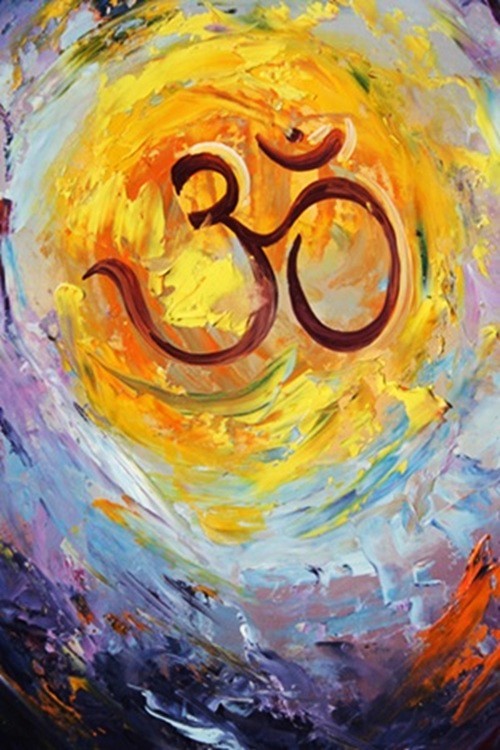
The very nomenclature comprises of two terms viz. Sanatana and Dharma. The word Sanatana means eternal, timeless, or uncreated, that which has no beginning (Anadi) and no end (Ananta).
Sanatana Dharma does not translate to a "religion" in the modern sense implying a single founder, a single holy book, or fixed dogmas; instead, to an "Eternal Order" or "Universal Law."
According to Vedic wisdom (the Rigveda), the cosmic laws that govern the universe existed before humans evolved and will exist after too, and it essentially refers to the intrinsic principles that sustain the cosmos, life, and moral order regardless of time, place, or historical belief systems. Rigveda 1.164.46) holds that the Truth (Satya, God) is one, though expressed in several ways (Ekam Sat Vipra Bahudha Vadanti). It is also an undisputable fact that Sanatana Dharma is the oldest known religion (in modern literal sense) or a way of life and other dominant religions like Christianity and Islam came much later. They may have taken some concepts from Hinduism and Judaism but the Vedas and Upanishads have original and pure knowledge.
Dharma, to put in simple way, in the Vedic and Upanishadic context broadly refers to "righteousness” i.e. righteous duty and action. It is derived from the Sanskrit root dhr, which literally means "to hold," "to bear," or "to sustain." Dharma is that which upholds, sustains, and holds together the universe, society and the individual. In early scriptural text, Dharma’s precursor and core element is rta, the cosmic order that keeps the stars in orbit, seasons cyclic, and moral cause-and-effect intact. In other words, to act according to Dharma means to align one's actions with rta. While the earlier Vedic literature usually focused on Dharma in the context of cosmic harmony and sacrificial/ritual precision, the Upanishads turned the inquiry inward, connecting Dharma straight to Ultimate Reality (Brahman) and Truth (Satya) or Satya synonym to Brahman.
In the same context, the Brihadaranyaka Upanishad (1.4.14), Dharma is explained as follows: "He (Brahman) created still further a better form, Law (Dharma). This Dharma is the controller of the Kshatriya (power). Therefore, there is nothing higher than Dharma. Hence, even a weak man hopes to defeat a stronger man through Dharma, as with the help of a king. Truly, that which is Dharma is Truth (Satya)."
Here, the Upanishad explicitly equates Dharma with Satya. Dharma is layered too in the Upanishadic and foundational philosophical thought, in that it operates on distinct levels.
(i) Universal/Cosmic level: It applies to all humans at all times with the attributes of truthfulness (Satya), non-violence (Ahimsa), self-control (Dama), purity (Shaucha) and compassion (Daya).
(ii) Contextual / Social level: It applies to Varnashrama duties and responsibilities specific to one's stage of life (Ashrama) and role or duty in society (Varna).
(iii) Personal / Situational: It is defined as Svadharma, essentially as an individual’s unique path, innate nature (Svabhava), and duty and action in a given context.
To summarize the aforesaid factual explanations and averments, Sanatana Dharma is the timeless, uncreated cosmic framework that sustains existence. Here Dharma is not a static dogma, but a dynamic principle of alignment with whatever upholds harmony, truth and growth not only for the individual (Atman) but also for the larger good of the society and cosmos. The aforesaid original and pure concepts have transitioned through various stages of human ancient history to the modern age and undergone changes, (mis)interpretations and adoptions vis-a-vis other evolving and invading cultures and religions in the Indian sub-continent leading to several misconceptions, misinterpretations and recurring doubts in the global context.
Common misconceptions about Hinduism
Here is a list of common misconceptions, misunderstandings, misgivings and doubts about Hinduism held globally with basic premise and position. While preachers of other faiths, predominantly two Abrahamic religions, aggressively question and criticize, many common observers of different faiths too indulge in similar rhetoric, and not to forget that many ignorant Hindus themselves are found confused while they raise similar questions. The author would like to discuss these misconceptions under five broad headings.
(A) Philosophy and Metaphysics
(1) Polytheism versus Monotheism: The common belief is that Hinduism fundamentally pursues polytheism in worshiping as many as 330 million distinct and different gods while God is actually only one. While disputing the concept, they completely miss the Vedic divine element well explained in core Upanishadic concept of one Supreme Reality (Brahman) manifested in different forms.
(2) Hinduism lacks a single central core or historical unity: The usual misgiving among some Western academics and critics is that they look at Hinduism as more of a modern 19th century British construct, a sort of umbrella term used to define hundreds of contradictory and unrelated regional cults, tribal traditions and philosophies with no underlying synergy. They forget that Hinduism looks the Reality as Ekam Sat and Dharma, and that it never needed a single founder or rigid (dogmatic) book for its adherents. The Sanatana Dharma is based on a profound and organic internal coherence rooted in Hindu Vedas and Upanishads, a pluralistic matrix with a shared cosmological vision rather than enforced dogma.
(3) Concept of "Maya" Misunderstood: Globally, there is widespread misunderstanding, more especially in Western philosophical circles, that Maya means the world is literally an "illusion" or non-existent; on the contrary, it is creative energy (Prakriti) of the Supreme Being representing changeable or ephemeral phenomenal universe that veils true reality from the individual consciousness.
(4) The "Single Holy Book" Expectation: The assumption that Hinduism operates like Abrahamic faiths, requiring a single authoritative text, a central human founder, and a standardized set of dogmas to be considered a "religion."
(5) Pessimistic and Life-Negating: The usual colonial-era critique to undermine Hinduism was that it views the world purely as suffering and cycle-bound (Samsara), ignoring the joyful aspects of the celebration of nature, art, music, aesthetics, and so on. On the contrary, Hinduism encourages the enjoyment of material life as Grihastha (householder).
(6) Equating Dharma with "Religion: Western preachers and people often evaluate Sanatana Dharma in the Abrahamic box of "religion," thereby creating false binaries of "believers versus non-believers" or "sinners versus saved" or “kafir versus mumin.”
(7) All Religions are Exactly the Same: A modern and highly prevalent misunderstanding, often committed by even well-meaning Hindus too, is that Hinduism teaches all religions being theologically identical. Instead, the real philosophy is that paths may be diverse and should be respected, but they lead to the same One God. In practice, different religions represent different paradigms and don’t necessarily profess the same metaphysical state.
(B) Sociology and Culture
(1) Idol Worship: This is one of the most disputed and criticized misconception that Hindus worship physical stone, wood, metal or paper images assuming them as God rather than understanding the real object i.e. idol (consecrated image) as a medium and physical focal point to connect with the omnipresent divine.
(2) The Inherent Subjugation of Women: A general impression is conveyed that the foundational Hindu scriptures inherently oppress women; they tend to ignore the supreme status of the Divine Feminine (Shakti) and the prominent female scholarly sages (Rishikas).
(3) The Caste System in Hinduism: Many critics world over believe that a rigid, birth-based discrimination as caste system (Jati) and untouchability are divinely mandated by the foundational texts, while Hindu scriptures actually provide for an original, aptitude-and-occupation-based Varna framework.
(4) Sannyasa (Renunciation) demolishes Social Responsibility and Family Life: The common misconception is by promoting Sannyasa and Vairagya (detachment), Sanatana Dharma encourages people to abandon their families, civic duties, thereby leading to social neglect. Reality is Sanatana Dharma created Ashram System and Purushartha for a balanced four-stage life to enjoy and attain goals of life. Renunciation is only meant for a specific life phase or as an exception for those with rare, genuine inner readiness.
(5) Vegetarianism as an Absolute Mandate: Many westerners have notion that Hindus are strictly vegetarian, ignoring the wide diversity of regional, scriptural, and Svadharma-based dietary traditions across India (such as Kshatriya dietary norms or Eastern/coastal traditions where fish is offered in worship).
(6) Worshiping the Cow: The oversimplified claim that "Hindus worship cows as a deity," misses the socio-cultural and philosophical nuance of the cow as a symbol of maternal sustenance, as well respect for all life (Ahimsa).
(C) History and Symbols
(1) Mythology vs. History (Itihasa): Western historians and Indologists constantly dismissed texts like Puranas, the Ramayana and the Mahabharata purely as "mythology" or fictional tales (prevalent till now), overlooking their specific Indian classification as Itihasa, and the historical, cultural, and moral frameworks woven into these texts.
(2) Conversion and Exclusivism: The general belief is that one must be born a Hindu to be a Hindu; some even hold that Hinduism actively proselytizes like missionary faiths; Reality is that Sanatana Dharma is an open-ended, experiential search for Truth rather than a sort of membership club.
(3) Ahimsa creates passive non-resistance and weakness; The usual misgiving about Ahimsa is that this Dharmic concept is akin to absolute pacifism and discourages standing up against the evil or external aggression rendering society vulnerable. In reality, Ahimsa is the highest value only next to Satya (Truth) and Hindu scriptures, for instance Srmad Bhagavad Gita, encourage righteous action/war (Dharma Yuddha) against unrighteousness (Adharma).
(4) Swastika as a Symbol of Hate: The widespread global conflation of the ancient Hindu, Jain and Buddhist Swastika (a sacred symbol of well-being, auspiciousness and harmony) with the Nazi Hakenkreuz (hooked cross) is a popular misconception.
(D) Cosmology and Practice
(1) Karma equals Fatalism: The critics argue with misconception that Karma means predestination or "fate," which encourages a passive mindset. On the contrary, it is actually the ultimate law of cause-and-effect; it encompasses every choice that an individual makes tp perform righteous duty without attachment to the result.
(2) Reincarnation as Punishment: The usual impression in the West is that Hinduism professes that an individual (soul) is reborn in the physical world as a divine punishment, while reincarnation is linked to Karma as a natural process and opportunity for the Jiva (individual soul) to evolve towards liberation (Moksha).
(3) The Trimurti Analogous to the Christian Trinity: Many in the West and Hindus as well erroneously equate the Christian Trinity with the Sanatan Trimurti. Remember Christianity came much later with Trinity representing God the Father, God the Son and God the Spirit, while the Sanatana Trimurti essentially represent three cosmic functions of creation, preservation and dissolution linking it to Brahma, Vishnu, and Shiva respectively.
(4) Concept of Avatara is Mythical Fantasy: Skeptics and critics argue that the concept of divine descents such as Sri Ramchandra, Shree Krishna are just mythical characters created for idolization and entertainment. Actually, the concept of Avatara symbolizes the universal cosmic law whereunder the Infinite (Supreme Soul) manifests in finite form to save society and restore moral order (i.e. Dharma Sansthapana) whenever chaos threatens existence (The Bhagavad Gita 4.7-8).
(5) Tantra being Purely Sexual Practice: The modern Western perception is that Tantra is essentially an ancient practice for sexual pleasure, while in effect it is a spiritual path and tradition of rituals, mantras, meditation and yoga to channel divine energy for inner liberation and worldly power.
(E) Epistemology and Science
(1) Asceticism and Anti-Materialism: The detractors opine that being a "good Hindu" requires renouncement of all wealth and pleasure to pursue ascetism. On the contrary, Hinduism recommends a judicious following of the four goals of life (Purusharthas), which explicitly recommends the pursuit of wealth (Artha) and pleasure (Kama) under the guidance of Dharma.
(2) Hinduism is Whole Ritualism: Many westerns believe that Hinduism in nothing but ritualism (Karmakanda) in the highest form. They tend to completely miss the transition to internal contemplation (Jnana) and devotion (Bhakti) emphasized in the Principal Upanishads and Srimad Bhagavad Gita.
(3) Hinduism Relies on Mysticism & Miracles: Modern secularists hold Hindu philosophy as anti-science citing several traditions such as Siddhis (yogic attainment), spiritual experiences and scriptural accounts as superstitions, anti-scientific myths. On the contrary, Sanatana Dharma views material and spiritual worlds as being governed by immutable cosmic laws (Rta). Its methodology is inward science (Adhyatma Vidya) which is based on systematic observation, real perception (Pratyaksha), logical inference (Anumana) and meditative experimentation (Yogic Sadhana).
(4) Sanatana Dharma treats Physical World as Dirty and Sinful: Conflating Maya with total denial of physical existence, critics claim Hinduism teaches that the material world, human beauty, art, and sensory experience are inherently bad, corrupt, or sinful. Reality is Sanatana Dharma believes in Purusharthas and sacred Nature, establishing Kama (pleasure, art, love, aesthetic enjoyment) and Artha (material prosperity, wealth, enterprise) as legitimate, noble human pursuits under the guidance of Dharma. Also, Nature itself is seen as an immanent manifestation of the Divine (Sarvam Khalvidam Brahma), not a fallen realm.The
(5) Scriptural Polyphony: They criticize Hinduism of lacking an objective truth and/or moral compass by quoting multiple schools of thought and presence of hundreds of texts with varying views. The reality is that Hinduism rather than being a dogmatic religion (in the Western model), is a way of life, as also adjudged by the Supreme Court of India. It allows healthy descent and debate in pursuance of the Ultimate Truth; hence ways may be different but they lead to same reality.
Analysis: Philosophy and Metaphysics
1. Polytheism versus Monotheism (& Monism)
This subject has already been dealt with at a greater length in Part LXVII of this series. However, as the point has come up in different context, we shall briefly discuss it here to learn and clarify misconceptions or misunderstanding on the subject world over.
The fundamental misunderstanding arises from Western (Abrahamic theological concepts) view point which strictly split theology into Monotheism (one distinct God) or Polytheism (many distinct gods). In their vision, they view the Sanatana Dharma being based on polytheism and to illustrate this they quote different deities being worshiped by Hindus, their diaspora often facing their nagging criticism, even insult at times. To understand this, one needs to learn a long Hindu legacy and heritage too.
Until the advent and spread of the Abrahamic religions Christianity (about 2 millennia) and Islam (about 1,400 years), almost all Western civilizations believed in polytheism. The Sanatana Dharma in the Indian sub-continent had evolved during the Vedic age. As for its chronology is concerned, the Western historians, Indologists and Indian leftist historians restrict its age between 3,500 – 4,000 years, linking it to the Indus Valley Civilization in the North India. On the other hand, the traditional Indian historians reckon Hindu civilizational history over ten thousand years, starting from the Vedic age, citing a variety of available evidences and record as per the Vedic corpus, Epics and Puranas (Itihasa texts), Buddhist and Jain literature and inscriptions, Sanskrit and Prakrit poetic literature, regional accounts, inscriptions, monastic chronicles, Vamsavalis, and so on, to explain the chronology, genealogy and other historical details.
If we have a close look at the ancient civilizations of the world such as Greek, Roman, Egyptian, Sumerian, Persian, and so on, we find they believed in polytheism and were highly materialistic civilizations. As against them, adherents of Sanatana Dharma had a balanced approach towards materialistic and spiritual life, the Vedic Indians believed in Brahman (one God), and worshiped thirty-three natural (cosmic) forces as deities whom they considered as manifestations of Brahman, and essential for their safety and well-being. While other ancient civilizations fizzled out with time owing to inner weaknesses and the advent of Christianity and Islam, the Sanatana Dharma (Hinduism) survived till date, owing to inner strengths (combined physical and spiritual strength) , despite constant onslaught of the Islamic invasions and colonial rule for nearly a thousand years. The Sanatana Dharma has undergone constant revisions to adjust with changing times; for the stated multiplicity of deities, it is often criticized as a polytheistic religion.
The classic example representing polytheistic religions from the ancient past are Sumerian, Egyptian, Roman and Greek civilizations. They were represented by an assembly of gods and goddesses with different attributes and functions, and usually one god was considered as the most powerful and supreme deity as the God of gods. The Hindu Vedic scriptures (Vedas & Upanishads) held the unmanifested Brahman (God) as the Supreme Reality, and thirty-three cosmic forces referred to as devas or deities as various manifests of Brahman. These deities included eight Vasus, eleven Rudras, twelve Adityas, Indra and Prajapathi Brahma. In the post-Vedic age, the concept of Trimurti evolved essentially as three principal deities namely God Brahma, Vishnu and Shiva represent three cosmic functions of universe, namely creation, preservation and dissolution respectively. Similarly, more deities such as Devi, Ganesh, Hanuman representing different divine aspects of God. In essence, all these manifests are essentially various aspects of the same formless ultimate divine, Brahman.
The Vedic people worshiped natural deities mainly through sacrificial rituals and practice of austerities and meditation. The ancient Indian rishis and even modern saints and scholars view aforesaid deities as manifestations or emanations of the same formless and genderless Brahman, representing many aspects of the same Ultimate Reality. Many ignorant Hindus do not understand this finesse, and religious leaders and adherents of other religions, particularly two Abrahamic faiths, tend to miss this reality while criticizing Hinduism for polytheism. The monotheism is belief in one God Who is accredited with the creation of world, with the attributes of being omnipresent, omnipotent, omnibenevolent and omniscient. They do not understand the fine distinction between worshiping multiple gods OR worshiping the One God (Brahman) in His multiple manifested forms.
In Hinduism, various deities such as Brahma, Vishnu, Shiva, Devi, or Ganesha are not separate and competing gods in a polytheistic pantheon; rather, they are diverse functional expressions, personifications, or manifestations (Rupa) of very single, ultimate Reality (Brahman), tailored to resonate with human minds of varying temperaments (Ruchi).
Just as water can manifest as liquid, ice, or vapor while remaining chemically H2O, or a single individual can simultaneously be a father, a son or an advisor depending on the relationship, the Ultimate Reality (Brahman) expresses itself in innumerable forms to allow a seeker to relate to the infinite through a finite form.
In fact, Hinduism goes one step further beyond the traditional monotheism, as professed by Abrahamic faiths. The ultimate concept of the God in Hinduism is based on the premise that the God, physical and abstract universe, human and all other living beings are essentially parts of the same oneness. In other words, the same godly subtle element exists in every human being as Atman or the eternal Self.
The Rigveda (1.164.46). captures this core truth in its most popular and explicit form: "Ekam Sat Vipra Bahudha Vadanti" i.e. Truth is One, but the wise speak of It in many ways. Similarly, the Chandogya Upanishad encapsulates it in the dictum "Tat Tvam Asi" i.e. That Thou Art, revealing that the individual soul (Atman) is ultimately non-different from that singular cosmic Reality (Brahman). Thus, far from worshipping many gods, a Hindu worshipping a specific deity is connecting with the same Supreme through that chosen form (Ishta-Devata). As against this, the monotheism is the belief and worship of one God, who has created the world and is omnipresent, omnipotent, omniscient and omnibenevolent. In this context, the Hindu foundational Vedic and Upanishadic vision is clearly Monistic (a step further beyond being monotheistic), often specifically termed Advaita (non-duality) or Polymorphic Monism. It teaches that there is only one ultimate, uncaused, formless Reality called Brahman; the infinite, omnipresent consciousness that underlies and permeates the entire cosmos.
To be Image (c) istock.com
16-Aug-2026
More by : Dr. Jaipal Singh
