Sep 19, 2026
Sep 19, 2026
How Semiconductors are Redrawing the Map of Geopolitical Power
What if the most important alliances of the twenty-first century are not signed in foreign ministries but fabricated inside cleanrooms? What if a lithography machine in the Netherlands, a foundry in Taiwan, a memory-chip plant in South Korea and a semiconductor-material factory in Japan collectively matter as much to national security as an aircraft carrier? What happens when countries can remain military allies but become technological liabilities? And could the humble semiconductor eventually redraw geopolitical blocs more decisively than ideology?
The semiconductor industry is quietly answering these questions.
For decades, the global semiconductor supply chain represented globalization at its most sophisticated. Design could happen in California, fabrication in Taiwan, lithography equipment could come from the Netherlands, materials from Japan, memory chips from South Korea, assembly and testing elsewhere in Asia, before the finished semiconductor entered a smartphone, automobile, missile, satellite or data centre somewhere else entirely.
The organizing principle was efficiency. That era is ending. The new organizing principles are increasingly security, resilience, technological sovereignty and political trust. Supply chains are becoming alliance chains. And the transformation may redraw the geopolitical map of the twenty-first century.
The $1.5-Trillion Strategic Commodity
The semiconductor is an extraordinarily unremarkable-looking object upon which an extraordinary amount of civilization now depends. Global semiconductor sales reached almost $800 billion in 2025. But artificial intelligence has dramatically accelerated demand. By July 2026, according to the Semiconductor Industry Association, global semiconductor sales had already exceeded the industry's previous highest full-year total. July alone recorded $146.8 billion in sales, up 135.1% year-on-year. Current industry projections put 2026 global semiconductor sales at around $1.5 trillion.
That is not merely a rapidly expanding industry. It is becoming foundational infrastructure for economic power. Semiconductors enable AI, telecommunications, cloud computing, automobiles, medical devices, industrial automation, satellites, weapons systems and virtually every important digital technology.
Oil powered the industrial geopolitics of the twentieth century. Chips increasingly power the computational geopolitics of the twenty-first. There is, however, one crucial difference. Oil comes out of the ground. Advanced semiconductors emerge from one of the most complicated industrial ecosystems humanity has ever constructed. No country completely controls it. That dependence is precisely what makes semiconductor geopolitics so interesting.
Taiwan: The Foundry Power
Begin with Taiwan. Its geopolitical leverage does not arise primarily from possessing raw materials. It comes from accumulated manufacturing capability. TSMC has become the indispensable foundry behind much of advanced computing. Taiwan consequently occupies one of the most strategically sensitive nodes in the global technology system.
But Taiwan's semiconductor strategy is evolving. TSMC's planned investment in the United States has now reached $265 billion, covering a projected 12 advanced semiconductor manufacturing and packaging facilities. The conventional interpretation is that America is reducing its dependence on Taiwan. That is true.
But something else is happening simultaneously. Taiwan is embedding itself more deeply into America. A TSMC fab in Arizona does not merely produce semiconductors. It connects Taiwanese technology with American workers, suppliers, universities, customers, infrastructure and political constituencies. That turns economic dependence into institutional interdependence.
Taiwan is therefore attempting a delicate geopolitical transition: from making the world dependent upon manufacturing in Taiwan to making allied economies dependent upon manufacturing with Taiwan. The distinction is profound. It converts the supply chain into a diplomatic network.
The Netherlands: The Power of the Chokepoint
Then consider the Netherlands. It is not normally placed alongside the United States and China when discussing great-power competition. Yet one Dutch company occupies an extraordinary strategic position.
ASML manufactures the extreme ultraviolet lithography systems required for producing the world's most advanced semiconductors. Its technological capability illustrates a fundamental principle of modern geopolitics: A country does not need to dominate an entire industry if it controls an irreplaceable chokepoint within it.
ASML reported sales growth of 15.6% in 2025, with AI investment helping drive demand. Its EUV business continued to benefit from demand for the TWINSCAN NXE:3800E platform. But ASML's importance cannot adequately be measured through revenue. Its real strategic value lies in substitutability, or the lack of it.
If several companies can provide a component, the supplier has commercial importance. If essentially nobody else can provide an equivalent capability at the technological frontier, the supplier possesses geopolitical leverage. This is why export restrictions involving advanced semiconductor equipment have transformed a Dutch industrial company into an actor within the wider U.S.-China technological contest.
The Netherlands has acquired strategic weight disproportionate to its geographic size.
Its leverage is not based on oil wells. It is based on nanometres.
Japan: The Return of Industrial Strategy
Japan provides another piece of the alliance chain. Its semiconductor position declined substantially from the extraordinary dominance Japanese companies enjoyed during the 1980s. Yet Japan retained considerable strength in semiconductor equipment, chemicals, wafers and specialist materials. Tokyo has now concluded that semiconductor capability is too important to leave entirely to market forces.
Enter Rapidus. Japan wants Rapidus to restore domestic advanced semiconductor manufacturing and develop leading-edge production capability. The language used by the Japanese government is revealing.
In February 2026, Japan's Ministry of Economy, Trade and Industry said the government and private companies had invested ¥267.6 billion in Rapidus. Of this, ¥100 billion came from the government and ¥167.6 billion from 32 primarily private-sector investors. METI described Rapidus as a national project whose failure could jeopardize Japan's national interests.
By June, the government had executed another ¥150 billion investment. This is not ordinary industrial policy. It is economic-security policy conducted through industrial investment. More revealingly, Rapidus has pursued cooperation with institutions in Britain and Italy. Japan's METI explicitly connected such collaboration with research partnerships and potential customers. The implication is important.
Japan is not merely attempting to rebuild a domestic semiconductor industry. It is constructing technological relationships with trusted countries. The fab is becoming part factory, part strategic infrastructure and part diplomatic instrument.
South Korea: Memory Becomes Strategic Memory
South Korea occupies yet another indispensable position. Samsung Electronics and SK Hynix give the country extraordinary strength in memory semiconductors, increasingly important because AI systems consume enormous quantities of high-performance memory.
The consequences are now visible in Korea's trade numbers. By early September 2026, South Korean exports had reached $709.4 billion, already exceeding the previous full-year record. Semiconductors accounted for an astonishing 41% of total exports. Between January and August, semiconductor exports surged 169.6% to $281 billion compared with the corresponding period a year earlier.
AI has therefore transformed memory chips from an industrial specialization into an increasingly powerful national strategic asset. And once again, the ecosystem is becoming multinational.
Four American companies recently pledged around $2 billion of investment in South Korea covering semiconductors, advanced materials and energy. Air Products is expanding semiconductor and rare-gas facilities; Axcelis is increasing production of ion-implantation equipment; Corning is investing in advanced materials. Notice the emerging pattern.
Taiwan invests in America. American companies invest in Korea. Japan collaborates with European institutions. Europe courts Taiwanese semiconductor investment. The industry is not simply deglobalizing. It is re-globalizing politically.
America: From ‘Efficiency’ to ‘Security’
The United States sits at the centre of this transformation. America remains enormously powerful in chip design, intellectual property, semiconductor software, AI processors and equipment. Companies such as Nvidia, AMD, Qualcomm, Applied Materials and Lam Research occupy crucial positions across the ecosystem. Yet decades of manufacturing globalization exposed a strategic weakness. America could design some of the world's most sophisticated semiconductors while depending heavily on Asian fabrication. That arrangement looked economically rational when geopolitical stability was treated as an assumption.
Once geopolitical risk became part of the equation, the calculation changed. The semiconductor shortage during the pandemic demonstrated how disruptions involving tiny components could halt automobile production and ripple across major industries.
The U.S.-China technology confrontation made the vulnerability more explicit. Washington increasingly treats advanced computing capability not merely as commerce but as national security.
This is why America's semiconductor strategy has combined domestic manufacturing incentives with export controls and increasingly explicit efforts to build supply chains around allies.
The objective is no longer pure self-sufficiency. Complete semiconductor autarky would be enormously expensive and technologically unrealistic. The emerging objective is something subtler: trusted technological interdependence.
America does not need to manufacture everything. It needs confidence that critical components come from itself or from countries unlikely to become strategic adversaries. That is the logic of the alliance chain.
China: The Pressure That Accelerated the Transformation
No analysis of semiconductor geopolitics is complete without China. China is simultaneously an enormous semiconductor market, a rapidly advancing producer and the principal strategic competitor around which many Western technology restrictions have been constructed.
Washington has progressively restricted Chinese access to certain advanced chips and semiconductor manufacturing technologies. Those controls matter precisely because advanced semiconductor production depends upon multiple technological chokepoints spread across allied economies.
America alone cannot completely constrain the frontier. But combine American chip-design technology, Dutch lithography, Japanese materials and equipment, Taiwanese fabrication expertise and Korean memory capability, and something approaching a technological coalition emerges. This may be the semiconductor equivalent of collective security. Except the weapons are patents, fabs, lithography machines, materials and export licences.
China's response is predictable: accelerate indigenous capability. This produces the great paradox of technological containment. The more effectively one country weaponizes interdependence, the stronger the incentive for the targeted country to eliminate that dependence. Export controls can slow technological progress. They can also stimulate technological nationalism. The semiconductor conflict is therefore not simply dividing existing supply chains. It is encouraging competing technological ecosystems to emerge.
The New Map Has ‘Nodes,’ Not ‘Borders’
Traditional geopolitical maps emphasize borders. The semiconductor map emphasizes nodes. Taiwan: advanced fabrication. The Netherlands: EUV lithography.
South Korea: memory. Japan: materials, equipment and an attempt to rebuild advanced fabrication. The United States: design, AI accelerators, equipment, software and capital. Europe: equipment, automotive semiconductors, research capabilities and an increasingly interventionist industrial policy. China: enormous demand, expanding domestic manufacturing and an increasingly determined self-sufficiency strategy. No single node possesses everything. That creates both vulnerability and power.
A country's strategic importance increasingly depends upon where it sits in this network and whether the capability it possesses can easily be substituted. This suggests a new geopolitical metric: the Strategic Substitutability Index. The less replaceable a country's technological capability, the greater its potential geopolitical leverage.
Population, GDP and military capability matter. But technological irreplaceability increasingly matters too.
When ‘Commerce’ Becomes ‘Foreign Policy’
The deeper transformation is conceptual. For decades, policymakers tended to separate economics from security. Companies optimized supply chains. Governments managed alliances. That distinction is collapsing.
Where a semiconductor factory is built can now become a foreign-policy decision. Who receives advanced lithography equipment can become a national-security decision. Which country supplies memory chips can become a resilience question. Where AI accelerators may be sold can become an instrument of geopolitical influence.
Private companies consequently find themselves performing quasi-diplomatic functions. TSMC affects U.S.-Taiwan relations. ASML affects Europe-China relations.
Samsung and SK Hynix influence South Korea's position in the technology order. Nvidia's products have become sufficiently strategically important that access to advanced computing power is increasingly entangled with national policy. The corporation has not replaced the state. But the boundary between corporate strategy and statecraft has become porous.
The Lesson for India
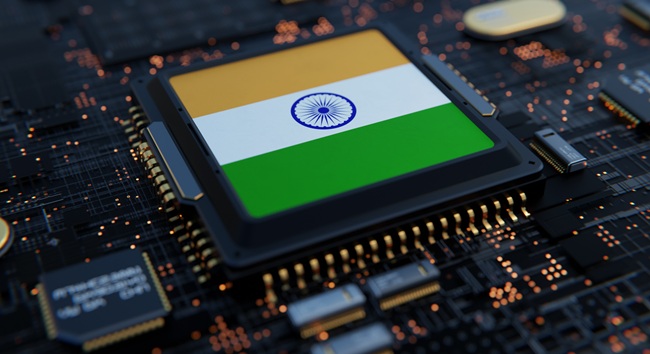
India should study this transformation carefully. India's semiconductor ambitions are expanding, but the wrong objective would be to replicate every component of the global semiconductor ecosystem domestically. That is neither realistic nor necessary.
The better question is: Where can India become difficult to replace? Perhaps it is semiconductor design, advanced packaging, compound semiconductors, talent, specialized manufacturing, and semiconductor equipment components. Perhaps India can combine its emerging semiconductor ecosystem with its strengths in software and AI to create a distinctive position spanning silicon and software.
The strategic goal should not merely be self-reliance. It should be strategic indispensability.
There is an enormous difference. Self-reliance asks: What can we manufacture ourselves?
Strategic indispensability asks: What will the world need us for?
Taiwan understood that distinction through fabrication. The Netherlands discovered it through lithography. South Korea achieved it through memory. Japan is attempting to rebuild it through advanced manufacturing while protecting its established strengths in materials and equipment. India must identify its own semiconductor chokepoint. Because countries occupying critical nodes in technological networks acquire bargaining power far beyond the factory gate.
Final Thoughts: The ‘Chip’ Is Becoming the ‘Treaty’
For seventy years, the architecture of geopolitical power was visible in institutions and treaties: NATO, the European Union, bilateral defence agreements and military bases.
The emerging technological order is harder to see. Its architecture consists of fabs, design centres, patents, cleanrooms, undersea cables, data centres, mineral-processing facilities and semiconductor equipment. Its alliances may not always be written on parchment. Sometimes they are etched onto silicon.
That does not mean economic relationships will replace military alliances. Nor does it mean commercial interdependence guarantees political solidarity. History provides ample evidence that economically intertwined countries can still become strategic rivals. But something important has changed.
Governments now understand that whoever controls critical technology possesses options that others do not. And companies understand that political trust increasingly determines where they can manufacture, sell and invest. The semiconductor supply chain is therefore evolving into something larger: an alliance chain connecting countries through complementary technological capabilities.
The Netherlands does not need to become Taiwan. Taiwan does not need to become America. America does not need to become South Korea. Their collective power comes partly from the fact that each controls different pieces of an extraordinarily complicated technological puzzle. That raises the defining questions of the coming decade.
Will these alliance chains make the semiconductor system more resilient, or merely divide it into rival technological blocs? Can countries pursue economic security without destroying the efficiencies that made semiconductor innovation possible? Will export controls preserve technological advantages or accelerate competitors' search for substitutes? And what happens when a country occupying an indispensable node decides that access to its technology is no longer simply a commercial transaction?
The old globalization asked companies to find the cheapest supplier. The new geopolitics asks governments to identify the safest partner. That is a fundamental shift.
The world once built semiconductor supply chains around efficiency. It is now rebuilding them around trust. And when trust determines who designs the chip, who supplies the machine, who manufactures the wafer and who receives the technology, the supply chain ceases to be merely a supply chain. It becomes an ‘alliance.’
Image (c) istock.com.
19-Sep-2026
More by : P. Mohan Chandran
