Oct 03, 2026
Oct 03, 2026
When The World Wants Skills, but Education Still Wants Memory
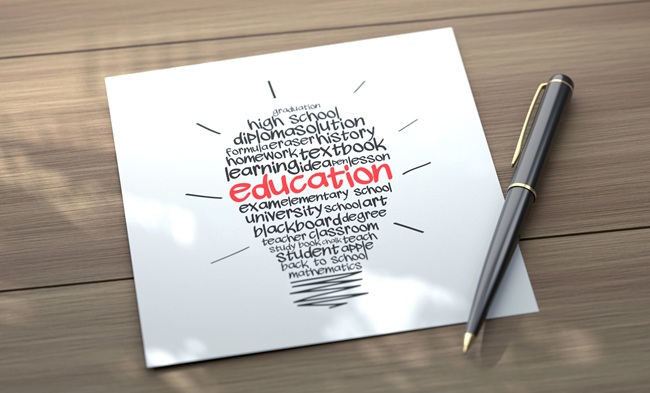
Perhaps the time has come to stop asking students, “What can you remember?” and start asking the considerably more dangerous question: “What can you actually do?”
For several centuries, education has performed one of civilization’s most successful magic tricks.
It takes a student, locks him inside a room for three hours, confiscates his books, disconnects him from the internet, prevents him from consulting another human being, gives him twelve questions, and then announces—with magnificent institutional confidence—that his performance under these extraordinarily artificial conditions reveals how well prepared he is for the real world.
There is only one small problem.
The real world works almost exactly the opposite way.
A surgeon can consult medical literature. A lawyer can research precedents. An engineer can examine technical manuals. A CEO can ask consultants. A scientist can search databases. A programmer can consult documentation. A journalist can verify facts. A policymaker can commission research.
But a nineteen-year-old undergraduate?
Absolutely not.
He must remember the five characteristics of organizational culture without assistance—or civilization may collapse.
Welcome to the Great Examination Comedy.
The Cult of the Closed Book
Traditional examinations emerged from an understandable need to evaluate knowledge. But somewhere along the journey, assessment quietly became confused with recollection.
We began measuring memory and calling it intelligence.
The conventional closed-book examination effectively says: “You will spend months learning from books. On the most important day, however, we shall take the books away.”
Imagine applying this principle elsewhere.
A hospital trains a surgeon for ten years and then, before a complicated operation, announces: “Doctor, no reference materials today. We want to know what you really know.”
Or imagine a judge being told: “Your Lordship, please decide this constitutional matter without consulting statutes or precedents. Open-book adjudication encourages cheating.”
Absurd?
Certainly.
Yet millions of students are subjected to essentially this logic every year.
The problem is not examinations themselves. Assessment is indispensable. The problem is what we choose to assess.
A major review published in Higher Education examined high-stakes final examinations across issues including memory and retention, authenticity and real-world relevance, validity, academic misconduct, stress, fairness, and student well-being. The very persistence of these debates shows how inadequate it is to assume that a three-hour final examination automatically represents learning.
Education has spent too long confusing the warehouse with the factory.
Memory stores information.
Intelligence does something with it.
Enter the Open Book and Panic Begins
Open-book examinations sound scandalous only because education has conditioned us to believe that knowing where to find information is somehow intellectually inferior to memorizing it.
“But students will find the answers in the book!”
Precisely.
Now give them questions whose answers cannot simply be copied from the book.
That is where the fun begins.
Ask a student to define inflation, and Google can answer before the student finishes yawning.
Give the student inflation, unemployment, wage growth, fiscal deficit, and interest-rate data and ask her to recommend an appropriate policy response—and suddenly the textbook becomes merely a toolbox.
Possessing a hammer does not make someone a carpenter.
Possessing information does not make someone intelligent.
India is already moving in this direction. CBSE approved an Open Book Assessment strategy for Class 9 beginning with the 2026–27 academic session, covering subjects including languages, mathematics, science, and social science. The rationale explicitly includes moving away from rote memorization toward competency-based learning, critical thinking, and contextual application.
But the pilot produced a delicious educational irony.
Student performance reportedly ranged from just 12% to 47%.
Students had access to resources and still found the assessment difficult. Teachers nevertheless saw potential for fostering critical thinking.
What an inconvenient discovery!
Apparently, having the book does not automatically provide the brain.
For generations we feared open-book examinations because students might find the answers.
Perhaps we should fear them because they may reveal that finding information and understanding information are two entirely different intellectual activities.
From “What Do You Know?” to “What Can You Do?”
The workplace is undergoing the same revolution much faster than the classroom.
The World Economic Forum’s Future of Jobs Report 2025, drawing on more than 1,000 employers representing over 14 million workers, estimates that 39% of workers’ existing core skills will change by 2030. Analytical thinking remains the most frequently cited core skill, identified by 69% of surveyed employers. AI and big data, cybersecurity, and technological literacy are among the fastest-growing skill areas.
Notice what employers are not desperately demanding: “Please send us candidates who can reproduce Chapter Seven without looking at Chapter Seven.”
The employment market increasingly wants people who can analyze, adapt, communicate, create, solve, collaborate, and learn.
And hiring practices are beginning to reflect this.
The WEF reports that 81% of surveyed employers expect work experience to remain part of their assessment mechanisms during 2025–30. Skills assessments are expected to be used by 48%, while university-degree requirements are expected to remain in use among 43%.
That last number is important. The degree is not dying.
But the degree is being demoted from evidence of competence to one possible signal of competence.
That is a profound change.
For generations, the degree behaved like an educational passport.
No passport, no entry.
Increasingly, employers are asking another question: “Never mind the passport. Can you drive the vehicle?”
The Degree is No Longer The Destination
There was a time when obtaining a degree represented educational arrival.
BA.
BCom.
BSc.
MBA.
Engineering.
The letters after one’s name sometimes became almost ceremonial ornaments—the academic equivalent of medals worn to a wedding.
But technology has shortened the shelf life of knowledge.
The WEF estimates that if the global workforce were represented by 100 people, 59 would require training by 2030. It also reports that 85% of surveyed employers plan to prioritize workforce upskilling.
The message is brutally simple: You cannot graduate from learning anymore.
A degree earned at twenty-two cannot automatically insure employability until sixty.
That would be like buying a Nokia phone in 2005 and demanding that it run every application developed in 2035 because, after all, it was an excellent phone when purchased.
The future belongs increasingly to continuous education: microcredentials, apprenticeships, vocational programs, professional certifications, employer-based training, digital learning, simulations, laboratories, portfolios, internships, and demonstrable competencies.
The educational journey is changing from Learn → Degree → Job to Learn → Work → Relearn → Reskill → Work → Upskill → Reinvent. The certificate once marked the completion of education.
Tomorrow it may merely mark one pit stop.
India's Great Skills Paradox
For India, this transformation is particularly important.
The Economic Survey 2024–25, citing PLFS 2023–24, reported that only 4.9% of Indians aged 15–29 had received formal vocational or technical training, while another 21.2% had received such training through informal sources. The Survey explicitly discusses the problem of skill mismatch between workers’ qualifications and occupational requirements.
This should concern a country aspiring simultaneously to become a manufacturing powerhouse, digital economy, semiconductor hub, AI center, green-energy leader, and developed economy.
We cannot build a twenty-first-century economy using a nineteenth-century educational measuring tape.
India needs electricians, robotics technicians, nurses, machine operators, coders, solar technicians, designers, caregivers, cybersecurity specialists, welders, data analysts, drone operators, AI specialists, plumbers, laboratory technicians, logistics professionals, and advanced manufacturing workers.
Yet vocational education has historically suffered from an absurd social hierarchy.
A young person who can repair a ₹20 lakh automobile may sometimes be considered less “educated” than someone holding a degree who cannot repair the office printer.
That is not educational sophistication.
That is credential snobbery.
We have somehow created a society in which knowing the definition of entrepreneurship may carry greater prestige than actually building an enterprise.
AI Has Now Entered the Examination Hall
And then came generative AI.
Education's traditional response has often been predictable: “How do we stop students from using it?”
That may eventually sound as quaint as asking: “How do we stop accountants from using calculators?”
The better question is: How do we design assessments in which access to AI does not eliminate the need for intelligence?
Give students ChatGPT. Give them Google. Give them textbooks. Give them datasets. Give them research papers. Then ask them to identify faulty assumptions, compare competing solutions, detect hallucinations, defend recommendations, solve unfamiliar problems, create something original, and explain why their judgment should be trusted.
Now we are examining education rather than memory. The examination of the future should resemble the workplace of the future. Medical students should diagnose. Business students should make decisions. Engineering students should design. Law students should construct arguments. Journalism students should investigate. Management students should negotiate. Computer science students should build. Public-policy students should evaluate trade-offs. And everyone should learn to distinguish reliable knowledge from confident nonsense — a skill whose market value is appreciating rather rapidly.
From Examination Hall to Demonstration Hall
This does not mean abolishing knowledge. One cannot critically analyze what one does not understand. Nor should every examination become open-book. Foundational knowledge, fluency, professional requirements, and disciplinary differences matter.
The reform required is subtler and more radical: Stop treating memory as the highest form of learning.
Assessment should progressively test four levels: Know → Understand → Apply → Create. And employability should increasingly ask: Degree + Skills + Experience + Judgment + Adaptability. Not degree versus skill. Degree plus demonstrable competence. That distinction matters because many of tomorrow’s fastest-growing occupations will still require substantial university education. The WEF notes that 14 of the 15 fastest-growing jobs it examined primarily require university degrees.
The university therefore need not disappear. It must evolve. The degree should become the foundation of competence rather than a substitute for competence.
Final Thoughts: Perhaps We Have Been Examining the Wrong Thing
For generations, we have celebrated students who could walk into examination halls carrying nothing except their memory. Perhaps the future belongs to students who can walk into the world carrying something more valuable: judgment. The old examination asks: “What do you remember?” The new examination must ask: “What can you understand, verify, apply, question, solve, and create?”
The old degree says: “I studied this.” The new economy increasingly asks: “Show me what you can do with it.” And perhaps that is the greatest educational irony of all. We built examination halls to prepare young people for life—and then designed those halls to resemble almost nothing they would encounter in life.
No books. No internet. No colleagues. No AI. No discussion. No external resources. Just three hours, one question paper, two pens, and the terrifying possibility that you have forgotten Point Number Four.
Meanwhile, outside the examination hall, civilization continues quite happily with books open, browsers running, AI responding, teams collaborating, experts consulting, workers reskilling, and problems stubbornly refusing to arrive with four multiple-choice options.
Perhaps it is not the students who need another examination. Perhaps it is the examination system. And this time, we should make it open-book.
Image (c) istock.com
03-Oct-2026
More by : P. Mohan Chandran
