Oct 10, 2026
Oct 10, 2026
How India Should Control the Cost of Essential Commodities
Inflation is discussed in percentages. Families experience it in rupees. A government may say inflation is 4%, 5% or 6%. But the housewife buying vegetables does not purchase the Consumer Price Index. The pensioner does not eat the inflation rate. And the daily-wage worker cannot tell his children that although dal, milk, vegetables and cooking oil have become expensive, the macroeconomic indicators remain reassuring.
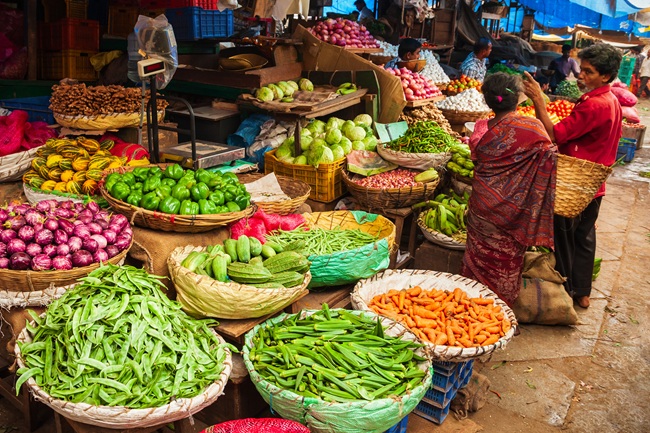
That is why the price of essential commodities is not merely an economic issue. It is an issue of household security. India's retail inflation rose to 4.82% in August 2026, while food inflation reached 5.95%. The government's September economic review has also warned that elevated crude-oil prices, geopolitical tensions and supply disruptions could generate imported inflation. The question, therefore, is not whether government should intervene. It must. The real question is: How should it intervene without destroying the very incentives required to produce tomorrow's food?
The Great Price-Control Paradox
Price control sounds wonderfully simple. If onions cost Rs.80 a kilogram, order traders to sell them at Rs.40. Problem solved. Except economics has an inconvenient habit of refusing to obey government notifications.
A farmer will not indefinitely grow a crop at a loss because the government wants consumers to receive it cheaply. A trader will not transport perishable goods across 1,000 kilometres if his legitimate margins disappear. And investment will not flow into warehouses, cold chains and processing facilities if returns are administratively suppressed.
A price ceiling can reduce the price printed on the board while simultaneously reducing the quantity available behind the counter. That is the paradox. India already possesses considerable statutory power. The Essential Commodities Act, 1955 permits regulation of production, distribution, pricing and trade in designated essential commodities and provides mechanisms to deal with hoarding and market manipulation. Such powers are necessary. But they should function as a fire extinguisher, not as the central heating system of the economy.
India's Problem Is Often Volatility, Not Permanent Scarcity
Consider onions. As of August 26, 2026, the government's reported all-India average retail prices included approximately Rs.37.87 per kg for onion, Rs.38.33 for tomato, Rs.22.63 for potato, Rs.86.71 for chana dal and Rs.123.30 for tur dal. The government estimated 2025–26 onion production at about 30.7 million tonnes and had begun releasing onions from its buffer to moderate seasonal price pressures. This reveals something important.
India can simultaneously produce enormous quantities of food and periodically experience painful price spikes. Why?
Because food does not teleport from farms to kitchens. It must be harvested, sorted, stored, transported, financed, traded and retailed. Every weakness between those stages becomes part of the consumer's bill. The Ministry of Food Processing Industries cites a NABCONS study estimating post-harvest losses of approximately 6.02–15.05% for fruits and 4.87–11.61% for vegetables.
Imagine producing 100 units and losing ten before they can be consumed, and then debating how to regulate the price of the remaining 90. Sometimes India's price problem begins long before the commodity reaches the market.
Pulses Expose the Structural Weakness
Pulses provide an even clearer example. India is the world's largest producer, consumer and importer of pulses. In 2024–25, it produced approximately 25.7 million tonnes but imported another 7.3 million tonnes. Imports represented roughly 23% of consumption. After deficient rainfall in important producing regions, the government has been considering reductions in duties on some imported pulses. This is precisely where intelligent price management differs from simplistic price control.
If tur dal becomes expensive because production has fallen, ordering retailers to sell it cheaply does not create a single additional kilogram of tur. Increasing supply does. India needs a permanent Essential Commodities Price Stabilization Strategy built around several principles.
The Government Cannot Control the Monsoon. It Can Control Preparedness.
Food inflation in India is unusually vulnerable to weather because significant agricultural production remains exposed to rainfall variability. Climate change will make price management even more difficult. The answer cannot be an endless cycle:
Shortage → price spike → public anger → export restriction → import liberalization → emergency stock release → price collapse → farmer distress → lower planting → next shortage. That is crisis management masquerading as policy. India needs to move towards: Forecast → anticipate → procure → store → import when necessary → release strategically → protect vulnerable consumers → preserve farmer incentives. That is price stabilization.
There is another uncomfortable truth. Monetary policy alone cannot solve an onion shortage. Higher interest rates may suppress aggregate demand, but they cannot make tomatoes grow faster, repair a broken cold chain or bring rainfall to a drought-affected district. Food inflation frequently requires microeconomic surgery rather than macroeconomic chemotherapy.
Final Thoughts: Control ‘Scarcity,’ Not Prices
The political temptation to "control prices" is understandable. Essential commodities are different from televisions, smartphones or luxury cars. A family can postpone buying a television. It cannot postpone eating. Government therefore has an unavoidable responsibility to ensure that basic necessities remain accessible. But affordability cannot be created sustainably by decree.
If the state forces prices too low, producers withdraw. If it permits uncontrolled speculation, consumers suffer. If it imports recklessly, farmers suffer. If it protects producers indefinitely through high tariffs during shortages, consumers suffer. The real challenge is not choosing between the farmer and the consumer. It is designing a system in which farmers receive remunerative prices without consumers paying scarcity prices. That requires strategic buffers, intelligent imports, better storage, efficient logistics, competition, transparent markets, aggressive action against hoarding, predictive data systems and targeted protection for vulnerable households.
India does not need a government that decides what every kilogram of dal should cost.
It needs a government capable of ensuring that enough dal reaches the market for competition to decide a reasonable price. There is a fundamental difference.
The best price-control policy is ultimately one that rarely needs to control the price because it has already controlled the causes that make prices explode.
Image (c) istock.com
10-Oct-2026
More by : P. Mohan Chandran
