Oct 14, 2026
Oct 14, 2026
Steering the Chariot Within
The Chariot: A Symbol of the Body and the Self
Lord Jagannath’s chariot, Nandighosha, towering at 45 feet and rolling on 16 wheels, represents the human body — the vessel through which the soul journeys through the world.
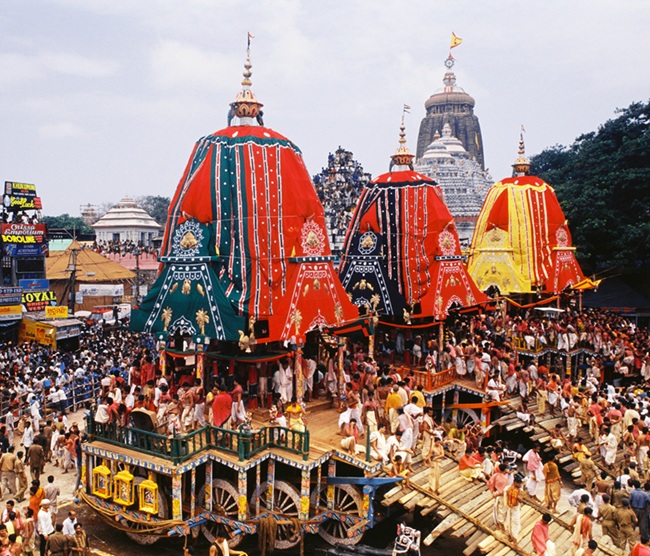
Just as the chariot is constructed each year carefully with rituals and reverence, our lives, too, require intentional crafting through self-discipline, ethical grounding, and spiritual awareness.
Each component of the chariot, its wheels, horses, and flag, has symbolic resonance:
The 16 wheels represent the various faculties of the human system, Body (Deha), Mind (Manas), Intellect (Buddhi), Ego (Ahamkara), Soul (Atman), Desire (Kama), Duty (Dharma), Action (Karma), Devotion (Bhakti), Wisdom (Jnana), Discipline (Tapasya), Compassion (Karuna), Detachment (Vairagya), Time (Kal), Death (Mrityu) and Liberation (Moksha).
The flag at the top is our higher self, constantly reminding us of our purpose.
The brakes and pauses in the chariot’s motion remind us that life is not always linear — we must embrace moments of stillness as much as movement.
“Yatra Yatra Ratham Pashyasi, Tatra Tatra Atma Gyanam Pashyasi”
(Wherever you see the chariot, see also the journey of the soul.)
The Rope: Connection, Devotion, and Effort
The thick ropes used to pull the chariots are held by thousands of hands. They symbolise collective karma and spiritual connection. No single individual moves the Lord forward — it is through unity and shared devotion that the journey progresses. In life, this rope becomes our relationships, values, and devotion to a higher cause. Just as the chariot cannot move without tension on the rope, our spiritual progress also demands effort, perseverance, and conscious intention.
The Journey: From the Sanctum to the Street, From Comfort to Challenge
The movement of Lord Jagannath from His sanctum in the Sri Mandir to the modest Gundicha Temple is rich with symbolism. It is a journey from luxury to humility, from divine stillness to human chaos. Even the deity steps out to mingle with His people, to be touched by those who cannot enter the temple. This act teaches us the importance of stepping out of our comfort zones, walking in empathy with others, and seeing divinity not in isolation but in engagement.
The Halts in the Journey
During the Rath Yatra, the chariot often stops unexpectedly. Even thousands of devotees cannot move it forward until the divine will allows.
This is symbolic of the inevitable pauses in our lives — moments of waiting, confusion, or stillness, when action is not enough and faith must take over. In these moments, we are reminded that not every obstacle is a punishment. Sometimes, it is an invitation to pause, reflect, and surrender.
Isn’t that our life too? Despite all our efforts, there are times when we feel stuck — personally, professionally, spiritually. Perhaps those pauses are the universe reminding us to listen, to realign, to simply be.
The Return: Completing the Cycle
When the chariot returns after nine days, the Lord re-enters the temple — a symbolic homecoming. Our life, too, is a journey of departure, experience, transformation, and return — to our essence, our truth, our inner sanctum. The return, known as the Bahuda Yatra, reminds us that every journey finds its meaning not just in motion, but in completion and reflection.
Final Reflection
The chariot is not just a wooden vehicle. It is you and me.
–– The wheels are our intentions.
–– The horses are our desires.
–– The reins are our mind.
–– The driver is our intellect.
–– The passenger is our soul.
And Lord Jagannath, the all-loving, is both within and ahead, guiding, witnessing, and becoming us. As we celebrate Rath Yatra this year, let us ask ourselves:
Am I the conscious charioteer of my life, or merely a passenger?
What ropes of connection pull me forward — and which ones hold me back?
Am I moving in alignment with my higher self, or drifting with the crowd?
The Rath Yatra is a cosmic invitation to remember that the divine journey is not outside of us, but within us, every moment, every day. The Chariot of Lord Jagannath reminds us that life is a sacred motion. And every turn of the wheel is an opportunity to live with greater purpose, presence, and grace.
Know the self as the rider, and the body as the chariot. — Katha Upanishad 1.3.3
Image (c) istock.com
