Nov 29, 2026
Nov 29, 2026
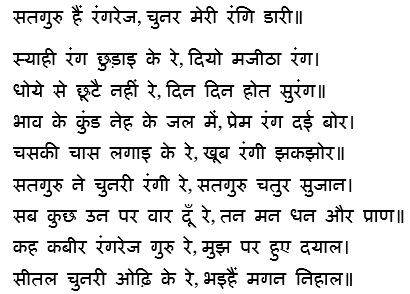
Satguru Hain Rangrej, Chunar Meri Rangi Daari.
Syaahi Rang Chhudai Ke Re, Diyo Majitha Rang.
Dhoye Se Chhootai Nahin Re, Din Din Hot Surang.
Bhav Ke Kund Neh Ke Jal Mein, Prem Rang Dayee Bor.
Chaski Chaas Lagai Ke Re, Khoob Rangi Jhakjhor.
Satguru Ne Chunri Rangi Re, Satguru Chatur Sujaan.
Sab Kuchh Un Par Vaar Doon Re, Tan Man Dhan Aur Pran.
Kah Kabir Rangrej Guru Re, Mujh Par Huye Dayal.
Seetal Chunri Odhi Ke Re, Bhaihain Magan Nihaal.
Translation
The Guru is the Master Dyer,
He has dyed my Chunri.
Removing the stains,
He has dyed it in the crimson of madder.
The color does not fade upon washing;
Day by day, it grows more beautiful.
In the vessel of faith, filled with the water of affection,
He immersed it in the color of Prem.
Instilling in me an eagerness for learning,
He dyed it thoroughly, shaking it vigorously.
The Guru has dyed my Chunri,
The Master, so skillful and discerning.
Upon him I would dedicate my all —
Body, mind, wealth and Life.
Says Kabir, the Master Dyer,
The Guru has been kind to me.
Wearing the soothing Chunri,
He appears blissful with delight.
My Understanding
Kabir employs the familiar imagery of a dyer and a Chunri to explain the process of transformation that culminates in Union.
The Chunri represents the pupil, while the Rangrej, the Master Dyer, represents the Guru. Before imparting a new color, the dyer removes the existing stains. Likewise, the process of learning involves unlearning. Our accumulated impressions, prejudices, attachments and ingrained tendencies often hinder our receptivity to wisdom.
The crimson of Majitha, traditionally associated with the Suhagin, is particularly significant. It is the color of belonging. Once thoroughly assimilated, the color neither fades upon washing nor loses its radiance. On the contrary, it grows more beautiful with each passing day.
Kabir is not suggesting that the circumstances which previously gave rise to our undesirable tendencies will cease to occur. What has been acquired through learning is Viveka — the faculty of discernment that enables us to respond consciously to such circumstances. Wisdom assimilated is enriched through living.
The process of dyeing is equally revealing. The vessel is that of Shraddha (faith), the water is that of Neh (affection), and the color is that of Prem (unconditional love).
Shraddha enables receptivity. Affection nurtures relatedness. Prem imposes no conditions.
The Guru imparts wisdom unconditionally; its assimilation is the responsibility of the pupil.
Through sustained engagement, the pupil develops a taste for learning. The process may shake the very foundations of one's habitual thinking and conduct. Yet, when learning becomes a personal aspiration, discipline is no longer perceived as an imposition.
Recognizing the transformation brought about by the Master, the pupil spontaneously expresses a willingness to dedicate everything to him. What the Guru never demanded, the pupil willingly offers. This is an expression of gratitude, not indebtedness.
The concluding stanza brings the metaphor to its fulfillment. The soothing Chunri and the Master's apparent delight signify acceptance. The transformation is of the pupil; the acceptance is of the Guru. The Suhagin finds fulfillment in Suhaag.
The significance of Kabir's composition, however, need not remain confined to the relationship between the Guru and the pupil.
Consider two individuals aspiring to develop a compatible relationship. Each brings a distinct upbringing, temperament, habits and expectations. With affection, an understanding of each other's vulnerabilities and a conviction in their togetherness, both willingly undergo transformation.
Here, the roles of the Rangrej and the Chunri can interchange. Both can be teachers and both can be pupils. Each must have the humility to learn and the generosity to share. The endeavor is not to make the other conform to one's expectations, but to become worthy of each other.
Whether during courtship or through the years of married Life, this process of growing together sustains the health and harmony of the relationship.
Togetherness provides the opportunity; mutual transformation nurtures Union.
The soothing Chunri becomes an expression of the serenity, fulfillment and gratitude experienced in such a Union.
More by : Rajender Krishan
Top | Love Songs | Home